
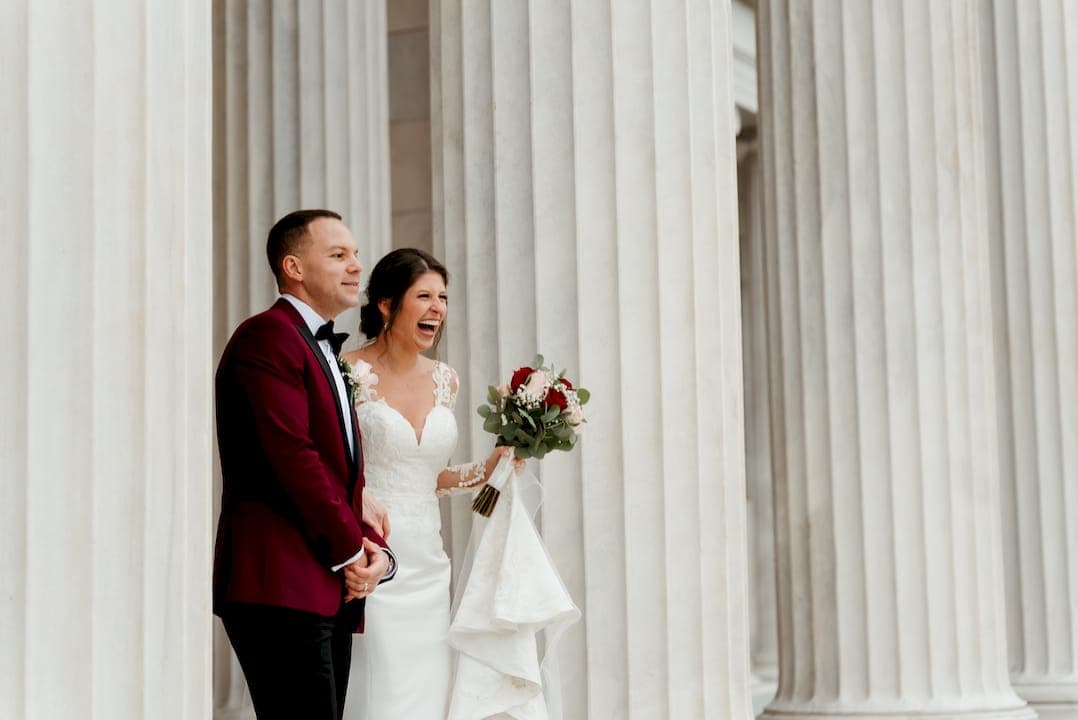
Most couples spend months planning every detail of their wedding day, then freeze the moment a camera appears. That stiffness is real, and it shows up in photos. Learning how to prepare for candid wedding photos changes that completely. When you walk into your wedding day with the right mindset, a photo-friendly timeline, and a few simple techniques, your photographer can capture the moments that actually feel like you. This guide gives you everything you need to make that happen.
Table of Contents
Key takeaways
| Point | Details |
|---|---|
| Candid means guided, not random | Good candid photography uses light prompting and timing, not zero direction. |
| Comfort shapes your photos | Feeling at ease in your outfit and with your photographer directly improves how natural you look. |
| Timeline buffers matter | Adding small breaks between activities gives your photographer room to capture genuine moments. |
| Prompts beat posing | Specific verbal prompts create real reactions far better than asking someone to smile. |
| Mistakes are recoverable | Stiffness and camera awareness are normal. Knowing how to reset keeps the day flowing naturally. |
How to prepare for candid wedding photos
Before you can prepare well, you need to understand what candid wedding photography actually is. And here is where most couples get it wrong. Candid does not mean your photographer wanders around hoping something interesting happens. It also does not mean zero direction, which is closer to pure photojournalism.
Candid wedding photography involves natural, relaxed, and unforced moments with light prompting and micro-direction. Your photographer is actively reading the room, anticipating emotion, and positioning themselves to catch the real thing when it happens. The difference between a candid photo that looks stunning and one that looks accidental is almost always preparation and timing.
Here is what candid photography is not:
-
A replacement for all portraits. You will still have some guided shots, especially for family formals.
-
Random snapping throughout the day with no strategy behind it.
-
Something that only works for naturally expressive or outgoing couples.
Pro Tip: Ask your photographer to show you examples of their candid work specifically, not just their full portfolio. The style of a candid-focused photographer looks noticeably different from a traditional portrait photographer, even in the same venue.
The best candid wedding photos come from a photographer who balances anticipation, comfort, and light prompting. When you understand that, you stop feeling like you need to perform and start trusting the process.
Getting yourself and your bridal party photo-ready
Preparation for candid photos starts well before your wedding day. The biggest factor most couples overlook is physical comfort. Wearing something that feels like you contributes directly to relaxed, authentic photos. If your dress is too tight to breathe in or your shoes are already hurting during the rehearsal, that tension will show in every frame.
Beyond attire, here is a practical approach to getting yourself and your wedding party ready for natural photos:
-
Practice micro-movements at home. Simple movements like slow walks, soft touches, and slight lean-ins help your body feel less rigid in front of a camera. Spend ten minutes with your partner practicing these a week before the wedding. It sounds awkward, but it works.
-
Do an engagement session first. This is the single best thing you can do to get comfortable with your photographer. By the time your wedding day arrives, the camera feels familiar instead of threatening.
-
Brief your wedding party. Tell them the goal is natural and relaxed, not stiff and formal. Let them know the photographer may give light prompts and that they should just respond naturally rather than freeze up.
-
Communicate your preferences clearly. Share what you love and what you want to avoid. If you hate photos of yourself mid-laugh with your mouth wide open, say so. If you want lots of quiet, intimate moments, make that a priority.
-
Focus on each other, not the camera. This sounds simple, but it is the core skill. When you are genuinely engaged with your partner, a skilled photographer captures that without you ever noticing the lens.
Pro Tip: On the morning of your wedding, give yourself a few minutes alone with your partner before the chaos starts. Even five minutes of quiet connection sets the emotional tone for the whole day and gives your photographer a beautiful, unhurried moment to work with.
Open communication with your photographer before the wedding is not optional. It is the foundation of good candid coverage. Share your mood notes, your favorite prompts, and any moments you absolutely want captured.
Building a photo-friendly wedding day timeline
Your timeline is either your photographer’s best tool or their biggest obstacle. Rushed schedules kill candid photography. When everyone is stressed and sprinting between events, genuine emotion disappears and stiff smiles take over.
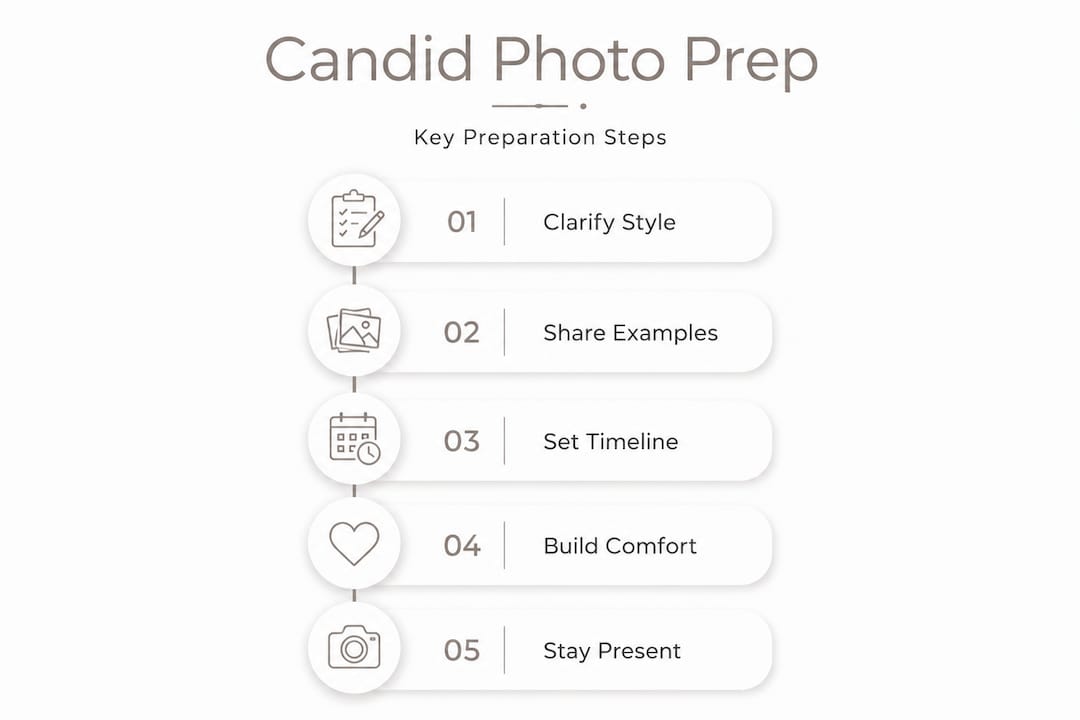
Timeline buffers of 5 to 20 minutes between photography blocks improve candid photo quality by giving real interactions room to breathe. Build in at least 5 to 10 minutes for transitions and 20 to 30 minutes for family formals so portraits never feel rushed.
One of the biggest timeline decisions you will make is whether to do a first look.
| First look | Post-ceremony portraits | |
|---|---|---|
| Candid opportunity | High. Genuine surprise and emotion in a private moment. | High. Raw post-ceremony joy is hard to fake. |
| Timeline pressure | Lower. Most portraits done before the ceremony. | Higher. Less time before reception begins. |
| Atmosphere | Calm, intimate, controlled light. | Energized, sometimes rushed, variable light. |
| Best for | Couples who want more breathing room during reception. | Couples who prefer the traditional reveal at the altar. |
Choosing a first look usually gives couples more breathing room for candid moments during the reception because portraits are mostly complete before the ceremony even starts.
Beyond the first look decision, think about where your best candid moments are likely to happen and protect those spaces on your timeline:
-
Near the bar or cocktail hour space, where guests naturally relax and laugh.
-
During the getting-ready portion of the morning, when real emotion tends to surface without prompting.
-
Right after the ceremony, when the relief and joy hit all at once.
Work with your planner and photographer together. When your vendors are aligned on the timeline, you spend your day being present instead of managing logistics.
Encouraging authentic moments during your photo session
This is where the real magic happens, and it is more practical than most couples expect. The goal is not to manufacture emotion. It is to create conditions where real emotion surfaces naturally.
Specific verbal prompts generate authentic reactions far better than generic instructions to smile. Your photographer might ask you to whisper your favorite memory of your partner, or to argue playfully about where you are going on your next trip. These prompts work because they redirect your attention away from the camera and toward something real.
Here are five ways to encourage genuine candid moments throughout your day:
-
Use movement between shots. Walking slowly together, swaying slightly, or pausing to look at something in the distance creates natural body language that reads beautifully on camera.
-
Tell each other something true. Right before a photo moment, whisper something you genuinely love about your partner. The reaction that follows is always real.
-
Let guests interact naturally. Easy photo zones near string lights, greenery, or the bar give guests a natural place to gather and connect, which produces joyful candid group shots without any posing.
-
Trust your photographer’s cues. When your photographer gives a light prompt, follow it without overthinking. The prompt is designed to get you moving naturally, not to make you perform.
-
Stay in the moment between takes. The best candid shots often happen in the seconds after a posed shot ends, when couples relax and laugh about how awkward posing feels. Do not rush to check your phone or look at the camera. Stay present.
Pro Tip: If you feel nervous or stiff during a photo moment, tell your photographer out loud. A good photographer will pivot immediately, give you something to do or talk about, and the stiffness usually disappears within thirty seconds.
Common candid photo mistakes to avoid
Even well-prepared couples run into trouble. Knowing what to watch for helps you recover quickly without losing the natural energy of your day.
-
Over-posing kills authenticity. Stopping the day every few minutes for resets reduces comfort and makes everyone self-conscious. Trust your photographer to work around you, not the other way around.
-
Performing candid is not candid. If you catch yourself thinking “this would make a great photo,” you are already out of the moment. Let your photographer worry about the frame. You worry about the experience.
-
Timeline drift is common. Hair and makeup run long, family gatherings take longer than expected. Build this into your plan rather than reacting to it with stress. Stress photographs terribly.
-
Camera awareness in guests spreads. When one guest starts acting stiff or self-conscious, it ripples through a group. Brief your wedding party ahead of time to stay relaxed and engaged with each other.
-
Trying to recreate a Pinterest photo mid-day backfires. Inspiration is great during planning, but chasing a specific image during your wedding pulls you out of your own experience.
The couples who end up with the most beautiful candid photos are almost always the ones who stopped trying to get beautiful candid photos and just lived their day.
When stiffness appears, the fastest reset is movement. Ask your photographer to have you walk together, share a hug, or simply look at something in the distance. Within seconds, the natural body language returns.
My honest take after years behind the lens
I’ve photographed enough weddings to know that the couples who prepare the most thoughtfully are rarely the ones who feel the most natural on camera. The couples who trust the process, stay present with each other, and let go of the idea that every moment needs to look perfect. Those are the ones whose photos stop people mid-scroll.
What surprises most couples is how much preparation actually happens before the shutter clicks. The timeline planning, the engagement session, the pre-wedding conversation about prompts and preferences. All of that invisible work is what makes the final images feel effortless. I’ve seen couples walk into their wedding day having done none of that prep and spend half the day uncomfortable in front of the camera. I’ve also seen couples who did the work and barely noticed us there.
The sweet spot between fully posed portraits and pure photojournalism is exactly where the best wedding photos live. Light prompting, genuine interaction, and a photographer who knows when to step back. That combination, paired with a couple who has done the preparation work, produces images that hold up for decades. Imperfection is not the enemy of great wedding photography. Inauthenticity is.
— Billy
See what candid preparation looks like in real weddings
At BGF Photography, every wedding starts with a conversation, not a contract. Before your day arrives, we sit down to talk through your timeline, your preferences, your prompts, and your vision for what authentic looks like to you. That pre-wedding consultation is where great candid photos are actually made. You can explore our wedding packages and FAQ to see how we structure that process, or browse our real wedding galleries to see what natural wedding photo preparation looks like in practice. If you are planning a wedding in the Buffalo or Rochester area and want coverage that captures the real moments, we would love to hear from you.
FAQ
What does candid wedding photography actually mean?
Candid wedding photography captures natural, unforced moments using light prompting and strategic positioning rather than rigid poses. It is not zero-direction photography. It is a balance of anticipation, timing, and comfort that produces genuine emotion in every frame.
How do I pose for candid photos without looking stiff?
Practice micro-movements like slow walks, soft touches, and slight lean-ins at home before your wedding day. Focus on your partner rather than the camera, and follow your photographer’s verbal prompts without overthinking them.
How early should I start planning candid wedding shots?
Start discussing your candid preferences with your photographer during your initial consultation, ideally several months before the wedding. An engagement session in the weeks before your wedding is one of the most effective ways to prepare.
Does a first look help with candid wedding photos?
Yes. A first look session allows most portraits to be completed before the ceremony, which gives couples significantly more breathing room for relaxed, candid moments during the reception.
Can guests contribute to candid wedding coverage?
Guest photos add a secondary storytelling layer, but professional coverage ensures consistent lighting, key moment capture, and portrait quality that guest photos cannot reliably provide. Think of guest photos as a bonus, not a backup.