
TL;DR:
Niagara Falls enhances wedding photography with its dramatic energy, iconic imagery, and natural motion.
A focused, well-planned session at the Falls creates powerful images that remain meaningful over time.
Niagara Falls is the most powerful natural backdrop available to Buffalo couples planning their wedding photography. The role of Niagara Falls in Buffalo wedding photos goes far beyond a simple scenic stop. It functions as a visual anchor, an emotional symbol, and a location that transforms ordinary portraits into images couples keep for generations. Professional wedding photography in the Buffalo and Niagara region typically starts at $2,500 and climbs well above $7,500 for full-service packages. Planning this kind of shoot requires both creative vision and logistical preparation, starting at least 12 to 18 months before your wedding date.
How does Niagara Falls enhance wedding photography compared to other Buffalo locations?
Niagara Falls delivers a scale and energy that no Buffalo ballroom or garden venue can replicate. The constant motion of the water creates a living backdrop. That movement adds depth and drama to every frame without requiring any additional props or staging.
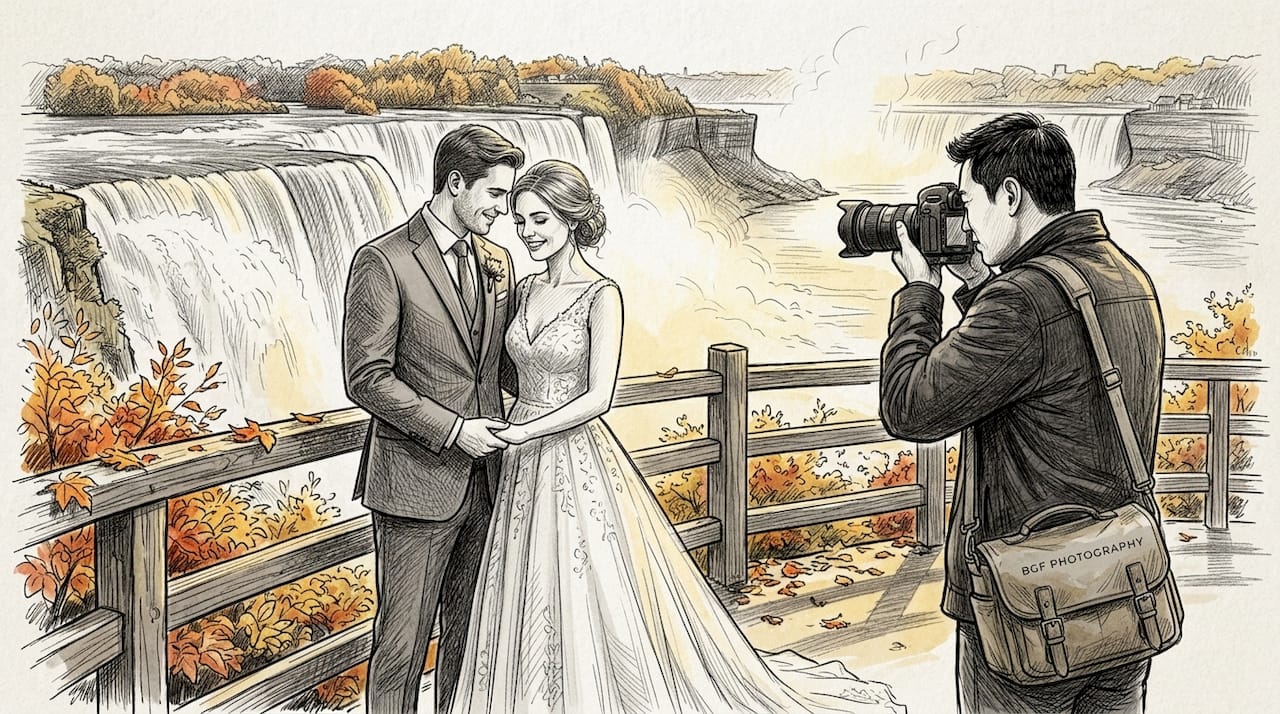
Couples are increasingly choosing natural venues over traditional indoor ballrooms for wedding photography. Locations like Beaver Island State Park offer lighting and scenery that no indoor space can match. The Falls take that outdoor appeal to a completely different level by combining raw natural power with recognizable iconic imagery.
The key distinction between Niagara Falls and other Buffalo wedding photography locations is how the Falls functions in the frame. A skilled photographer does not place the couple in front of the Falls as if posing for a tourist snapshot. Instead, the waterfall becomes a supporting element in the background, giving the image context and grandeur while keeping the couple as the emotional center.
Historic venues like the Buffalo History Museum offer architectural elegance. Garden venues provide softness and color. The Falls adds something neither of those can: raw, kinetic energy. Combining all three across a wedding day creates a gallery with genuine visual range.
-
Scale and motion: The Falls creates natural depth and movement that static venues cannot provide.
-
Emotional resonance: Couples associate Niagara Falls with romance and milestone moments, which translates directly into the emotional weight of the photos.
-
Iconic recognition: Images taken at the Falls carry an immediate sense of place that makes wedding galleries feel grounded in a specific, meaningful location.
-
Light variety: Mist from the Falls diffuses sunlight and creates soft, flattering light conditions that photographers actively seek out.
Pro Tip: Ask your photographer to position the Falls slightly off-center in the background rather than directly behind you. This compositional choice keeps you as the subject and turns the waterfall into a dramatic supporting element rather than a competing focal point.
The strategic viewpoints over proximity principle is one that experienced photographers apply consistently. Being near the Falls matters far less than knowing exactly where to stand for the best angle, light, and composition.
What logistical and planning factors affect photo sessions at Niagara Falls?
Niagara Falls is one of the most visited tourist destinations in North America. That fact shapes every decision a photographer makes when planning a wedding shoot there. Crowd management is not optional. It is the central logistical challenge.
Early morning timing and off-peak seasons produce the best results. Arriving before 8 a.m. on a weekday in early June or late September gives couples access to the best viewpoints with minimal tourist interference. The light is also softer and more flattering in the early morning hours, which is a significant photographic advantage.
Seasonal conditions affect far more than just crowd size. Wind near the Falls can disrupt veils, hair, and floral arrangements. Mist can settle on lenses and clothing within minutes. Cold temperatures in october and November add physical discomfort that shows up in photos as tension rather than joy. A photographer who scouts locations in advance knows which spots offer natural wind protection and which viewpoints stay drier during high-flow periods.
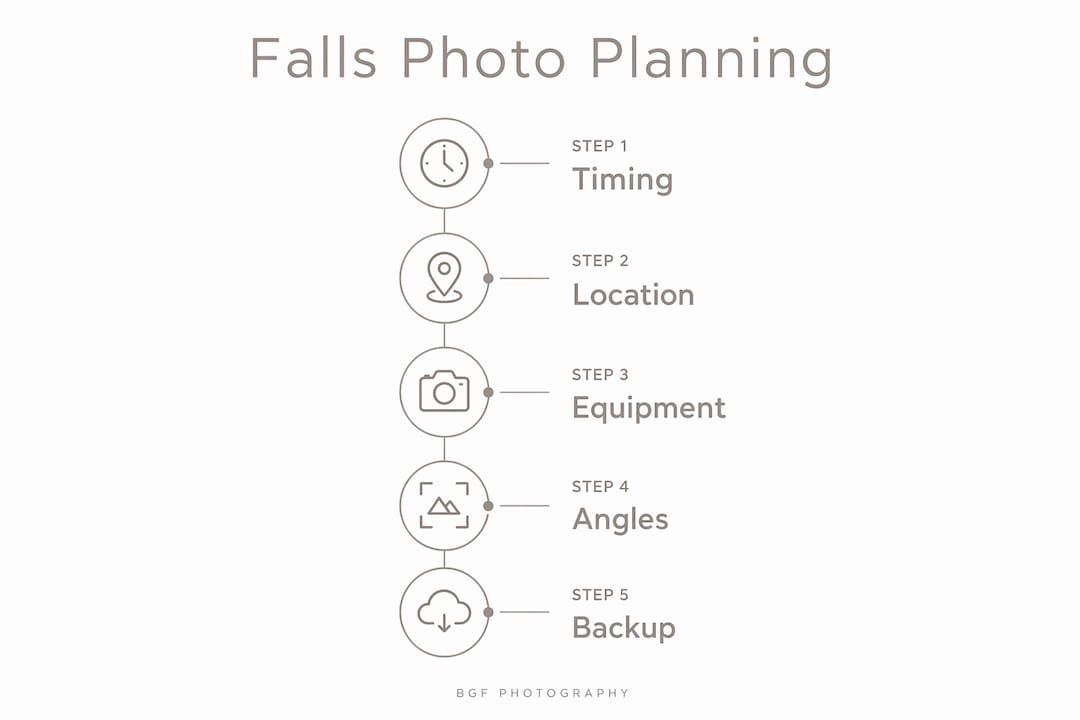
Here is a practical planning sequence for a Niagara Falls wedding photo session:
-
Book your photographer 12 to 18 months in advance. Peak wedding season in Buffalo runs from may through October. The best photographers fill their calendars quickly, and those with specific Falls experience fill even faster.
-
Schedule a location scout with your photographer before the wedding day. Conditions at the Falls change with tourism patterns, construction, and seasonal water flow. A pre-shoot visit eliminates surprises.
-
Plan your Falls session for early morning or a weekday. This reduces crowd interference and gives you access to the most photogenic viewpoints without competition.
-
Keep the Falls portrait window short and focused. A 30 to 45 minute session at the Falls produces stronger images than a two-hour marathon. Fatigue shows in faces and body language.
-
Prepare for weather conditions specific to the Falls. Bring a waterproof bag for camera gear, a comb for wind-affected hair, and a light jacket for the mist zone.
Pro Tip: Tell your photographer about any physical limitations or comfort concerns before the shoot. The Falls area involves uneven terrain, wet surfaces, and significant walking distances. A good photographer will plan a route that keeps everyone comfortable and confident.
Wind, mist, and noise near the Falls require active planning rather than reactive adjustments. Couples who treat the Falls session as a structured, time-limited event consistently report better experiences than those who treat it as an open-ended exploration.
The local expertise of a Buffalo-area photographer is the single most valuable asset in navigating these conditions. Tourism patterns, construction zones, and seasonal water levels all shift throughout the year. A photographer who works the Falls regularly knows where the crowds go and, more importantly, where they do not.
How to build a layered wedding photo gallery with the Falls and Buffalo venues
The strongest wedding photo galleries do not rely on a single location. They tell a story across multiple settings, each contributing something visually distinct. Niagara Falls works best as the anchor of that story, not the entire chapter.
Anchoring images at the Falls with one high-impact session, then moving to secondary venues, produces a gallery with genuine depth. This approach avoids the visual repetition that comes from spending too much time in one location. It also protects the couple and their guests from the physical and emotional fatigue of an extended Falls session.
Nearby venues like Morningstar Mill and local vineyards offer quieter, equally beautiful alternatives. These locations allow for more intimate portrait sessions without the crowd pressure of the Falls. The contrast between the grandeur of the Falls and the intimacy of a vineyard or garden creates a gallery that feels both epic and personal.
| Location | Visual character | Best for |
|---|---|---|
| Niagara Falls | Dramatic, high-energy, iconic | Wide shots, power portraits, statement images |
| Morningstar Mill | Rustic, historic, intimate | Close-up portraits, candid moments |
| Local vineyards | Soft, romantic, warm-toned | Golden hour portraits, relaxed couple shots |
| Buffalo History Museum | Architectural, elegant, formal | Classic portraits, bridal party shots |
| Botanical gardens | Colorful, lush, natural | Detail shots, soft romantic imagery |
The Buffalo History Museum pairs particularly well with a Falls session because the architectural formality of the museum creates a visual contrast with the raw natural energy of the waterfall. That contrast is what makes a gallery feel complete rather than one-dimensional.
Choosing two or three locations with distinct visual personalities produces a stronger gallery than visiting five locations with overlapping aesthetics. The goal is variety that tells a coherent story, not a photo marathon that exhausts everyone involved.
Pro Tip: Map your locations geographically before the wedding day. Niagara Falls, Morningstar Mill, and several Buffalo venues sit within a reasonable driving distance of each other. A photographer familiar with the region can build a route that minimizes travel time and maximizes shooting time.
The Buffalo wedding planning checklist approach applies directly here. Treating location selection as a planning task rather than a day-of decision gives your photographer the preparation time needed to produce their best work at each spot.
What should couples know about photography investment and booking timelines?
Wedding photography in the Niagara and Buffalo region carries a clear price structure. Professional packages typically range from $2,500 to $7,500, with luxury teams and full-day coverage exceeding that upper figure. That range reflects real differences in experience, equipment, and the number of photographers covering your day.
| Package feature | Entry level | Mid-range | Full service |
|---|---|---|---|
| Starting price | $2,500 | $4,000 | $7,500+ |
| Coverage hours | 6–8 hours | 8–10 hours | Full day |
| Second shooter | Not included | Often included | Included |
| Engagement session | Not included | Sometimes included | Included |
| Edited image delivery | 300–400 images | 500–700 images | 700+ images |
| Video coverage | Not included | Add-on available | Often included |
The 12 to 18 month booking window is not a suggestion. It is the practical reality of the Buffalo wedding market. Photographers with specific Niagara Falls experience and strong portfolios book their peak season dates well in advance. Waiting until six months before your wedding date significantly limits your options.
An engagement session adds genuine value beyond the photos themselves. It gives you and your photographer time to develop a working relationship before the wedding day. Photographers who offer engagement sessions as part of their packages often use that session to scout locations, test lighting conditions, and understand how you move and interact naturally. That preparation shows up directly in the quality of your wedding day images.
A second shooter is worth the additional cost for Falls-inclusive wedding days. The Falls session, the ceremony, and the reception all benefit from two sets of eyes capturing different angles simultaneously. A single photographer cannot be in two places at once, and the moments that happen between posed shots are often the most meaningful.
Key Takeaways
Niagara Falls serves as the most powerful natural backdrop in the Buffalo region, but its role in a wedding gallery is strongest when treated as one element within a layered, multi-location photo strategy.
| Point | Details |
|---|---|
| Falls as visual anchor | Use Niagara Falls for one focused, high-impact session rather than the entire photo day. |
| Timing determines quality | Early morning and off-peak seasons reduce crowds and improve light conditions significantly. |
| Local expertise matters | Photographers familiar with the Falls navigate crowds, weather, and viewpoints far more effectively. |
| Layered galleries outperform single-location shoots | Combining the Falls with vineyards, gardens, or historic venues creates visual variety and emotional range. |
| Book 12–18 months early | Peak season photographers with Falls experience fill their calendars quickly. |
Why most couples get the Falls session wrong
Most couples I work with arrive at Niagara Falls with the same mental image: the two of them standing directly in front of the waterfall, smiling at the camera. That image exists, and it has its place. But it is the least interesting photo you can take there.
The Falls is at its most powerful when it is unexpected in the frame. A couple walking along the gorge path with the mist rising behind them. A quiet moment between the ceremony and the reception, stolen at a viewpoint most tourists walk right past. Those are the images that hold up twenty years later. The posed-in-front-of-the-Falls shot fades into the background of memory. The candid moment at the Falls stays with you.
I also see couples dramatically over-schedule their Falls sessions. They plan two hours at the Falls, then two more hours at a second location, then rush to the reception. Everyone is exhausted by the time the dancing starts, and it shows in the photos. A focused 30 to 45 minute Falls session, done with intention and a clear shot list, produces better images than a two-hour wander. Less time, more purpose.
The other thing I tell every couple: the Falls is not the point. You are the point. The Falls is the context that makes your story feel larger than a single day. When a photographer understands that distinction, every image from the session reflects it.
Couples who embrace natural movement and genuine interaction at the Falls consistently produce stronger galleries than those who try to control every pose. The water is already doing the dramatic work. Your job is to be present with each other, and let the photographer document what that actually looks like.
— Billy
Capture your Falls session with BGF Photography
BGF Photography specializes in candid, natural wedding photography and videography across Buffalo and the Niagara region. The team brings direct experience with Falls-area logistics, seasonal conditions, and the multi-location wedding days that produce the strongest galleries.
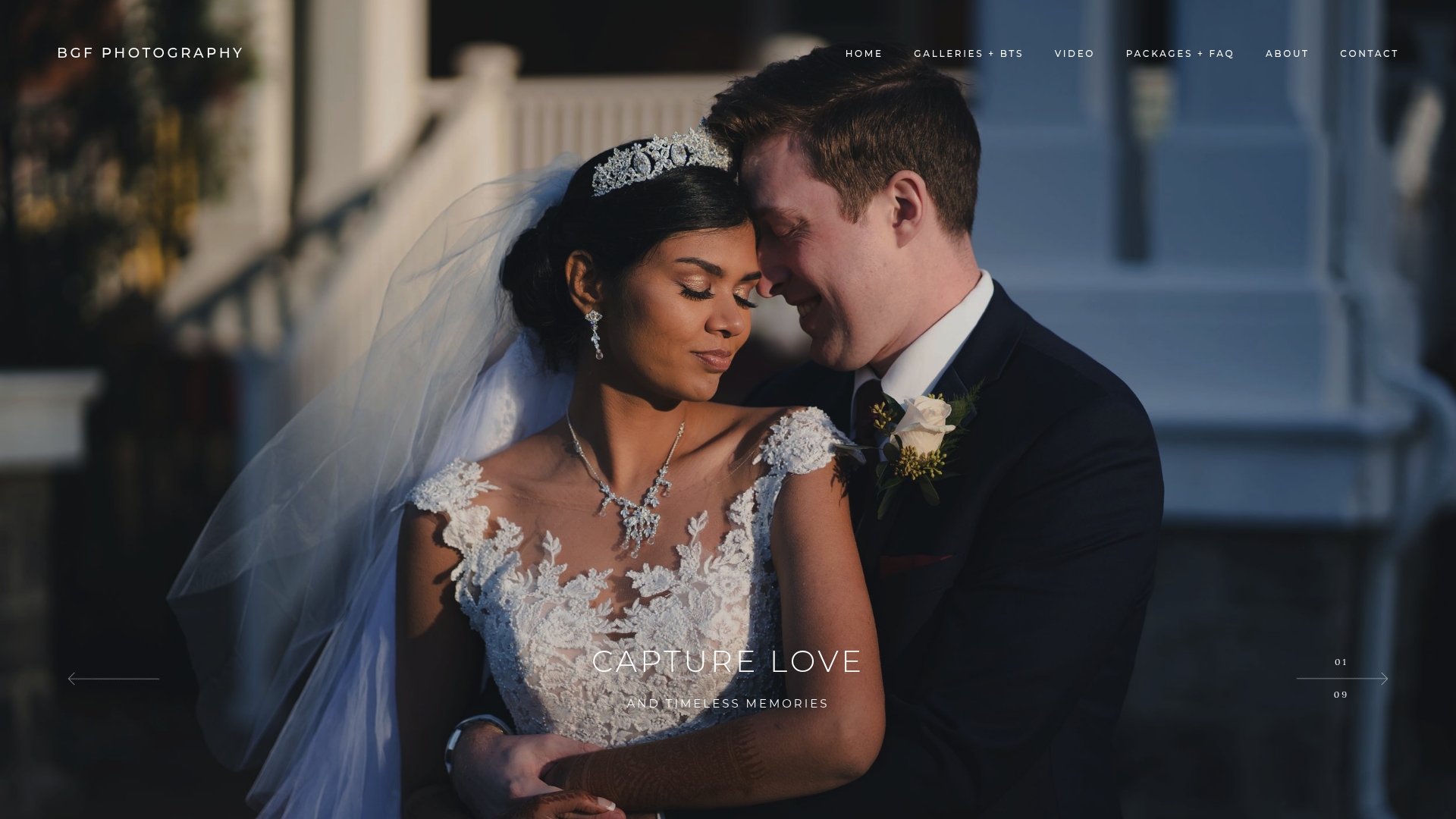
BGF Photography offers hybrid coverage packages that combine photography and videography under one cohesive style, so your Falls session, ceremony, and reception all feel like one continuous story rather than separate shoots. Early booking secures your date and gives the team time to scout locations, plan your timeline, and prepare for the specific conditions of your wedding day. Browse packages and pricing or reach out directly through the contact page to check availability for your date.
FAQ
What makes Niagara Falls a strong wedding photo location?
Niagara Falls provides a combination of dramatic scale, natural motion, and iconic imagery that no indoor or garden venue can replicate. Its mist creates soft, diffused light that flatters portraits, and its recognizable silhouette gives wedding galleries an immediate sense of place.
When is the best time to shoot wedding photos at Niagara Falls?
Early morning sessions on weekdays and off-peak months like June or September produce the best results. Crowds are smaller, light is softer, and couples have access to the most photogenic viewpoints without competition from tourists.
How much does wedding photography near Niagara Falls cost?
Professional packages range from $2,500 to $7,500, with full-service luxury teams exceeding that upper figure. Package features like second shooters, engagement sessions, and video coverage affect the final price.
How far in advance should I book a photographer for a Falls session?
Booking 12 to 18 months in advance is the standard recommendation for Buffalo and Niagara weddings. Photographers with specific Falls experience and strong portfolios fill peak season dates well before the six-month mark.
Should Niagara Falls be the only location for wedding photos?
The strongest wedding galleries combine one focused Falls session with secondary venues like vineyards, historic houses, or botanical gardens. This approach creates visual variety and prevents the fatigue that comes from spending too much time in a single high-stimulation environment.