
TL;DR:
- Asking the right questions ensures your wedding videographer's style, experience, and audio quality match your expectations, resulting in a more meaningful film. Clarifying package details, insurance, and contract specifics prevents disputes and guarantees the coverage you desire. Prior venue knowledge and comprehensive communication are vital for capturing your day authentically and reliably.
The questions you ask your wedding videographer before signing a contract determine whether your finished film captures the day you actually lived or a generic version of it. Most couples spend hours choosing a venue and minutes vetting their videographer. That imbalance is exactly how you end up with muffled vow audio and a highlight reel that feels like it belongs to someone else's wedding. The right videographer interview questions reveal style alignment, technical competence, and contract clarity before a single deposit clears.
Questions to ask your wedding videographer about style and experience
Style is not a preference. It is the single biggest predictor of whether you will love or merely tolerate your wedding film. A videographer who shoots documentary-style footage and one who builds cinematic narratives deliver fundamentally different products, even when filming the same ceremony. Asking the right questions here saves you from a mismatch that no amount of editing can fix.
Start with these core style and experience questions:
- Can we see full wedding videos from start to finish? Full wedding videos reveal how a videographer handles the slow moments, the transitions, and the emotional arc of a full day. Highlight reels are curated to impress. A complete film shows you the truth.
- How would you describe your storytelling approach? Some videographers follow a strict timeline. Others build a film around emotion and music. Knowing which camp your candidate falls into tells you whether their instincts match your vision.
- How many weddings have you filmed, and can you show us work from a venue similar to ours? Experience at a specific venue type, whether a dim cathedral or an open-air farm, matters more than total years in business.
- Do you specialize in any particular wedding style? A videographer who focuses on cinematic wedding videography will approach your day very differently from one who shoots straightforward documentary coverage.
Pro Tip: Watch at least one full wedding video before your consultation. Come prepared with specific timestamps where you loved or questioned a creative choice. That level of specificity tells the videographer you are serious and gives them a real chance to explain their decisions.
The goal of this line of questioning is not to quiz the videographer. It is to confirm that their natural instincts align with what you want to remember. A great videographer will welcome these questions because they filter out couples who are not a good fit just as much as they help you filter out the wrong hire.

What audio questions should you ask a wedding videographer?
Audio quality is the make-or-break factor for wedding video satisfaction. Couples consistently report that poor audio ruins an otherwise beautiful film. You can forgive a slightly shaky camera angle. You cannot forgive inaudible vows.
Ask these specific audio questions before you commit:
- What microphones do you use for vows and speeches? Look for answers that mention lavalier microphones, shotgun mics like the Rode VideoMic NTG, or compact recorders like the Tascam DR-10L. These tools provide reliable, close-source audio that survives crowd noise, wind, and distance.
- Do you connect to the DJ's sound system for speeches? A DJ feed integration gives the videographer a direct line to the room's amplified audio, which is especially valuable during toasts in large reception halls.
- What is your backup plan if a microphone fails mid-ceremony? A professional audio plan never relies on a single source. The answer should describe at least two independent recording setups running simultaneously.
- How do you handle outdoor ceremonies where wind is a factor? Wind protection, mic placement, and redundant sources are all part of a competent outdoor audio strategy.
Pro Tip: Ask the videographer to play you a raw audio clip from a previous outdoor ceremony. Polished final films always sound good. Raw audio tells you what they actually captured before post-production cleaned it up.
Understanding audio visual basics for live events helps you evaluate whether a videographer's answer is genuinely thorough or just confident-sounding. A videographer who mentions only one mic type and no backup plan is a real risk, regardless of how beautiful their portfolio looks.
How do videography packages and team coordination work?
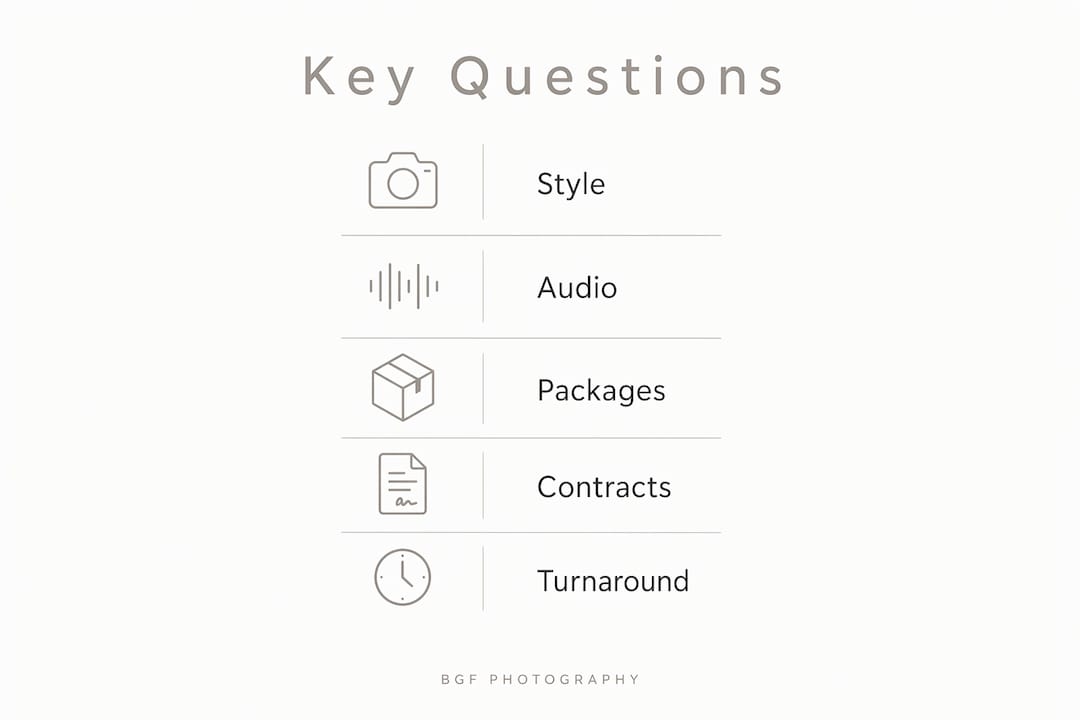
Package clarity prevents the most common post-wedding disputes. Videography package details including hours of coverage, number of videographers, editing style, music licensing, and delivery timelines should all be confirmed in writing before you sign anything.
| Package element | What to ask |
|---|---|
| Coverage hours | What time does filming start and end? Is travel time included? |
| Number of videographers | Do you work with a second videographer or shoot solo? |
| Deliverables | What formats and lengths are included? Highlight reel only, or full ceremony edit? |
| Music licensing | Are the songs in my film licensed for personal and online sharing? |
| Turnaround time | How many weeks until we receive the finished film? |
| Client input | Can we provide song preferences or flag specific moments to prioritize? |
A second videographer is not a luxury. It is the difference between capturing your partner's face during the first look and only capturing yours. Solo videographers make trade-offs constantly. Knowing those trade-offs in advance lets you decide whether the coverage gap is acceptable at the price point offered.
Coordination with your photographer is equally worth discussing. Ask directly whether the videographer has worked alongside photographers before and how they handle shared space during formal portraits. BGF Photography, for example, offers hybrid coverage where photography and videography operate under one cohesive style and vision, which eliminates the coordination friction entirely. When both vendors share the same creative instincts, the final images and film feel like they belong to the same day.
Turnaround time is another area where expectations frequently diverge. Some videographers deliver within six weeks. Others quote six months. Neither is automatically wrong, but you need to know before you book, not after your anniversary has passed.
What should you verify in a wedding videographer's contract?
A contract is not a formality. It is the document that protects you when something goes wrong, and something always has the potential to go wrong. Wedding videography contracts should explicitly state scope, key moments, deliverables, unavailability policies, payment terms, and insurance coverage.
Review these contract elements before signing:
- Key moments list. The contract should name the specific moments you expect filmed: the ceremony processional, vows, first kiss, first dance, toasts, and any cultural traditions. Vague language like "full day coverage" leaves room for interpretation you will not enjoy after the fact.
- Unavailability and replacement policy. Ask what happens if your videographer is sick or injured on your wedding day. A professional contract includes a replacement guarantee or a clear refund policy. Verbal reassurances are not enforceable.
- Payment schedule and cancellation terms. Know exactly when each payment is due, what triggers a late fee, and what portion of your deposit is refundable if you cancel or reschedule.
- Insurance and liability. Most venues now require vendors to carry general liability insurance. Ask for proof. Videographer insurance typically covers equipment damage, accidents on site, and lost footage liability, protecting both of you.
- Intellectual property and usage rights. The contract should specify who owns the footage, whether the videographer can use your film in their portfolio, and whether you can share it publicly online.
Scope creep and misunderstandings are the most common sources of post-wedding disputes between couples and videographers. A detailed contract with a named list of deliverables eliminates the gray area where those disputes live. If a videographer resists putting specifics in writing, that resistance is itself important information.
Key takeaways
The questions you ask before booking a wedding videographer directly determine the quality, reliability, and emotional resonance of your finished film.
| Point | Details |
|---|---|
| Watch full wedding videos | Request complete films, not just highlight reels, to assess real storytelling consistency. |
| Prioritize audio questions | Ask about lavalier mics, DJ feed integration, and backup plans before anything else. |
| Clarify every package detail | Confirm coverage hours, number of videographers, deliverables, and turnaround time in writing. |
| Review the contract thoroughly | Verify key moments lists, replacement guarantees, insurance proof, and usage rights before signing. |
| Coordinate with your photographer | Ask how the videographer works alongside photographers to avoid coverage gaps on the day. |
Why audio and contracts matter more than anything else
Most couples walk into videographer consultations focused on the wrong things. They ask about drones. They ask about color grading. Those are real considerations, but they are finishing touches on a film that either works or does not based on two fundamentals: audio and contract clarity.
I have seen stunning footage made unwatchable by a single lapel mic that slipped during the ceremony. The visuals were gorgeous. The vows were a murmur under ambient room noise. No amount of post-production fixes that. Audio is not a technical detail you delegate to the videographer's judgment. It is the first question you ask and the first answer you scrutinize.
Contracts feel uncomfortable to push on because the consultation has a friendly, collaborative energy. But the videographer who gets defensive when you ask about replacement guarantees or insurance is telling you something real about how they operate under pressure. The best vendors welcome contract conversations because they have already thought through every scenario. That confidence is what you are actually paying for.
One more thing couples consistently overlook: ask whether the videographer has shot at your specific venue before. Venue familiarity changes everything. A videographer who knows where the light falls during a 4 PM ceremony, where the acoustics create echo problems, and where to position for the reception entrance is not starting from scratch on your wedding day. That prior knowledge is worth more than an extra camera angle.
— Billy
See how BGF Photography handles every detail for you
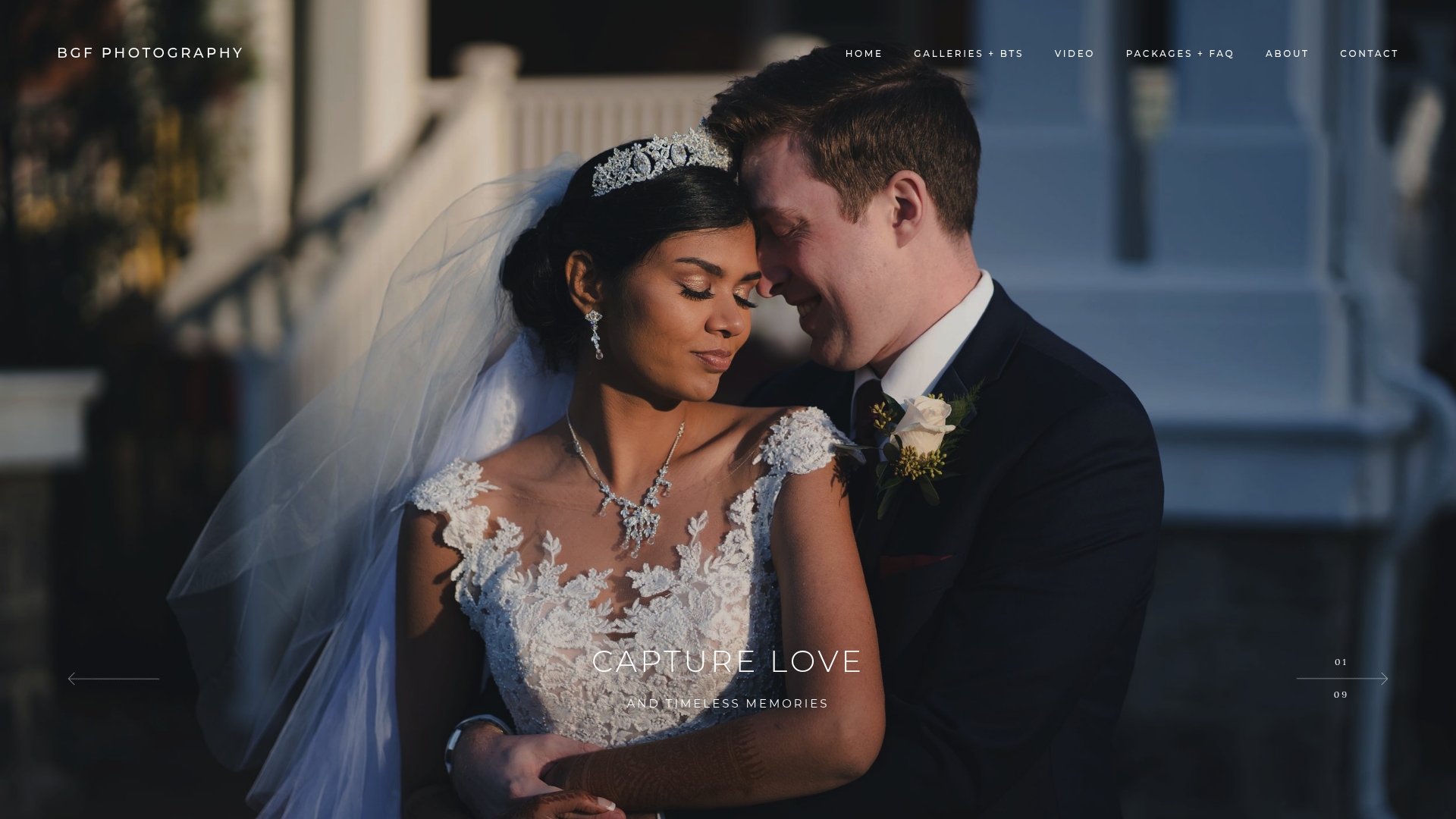
BGF Photography offers hybrid wedding coverage in the Buffalo and Rochester, NY areas, pairing candid photography with videography under one unified creative vision. Every package is built around transparency: you know exactly what moments are covered, how audio is captured, and what your finished film includes before you sign. There are no surprises in the contract and no gaps in the coverage. If you are ready to see what that looks like in practice, explore the BGF Photography packages to review package options, pricing, and the detailed FAQ that answers the questions most couples forget to ask.
FAQ
What questions should I ask a wedding videographer first?
Start with style and audio. Ask to see a full wedding film from start to finish, then ask specifically how they capture vow and speech audio and what their backup plan is if a microphone fails.
How many videographers do I need for my wedding?
A second videographer provides coverage from multiple angles simultaneously, capturing both partners' expressions during key moments. Solo videographers make trade-offs; knowing those trade-offs in advance helps you decide if the coverage level fits your needs.
What should a wedding videography contract include?
A contract should list specific key moments, deliverables, turnaround time, payment schedule, cancellation policy, replacement guarantees, and proof of insurance. Vague contracts are the leading cause of post-wedding disputes.
How long does it take to receive a finished wedding film?
Delivery timelines vary widely, ranging from six weeks to six months depending on the videographer's workload and editing process. Confirm the exact timeline in writing before you book.
Is wedding videographer insurance required?
Many venues require vendors to carry general liability insurance as a condition of access. Videographer insurance typically covers equipment damage, on-site accidents, and lost footage liability, protecting both the couple and the vendor.