
TL;DR:
Cinematic wedding videography emphasizes storytelling through film techniques like lighting, drone shots, and editing, creating a movie-like experience.
It costs more due to the specialized equipment, expertise, and extended post-production required for emotional, narrative-driven films.
Most couples assume that wedding video means a camera following them around all day and recording everything that happens. What is cinematic wedding videography, though, is something fundamentally different. It’s closer to film production than event recording. Think narrative structure, intentional lighting, sweeping drone shots, and a final film that plays more like a short movie than a home video. Knowing the difference between cinematic and traditional styles helps you make a choice you won’t regret when you’re watching your wedding film ten years from now.
Table of Contents
Key takeaways
| Point | Details |
|---|---|
| Cinematic is storytelling first | Cinematic wedding films use narrative arcs and emotional pacing, not just chronological footage. |
| Technique separates the styles | Gimbals, drones, color grading, and shallow-focus lenses create the movie-like look couples love. |
| It costs more for a reason | Higher investment reflects equipment, expertise, and post-production time that can stretch weeks. |
| Preparation matters | Timeline, locations, and music choices all shape how your cinematic film turns out. |
| Portfolio review is non-negotiable | Always watch full wedding films, not just highlight clips, before hiring a videographer. |
What cinematic wedding videography really means
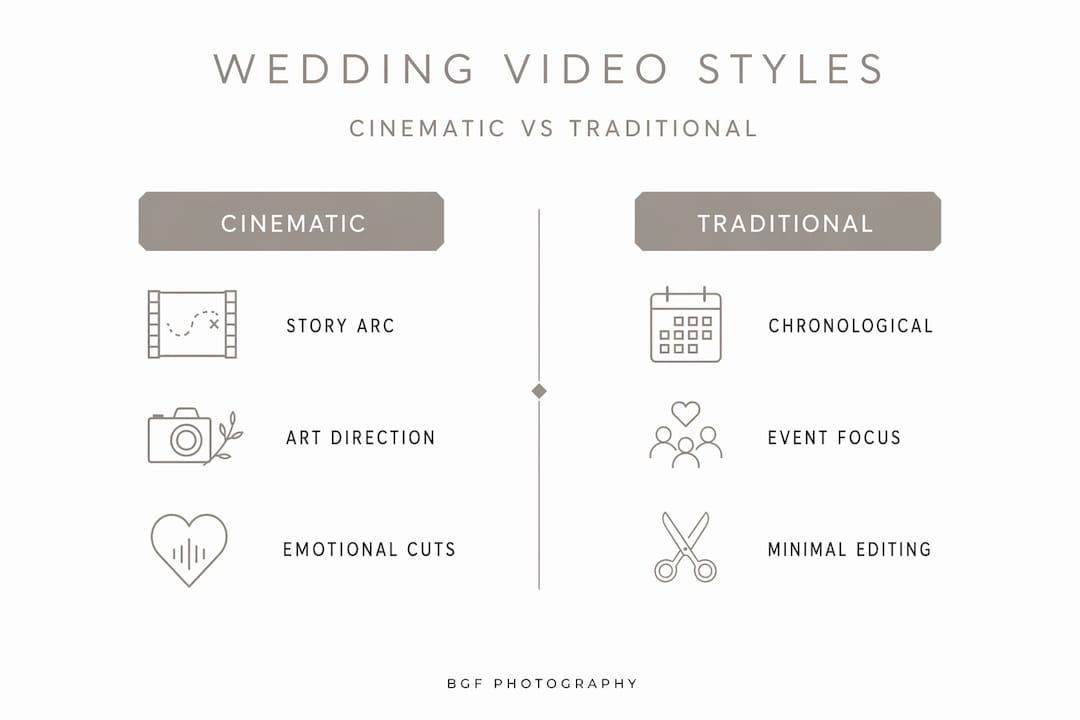
Wedding videography is storytelling built from cinematic visuals and raw emotion rather than simple event documentation. A traditional wedding video captures the day in order: ceremony, cocktail hour, reception, cake cutting. It’s thorough and accurate, but it often lacks an emotional through-line.
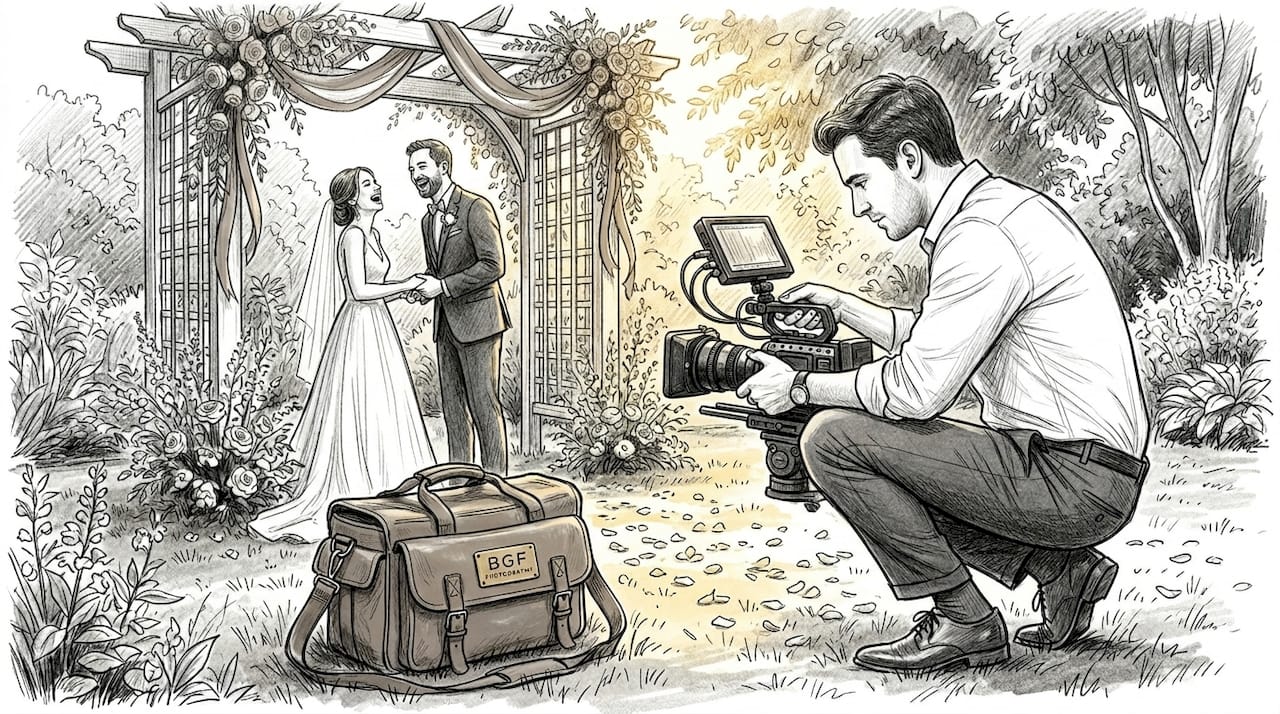
Cinematic wedding videography takes a different approach. Cinematic wedding films have a narrative structure with a real beginning, middle, and end. Your wedding film might open with your voice reading your vows over black screen, then pull back to reveal the ceremony. It builds tension, releases it, and delivers emotional payoff in a way a straight-from-start-to-finish video never could.
How the three styles compare
The differences between cinematic, traditional, and documentary styles are real and worth understanding before you book anyone.
| Style | Focus | Direction | End result |
|---|---|---|---|
| Cinematic | Emotional storytelling | Some artistic direction given | Movie-like film with pacing and score |
| Traditional | Complete event documentation | Minimal, observational | Chronological record of the day |
| Documentary | Candid, unfiltered moments | None or very little | Raw, authentic footage, less polished |
For a cinematic vs traditional wedding video comparison, the clearest way to think about it is this: traditional videography asks “what happened?” Cinematic videography asks “how did it feel?” The documentary style sits somewhere on its own, prioritizing authenticity over artistry. Neither is wrong. They just serve different goals.
For couples who want something that plays beautifully at anniversary parties or family gatherings, the cinematic approach is the one that holds up emotionally for decades. If you want a complete record of every speech and every moment exactly as it happened, traditional coverage might actually serve you better. Most couples who hire BGF Photography end up wanting elements of both, which is where hybrid coverage becomes a real advantage.
The tools and techniques behind the look
The cinematic look you see in wedding films doesn’t happen by accident. Cinematic videography uses gimbals, drones, and shallow depth-of-field lenses along with color grading to produce that movie-like aesthetic.
Here’s what’s actually happening behind the scenes:
-
Gimbals keep the camera perfectly smooth while moving, which is why cinematic films feel like a glide rather than a walk. Without one, handheld footage looks shaky and amateurish.
-
Drones capture aerial perspectives that give your venue, your surroundings, and your first look a scale and grandeur that ground-level shots can’t replicate.
-
Shallow depth-of-field lenses blur the background and keep only your face in sharp focus. That dreamy quality you notice in cinematic wedding films? That’s a fast prime lens doing its job.
-
Color grading happens entirely in post-production. A skilled colorist adjusts the tone of every scene, sometimes making footage look warmer, cooler, or more film-like to match the emotional mood of each moment.
-
Slow motion is used strategically, not constantly. Slow motion and candid guest reactions enhance the emotional storytelling when placed at the right points.
-
Multiple camera angles shot simultaneously mean you get wide establishing shots at the same moment as tight close-ups on your face during vows. Multiple shooters are often required to capture this level of coverage at once.
Music deserves its own mention here because it is genuinely the backbone of a cinematic wedding film. Music selection is crucial and professionally licensed to build emotional tension and narrative structure. The right song at the right moment is what makes someone cry watching your wedding film even if they weren’t there.
Pro Tip: Ask any potential videographer to show you how they handle natural light during a late afternoon golden hour. This single skill separates experienced cinematic filmmakers from those who rely entirely on artificial lighting setups.
There’s also a subtler element most couples don’t think about. Cinematic wedding films require some level of direction and artistic interpretation. Your videographer might ask you to walk slowly through a doorway, or to look out a window for thirty seconds. These moments aren’t staged in a way that feels fake on film. They’re guided so the camera can capture something beautiful that might not have happened naturally in the chaos of a wedding day.
Why couples love cinematic wedding films
The emotional return on a cinematic wedding film is difficult to overstate. Most couples report that watching it brings back feelings, not just images. That’s because cinematic storytelling is designed to create an emotional journey, not a timeline.
“I didn’t expect to cry watching it. I was there. But hearing our vows over those visuals, with that music, felt like experiencing it for the first time all over again.”
This kind of response is common, and it speaks to why cinematic wedding videography has become the choice for couples who treat their wedding film as a genuine heirloom. Unlike a photo album that requires flipping through pages, a well-made wedding film pulls you back in completely within the first thirty seconds.
The benefits worth knowing before you decide:
-
Your wedding film becomes a piece of art, not just a document
-
Guests who couldn’t attend can experience the day with full emotional depth
-
Future family members, including your own children, can see your relationship’s story told beautifully
-
The film captures reactions, ambient sound, and movement that photos simply cannot
The trade-offs are real too. Cinematic wedding videography usually costs more due to equipment, expertise, and editing time. Post-production including editing and color grading can take weeks or months to complete. Delivery timelines are longer than traditional video. If you’re expecting a finished film within two weeks, cinematic quality is not going to fit that expectation.
It’s also worth understanding that some parts of your day will receive more attention than others. Cinematic directors prioritize moments with emotional weight. Your videographer will lean into your vows, your first look, the first dance. The third cousin’s toast might not make the final cut.
How to choose and prepare for cinematic coverage
Finding the right cinematic videographer is less about price and more about creative fit. Here’s how to approach it systematically.
-
Watch full films, not just highlight reels. Short clips can make almost any videographer look talented. A full wedding film shows you their pacing, storytelling instincts, and editing judgment across an entire day.
-
Ask directly about their editing process. How do they handle color grading? Do they offer style options? Do they edit in-house or outsource? The answers reveal how much control they have over the final product.
-
Discuss your wedding day timeline. Your wedding day timeline affects every visual decision a filmmaker makes. Golden hour is non-negotiable for cinematic quality, and you’ll want enough buffer time to use it.
-
Share music preferences early. You may not get to pick the final track, but a good videographer will want to know the mood and genre you respond to.
-
Ask about their approach to direction. Some videographers are very hands-off; others will give you brief, gentle prompts throughout the day. Knowing this in advance prevents surprises.
-
Request references from real couples. Testimonials on a website are curated. A real conversation with a past client tells you what the experience was actually like.
Pro Tip: Review their work on a big screen, not your phone. A film that looks good on mobile might show compression artifacts, poor color work, or soft focus on a larger display. The quality difference is significant.
Preparing for candid moments is also worth your attention. Reading about how to prepare for candid wedding photos gives you a practical foundation for translating that same mindset to your video coverage.
My honest take on what makes this worth it
I’ve worked with couples who showed up to their consultation already sold on cinematic video because they loved a reel they saw on social media. What I’ve learned is that the reel is the easy part. The real skill is reading a wedding day in real time and finding the story inside the chaos.
The biggest misconception I see is that cinematic means staged. Couples sometimes worry the whole day will feel like a film set. The truth is, the best cinematic moments I’ve captured were completely unplanned. A father’s expression when he sees his daughter in her dress. Two guests who haven’t seen each other in years, laughing in the corner. The direction we give couples is minimal and quick. It opens a window. The genuine emotion walks through it on its own.
What I’d tell any couple considering this style is to think less about the equipment list and more about whether you trust the person holding the camera to understand your story. The film is only as good as the human judgment behind it. In my experience, the couples who get the most out of cinematic coverage are the ones who share context before the wedding: who means the most to them, which moments they’re dreading, and which ones they can’t wait for. That information is what turns footage into a film.
— Billy
Capture your story with BGF Photography
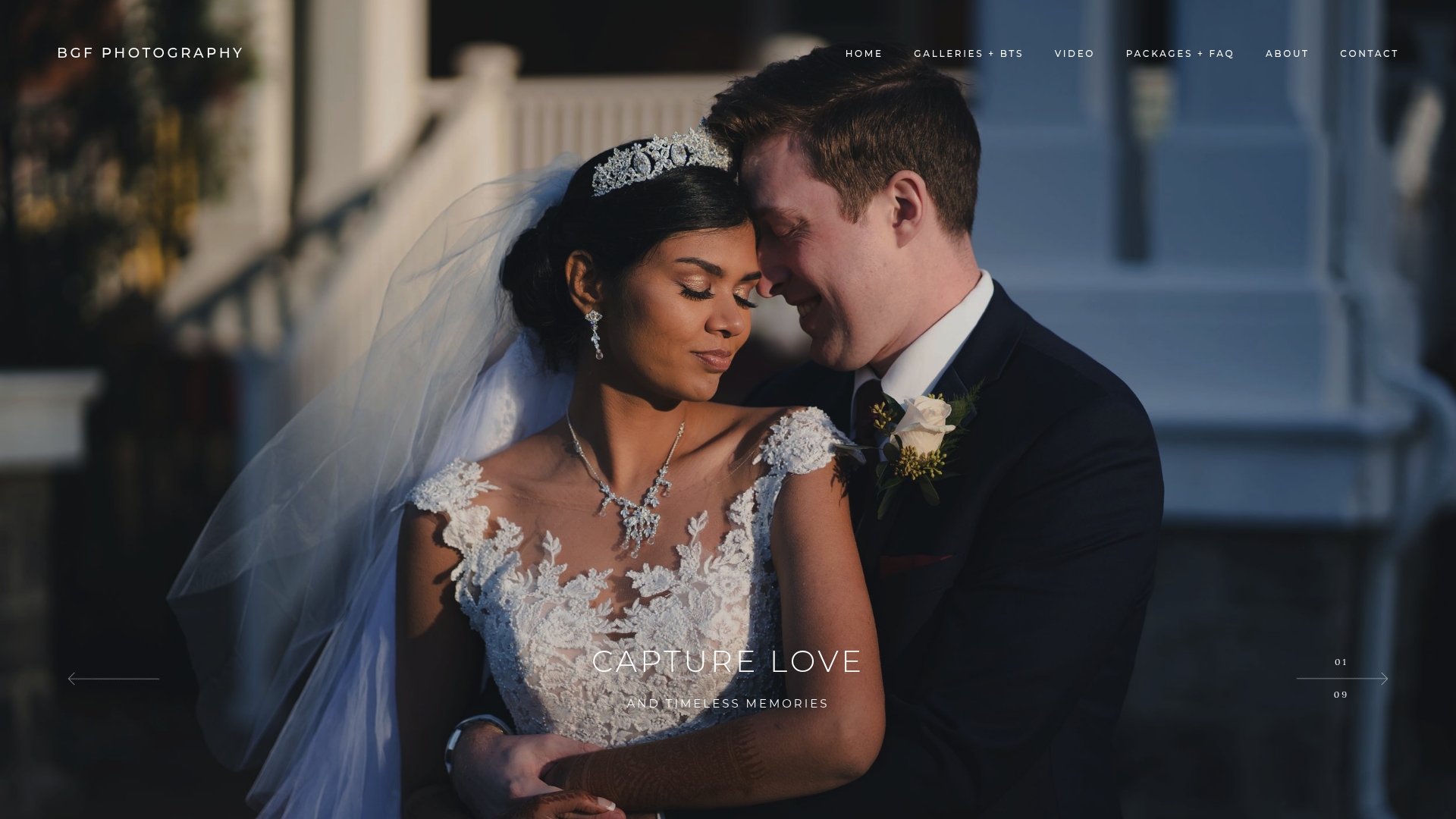
BGF Photography brings a candid, film-influenced approach to cinematic wedding videography in the Buffalo and Rochester, NY areas. Every wedding film we create is built around your story, not a formula. We handle both photography and video under one cohesive style, which means your photos and film look like they belong together because they do. Our wedding videography packages are designed with flexibility so you get exactly the coverage your day deserves. Browse our wedding galleries to see how our cinematic style translates across real wedding days, and reach out to schedule a conversation about your vision.
FAQ
What is cinematic wedding videography?
Cinematic wedding videography is a filmmaking approach that turns your wedding day into a narrative-driven film using techniques like color grading, gimbals, drones, and professional music. The focus is on emotional storytelling rather than chronological documentation.
How is cinematic different from documentary style?
A cinematic wedding film is intentionally shaped with a narrative arc and artistic direction, while documentary style prioritizes unfiltered, candid capture with minimal involvement from the videographer. Cinematic films are more polished; documentary films are rawer.
How long does it take to receive a cinematic wedding film?
Post-production including editing and color grading can take several weeks to months depending on the videographer’s workload and the complexity of the film. Expect a longer delivery window than you would with traditional video.
Does cinematic videography cost more than traditional?
Yes. The higher cost reflects specialized equipment, the expertise required to use it well, and the significant editing time that cinematic quality demands. Most couples consider it a worthwhile investment for the heirloom they receive.
What should I ask a videographer before booking?
Ask to see full wedding films rather than just highlight clips, ask about their color grading process, confirm how they handle your wedding day timeline, and discuss how they approach directing couples for natural but visually compelling moments.