
TL;DR:
Wedding vows filmed on video preserve emotional promises and reactions for a lifetime.
Couples should write clear, structured vows of about 1.5 to 2 minutes, practicing aloud beforehand.
Film wedding vows are the spoken promises that become the emotional centerpiece of your wedding video, preserving your voice, your tears, and your partner’s reaction for a lifetime. In the wedding film industry, this moment is called ceremony vow capture, and it is the single most requested highlight in any final edit. This film wedding vows Buffalo NY guide covers everything engaged couples need: how to write vows that sound great on camera, how to prepare for clear audio, how to choose the right local videographer, and what mistakes to avoid on the day. Buffalo couples planning 2026 weddings have a real advantage when they treat vow filming as a deliberate craft, not an afterthought.
How to craft personalized film wedding vows for your Buffalo wedding
The ideal spoken vow runs 1.5 to 2 minutes per person, which translates to roughly 250–300 words. That length gives your videographer enough material to build a meaningful sequence without losing the audience’s attention in the edit.
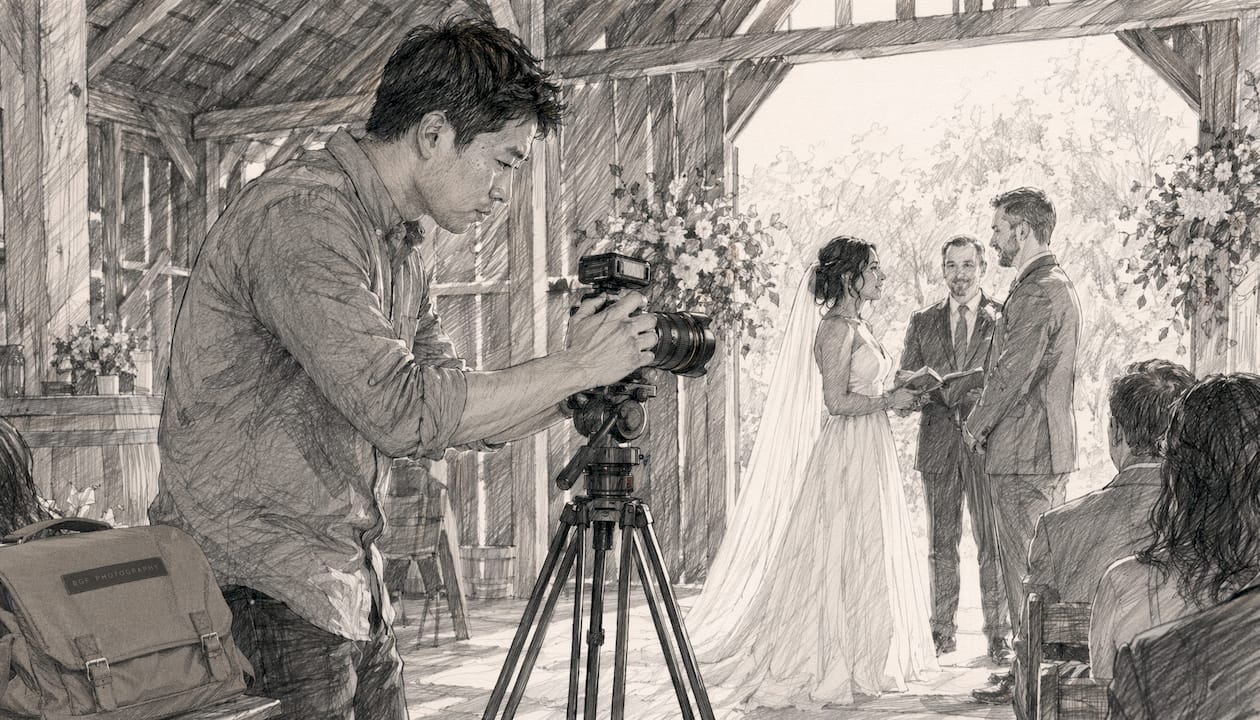
Structure matters as much as length. A strong set of vows follows four beats: a short personal opening that grounds the moment, two or three specific truths about your relationship, a set of clear promises, and a forward-looking close. Balanced vows that mix heartfelt reflections with concrete future promises create a stronger emotional arc in the final film. That structure gives your editor natural cut points and keeps the story moving.
Language choice is where most couples go wrong. Write the way you actually talk. Simple, conversational language sounds best on video, and practice helps you catch awkward phrasing and tongue twisters before the day. If you would not say a word at the dinner table, cut it from your vows.
Inside jokes are the other common trap. What lands in the room often falls flat on video for anyone watching the film later, including your future children. Keep references broad enough that the emotion translates to any viewer.
Pro Tip: Read your vows aloud to a friend or record yourself on your phone. Listen back and note any spots where you stumble or rush. Those are the lines to rewrite or remove.
Here is a simple structure to follow when drafting your vows:
-
Opening line. Name your partner and state what this moment means to you in one sentence.
-
Relationship truth. Share one or two specific memories or qualities that define your bond.
-
Your promises. State three to four clear, concrete commitments. Use “I will” language, not “I hope to.”
-
Forward-facing close. End with a statement about the life you are building together.
-
Practice round. Read the full draft aloud three times before the wedding, ideally in front of a mirror.
What audio prep do you need for clear vow recording?
Audio is the most common failure point in ceremony vow capture, and it is entirely preventable with early planning. Confirm your officiant’s microphone type at least one month before the wedding so your video team can plan the right backup setup. Officiant mic type, whether lapel, handheld, or headset, changes how the entire audio rig is configured.
Lavalier microphones, also called lav mics, clipped to the groom’s lapel or hidden in the bride’s bouquet, deliver the cleanest vow audio available. They capture speech at close range and cut through ambient noise that a camera mic simply cannot filter. Lav mic placement with wind protection is especially critical for Buffalo outdoor ceremonies, where lake-effect wind can ruin otherwise perfect audio.
Multiple audio sources are the industry standard for professional ceremony filming. A lav mic on the groom plus a camera-mounted backup mic plus a feed from the venue’s PA system gives your editor three layers to work with if one source fails. Never rely on a single recording.
Venue selection also shapes audio quality. Buffalo has a wide range of ceremony spaces, from the hard stone walls of historic churches like St. Joseph Cathedral to open-air spots along the Niagara River. Each environment carries different acoustic challenges. Discuss your venue with your videographer before booking so they can assess the space.
Pro Tip: If your ceremony is outdoors and wind is a concern, ask your videographer about foam windscreens for lav mics. A $10 windscreen can save an entire audio track.
| Audio challenge | Cause | Solution |
|---|---|---|
| Wind noise outdoors | Exposed lav mic | Foam windscreen or deadcat cover |
| Echo in stone churches | Hard reflective surfaces | Position mics close to speaker |
| Crowd noise during vows | Open-air venue layout | Lav mics on both partners |
| Officiant audio too low | Handheld mic held incorrectly | Confirm mic technique at rehearsal |
| Single source failure | No backup recording | Use three-source audio setup |
Holding your vow notes at chest level rather than face level keeps your expressions fully visible on camera. Your videographer is framing your face during this moment. A paper held at nose height blocks the shot that matters most.
How do you choose the best wedding videographers in Buffalo?
The right videographer does not just point a camera at the altar. They plan the entire audio and visual setup for your vow moment weeks before the wedding day. Ceremony filming in Buffalo requires local knowledge of venues, lighting conditions, and seasonal weather that only experienced local teams carry.
When you meet with a videographer, ask direct questions about their technical setup and their creative approach to vow filming. The answers reveal whether they treat vows as a priority or as background content.
Key questions to ask every videographer you interview:
-
What microphones do you use for vow capture? Look for lav mics on both partners as the baseline answer.
-
What is your backup audio plan if a mic fails? A professional always has one.
-
How do vows appear in the final edit? Ask to see a sample film where vows are featured prominently.
-
Do you coordinate with the officiant before the ceremony? This matters for mic placement and cue timing.
-
What is your approach to filming in low-light venues? Many Buffalo churches have dim interiors that challenge camera sensors.
-
Do you offer hybrid coverage? A team that handles both wedding photography and videography under one style creates a more cohesive final product.
BGF Photography specializes in exactly this kind of hybrid coverage. The team captures vow moments with a candid, unobtrusive approach that lets genuine emotion show without directing couples to perform. That philosophy produces films where the vows feel real because they are real.
Review packages carefully for what is included in ceremony coverage. Some packages cover the full ceremony while others limit the edit to a short highlight reel. If your vows are the emotional core of your wedding film, confirm they receive full treatment in the final cut, not just a 10-second clip.
What mistakes should you avoid when filming wedding vows?
The most common vow filming mistake is speaking too fast. Nerves accelerate speech, and fast delivery compresses the emotional pauses that make vow footage powerful. Videographers prefer couples who speak clearly at a moderate pace, pausing to let emotion show and giving the editor room to breathe between cuts. Build deliberate pauses into your written vows so you remember to slow down.
Small stumbles, laughter, and emotional pauses in vows add authenticity and enrich storytelling rather than detract from it. Authentic, heartfelt delivery resonates more deeply than scripted perfection on video. The moments you think are mistakes are often the ones your editor uses as the emotional peak of the film.
Relying on a single audio source is the technical mistake that causes the most heartbreak after the wedding. Equipment fails. Batteries die. Venues have unexpected interference. Always insist your videographer runs at least two independent recording sources for your vow moment.
Blocking your face with vow notes is a subtler problem that couples rarely anticipate. Practice holding your notes low and glancing up at your partner as you speak. The camera captures connection, and connection requires eye contact.
Outdoor ceremonies in Buffalo carry specific risks. Lake-effect weather can shift quickly, especially in spring and fall. Discuss a weather contingency plan with your videographer before the day. Pre-recorded private vows offer pristine audio quality for outdoor or noisy venues and can be woven creatively into the final edit alongside the live ceremony footage.
Here is a quick checklist of mistakes to avoid:
-
Speaking too fast due to nerves
-
Relying on one audio source with no backup
-
Holding vow notes at face level
-
Skipping the rehearsal read-through
-
Ignoring outdoor weather and wind conditions
-
Writing vows that are too long or too complex to deliver naturally
Key Takeaways
Vows filmed with proper audio preparation, clear writing, and an experienced local videographer become the emotional backbone of your entire wedding film.
| Point | Details |
|---|---|
| Ideal vow length | Aim for 250–300 words per person, spoken over 1.5–2 minutes, for the best pacing on film. |
| Audio preparation | Confirm officiant mic type one month out and use lav mics on both partners as the baseline setup. |
| Vow writing structure | Open personally, share relationship truths, state clear promises, and close with a forward-looking statement. |
| Videographer selection | Ask about mic setups, backup plans, and how vows appear in the final edit before you book. |
| Authentic delivery | Slow down, pause for emotion, and hold notes at chest level to keep your face visible on camera. |
Why vows are the part of the film I never skip
Every wedding film I have worked on tells a story, and the vows are always where that story finds its center. You can have the most beautiful venue in Buffalo, perfect golden-hour light, and a stunning dress, but if the vow audio is muddy or the delivery is rushed, the film loses its heart.
What surprises most couples is how little polish matters on camera. The bride who cries mid-sentence, the groom who laughs before he can finish a line, the moment where both of them just look at each other and forget the words entirely. Those are the frames that make people rewatch a wedding film ten years later. Vows function as the narrative backbone of the entire film, and the couples who understand that going in always end up with something worth keeping.
Buffalo presents real logistical challenges that couples from other markets do not face. The weather is unpredictable. The historic venues are acoustically complex. The outdoor spaces along the waterfront are stunning but exposed. I have seen perfectly written vows lost to a gust of wind off Lake Erie because nobody thought to put a windscreen on the lav mic. That is a fixable problem, and it is one worth fixing before the day.
My honest advice: treat your vow filming as seriously as you treat your dress or your flowers. Write early, practice out loud, and have a direct conversation with your videographer about audio at least a month before the wedding. The couples who do that walk away with films they actually watch again. The ones who leave it to chance often wish they had not.
— Billy
BGF Photography’s approach to vow filming in Buffalo
Capturing your vows on film is one of the most personal things a videographer can do for you. BGF Photography works with Buffalo couples to plan every detail of ceremony coverage, from mic placement to final edit, so your spoken promises are preserved with the clarity and emotion they deserve.
BGF Photography offers hybrid photography and videography packages that treat your vow moment as the centerpiece of the entire wedding film. The team’s candid approach means no directing, no staging, just your real words and your partner’s real reaction, captured cleanly. If you are ready to talk through your ceremony plans and vow filming needs, BGF Photography is available for consultations tailored to your venue, your style, and your 2026 wedding date. Reach out and start the conversation before your date books up.
FAQ
How long should wedding vows be for a film?
The ideal spoken length is 1.5 to 2 minutes per person, or roughly 250–300 words. That length gives your videographer enough material for a meaningful edit without losing pacing.
What microphone setup is best for capturing vows?
Lavalier mics clipped to both partners deliver the clearest vow audio. Pair them with a backup camera mic and, when available, a feed from the venue’s PA system for a three-source safety net.
Can I use pre-recorded vows in my wedding film?
Pre-recorded private vows are a practical option for outdoor or noisy venues. Your editor can weave them into the final film alongside live ceremony footage for a polished result.
What questions should I ask a Buffalo wedding videographer about vows?
Ask about their mic setup, backup audio plan, and how vows appear in the final edit. Reviewing their questions to ask before your consultation puts you in a much stronger position.
Does it matter if I stumble over my vows on camera?
Small stumbles and emotional pauses actually strengthen the film. Authentic delivery resonates more than a perfect recitation, and experienced editors use those human moments as the emotional peak of the vow sequence.