
TL;DR:
- Getting ready wedding photos include candid moments, detail shots, and emotional interactions before the ceremony. Planning for 60 to 90 minutes of coverage ensures a complete story, with a tidy, well-lit space enhancing photo quality. Proper preparation, timing, and a calm environment lead to emotionally significant images that tell the true story of your wedding day.
Most couples spend months planning the ceremony and reception, then almost nothing planning what are getting ready wedding photos and how to capture them. That’s a mistake. This part of your wedding day is where the real story starts. The nervous laughter, a mom zipping up a dress, bridesmaids toasting with champagne at 10am. These are the moments you’ll return to long after the reception music fades. This guide explains exactly what these photos include, how to time them, how to prepare your space, and how to show up looking and feeling your best.
Table of Contents
Key Takeaways
| Point | Details |
|---|---|
| More than posed portraits | Getting ready photos include candid moments, detail shots, and emotional interactions before the ceremony. |
| Timing is everything | Plan for 60 to 90 minutes of coverage so your photographer captures a complete story without rushing. |
| Room prep matters | A clutter-free space near natural window light produces dramatically better photos with minimal effort. |
| Attire choices affect mood | Coordinated robes or button-down shirts photograph better and feel more relaxed than mismatched sleepwear. |
| Plan the details in advance | Gather your dress, shoes, rings, and meaningful items before your photographer arrives to maximize shooting time. |
What getting ready wedding photos actually are
Getting ready wedding photos are the images your photographer captures during the hours before your ceremony begins. They cover everything from the quiet moments of putting on jewelry to the chaotic joy of the bridal party getting their hair done together. They are not just filler content. They are the opening chapter of your wedding day story.
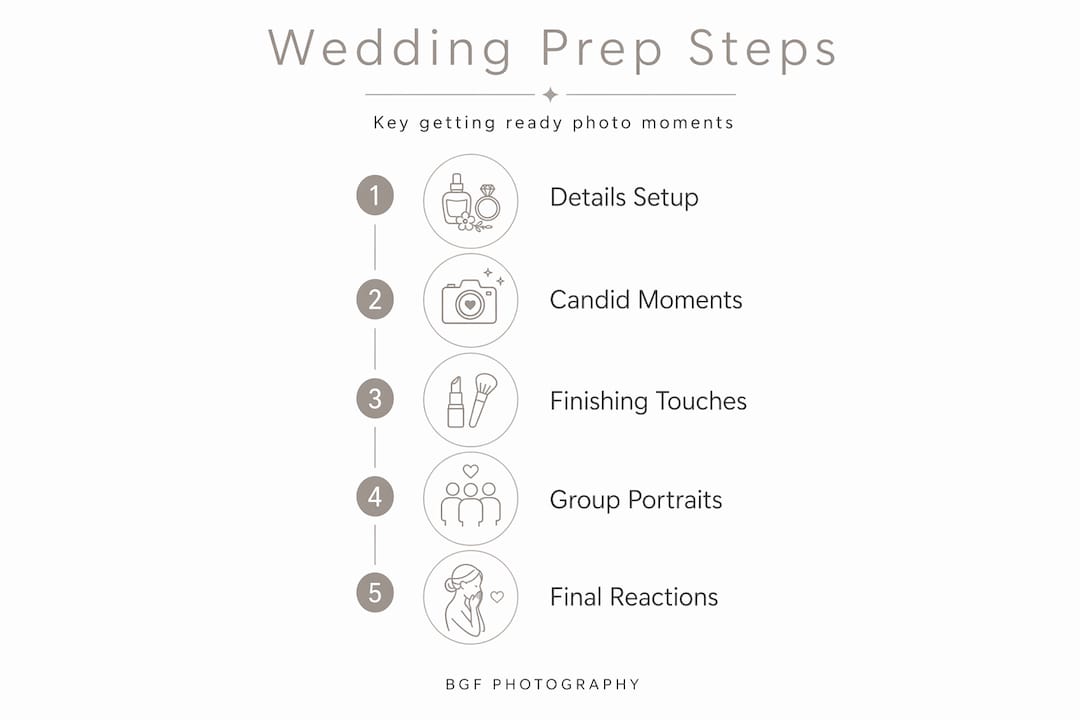
A strong getting ready session typically includes three categories of shots.
Detail shots focus on the physical objects that define your wedding day:
-
The wedding dress hanging or laid flat
-
Shoes, jewelry, rings, and perfume bottles
-
The invitation suite, florals, or any heirlooms
-
Meaningful personal items like a grandmother’s brooch or a handwritten note
Candid moments are the unscripted, emotional interactions that make these photos feel alive. A bridesmaid crying while watching you put on your veil. Your mom holding your hands before you walk out the door. The groom’s friends helping him with his tie and laughing about it. These are the shots photographers prioritize over checklist poses because they hold real emotional weight.
Portraits and finishing touches round out the session. These include close-up shots of lipstick being applied, hair being pinned, and the final look before the dress goes on. They create visual variety in your wedding album and give the narrative a clear sense of movement through time.
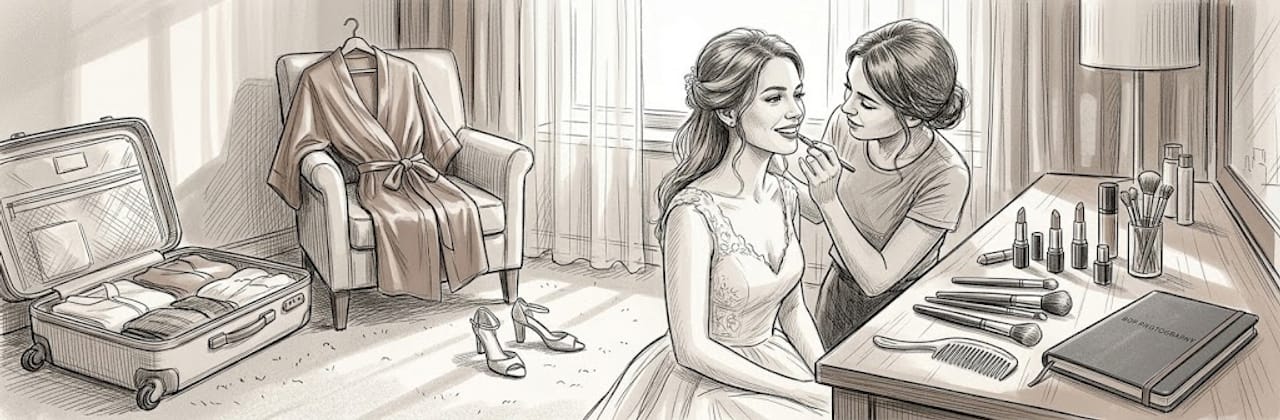
The subjects aren’t limited to the bride and groom either. Parents, siblings, the entire bridal party, and even pets that show up that morning can all be part of this coverage. Wedding preparation photos work because they include real people doing real things, not just standing in a line.
How to schedule your getting ready session
Timing is where most couples make their biggest mistakes, and it is entirely preventable with a little planning.
Coverage typically runs 60 to 90 minutes for a relaxed, story-driven session. If you are pressed for time, a tight minimum is around 25 to 35 minutes, but you will likely miss detail shots and candid moments. The groom’s preparation generally needs less time, around 45 to 60 minutes, because the routine is simpler.
Here is a practical way to think about what fits into different time windows:
-
25 to 35 minutes (tight coverage): Photographer captures finishing touches, the dress going on, and a few detail shots. Emotional moments between family members are harder to catch because everything feels rushed.
-
60 minutes (standard coverage): Room for detail shots, key emotional interactions, finishing touches, and a few portraits. This is the sweet spot for most couples.
-
90 minutes or more (ideal coverage): Full story from hair and makeup in progress through final portraits. Photographer arrives earlier to capture the full arc, including real interactions that happen naturally when there is no time pressure.
| Coverage window | What fits | What you likely miss |
|---|---|---|
| 25 to 35 minutes | Dress on, a few details | Candid moments, family interactions |
| 60 minutes | Details, finishing touches, portraits | Deep emotional storytelling |
| 90 or more minutes | Full story from start to finish | Nothing significant |
Pro Tip: Hair and makeup often run 30 to 60 minutes behind schedule. Build a buffer into your timeline so your photographer isn’t waiting while you’re still in the makeup chair, and you aren’t rushing through the moments that matter most.
The “ready by” rule is worth knowing. It means your photographer should arrive when you are nearly ready, not when you are just starting. That way the first 10 to 15 minutes go toward detail shots and room setup, and the camera is ready the moment you reach for your dress. A well-built wedding day timeline makes this entirely manageable with a little advance planning.
How to prepare your space for better photos
Your getting ready room is more than a backdrop. It actively shapes your photos. A crowded, cluttered room produces photos that feel stressful. A tidy, well-lit space produces photos that feel calm and cinematic. The difference is in your control.
Start by identifying the best natural light source in the room. A large window is ideal. Position hair and makeup near it. Turn off overhead lights because fluorescent and warm overhead bulbs create unflattering color casts and harsh shadows that fight against the natural light. Natural light alone softens skin tones and creates the glow you want in these images.
Next, do a quick room reset before your photographer arrives. Photographers spend the first 10 to 15 minutes moving trash bags, clothing piles, and random items out of the shot. You can save that time and get more photos by designating a “clutter zone” in a corner or closet where everything gets pushed before the session starts.
Here is a checklist of items to gather and stage in one clean area:
-
Wedding dress on a hanger or laid on a clean surface
-
Shoes, both pairs if you have a second pair
-
Rings, earrings, necklace, and any other jewelry
-
Perfume bottle, invitation, and florals
-
Any heirloom pieces or sentimental items
-
A handwritten note, if you and your partner are exchanging them
Pro Tip: Photographers often prefer to photograph rings and small details against meaningful textures like the fabric of your dress or the envelope of your invitation. Lay those items out together before your photographer arrives so they can work efficiently.
| Room setup element | Good choice | What to avoid |
|---|---|---|
| Lighting | Natural window light only | Overhead fluorescent or warm bulbs |
| Background | Clean wall, bed, or neutral surface | Cluttered counters, suitcases in view |
| Detail staging | Dress, rings, and florals grouped together | Items scattered across multiple rooms |
| Space | Enough room to move around | Cramped corners with no photographer movement |
Bridal party size and room size both affect photo quality in ways couples don’t always anticipate. A suite with 10 bridesmaids in a standard hotel room leaves almost no room for a photographer to move. If you have a large bridal party, booking a suite or getting ready space with generous square footage is worth the extra cost.
What to wear for bridal getting ready photos
What you wear during your getting ready session affects both the photos and your own comfort. This is not the moment to wing it with whatever you slept in.
Robes, pajama sets, button-down shirts, and wrap dresses are the most popular choices, and for good reason. They are functional enough to wear through hair and makeup, they photograph beautifully, and they come off easily when it is time to put on the wedding dress without disturbing your hair or makeup.
When choosing attire for bridal prep photography, keep these points in mind:
-
Coordinated, not matching: Your bridal party wearing identical silk robes in the same shade creates a cohesive look without being overly staged. Shades in the same color family, like dusty rose, champagne, or ivory, work well together.
-
Avoid bold graphics or logos: Text and large prints draw the eye away from faces and can feel dated in photos years from now.
-
Consider how it comes off: Button-fronts and wrap styles are easiest to remove without disturbing hair and makeup. Pullover styles are a real risk.
-
Match the mood of your wedding: A flowy linen robe fits a garden wedding. A structured satin robe fits a black tie affair. Let your attire hint at the day ahead.
Comfort matters too. You will likely be in these outfits for two to three hours. Anything that pulls, bunches, or requires constant adjusting will show up in photos.
Common mistakes that hurt getting ready photos
Most of the things that go wrong during getting ready sessions are completely predictable. Knowing them in advance puts you ahead of the majority of couples.
-
Not building buffer time into the morning. Hair and makeup run long on wedding days more often than not. If your timeline has no flex, one delay cascades into missed shots.
-
Starting photography too early. Photos of everyone in curlers with half a face of makeup are rarely the images couples want in their album. Schedule photographer arrival for when you are nearly finished, not just starting.
-
Ignoring the room. A calm, organized space produces better photos and a better morning. Walking into chaos at 7am sets the wrong tone for the whole day.
-
Skipping the emotional moments. Couples focused on getting through the morning checklist sometimes talk over or rush past the tender moments. Let them happen.
-
Forgetting the groom’s coverage. The groom’s preparation often gets shortchanged in planning. His portraits, his people, and his details deserve the same attention.
Pro Tip: Assign one person in your bridal party as the “room captain.” Their job is to keep clutter out of the photo zone, keep noise levels reasonable, and gently remind people when the photographer needs space to work. This one move changes the morning.
My honest take on getting ready photos
I’ve photographed a lot of weddings, and I’ll tell you this without hesitation: the getting ready session produces some of the most emotionally significant images of the entire day. Not always the most technically perfect. But the most felt.
What I’ve noticed is that couples who treat it as a separate event worth preparing for, rather than just “the part before the ceremony,” get dramatically different results. The photos feel intentional. You can see the story in them.
What I’ve also learned is that the couples who are stressed during their getting ready session almost always trace it back to one of two things: not enough time or a chaotic room. Both are fixable before the day even arrives. I’ve seen a ten-minute room tidy turn a cramped hotel room into something that looks like it was selected as a shoot location. The environment is that powerful.
My personal advice is to prepare for candid moments by doing less, not more. Don’t over-choreograph. Don’t rehearse your interactions. The best photos happen when people forget the camera is there and just exist together in the morning of one of the biggest days of their lives. Give yourself that gift.
— Billy
Let BGF Photography document your wedding morning
At BGF Photography, the getting ready session is not an afterthought. It is where we start telling your story. Our approach to bridal prep photography is built around staying out of the way so real moments can happen, while keeping a skilled eye on details, light, and the interactions that define your morning. Whether you want photos from the full morning or a focused session covering the final hour before you walk down the aisle, we build coverage around your day.
We also offer hybrid wedding coverage, combining photography and videography under one consistent style. Our wedding day packages include options tailored to your timeline, bridal party size, and the kind of story you want to tell. If you are planning your wedding in the Buffalo or Rochester, NY area, we would love to talk through what your morning could look like.
FAQ
What do getting ready wedding photos include?
Getting ready wedding photos include detail shots of the dress, rings, shoes, and heirlooms, plus candid moments between the bride, bridal party, and family, and portraits taken during finishing touches before the ceremony.
How long should I budget for getting ready photos?
Plan for 60 to 90 minutes for a relaxed, story-driven session. A tight minimum of 25 to 35 minutes works if time is short, but you risk missing meaningful candid moments and detail shots.
When should my photographer arrive for getting ready coverage?
Your photographer should arrive when you are nearly finished with hair and makeup, not when you are just beginning. Arriving 2 to 3 hours before the ceremony allows for full prep coverage, but the best emotional moments happen closer to the final hour.
What should I wear during my getting ready photos?
Robes, silk pajama sets, button-down shirts, and wrap styles are the best choices. They photograph well, keep your bridal party looking cohesive, and come off easily without disrupting your hair or makeup.
How do I prepare my room for getting ready photos?
Clear clutter to one corner or a closet, position hair and makeup near a natural window, turn off overhead lights, and lay out all detail items (dress, shoes, rings, florals) in one clean area before your photographer arrives.