
Yes, include black and white wedding photos in your gallery. Stripping away color pulls focus straight to emotion, expression, and light, and monochrome images tend to age better than trend-driven color edits. Most photographers blend both: color for the day's atmosphere and detail, black and white for the moments that carry the most feeling.
TL;DR:
- Black and white photos emphasize emotion and facial gestures, making them ideal for moments like vows, parent reactions, and late-night candid dances.
- Proper lighting, contrast, and shooting in RAW are critical for creating impactful black and white images that avoid flatness and maintain detail.
- Use black and white selectively in a wedding gallery to highlight the most powerful moments while keeping colorful details like florals and decor for atmosphere.
- Consistent tonality and individualized conversion are essential, with photographers often using subtle edits rather than preset filters for a natural look.
- Incorporating film options can add film grain and tonal richness, especially for emotional or textured shots where black and white excels.
Table of Contents
- Why Black and White Wedding Photography Works So Well
- Which Wedding Moments Look Best in Black and White
- Lighting, Composition, and Editing Tips That Make Black and White Photos Stronger
- Blending Black and White with Color in Your Gallery
- What to Ask Your Photographer for Great Black and White Wedding Photos
- Gallery Inspiration: What Makes These Black and White Moments Work
- A Note From Billy at BGF Photography
- Requesting Black and White Coverage From BGF Photography
- Sources
- FAQ
Why Black and White Wedding Photography Works So Well
Color pulls the eye toward whatever is brightest or most saturated in the frame, whether that's a bridesmaid's dress or an exit sign in the reception hall. Remove color and the viewer has nowhere to look but the faces, the hands, the tilt of a head during a first look. That's the core reason black and white wedding photos focus attention on emotion, connection, and composition rather than on the visual noise around the subject.
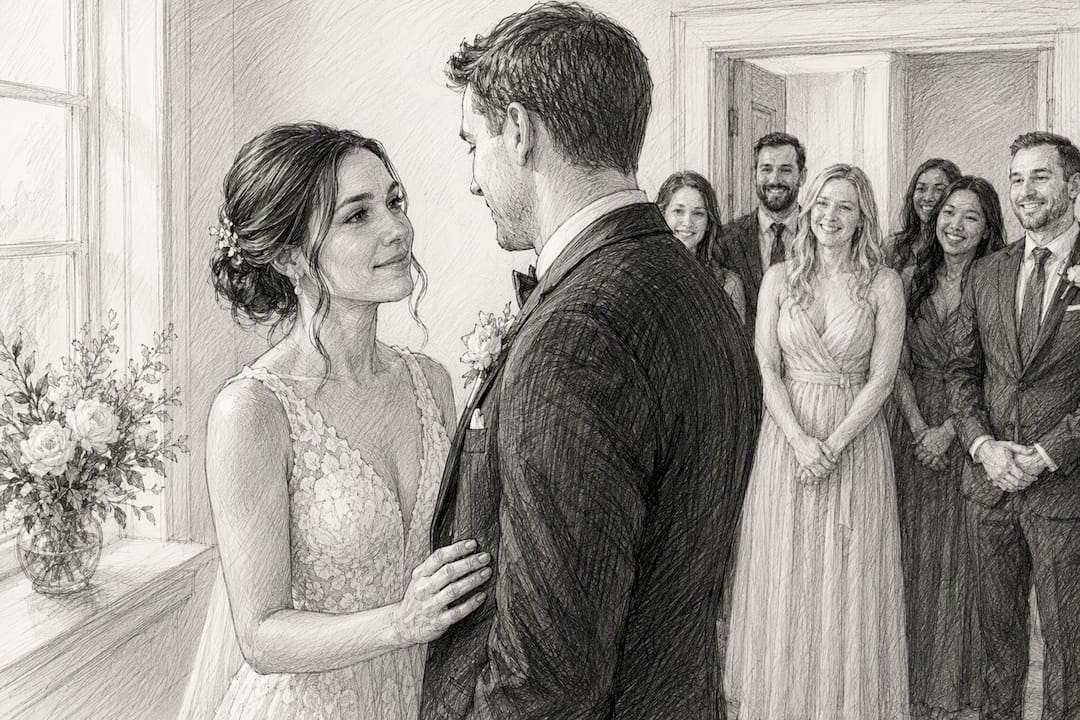
There's a psychological layer too. Black and white images can trigger memory and emotion centers differently than color photos, which is part of why grandparents' wedding portraits from the 1950s still feel more emotionally weighty than a lot of overly processed color work from a decade ago.
Monochrome also sidesteps a problem color photography can't avoid: fashion dates itself. A mint green color scheme or a specific filter trend will look distinctly "of its era" in ten years. Black and white doesn't carry that baggage, which is exactly why it holds up on a wall or in a leather-bound album for decades.
- Faces and gestures become the entire subject
- Tonal contrast replaces color as the storytelling tool
- Prints resist looking dated the way trend-driven color edits do
- Emotional read gets deeper, not just more artistic
Pro Tip: If you only remember one thing from this section, remember that black and white isn't a filter, it's a decision about where you want the eye to go.
Which Wedding Moments Look Best in Black and White
Not every frame benefits from losing color. Some moments are built for it, and others lose everything without it.
- The first look. Raw, unguarded reactions read stronger without color competing for attention.
- Vows. Tears, trembling hands, the officiant's expression, all of it lands harder in monochrome.
- Parent reactions. A father's face during the processional is often the most quietly powerful image of the day, and black and white makes it feel timeless rather than snapshot-casual.
- Toasts and speeches. Genuine laughter and emotion photograph well when color isn't distracting from expression.
- Late-night candids. Dance floor chaos, string lights, low light. These are exactly the conditions where black and white images tend to outperform color, since shadow and highlight carry the story better than a color cast from a DJ light rig ever could.
- Texture-driven portraits. Lace detail, veils catching wind, weathered church architecture. These reward the loss of color.
Keep color, though, for anything where the design choices were part of the point: styled tablescapes, florals your planner spent months choosing, a color-coordinated bridal party. That work deserves to be seen in its actual palette.
Lighting, Composition, and Editing Tips That Make Black and White Photos Stronger
Black and white photography lives or dies on light direction and contrast, not on color grading. Flat, even lighting produces flat, boring monochrome. Hard side light, window light, or backlight during golden hour gives the image the shadow and highlight separation that makes black and white feel intentional instead of just "the color turned off."
A few things worth knowing before your wedding day:
- Shoot in RAW and convert later rather than relying on an in-camera black and white mode, since RAW preserves the tonal information needed for a clean conversion
- Meter for the highlights in high-contrast scenes (bright windows, direct sun) so skin tones don't blow out
- Watch shadow areas closely. Losing detail into pure black is common in dim reception venues and is hard to recover afterward
- Avoid flat midtones by building in real contrast during editing rather than a uniform gray wash
On the editing side, converting to black and white is a genuinely useful tool for unifying visually busy or chaotic scenes, pulling a crowded dance floor or a clashing color palette into something cohesive. It's also often more flattering for close-up portraits, since it emphasizes light and shadow over skin tone variation instead of color nuance. Good low light technique matters here as much as good editing, since a poorly exposed dim shot won't recover in conversion no matter how skilled the retouching is.
Pro Tip: Ask your photographer whether they convert each image individually or apply one preset across the gallery. Individual conversion protects skin tones far better than a blanket filter.
Blending Black and White with Color in Your Gallery
Treat black and white images as emotional anchors rather than a wholesale style choice. A gallery that's 100% monochrome can feel heavy, and one that's all color can lose its quietest, most powerful moments in the noise. Used sparingly and with intention, black and white images increase the emotional weight of the album precisely because they stand apart from everything around them.
Practical approach:
- Reserve black and white for vows, first looks, and candid emotional beats
- Keep getting-ready details, florals, and reception decor in color, since that's where the design choices live
- Sequence albums so a black and white spread signals "this moment mattered most," giving the eye a visual pause
- For wall art, monochrome portraits with strong shadow tend to outlast color prints stylistically; save color spreads for detail-heavy pages in the album itself
What to Ask Your Photographer for Great Black and White Wedding Photos
Before you book anyone, look closely at how they've handled monochrome in past galleries. Consistent tonality across a wedding is a good sign. A portfolio where every black and white image looks like the same one-click preset, regardless of lighting or venue, is a red flag.
- Ask for a black and white portfolio sample, not just a handful of images scattered through a color gallery.
- Ask what percentage of your gallery will be delivered in black and white, and whether that's negotiable based on your preferences.
- Ask for sample prints if you're planning wall art, since black and white tones can render differently on paper than on a screen, and paper choice affects contrast and skin rendering.
- Confirm how they handle low light and late-night candids, since that's where black and white typically earns its keep the most.
- Ask whether film is available if you want the added grain and tonal quality that comes with a medium format or 35mm roll rather than a purely digital workflow.
Pro Tip: Bring three or four saved reference images to your consult. Photographers work far more efficiently from visual references than from verbal descriptions like "moody" or "classic."
Gallery Inspiration: What Makes These Black and White Moments Work
A short mental gallery to build before your wedding day, with notes you can hand your photographer directly:
- A veil backlit by a doorway. Rim light on sheer fabric reads as pure texture in monochrome, something color often flattens.
- Hands clasped during vows. No jewelry glare, no color distraction, just the gesture itself.
- A father seeing his daughter for the first time. Emotion first, everything else second.
- A groom laughing mid speech. Genuine, unposed reactions carry more weight without color pulling focus.
- Dancing under string lights. High contrast, blown highlights on the bulbs, deep shadow on the dance floor. This is where black and white does its best work.
- A quiet portrait against old stone or brick. Architectural texture photographs beautifully once color is out of the equation.
Save these kinds of references and note why each one works. That's more useful to a photographer than a vague mood board.
A Note From Billy at BGF Photography
I don't shoot a wedding thinking "this needs to be black and white." I shoot it thinking "where is the emotion strongest right now," and monochrome usually follows from that. A recent vow exchange stayed in soft window light with almost no color in the frame at all, and converting it afterward did more for the moment than any amount of color grading could have. That's the pattern I trust: let the moment decide, not a preset. A balanced gallery, mostly color with black and white reserved for the moments that need it, tends to serve couples better than an all-or-nothing approach ever does.
— Billy
Requesting Black and White Coverage From BGF Photography
BGF Photography is built around a candid, unobtrusive approach, which happens to be exactly the shooting style that produces strong black and white moments: real reactions, not posed ones. Couples get hybrid coverage, meaning photography and videography under one cohesive vision, plus the option of genuine medium format and 35mm film for a nostalgic, grain-rich quality that digital conversions can't fully replicate.
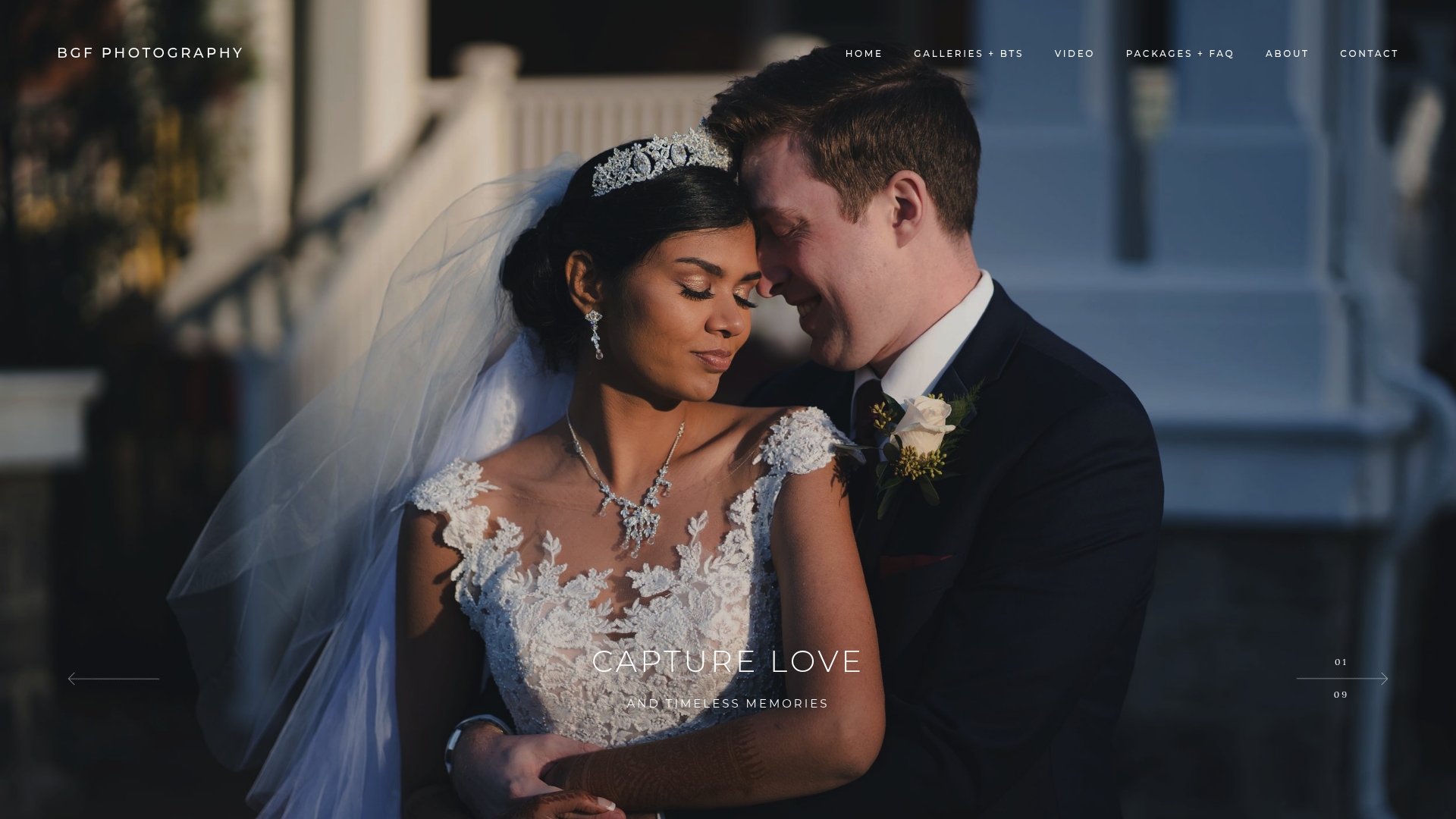
If you want black and white to play a meaningful role in your gallery, say so directly during your consult. Ask about the percentage split between color and monochrome, whether film is available for portraits, and how conversions are handled for low-light candids at your venue. Every service, from the Full Wedding Day package to add-on drone coverage, can be shaped around that preference. Check current package details and availability on the investment page to start the conversation.
Sources
Claims on emotional impact, technique, and editing practice in this guide draw on reporting from Rangefinder, Nearlywed, JJ Pixx Photo Booth, and Mango Studios.
- Black & White Wedding Photo Inspo | Nearlywed Weddings
- Striking balance: black-and-white wedding photos | Rangefinder
- Black & White Photography for Elegant Weddings | JJ Pixx
FAQ
Should wedding photos be black and white?
Not exclusively. Most galleries work best mixing both, with black and white reserved for emotionally charged moments like vows and first looks, and color kept for florals, decor, and styled details.
What is the rule of black and white photography?
There's no single fixed rule, but the widely followed guideline is to let contrast and light direction, not color, carry the composition, and to convert images individually rather than apply one preset across an entire gallery.
What colors go with a black and white wedding?
If you mean a black and white wedding color scheme rather than the photo style, deep jewel tones, greenery, and metallics like gold or silver tend to pair well since they photograph with strong contrast in both color and monochrome.
What pictures look best in black and white?
High-emotion moments (vows, first looks, parent reactions), texture-heavy portraits (veils, lace, architecture), and low-light candids like dance floor shots tend to look strongest once color is removed.