

TL;DR:
- Wedding photography involves capturing authentic moments through various styles, including documentary, candid, and cinematic approaches. Choosing the right style depends on your personality, desired aesthetic, and how involved you want your photographer to be on your special day. Planning a detailed timeline, especially for golden hour and family formals, ensures high-quality images and a stress-free experience.
Portrait and wedding photography is the art of documenting a couple’s unique story by capturing intimate moments and emotions through varied stylistic approaches including candid, cinematic, and film photography. The style you choose shapes every image you receive, from the raw emotion of a documentary ceremony shot to a golden hour portrait that looks like it belongs in a magazine. Photographers like BGF Photography in Buffalo and Rochester, NY have built their entire approach around blending these styles intentionally. Understanding the differences before you book gives you real control over your wedding gallery.
What are the main styles of portrait and wedding photography?
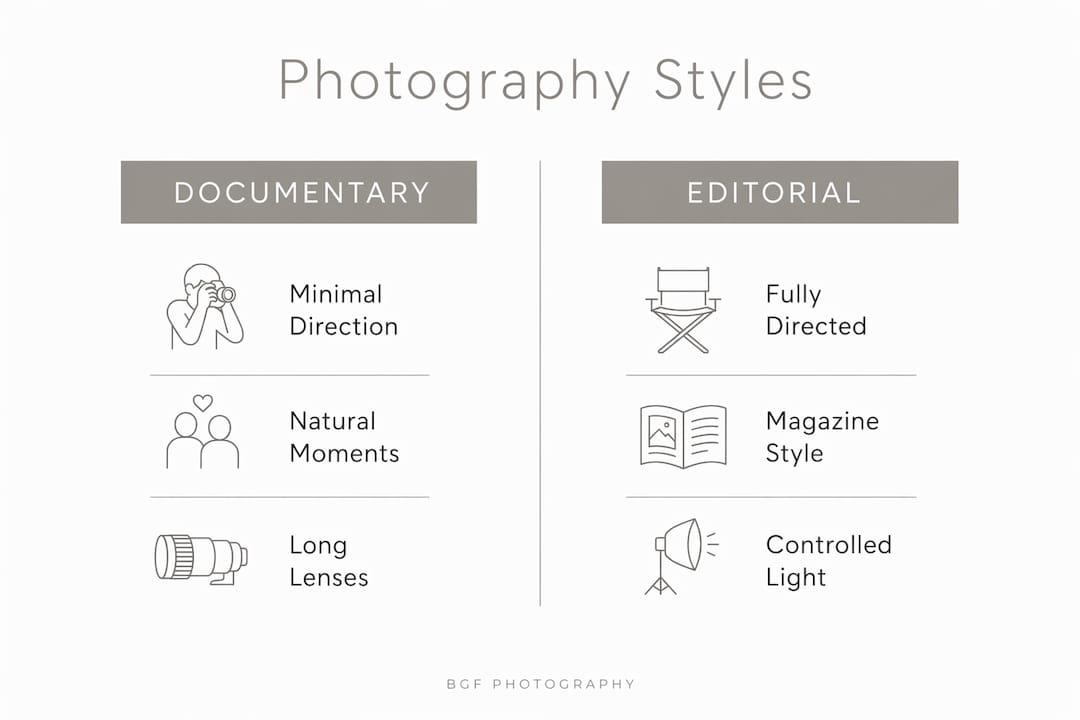
Documentary, candid, and editorial wedding photography differ by degree of direction and photographer involvement. Knowing where each style sits on that spectrum helps you identify what your gallery will actually look like.
Documentary style
Documentary photographers shoot with minimal direction, using longer lenses and staying physically distant to capture genuine moments without interference. This approach prioritizes observation over staging. It works best during ceremonies, speeches, and first dances where emotion unfolds naturally and any direction would break the moment. The trade-off is that you surrender control over composition. You get truth, not perfection.
Candid style
Candid photography is not purely unstaged. Small prompts help couples relax and produce authentic body language and lively wedding-party energy. A photographer might ask you to walk toward them, whisper something to your partner, or simply laugh. The result looks natural because the interaction is real, even if the setup was not. This is the style BGF Photography leans into most heavily, using light direction to draw out genuine reactions rather than manufactured poses.
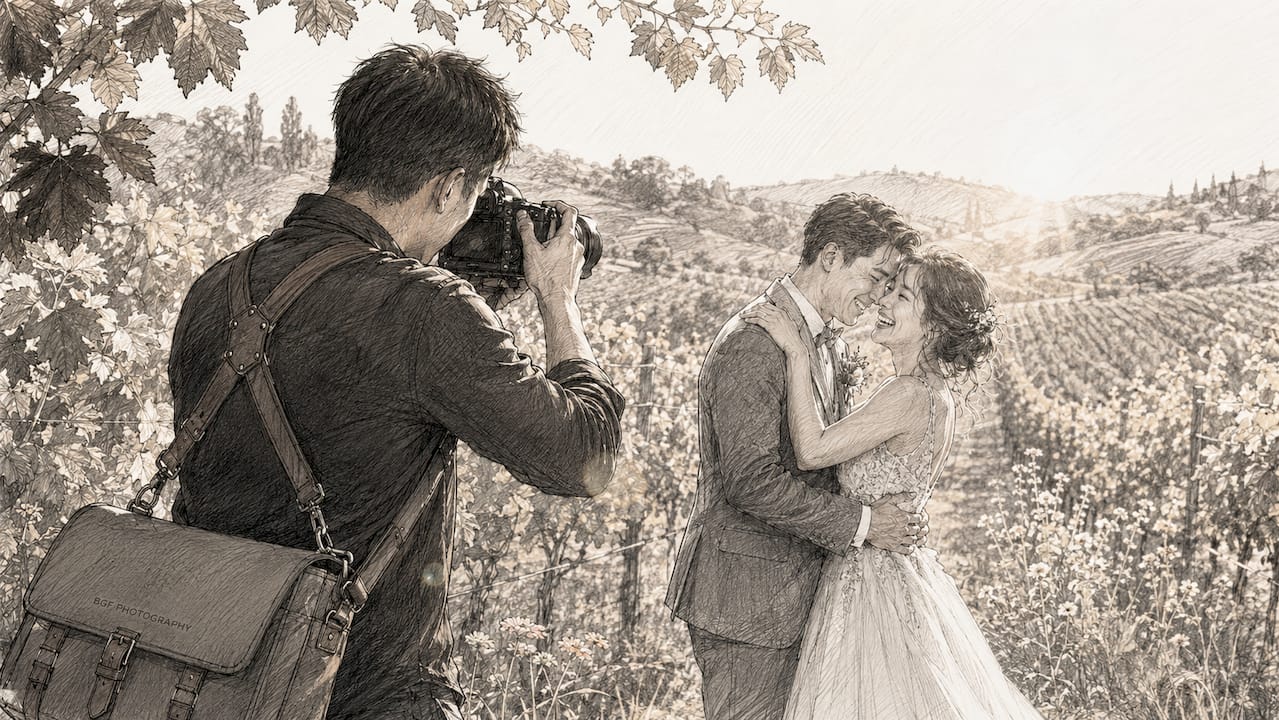
Editorial and cinematic style
Editorial photography is fully directed for magazine-style images. The photographer controls light, position, and composition deliberately. Cinematic wedding photos blend documentary authenticity with editorial-style composition selectively to highlight emotional story arcs and beautiful light. This style shines during portrait sessions and golden hour, where you have time to slow down and build a frame intentionally.
Film photography
Film operates on physical rolls with 24–36 frames per 35mm roll. Every frame costs money to shoot, develop, and scan. That constraint forces a slower, more deliberate workflow that many photographers and couples find produces a distinct, intentional aesthetic. Film is rarely used for an entire wedding day. Most photographers deploy it strategically during high-emotion moments.
Here is how the four main styles compare:
| Style | Direction Level | Best Moments | Look and Feel | Ideal For |
|---|---|---|---|---|
| Documentary | None | Ceremony, speeches, dancing | Raw, observational, unfiltered | Couples who want pure truth |
| Candid | Light prompts | Portraits, getting ready, reception | Natural, movement-driven, warm | Couples who want authentic energy |
| Editorial/Cinematic | Fully directed | Golden hour, portraits, bridal party | Polished, composed, magazine-like | Couples who want striking images |
| Film | Intentional, selective | First look, ceremony, golden hour | Nostalgic, grain-rich, timeless | Couples who value craft and aesthetic |
Pro Tip: Ask any photographer you interview to show you a full wedding gallery, not just their highlight reel. A full gallery reveals how they handle low-light receptions, family formals, and getting-ready chaos, not just the beautiful golden hour shots they post online.
How do you plan your timeline for better wedding photos?
A well-built timeline allocates specific blocks for portraits, golden hour, and family photos, reducing day-of stress and improving gallery results. Without that structure, portrait sessions get squeezed, rushed, or skipped entirely. Your timeline is not just a schedule. It is a photography plan.
Why golden hour changes everything
Golden hour occurs in the last 45–60 minutes before sunset, and dedicated blocks of 20–30 minutes are ideal to capture the soft, warm light that flatters every skin tone and adds depth to portraits. That light is not replicable with flash or editing. Golden hour portraits require deliberate timeline planning, not just hoping your ceremony time will align. If your ceremony ends two hours before sunset, you need to account for cocktail hour, family formals, and travel time before you can use that light.
First look vs. no first look
First look sessions enable most portraits and party photos to happen before the ceremony, freeing cocktail hour for guests and reducing scheduling pressure afterward. Without a first look, all portrait sessions must fit into cocktail hour, which creates tighter schedules and increases the risk of delays. Neither choice is wrong. A first look gives you more time and flexibility. Skipping it gives you a genuine, unrehearsed reaction at the altar that no portrait session can replicate.
Recommended time blocks
Here is a practical breakdown of how a well-structured wedding photography timeline typically looks:
| Session | Recommended Time Block | Notes |
|---|---|---|
| Getting ready | 60–90 minutes | Details, dress, candid prep shots |
| First look (if applicable) | 20–30 minutes | Portraits and wedding party photos |
| Ceremony | 30–60 minutes | Documentary and candid coverage |
| Family formals | 20–30 minutes | Keep the list short and pre-planned |
| Couple portraits | 20–30 minutes | Cocktail hour or post-ceremony |
| Golden hour portraits | 20–30 minutes | Protect this block above all others |
Key planning tips to share with your photographer before the wedding day:
-
Assign a family wrangler. One person who knows both families should gather people for formals. This alone saves 10–15 minutes.
-
Build in buffer time. Every wedding runs late somewhere. A 10-minute buffer between sessions prevents a cascade of delays.
-
Share your sunset time. Give your photographer the exact sunset time for your wedding date and location so they can build the timeline backward from golden hour.
-
Limit the formal list. Every additional family grouping adds 3–5 minutes. Keep the list to your most important combinations.
Pro Tip: Check your local sunset time on your wedding date using a free tool like TimeandDate.com, then share it with your photographer at your planning meeting. This single step protects your golden hour portraits more reliably than any other planning decision.
You can also read more about building your wedding day timeline to see how protecting these blocks affects your final gallery.
What should you expect from film wedding photography?
Film wedding photography uses physical rolls with limited frames, requiring intentional shooting and higher per-image cost due to development and scanning. This is not a style you choose for volume. You choose it for aesthetic and intentionality.
The film workflow
Film rolls are developed at a lab, scanned, and then delivered digitally. That process adds time to your delivery window, often several weeks beyond what a digital-only workflow requires. The images carry a distinct grain, color rendering, and tonal quality that digital editing can approximate but not fully replicate. Film discipline shapes the workflow in a meaningful way. Photographers slow down and shoot deliberately, knowing each frame carries a real cost. That mindset produces more considered images.
Film costs and what to ask
Film add-ons for weddings often cost $400–$1,200, reflecting stock, lab development, and scanning expenses. That range is wide because it depends on how many rolls are shot and which lab is used. Before booking a photographer who offers film, ask these questions:
-
How many rolls do you typically shoot at a wedding?
-
Which moments do you prioritize for film coverage?
-
What is the delivery timeline for film images?
-
Are film images included in the total image count or delivered separately?
-
Can I see a full wedding gallery that includes film images?
Film rolls are typically allocated to high-emotion moments like the first look, ceremony climax, and golden hour to maximize quality per frame. A photographer who shoots film randomly throughout the day is not using the medium to its advantage.
Hybrid coverage
BGF Photography uses a hybrid approach, combining film and digital coverage within a single wedding day. Digital handles the high-volume, fast-moving moments like receptions and candid group shots. Film handles the deliberate, emotionally weighted moments where its aesthetic adds the most value. This approach gives couples the best of both workflows without sacrificing coverage or image count. You can explore more about wedding aesthetic and photography style to understand how film fits into a cohesive visual story.
How do you choose the right photography style for your wedding?
Photographers use combined styles on wedding days, using documentary for ceremony and candid events, editorial for portraits and sunset sessions, balancing authenticity with artistry. The best approach for you depends on your personality, your wedding atmosphere, and what you want to feel when you look at your photos in ten years.
Start by asking yourself a few honest questions:
-
Do you want photos that look like they happened, or photos that look like they were crafted?
-
Are you comfortable being directed, or does posing feel unnatural to you?
-
Do you prioritize volume of images or quality of specific moments?
-
Is a nostalgic, film-grain aesthetic important to you, or do you prefer clean digital color?
Your answers point directly to a style. Couples who hate posing and want to feel present on their wedding day tend to thrive with candid and documentary coverage. Couples who are drawn to editorial fashion photography and want striking, composed portraits lean toward cinematic and editorial styles. Most couples land somewhere in between, which is exactly why blended approaches work so well.
When evaluating photographers, look at their unique wedding photography styles and ask specifically how they handle the transition between documentary ceremony coverage and directed portrait sessions. A photographer who can move fluidly between those modes without losing the emotional thread of the day is the one worth booking. Also review their guide to choosing a candid photographer to understand what questions reveal the most about a photographer’s real approach.
The style conversation should happen before you sign a contract. Ask to see full galleries from weddings similar in size and venue to yours. Ask how they handle low-light receptions. Ask what happens if the timeline runs late and golden hour gets cut short. A photographer who has clear, confident answers to those questions has done this before and knows how to protect your images.
Key takeaways
The most effective wedding photography approach combines documentary ceremony coverage with directed golden hour portraits and, where desired, selective film coverage of high-emotion moments.
| Point | Details |
|---|---|
| Style defines your gallery | Choose between documentary, candid, editorial, or film based on your personality and priorities. |
| Timeline protects your portraits | Block 20–30 minutes for golden hour portraits and assign a family wrangler for formals. |
| Film costs more for a reason | Budget $400–$1,200 for film add-ons and ask photographers exactly how they allocate rolls. |
| First look creates flexibility | A first look frees cocktail hour and reduces post-ceremony scheduling pressure significantly. |
| Blended styles work best | Most photographers combine documentary, candid, and editorial techniques across a single wedding day. |
Why I think most couples overthink photography style
Here is the honest truth I have learned from shooting weddings in Buffalo and Rochester: the style label matters far less than the photographer’s ability to read a room and adapt. Couples spend hours debating “documentary vs. candid” when the real question is whether their photographer can disappear during the ceremony and then step in confidently to direct a golden hour portrait session twenty minutes later.
The couples who get the best galleries are not the ones who picked the “right” style. They are the ones who protected their timeline, trusted their photographer, and stayed present on their wedding day. Every time a couple spends their cocktail hour anxious about photos, the images show it. Tension reads on camera.
Film is the one area where I think the choice genuinely changes the experience. Shooting on film slows everything down in a way that digital cannot replicate. When I pick up a film camera, I am making a commitment to that frame. That intentionality transfers to the couple. They feel it. The session moves differently.
The misconception I hear most often is that candid photography means the photographer just wanders around hoping for good moments. Real candid work is active. It involves reading body language, anticipating moments before they happen, and using light prompts to draw out genuine reactions without breaking the emotional flow of the day. That skill takes years to develop and it is the single biggest differentiator between photographers whose portfolios look similar on paper.
My advice: book the photographer whose full galleries move you emotionally, then trust them to handle the style decisions on the day. Give them a protected golden hour window and a tight family formal list. The rest takes care of itself.
— Billy
See what BGF photography can do for your wedding day
BGF Photography brings candid, cinematic, and film photography together under one cohesive vision for couples in Buffalo and Rochester, NY. Whether you want pure documentary coverage, a hybrid film and digital approach, or fully directed golden hour portraits, BGF Photography builds a package around your wedding day priorities.
Every couple gets a personalized planning session to build a timeline that protects the moments that matter most. Film add-ons, hybrid photo and video packages, and cinematic portrait sessions are all available. Visit the BGF Photography packages page to explore investment options, or browse all services and links to find the right starting point for your wedding photography planning.
FAQ
What is the difference between candid and documentary wedding photography?
Documentary photography uses zero direction and longer lenses to observe moments from a distance, while candid photography includes small prompts and movement cues to help couples look natural. Both prioritize authenticity, but candid involves slightly more photographer involvement.
How much does film wedding photography cost?
Film add-ons typically range from $400 to $1,200, depending on the number of rolls shot and the lab used for development and scanning. Ask your photographer how many rolls they plan to shoot and which moments they prioritize for film coverage.
When should golden hour portraits happen on a wedding day?
Golden hour occurs in the last 45–60 minutes before sunset, and a dedicated 20–30 minute portrait block during that window produces the most flattering light of the entire day. Plan your ceremony end time with this window in mind.
Should we do a first look before the ceremony?
A first look enables most portraits to happen before the ceremony, freeing cocktail hour and reducing post-ceremony scheduling pressure. Skipping it preserves a genuine, unrehearsed reaction at the altar, so the choice depends on what matters more to you.
How do we prepare for candid wedding photos?
Read through the candid wedding photo preparation guide from BGF Photography for specific tips. The core principle is to stay present and trust your photographer’s prompts rather than trying to perform for the camera.