
The easiest way to get natural, flattering engagement photos is to use simple guided poses that invite movement and real interaction rather than stiff or frozen poses. Expect a variety of romantic, playful, and candid setups, some flattering adjustments for your build and height, plus prompts that encourage talking and laughing rather than focusing on awkward hand placement. Photographers who treat direction as creative guidance, the approach BGF Photography builds sessions around, tend to produce the most authentic results.
TL;DR:
Small adjustments like body angle, camera height, and stepping on low surfaces can significantly improve photo balance and appearance for varied body types and height differences.
Using movement prompts instead of standing still and smiling produces more authentic and relaxed images, especially when combined with clear direction and short, specific cues.
Overcast days provide ideal lighting for movement-focused shots, while bright sun requires strategic positioning behind or beside the subjects to avoid harsh shadows and maintain softness.
Preparing by discussing pose preferences, comfort limits, and must-have shots with your photographer ensures a smoother session and more personalized results.
Incorporating meaningful props and simple locations with clean backgrounds directs focus on you and fosters natural interaction, boosting authenticity in your engagement photos.
Table of Contents
-
2. Flattering adjustments for body types and height differences
-
3. Movement and interaction prompts that beat standing still
-
5. Working with your photographer to get direction that fits you
1. Pose categories with real examples to try
Most engagement photos fall into a handful of moods. Picking two or three ahead of time gives your shoot direction without making it feel scripted.
Romantic poses lean into closeness and quiet connection.
-
Forehead touch: stand close, tilt foreheads together, eyes closed or gazing at each other.
-
Slow dance hold: one hand on a waist, the other laced together, swaying slightly.
-
Hand on the chest: one partner rests a palm over the other’s heart while foreheads or noses touch.
-
Back hug: one partner wraps arms around the other from behind, chin resting on a shoulder.
Playful poses work when a couple wants energy in the frame.
-
Piggyback or lift: one partner lifts or carries the other, both laughing at the wobble.
-
Tickle or poke: a light tickle produces genuine, unposed laughter.
-
Twirl: one partner spins the other by the hand, skirts and jackets included.
-
Silly face swap: count to three and both partners make an exaggerated face, then laugh at the result.
Candid movement poses capture couples as they actually move together.
-
Walking hand in hand, looking anywhere but the camera.
-
Mid-laugh caught while walking, triggered by a real joke or memory.
-
Jumping together on a count of three.
-
Running toward or away from the camera on an open path.
Seated and intimate poses slow the pace down and suit quieter locations.
-
Sitting on steps with one partner’s head on the other’s shoulder.
-
Facing each other cross-legged, hands linked in the middle.
-
One partner seated on a ledge, the other standing between their knees.
Dramatic poses suit couples who want a more editorial feel.
-
Silhouette against a sunset or bright window, bodies close.
-
One partner dipping the other in a low, controlled lean.
-
A slow walk directly toward the camera with serious, confident expressions.
Small variations matter more than the pose itself. A couple in heels might swap a jump for a slow spin, and a couple on a beach or trail can trade a step-sit for a rock or fallen log. According to guidance from the Professional Photographers of America, small intentional direction on body orientation and hand placement helps couples forget their nerves and look more natural on camera, which is why these examples work best when your photographer calls them out in the moment rather than leaving you to guess.
2. Flattering adjustments for body types and height differences
A few adjustments make almost any pose look more balanced, no matter your build or how far apart you and your partner stand in height.
-
Turn your body at a slight angle to the camera rather than facing it directly, since a straight-on stance widens the frame.
-
Ask your photographer to shoot from slightly above eye level if you want a slimming effect, or from a lower angle if you want a fuller, more grounded look.
-
For height differences, have the taller partner shift weight back and bend the knees slightly, or have the shorter partner stand on a low step or curb.
-
Keep at least one hand doing something (holding a jacket, resting in a pocket, touching your partner) instead of hanging loosely at your side.
-
Lift your chin slightly and lean your face toward the light to avoid a double chin or harsh shadow under the jaw.
-
Avoid pressing arms flat against your torso. A small bend at the elbow creates a visible waistline.
These are the same corrective posing habits professional portrait photographers rely on. The PPA’s lighting and posing guidance recommends angling bodies and adjusting camera height to slim or balance a subject, and using subtle leans or steps to bring two people’s eyes onto the same level without forcing an awkward stance. That eye-level alignment is not just a stylistic preference. The New York Times has noted that keeping a couple’s eyes on a similar plane prevents awkward cropping and gives a portrait a more balanced, editorial feel.
Pro Tip: If there is a noticeable height difference, sitting side by side can reduce the height gap and often appears more relaxed than standing adjustments.
3. Movement and interaction prompts that beat standing still
Standing still and smiling is the fastest way to end up with a stiff photo. Short prompts that ask you to do something instead of pose for something almost always look better.
-
Walk toward your photographer while holding hands, then stop and look at each other.
-
Whisper your partner’s most embarrassing nickname for them.
-
Spin your partner once, slowly, then pull them back in.
-
Run a few steps together, hand in hand, on a flat clear path.
-
Fake an argument for two seconds, then break into laughter.
-
Recreate your first date greeting or goodbye.
-
Tell your partner what you’re most looking forward to about the wedding.
-
Trade a genuine compliment, out loud, right before the shutter clicks.
-
Try to make your partner laugh without touching them.
-
Slow dance for a few seconds with no music playing.
The trick behind all of these is what photographers call photographing through the moment: starting the burst before the action begins and continuing past it, rather than firing a single frame at the peak. The PPA’s coverage of authentic connection points out that the most genuine expression often lands just before or after the posed moment, not during it. A good photographer will call these prompts one after another with pauses in between so you’re never left standing frozen, waiting for the next instruction.
Pro Tip: Breathe out and shake your hands loose between prompts. It resets your posture and keeps the next pose from looking tense.
4. Outfits, props, and locations that make poses work
What you wear and where you stand either opens up pose options or limits them, so it’s worth thinking through before the shoot.
-
Choose layers (a jacket, cardigan, or wrap) so you have something to hold, remove, or drape, which gives your hands a job during transitions.
-
Pick comfortable shoes you can actually walk, jump, or spin in. Heels look great for five minutes and terrible for an hour of movement poses.
-
Avoid busy logos, tiny patterns, or clashing prints, which distract from your expressions and date the photos.
-
Bring one or two small, meaningful props, a blanket for sitting, a partner’s jacket, a bouquet, or a hand-written note, since props give you something to interact with instead of just holding a pose.
-
Favor locations with simple, uncluttered backgrounds so the focus stays on you, not the scenery behind you.
-
Use built-in features like steps, low walls, benches, and railings as posing aids. They naturally solve height differences and give you something to lean on or sit against.
5. Working with your photographer to get direction that fits you
A good engagement session runs like a photographer acting as a creative director, not a bystander waiting for a natural moment to happen on its own. That direction, small verbal cues on where to place a hand or how to angle a shoulder, is what turns an average photo into one that looks effortless.
Before the session, it helps to cover a short list with your photographer:
-
Share two or three photo styles you love, whether that’s romantic and quiet or playful and energetic.
-
Mention any mobility limits, injuries, or poses you’re not comfortable attempting.
-
Ask about the lighting plan for your time slot, since that affects which poses will look best.
-
Confirm the shoot’s rough timeline and any must-have shots, like a specific ring detail or family pet.
On the day, three questions are worth asking directly: can you coach our movement instead of just calling out “smile”? How will we use the benches, steps, or walls at this location? And is there anything we should practice before we arrive?
| What to bring up | Why it matters |
|---|---|
| Preferred pose styles | Sets the tone for the whole session |
| Mobility or comfort limits | Avoids poses that feel forced or painful |
| Lighting and timeline | Determines which poses suit the available light |
| Must-have shots | Makes sure ring or keepsake shots aren’t missed |
BGF Photography’s candid bridal portrait guidance and engagement session style examples walk through this same kind of pre-shoot planning in more detail.
6. Quick cheat sheet: 10 foolproof pose prompts
Save this list for the day of your shoot when your mind goes blank in front of the camera.
-
Forehead touch, eyes closed.
-
Slow spin into a hug.
-
Walk and talk, no eye contact with the camera.
-
Piggyback laugh.
-
Whisper something funny.
-
Sit on a step, head on shoulder.
-
Jump together on three.
-
Back hug with chin on shoulder.
-
Silhouette walk toward the light.
-
Genuine compliment, said out loud.
Move between each one and breathe out before the next. For variations suited to your body type or height, revisit the flattering adjustments above.
7. Posing tips for couples with different comfort levels
It’s common for one partner to feel at ease in front of a camera while the other tenses up. Start with poses that put the more comfortable partner in a supporting role, like the back hug or forehead touch, so the nervous partner has something to focus on besides the lens.
Give the less confident partner a physical task rather than an expression to perform. Whispering a joke, holding a jacket, or walking forward works better than “just relax,” since a job for your hands and attention takes the pressure off your face. If nerves show early, ask your photographer to shoot through a few throwaway frames first. Knowing the first attempts don’t count takes the edge off.
Couples with a wide comfort gap often do best starting with movement prompts, walking, spinning, a short laugh, before trying quieter poses like the forehead touch. Movement burns off nervous energy, and stillness comes easier once you’ve warmed up.

8. Facial expressions and eye contact that read as genuine
Genuine expressions come from a real reaction, not a held smile. Instead of asking your partner to smile at the camera, ask them a real question or bring up an inside joke right before the shutter clicks.
Eye contact between partners, rather than with the camera, tends to produce warmer, more believable images. Save direct-to-camera looks for a handful of frames, and let most of the session happen with your attention on each other. A slight downward glance or a laugh caught mid-breath usually reads as more authentic than a held gaze.
If a smile feels forced, try relaxing your jaw and breathing out through your mouth right before the photo. A held, tense smile is one of the easiest things to spot in a finished photo, and it’s one of the easiest to avoid with a quick breath and a real laugh.
9. Posing ideas with your ring and other meaningful items
Ring shots work best with a small, deliberate gesture rather than a stiff hand-out-to-camera pose. Try resting your hand on your partner’s shoulder, chest, or jaw so the ring appears naturally in the frame instead of being presented for inspection.
A close-up of interlaced hands, ring visible, works well against a plain background like a jacket, denim, or bare skin. If you’re carrying a meaningful item, a grandmother’s brooch, a pet on a leash, a bouquet from a favorite florist, work it into a pose that already involves movement or touch rather than holding it up separately. A partner adjusting the other’s ring, or a hand resting on a shared item like a picnic blanket, tends to look more natural than a posed product shot.

10. Adapting poses for weather and light
Overcast days are a gift for engagement photos. Flat, even light is forgiving and works well with almost any pose, including movement shots that would otherwise create harsh shadows in direct sun.
In bright sun, plan for the sun to sit behind or to the side of you rather than overhead, and lean on shaded spots like tree cover or building overhangs for softer light. According to the PPA’s lighting and posing guidance, dramatic lighting suits staged, moody poses, while softer light suits playful or romantic movement, so it’s worth matching your pose list to the light you’re given rather than forcing a plan that doesn’t fit the day.
Cold or wet weather calls for poses that keep you close together anyway, back hugs, forehead touches, sitting under a shared coat, which double as practical warmth and a natural-looking pose. Wind is often an asset for movement shots involving hair, skirts, or scarves, so don’t fight it.
11. Why guided posing creates authentic images
I think the biggest myth in engagement photography is that direction ruins authenticity. It’s the opposite. A quick prompt, a whispered joke, a “walk toward me and stop when I say,” removes the guesswork that makes people freeze up in the first place.
Practicing a handful of poses before the wedding day is not about performing for a camera. It’s about becoming familiar enough with movement and touch that the wedding-day version looks effortless. Treat your engagement session as a rehearsal, and the real event goes far smoother.
— Billy
12. Book an engagement session with BGF Photography
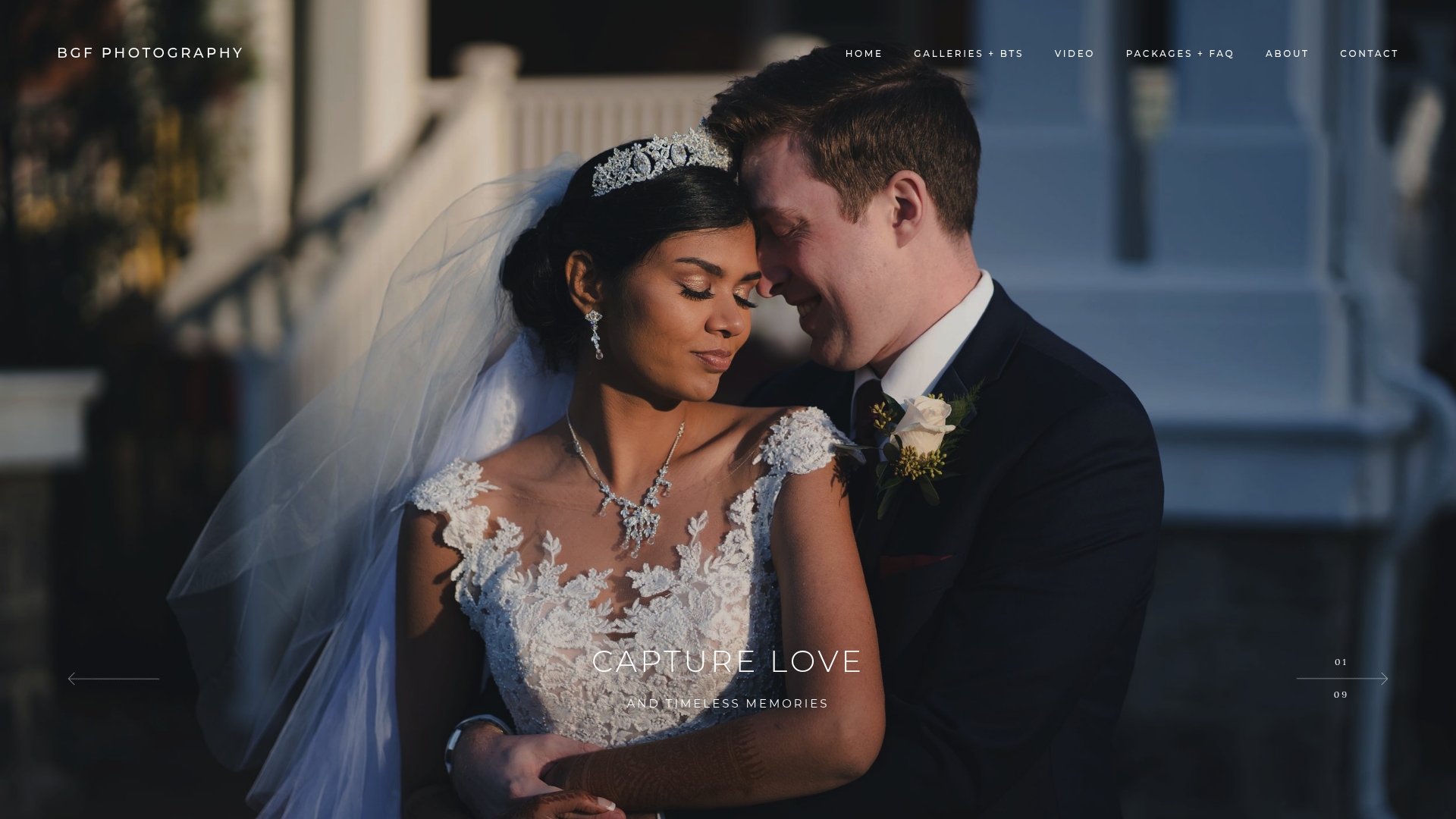
If you want a photographer who directs without making anything feel staged, BGF Photography’s Engagement Session is built around exactly that balance: candid, unobtrusive coverage guided by real posing and movement cues rather than stiff instructions.
-
The Engagement Session is $500 and can be paired with any wedding package on the investment page.
-
Sessions double as practice for wedding-day photos and video, which suits couples booking hybrid coverage.
-
Couples working with a photographer who understands both stills and movement direction—the same approach photographers rely on for client communication, per photography business guidance—tend to feel more prepared once the wedding day arrives.
Reach out through the investment page to check availability and start planning your session.
Sources
For more on posing philosophy and pre-shoot prep, see BGF Photography’s posts on candid bridal portraits, romantic couples photography, and why an engagement session prepares couples for the wedding day. Additional guidance came from the Professional Photographers of America and The New York Times, cited throughout this article.
FAQ
How long does an engagement photo session usually take?
Session length varies by photographer and location, but most couples plan for one to two hours to allow time for outfit changes and multiple settings. BGF Photography’s Engagement Session, priced at $500, fits within that typical window.
What should we wear for engagement photos?
Choose comfortable, well-fitted layers in solid colors or simple textures, and avoid busy logos or tiny patterns that distract from your expressions. Bring shoes you can actually walk or move in, since the best poses usually involve motion rather than standing still.
How do we look natural instead of stiff in photos?
Natural results usually come from movement and real interaction rather than holding a static pose, such as walking, whispering a joke, or spinning into a hug. A photographer who gives short, specific direction, as described in PPA’s guidance on intentional posing, helps subjects forget the camera and relax into the moment.
Should we practice poses before the shoot?
Practicing a few prompts in front of a mirror the night before can reduce nerves and help you find your most comfortable angles. Even ten minutes trying out a handful of chin positions, smiles, and hand placements can make the actual session feel less awkward.
What if one of us is much taller than the other?
Simple adjustments like having the taller partner bend the knees slightly, the shorter partner stand on a step, or both partners sit side by side solve most height differences without looking forced. Aligning both partners’ eyes at a similar level, a compositional habit noted by The New York Times, keeps the photo balanced and avoids awkward cropping.