

A parent first look is a private reveal where the bride or groom shows off their wedding-day look to a parent before the ceremony, separate from the couple's own first look. It works best for couples who want unscripted emotion on camera, extra buffer in a tight timeline, or a way to include a parent who cannot make it down the aisle later. The rest of this guide covers who to invite, when to schedule it, how to brief your photographer, and the mistakes that flatten an otherwise unforgettable moment.
TL;DR:
- A parent first look provides a controlled, private setting that often captures more authentic emotional reactions than during the ceremony or reception.
- Scheduling the reveal 45 to 90 minutes before the ceremony ensures adequate buffer time for hair, makeup, travel delays, and avoids rushing the moment.
- Choosing a quiet, well-lit indoor location and briefing the photographer on style and privacy cues prevents interruptions and ensures high-quality, natural images.
- Including children requires giving them specific roles and timing the reveal earlier in the day to avoid fussiness or restlessness that can spoil the photos.
- Alternative sentimental moments such as handwritten letters, gift exchanges, or virtual video reveals can replace traditional visual reveals when necessary.
Table of Contents
- Why Couples Choose a Parent First Look
- Who To Include And When To Schedule It
- Logistics And Coordinating With Your Photographer
- Photo Ideas Worth Requesting
- Common Mistakes And How To Avoid Them
- What A Parent First Look Actually Is, Versus A Couple's First Look
- Helping Parents Show Up Emotionally Ready
- Including Children And Young Family Members
- Alternatives If A Traditional Reveal Isn't Right For Your Family
- BGF Photography's Approach To Parent First Looks
- How BGF Photography Helps You Capture This Moment Right
- Sources
- FAQ
Why Couples Choose a Parent First Look
The appeal isn't just sentimental, though it usually starts there. A father seeing his daughter in her dress for the first time, or a mother catching her son in his suit, tends to produce reactions that no posed portrait can fake. Wedding coordinators describe these moments as genuine stress relief for parents, giving them something to feel included in before the ceremony's nerves take over.
The practical case is just as strong. A parent first look gives your photographer a controlled setting with better light, fewer onlookers, and no rushed five-minute window squeezed between the processional and cocktail hour.
It helps most in a few specific situations:
- Winter or late-fall weddings where daylight disappears fast
- A parent with mobility limits who cannot manage a long receiving line later
- Blended families where a private moment avoids awkward group dynamics
- Couples who already booked a couple's first look and want to add depth without adding stress
Photographers who shoot these regularly report that parent first looks often produce the most authentic emotional images of the entire day, more than the ceremony kiss or the reception toast.
Who To Include And When To Schedule It
Picking participants matters more than most couples expect. A single parent, both parents together, a stepparent, or even a sibling can all work, but mixing too many people into one reveal usually dilutes the reaction you're trying to capture. If your family situation involves divorced parents or a tense stepparent relationship, doing separate, shorter reveals almost always photographs better than forcing everyone into one group moment.
Here's a practical approach for building your schedule:
- Confirm hair and makeup finish time first. Nothing else can move until this is locked in.
- Block 45 to 90 minutes before the ceremony for the reveal itself, which is the timing window most wedding planning guides recommend to leave room for hair, makeup, and travel delays.
- If you're pairing it with a couple's first look, budget a shorter 10 to 20 minute window for the parent reveal, since photographers commonly recommend keeping it tight when other pre-ceremony photos are already on the clock.
- Add a 15 minute buffer after the reveal before you have to move to the next photo block.
- Tell your photographer the order of operations in advance: parent reveal, then couple first look, then family portraits, or whatever sequence fits your day.
A detailed wedding day timeline checklist can help you map every block before the morning gets chaotic. Coordinate transport arrival times too. If your parent is riding in a separate car, a 10-minute delay can eat your entire buffer.
Logistics And Coordinating With Your Photographer
Location decides more of the outcome than most couples realize. A hallway outside the bridal suite works fine if it's private, but a hotel lobby or a busy hallway near the reception space invites interruptions and awkward backgrounds. Always scout an indoor backup in case rain forces you off a planned outdoor spot.
When you brief your photographer, be specific about style. Do you want documentary style, where they capture the reaction as it unfolds without direction, or a mixed approach with one posed portrait afterward? Both work, but your photographer needs to know which one you want before the moment starts, not during it. If you're bringing a second shooter, tell them where you want that person positioned, usually opposite the primary photographer to catch the parent's face and the couple's reaction in the same beat.
Privacy management is where most of the actual planning happens:
- Designate one person, usually a bridesmaid or the coordinator, as the lookout to keep guests and staff from wandering into frame
- Confirm exactly who cues the reveal (a tap on the shoulder, a knock, a "ready?") so nobody hesitates in the moment
- Clear the space of anyone not directly involved before the parent arrives
- Have a signal for "we're rolling" so your photographer knows to start shooting before the actual turn
Designating a specific lookout is one of the simplest ways to prevent an accidental interruption from ruining an otherwise perfect take.
Pro Tip: Give your photographer a two-minute warning before the parent walks in. Photographers who know the exact moment it's happening capture the walk-up and the turn, not just the aftermath.
Build in a contingency for weather and delays. If your outdoor spot floods with rain, know your indoor alternative before the morning starts, not while everyone is standing around waiting.
Photo Ideas Worth Requesting
Ask for specific shots rather than leaving it entirely up to your photographer's instincts. Reaction shots matter most: the moment a parent turns around, the half-second before recognition hits, the close-up on watery eyes, and the embrace that usually follows. These are the frames couples print and frame decades later.
A few prompts consistently produce strong images without feeling staged:
- Handing a parent a handwritten note to read as they see you for the first time
- Wearing or holding a family heirloom, like a grandmother's veil or a father's cufflinks, as a visual anchor
- A gentle tap-on-shoulder cue instead of a verbal countdown, which keeps the turn feeling natural
- A silhouette shot against a window or doorway if the location has strong backlight
- A full-length shot that shows the entire dress or suit alongside the parent's reaction
Practitioner advice consistently favors keeping the reveal simple and unscripted. A handwritten note or heirloom adds meaning without turning the moment into a performance.
Variations worth considering beyond the standard reveal include a mother son first look shot in a quieter corner away from the bustle, a father of the bride first look staged near a window for soft light, or a first touch moment where the parent closes their eyes and reaches out before opening them, which tends to produce a slower, more emotional build than a straight visual reveal.

Common Mistakes And How To Avoid Them
Most parent first look disasters trace back to the same handful of errors, and all of them are avoidable with basic planning.
- No buffer time. Rushing the reveal because the timeline is too tight kills the emotional payoff. Fix it by blocking extra minutes on both sides of the moment.
- A crowded or noisy location. Hotel lobbies and busy hallways invite interruptions. Fix it by scouting a private spot in advance, indoors and out.
- Poor light. A dim hallway photographs flat no matter how good the reaction is. Fix it by choosing a spot near a window or scheduling during golden hour if outdoors.
- Unbriefed parents. A parent who doesn't know what's about to happen often reacts with confusion instead of emotion. Fix it by giving them a simple heads up, without over-explaining the plan.
Common pitfalls like skipping buffer time or picking a crowded spot are the same issues that trip up couples again and again, and they're solved by assigning one person to coordinate the moment and keeping instructions short.
What A Parent First Look Actually Is, Versus A Couple's First Look
A parent first look is a planned, private or semi-private reveal of the couple in full wedding attire to a parent, done before the ceremony. It exists as a distinct tradition from the couple's first look, which is the moment the bride and groom see each other for the first time that day. The two can be scheduled back to back, or a couple can choose one without the other entirely.
The key difference is emotional focus. A couple's first look is about the two people getting married seeing each other. A parent first look shifts the attention to a different relationship entirely, the bond between a parent and their child on the day that relationship changes shape. Some couples do both. Others skip the couple's first look and save all the surprise for the ceremony, while still carving out a private moment with a parent beforehand.
Neither version cancels out a first look at the altar. Even couples who do a full parent reveal and a couple's first look still get a fresh reaction walking down the aisle, since the ceremony moment carries its own weight regardless of what happened earlier in the day.
Think of it less as a replacement and more as an additional layer. You're not trading one tradition for another. You're adding a second emotional beat to a day that already has several, and giving your photographer another genuine moment to capture instead of relying entirely on the ceremony and reception for reaction shots.
Helping Parents Show Up Emotionally Ready
The best reactions come from parents who feel prepared, not surprised into performing. A quick conversation the week before, letting them know roughly what to expect and where the reveal will happen, does more for authenticity than any coaching on the day itself.
Avoid over-directing in the moment. Telling a parent exactly how to react, or asking them to "really show emotion for the camera," almost always produces a flatter result than letting them respond naturally. The goal is a private moment that happens to be photographed, not a photo shoot dressed up as a private moment.
Give parents a small window to process before the cameras start rolling if they need it. Some parents cry immediately. Others need a beat to take in what they're seeing before the emotion surfaces. Both are normal, and a good photographer will hold space for either without rushing the shot.
If a parent tends to get overwhelmed easily, or has a strained relationship with public displays of emotion, consider a quieter, more private version of the reveal with fewer people watching, even if that means excluding a second shooter from that particular moment. The goal is authentic connection, not a guaranteed tearjerker.
One thing worth telling parents directly: they don't need to say anything specific or hit a particular emotional beat. The moment works because it's real, not because it's dramatic. Letting go of any expectation about how they "should" react usually produces the most genuine result.
Including Children And Young Family Members
Kids add warmth to a parent first look when they're included thoughtfully, but they need a defined role rather than just being present. A flower girl or ring bearer standing off to the side without direction tends to wander, get restless, or accidentally step into frame at the wrong moment.
Give young children something specific to do. Handing a bouquet to a grandmother, carrying a small sign, or simply standing next to a parent during the reveal gives them a job that keeps them anchored in the scene. For toddlers, keep expectations low. A three-year-old is unlikely to hold a pose or wait quietly for a cue, so plan for a shorter, looser version of the moment if young kids are part of it.

Timing matters more with children involved. Schedule their portion earlier in the day if possible, before nap time, hunger, or restlessness sets in. A first look moment with a cranky toddler rarely produces the photos you're hoping for, no matter how good the light is.
If older children or teenage siblings are part of the family reveal, consider whether they want a speaking or interactive role versus simply being present as observers. Some teens love being handed a task. Others feel more comfortable standing back and watching the moment unfold. Ask rather than assume, and build the shot list around their comfort level.
Alternatives If A Traditional Reveal Isn't Right For Your Family
A visual reveal isn't the only way to create this moment, and some families do better with a different format entirely. A handwritten letter, read privately by a parent before the ceremony, can carry the same emotional weight without requiring anyone to perform for a camera. Photographers can still capture the moment of reading, the folding of the paper, the expression as the words land.

A small gift exchange works similarly. A father receiving a watch, a mother receiving a locket with a family photo inside, these exchanges give parents something tangible to hold onto and create a natural photo opportunity that doesn't depend on a staged turn-and-reveal.
For families with a parent who can't attend in person, a virtual reveal over video call has become a real option. It's not the same as an in-person moment, but it lets a parent who's overseas, ill, or otherwise unable to travel still participate in something meaningful, and it can be photographed as its own distinct moment worth preserving.
A first touch, where a parent reaches out and holds hands or an arm through a doorway before turning to see the full look, gives you an emotional buildup without a visual reveal at all. It works especially well for parents who feel self-conscious about crying on camera, since the anticipation happens before anyone sees a face.
Whatever variation you choose, the goal stays the same: create a genuine, unscripted moment between a parent and their child, and let your photographer capture it as it actually happens rather than as a performance for the lens.
BGF Photography's Approach To Parent First Looks
We shoot parent first looks the same way we shoot everything else: unobtrusively, letting the moment happen before we ever ask for a pose. A typical timeline has us arriving early enough to scout the space, confirm the reveal cue with whoever's coordinating, and position a second shooter opposite the primary angle so we catch both faces in the same frame. Couples who want the nostalgic quality of film can request it for this specific moment even if the rest of the day is digital.
When you request coverage, tell us your preferred mix of candid versus posed, whether you want a second shooter, and if you need an indoor backup location built into the plan.
— Billy
How BGF Photography Helps You Capture This Moment Right
Getting a parent first look right comes down to having a photographer who knows how to read the room and stay out of the way until the exact right second. BGF Photography's hybrid coverage means your parent reveal, your couple's first look, and your ceremony all get shot in one cohesive style, by one team that already knows your timeline, instead of stitching together separate vendors who've never worked together before.
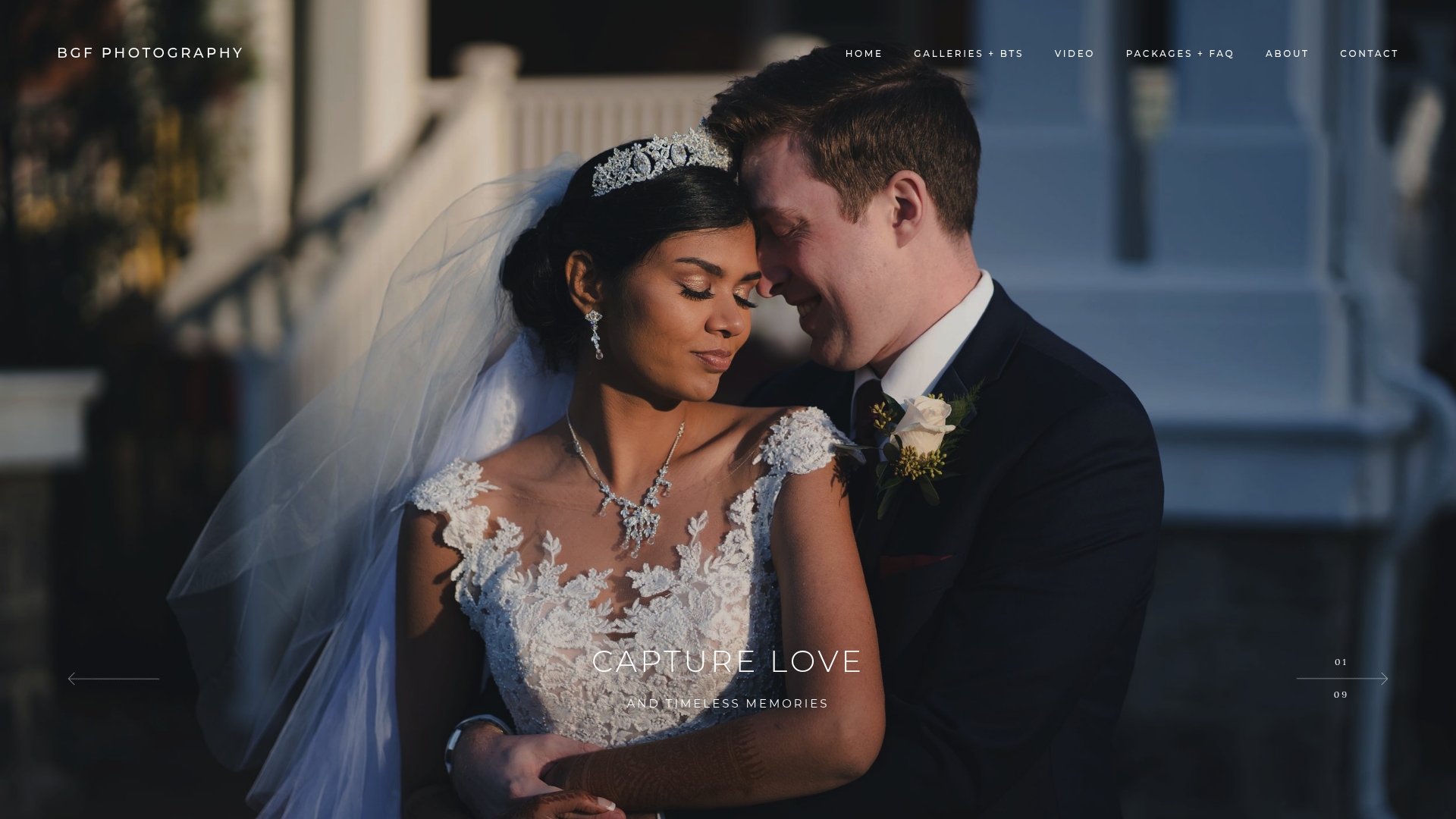
Our packages combine candid photography and videography under one booking, with an optional film add on for couples who want that nostalgic texture in their parent first look images specifically. When you reach out for a quote, ask about second shooter availability, how much buffer time we recommend for your specific timeline, and whether an indoor backup location is already part of the plan. Browsing our wedding galleries is the fastest way to see how we've handled this exact moment for other couples in Buffalo, Rochester, and the Finger Lakes. If you're ready to talk dates and pricing, check our packages and investment guide to see what fits your day.
Sources
- How to Plan a First Look with Parents: Timing, Logistics, and Photo Ideas
- Wedding First Look: Pros, Cons, Timing, Locations + How to Plan Yours - Paperlust
- Tips for a unique first look with your parents
FAQ
Is the first look with dad or with the groom first?
There's no fixed order. Many couples do the parent first look earlier in the day since it needs less setup time, then move into the couple's first look closer to the ceremony, but either sequence works depending on your timeline.
What are the drawbacks of a first look?
The main risks are losing spontaneity at the ceremony itself and adding another item to an already tight morning schedule. Both are manageable with proper buffer time and a clear plan for who's involved.
What is a father-daughter first look?
It's a private moment where a bride reveals her wedding dress to her father before the ceremony, typically producing some of the most emotional reaction photos of the day.
Can you kiss during the first look?
Yes, a kiss during a first look is common and photographs well, though it's entirely up to the couple or family members involved. There's no rule requiring it, and plenty of meaningful first looks involve just an embrace or a held hand.