
TL;DR:
- A wedding family portrait session is a 20-45 minute block dedicated to formal group photos of relatives, scheduled immediately after the ceremony. Planning a detailed shot list and assigning family wranglers helps keep the session efficient, relaxed, and meaningful for future generations. Proper timing, communication, and managing complex family dynamics ensure the portraits become treasured heirlooms.
A family portrait session at a wedding is a dedicated block of time, typically 20–45 minutes, when the couple and their photographer capture formal group photos of immediate and extended family members. These images are not just documentation. They become heirlooms that link generations, preserve family identity, and serve as daily reminders of who was present on one of the most significant days in a family's history. Understanding what a family portrait session at weddings actually involves, and how to plan one well, is the difference between a smooth, joyful experience and a stressful scramble between the ceremony and cocktail hour.
What is a family portrait session at weddings?
A wedding family portrait session is the structured portion of the photography timeline dedicated to formal group shots. In the industry, photographers also call this the "formals" or "family formals" block. It sits apart from candid coverage and the couple's portraits. The goal is to capture specific combinations of family members in a deliberate, organized way.
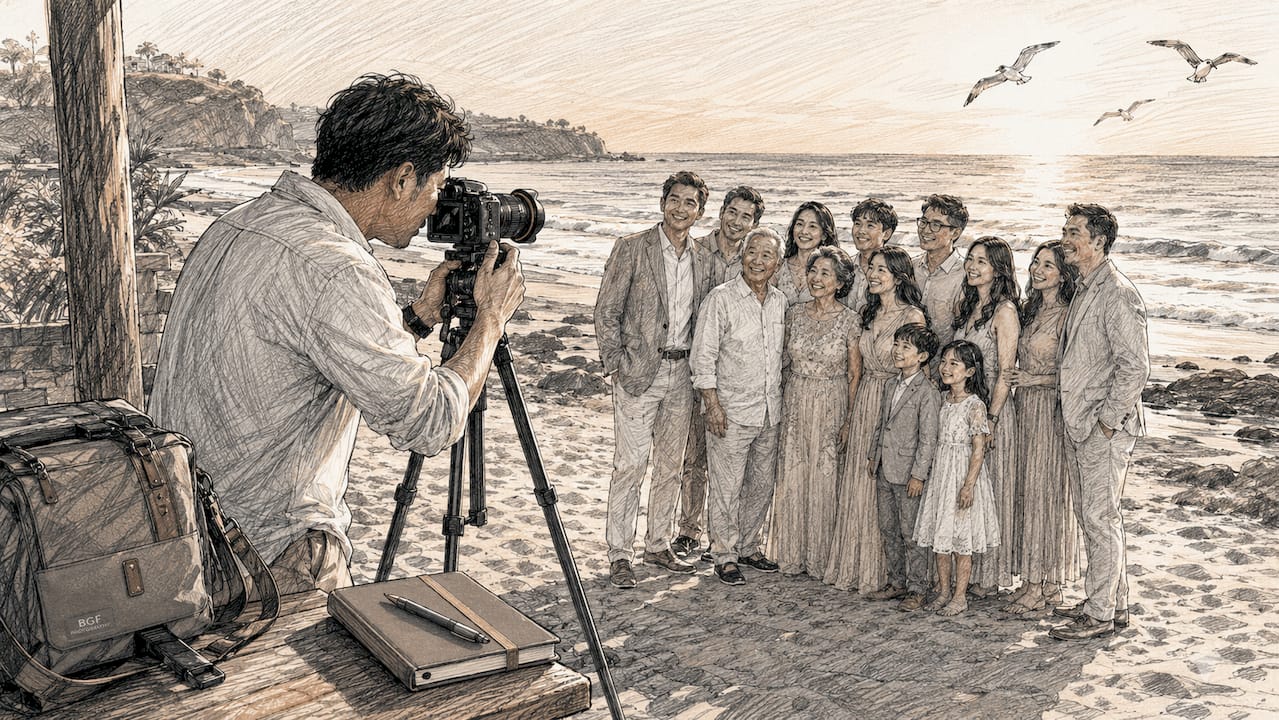
These photos serve a purpose that candid shots cannot fully replace. A candid image might catch Grandma laughing at the reception, but a formal family portrait places her alongside three generations in a single frame. That image becomes a reference point for family history. It shows who was there, how everyone looked, and how the family stood together at that moment in time.
The session typically covers the couple's immediate families first, then expands outward to include grandparents, siblings, and sometimes close family friends. A well-run session moves efficiently through each grouping without feeling rushed. The key is preparation, which starts well before the wedding day itself.
How do family portrait sessions fit into the wedding day timeline?
Timing is the single biggest factor in whether a family portrait session feels relaxed or chaotic. Scheduling family portraits immediately after the ceremony captures guests before the cocktail hour begins and prevents the loss of natural smiles caused by fatigue later in the day. This window, usually 20–45 minutes right after the recessional, is the most reliable slot on the entire wedding day.
The logic is straightforward. Guests are still gathered, dressed, and emotionally present. They have not yet had a drink, wandered off to find friends, or loosened their ties. The ceremony itself has primed everyone for connection and presence. That emotional energy shows up directly in the photos.
Here is how a typical family portrait timeline fits into the broader wedding day flow:
- Ceremony ends. The couple completes the recessional and moves to a holding area or private space for a few minutes.
- Family formals begin. Guests are directed to the portrait location, usually by a designated family member or the wedding coordinator.
- Groups are photographed in order. The photographer works through the shot list from largest group to smallest.
- Session wraps. The couple transitions to their own portraits while guests move to cocktail hour.
- Cocktail hour ends. Everyone reunites for the reception, relaxed and on schedule.
Placing family portraits in this slot also protects the couple's portrait time. If formals run long, they eat directly into the golden hour window that produces the most flattering light for couple photos. Keeping the session contained and efficient preserves that time.
Pro Tip: Tell family members exactly where to go and when before the ceremony ends. A quick announcement from the officiant or a note in the program saves five minutes of rounding people up.
What does effective planning for a wedding family portrait session involve?
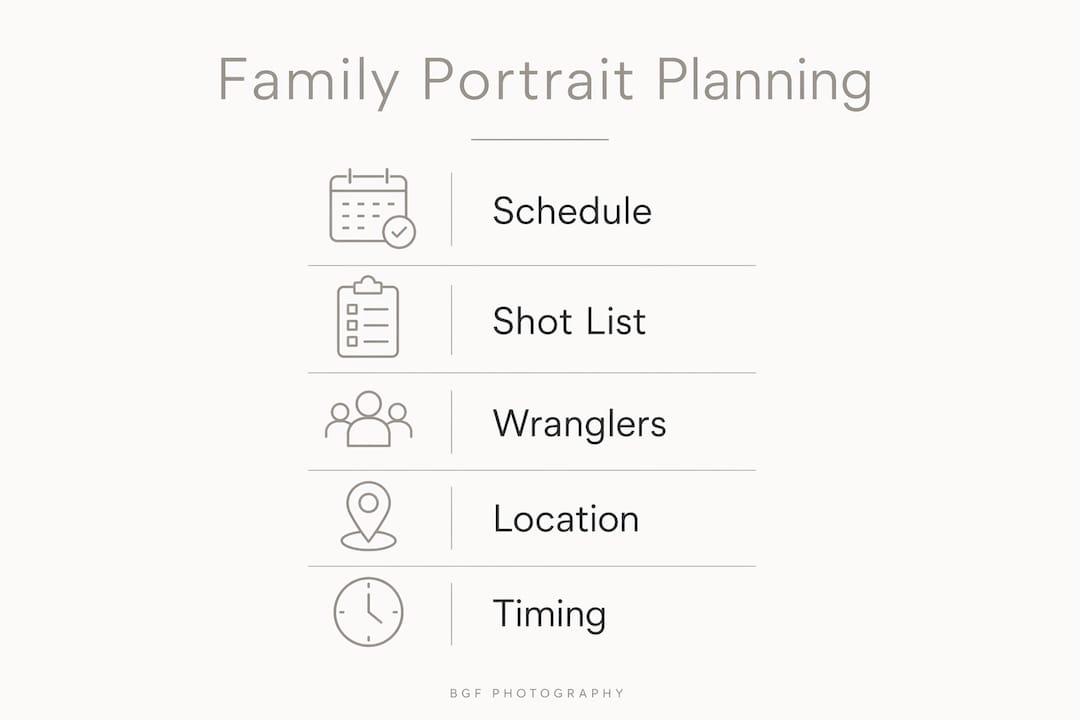
Planning is what separates a 25-minute session from a 60-minute one. The most effective tool is a formal shot list shared with the photographer at least one week before the wedding. A pre-planned shot list is the single biggest factor preventing session overruns, according to professional photographers who work weddings regularly. It gives the photographer a clear sequence to follow and removes all guesswork on the day.
Building your shot list
A strong shot list groups photos from largest to smallest. Start with the full family on both sides together, then work down to each side separately, then to individual family units. This approach means the most people are present at the start, and individuals can leave as their photos are completed.
Key elements to include in your shot list:
- Both families together with the couple at the center
- Each immediate family (bride's side, groom's side) as a full group
- Parents with the couple, including stepparents as separate groupings if needed
- Siblings with the couple, with and without spouses or children
- Grandparents with the couple, one side at a time
- Extended family groupings that matter most to you, kept to a minimum
A typical session covers 10–15 groupings. More than that pushes the session past 45 minutes and tires guests. Limiting the list to the combinations that matter most keeps the energy high and the photos genuine.
Managing complex family dynamics
Divorced parents, stepfamilies, and estranged relatives are common realities at weddings. Sharing special family dynamics with the photographer beforehand enables custom solutions that minimize awkwardness and keep everyone comfortable. A skilled photographer can arrange groupings so that divorced parents are never placed next to each other unless both are comfortable with it. They can create separate but equally honored groupings for blended families.
The table below shows how to structure common complex family scenarios in a shot list:
| Family situation | Recommended approach |
|---|---|
| Divorced parents, no conflict | Photograph together with couple, then separately |
| Divorced parents, high conflict | Photograph each parent separately with couple |
| Stepparents involved | Include stepparents in their own grouping with couple |
| Blended families with children | Photograph each family unit separately, then combine |
| Estranged relatives | Omit or place in extended group shots only |
Pro Tip: Assign one trusted family member on each side as a "wrangler." Their only job is to gather the right people for each shot. Designated family wranglers keep the session moving and take the organizational pressure off the photographer.
Why are family portrait sessions emotionally and historically significant?
Family portraits at weddings carry weight that goes far beyond aesthetics. Professional family portraits serve as heirlooms that support identity and connection, with psychological research showing that viewing family photos supports self-esteem and reduces anxiety in children. The mechanism is direct. Photos activate mental representations of being loved and supported, even when loved ones are not physically present. That is a measurable psychological benefit from a single framed image.
"Candid, genuine moments between generations are the ones that get cherished most. Not the perfectly posed shot, but the one where Grandpa is squeezing the couple's hands and looking at them like they hung the moon. Those are the images families return to for decades."
The importance of family portraits extends across generations in ways that are easy to underestimate on the wedding day itself. A child born five years after the wedding will grow up seeing that portrait on the wall. They will know their grandparents' faces before they have memories of meeting them. They will understand their place in a larger family story. That is not sentiment. That is identity formation.
Photos taken during significant family milestones help people process transitions and emotional changes, serving as vital coping resources. Parents in particular experience a strong urge to document moments that highlight family bonds. A wedding is one of the clearest examples of a milestone that reshapes family structure. The portrait session captures that exact moment of transition.
Wedding photography family shots also serve a practical historical function. They record who was present, how old everyone was, and how the family looked at a specific point in time. Relatives who pass away in the years following the wedding become preserved in those images. Families who have lost members often describe those wedding portraits as among their most treasured possessions.
Authentic connections captured during family portraits hold the most lasting value for memories, more than technically perfect poses. Couples who prioritize genuine interaction over rigid positioning consistently report higher satisfaction with their final images. The goal is not a catalog of perfect smiles. The goal is a true record of real relationships.
What are common challenges during wedding family portrait sessions?
The most common problem is a shot list that is too long. Excessive groupings detract from the joy of the wedding day and leave guests feeling like props rather than participants. When a session runs past 45 minutes, smiles become forced, children become restless, and the couple starts to feel guilty for keeping everyone waiting. The fix is simple: cut the list before the wedding, not during it.
Other frequent challenges include:
- Guests who wander off to cocktail hour before their group is photographed
- Children who lose patience after the first few shots
- Family members who arrive late to the portrait location after the ceremony
- Unclear communication about where portraits will take place
- Conflicting family dynamics that create tension in groupings
Each of these has a practical solution. Guests wander because no one told them to stay. Assign your wranglers and make a clear announcement before the ceremony ends. Children lose patience because sessions run long. Keep the list short and move fast. Late arrivals happen when the location is not communicated clearly. Put it in the wedding program and brief the wedding party in advance.
The peeling off method is the most effective technique for keeping sessions efficient. The photographer starts with the largest group, then dismisses people as their photos are complete. This means guests are only waiting for their specific shots, not standing through the entire session. It also creates a natural, low-pressure flow that keeps the mood relaxed.
Pro Tip: Keep the portrait location close to the ceremony exit. Every extra minute of walking is a minute of lost momentum and a chance for guests to drift away.
Clear communication with your photographer before the wedding day is the foundation of a smooth session. Communicating complex family dynamics in advance allows photographers to arrange groupings and staging to minimize discomfort. A photographer who knows your family situation can anticipate problems and solve them before they happen. One who does not know is managing surprises in real time, which slows everything down.
Limiting family photo groupings keeps guests cheerful and photos natural. The best wedding photography family shots come from sessions where people feel relaxed, not sessions where they have been standing in the sun for an hour. Restraint in planning produces better results than ambition.
Key Takeaways
A well-planned wedding family portrait session produces heirloom images that support identity, preserve family history, and hold lasting emotional value for every generation that follows.
| Point | Details |
|---|---|
| Timing is critical | Schedule family formals immediately after the ceremony to capture guests before fatigue sets in. |
| Shot list prevents overruns | Share a detailed shot list with your photographer at least one week before the wedding. |
| Peeling off keeps sessions efficient | Start with the largest group and dismiss people as their photos are done to reduce waiting. |
| Emotional value is generational | Family portraits support children's identity and self-esteem by making family bonds visible and permanent. |
| Communication prevents conflict | Share complex family dynamics with your photographer in advance so groupings can be arranged thoughtfully. |
Why I think most couples underestimate the family portrait session
Most couples spend months planning the ceremony and the reception, then treat the family portrait session as an afterthought. I have seen it happen repeatedly. The shot list gets thrown together the night before. No one tells the grandparents where to stand. The session runs 20 minutes over, the couple misses golden hour, and everyone arrives at cocktail hour a little frazzled.
The couples who get it right treat the family session with the same intentionality they bring to the rest of the day. They share a detailed list with their photographer weeks out. They assign wranglers. They keep the groupings to what actually matters. And then something interesting happens: the session becomes one of the most emotionally resonant parts of the day, not a logistical hurdle.
There is also a tendency to chase perfection in poses. I understand the impulse. But the images that end up framed on walls are rarely the ones where everyone is standing perfectly straight. They are the ones where your dad is wiping his eye, or your grandmother is holding both of your hands at once. Those moments happen when the session is relaxed and moving at a good pace. They do not happen when everyone is exhausted and waiting for the next grouping.
For couples with complex family situations, the instinct is often to avoid the conversation with the photographer. That is the wrong call. A good photographer has handled divorced parents, estranged siblings, and blended families many times. Telling them in advance is not awkward. It is professional. It gives them the information they need to do their job well. You can find more on working with a photographer who understands your specific needs in this guide on how to choose a professional photographer for your wedding.
The family portrait session is not just a box to check. It is the part of the wedding day that your family will look at for the next 50 years. Plan it like it matters, because it does.
— Billy
How BGF Photography handles your family portrait session
BGF Photography builds the family portrait session directly into every wedding day timeline, treating it as a core part of the day rather than an add-on. The approach is structured but relaxed, moving efficiently through your shot list while staying alert to the genuine moments that make these images worth keeping.
BGF Photography serves couples in the Buffalo and Rochester, NY areas with hybrid photography and videography coverage, so your family formals are captured in both formats under one consistent style. Every package includes pre-wedding planning support to help you build your shot list, communicate family dynamics, and set realistic timing expectations. Explore the full range of wedding photography packages to find the right fit for your family portrait session and your entire wedding day.
FAQ
What is a family portrait session at a wedding?
A family portrait session at a wedding is a dedicated 20–45 minute block during the photography timeline when the couple and photographer capture formal group photos of family members. It typically takes place immediately after the ceremony, before the cocktail hour begins.
How long should wedding family portraits take?
A well-planned session with a pre-shared shot list runs 20–40 minutes. Sessions without a shot list or with too many groupings can run significantly longer and cause delays in the rest of the day.
How many family groupings should be on the shot list?
Most photographers recommend 10–15 groupings as the upper limit. Staying within that range keeps guests comfortable, maintains natural expressions, and protects time for the couple's portraits.
How do you handle divorced or blended families in wedding portraits?
Share the family dynamics with your photographer at least one week before the wedding. A skilled photographer arranges separate groupings for each parent and creates distinct but equally honored shots for blended family units, removing awkwardness before it starts.
What is the peeling off method in family portrait sessions?
The peeling off method starts with the largest family group and dismisses individuals as their photos are complete. This technique reduces waiting time, keeps the session moving, and prevents guests from standing through groupings they are not part of.