
The first dance is the single most emotionally loaded moment in a Rochester wedding video. It's the couple's first public act as a married unit, the official signal that the ceremony is over and the celebration has begun. A skilled videographer doesn't just record it. They read the room, follow the energy, and build footage that will make you feel the whole thing again years from now.
A few things shape how well that moment translates to video:
- Song length: Most couples choose songs between 2.5 and 3.5 minutes to hold guest attention without overstaying the moment.
- Positioning: Standing at the center of the dance floor gives your videographer better light and cleaner angles.
- Communication: Telling your videographer about choreography or surprises in advance changes everything about how they prepare.
- Emotional authenticity: The footage that holds up over time captures connection, not just movement.
Why the first dance carries so much tradition and meaning
The first dance has roots older than most couples realize. It traces back to aristocratic European balls, where the guests of honor opened the dancing to signal the evening had begun. At weddings, that role fell to the newlyweds. Earlier still, historical accounts describe the tradition evolving from a groom presenting his new wife before celebrations, eventually becoming a fertility ceremony, and finally settling into the romantic spotlight moment couples know today.
What that history produced is a tradition with genuine symbolic weight. The first dance marks the reception's official start and frames the couple as the center of the evening.
Modern Rochester couples adapt it freely:
- Some invite guests to join after the first verse, turning a solo spotlight into a shared floor.
- Others choreograph a full routine, sometimes keeping it secret until the moment arrives.
- A few skip the formal dance entirely and open the floor to everyone at once.
Whatever form it takes, keeping the moment undisturbed matters. No microphone interruptions from the DJ, no open photo booths pulling attention away, no bridal party drifting onto the floor early. That focus is what gives the footage its intimacy.
How the first dance affects couples and guests emotionally
The first dance offers something rare on a wedding day: a moment of genuine stillness. The couple steps onto the floor, the room goes quiet, and for two or three minutes, all distractions fade. You lock eyes. You hold each other. The noise of the day drops away.
For guests, it's equally powerful. Parents watching their child dance for the first time as a spouse, friends seeing a couple they've known for years finally arrive at this moment. That collective feeling is what a good videographer hunts for in the crowd shots.
Emotion consistently outweighs choreography in memorable first dance footage. A simple, genuine sway between two people who are fully present reads more powerfully on screen than a technically polished routine performed with visible nerves. The footage that couples watch ten years later and still feel something? It almost always comes down to the expression on a face, not the footwork.
Best practices for filming the first dance at a Rochester wedding
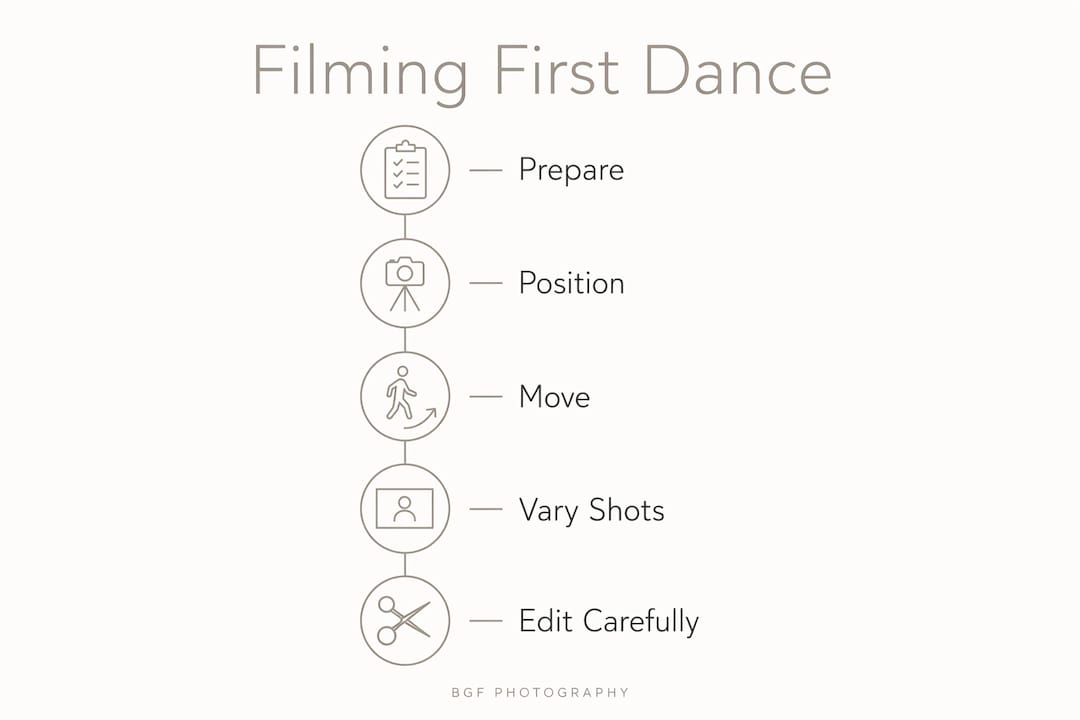
Filming the first dance well requires preparation, not just presence. The techniques that separate a flat recording from footage worth rewatching are specific and learnable.
Positioning and camera movement
Standing at the center of the dance floor from the moment you're announced gives your videographer access to the venue's best lighting and the clearest sightlines. Moving even a few feet toward the dinner tables creates obstructions and shadows that editing cannot fix.
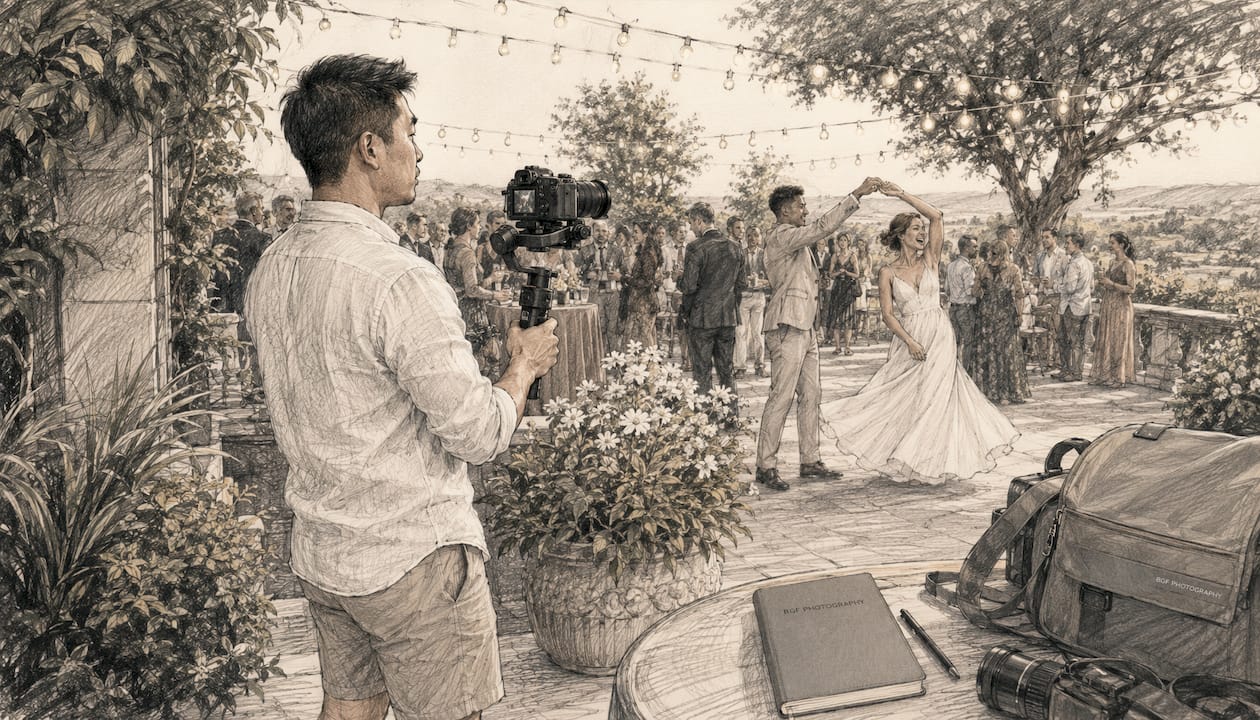
Stabilized camera movement captures the dance's energy far better than a static tripod shot. A videographer moving with you, circling slowly, adjusting angles in real time, produces footage that feels alive. A locked-off camera produces footage that feels like surveillance.
Shot variety
Wide shots and close-ups both earn their place. Wide shots establish the atmosphere, the room, the guests watching. Close-ups capture the details that carry emotion: eye contact, a hand on a waist, a smile breaking through nerves. Neither alone tells the full story.
Lighting
Evening receptions in Rochester venues often rely on candles and ambient light, which look beautiful but challenge cameras. External flashes positioned high and aimed downward, combined with ISO settings in the 800–1,000 range, preserve detail without killing the romantic atmosphere. Visiting the venue beforehand lets a videographer plan exactly where to place supplemental light.
Common mistakes to avoid
| Mistake | Why it hurts the footage |
|---|---|
| Static tripod only | Loses energy and intimacy; footage feels flat |
| Poor floor positioning | Creates obstructions, bad light, and blocked angles |
| No close-up coverage | Misses the emotional details that make footage memorable |
| Ignoring audio | Muddy or quiet song audio undermines the whole edit |
| Overusing slow motion | Dilutes impact; works best on a single spin or dress detail |
Editing
Editing determines whether the footage feels impactful or flat. The best edits select shots deliberately, use slow motion sparingly (a spin, the dress catching light), and preserve continuity rather than chopping the dance into disconnected clips. If the choreography was intentional, a standalone edit that shows the full sequence may be worth requesting alongside the highlight film.
Pro Tip: Tell your videographer about any planned choreography, surprise transitions, or meaningful song moments at least two weeks before the wedding. That context lets them mentally prioritize angles and prepare for specific beats in the music, rather than reacting to surprises in real time.
What Rochester videographers know about capturing this moment
The videographers who consistently produce strong first dance footage share one trait: they adapt. They read body language, watch for weight shifts, and follow energy rather than executing a fixed shot list. Advance communication from the couple is what makes that adaptation possible.
Venue-specific factors matter in Rochester. A ballroom at a downtown venue offers different lighting conditions than an outdoor tent at a Finger Lakes property. A videographer who has worked across Rochester's range of venues arrives with a plan already shaped by the space, not just the moment.
The most experienced videographers also know when to look away from the couple. Reaction shots of parents, the best man laughing, a grandmother wiping her eyes: those frames often carry as much emotional weight as the couple themselves. A shot list for the first dance typically runs 3–5 minutes of coverage, blending wide angles, close-ups, and crowd reactions into a complete picture of the moment.
BGF Photography approaches the first dance as part of a full narrative arc, not an isolated segment. With hybrid photo and video coverage, both the still images and the film are built around the same emotional priorities, so the first dance looks and feels consistent across every format you receive.
If you're planning a Rochester wedding and want the first dance captured with that level of intention, view BGF Photography's packages to see how hybrid coverage works.
Key Takeaways
The first dance in a Rochester wedding video works best when emotional authenticity, deliberate technique, and early communication between couple and videographer all align.
| Point | Details |
|---|---|
| Song length shapes attention | Most first dances last between 2.5 and 3.5 minutes to hold guest focus without losing momentum. |
| Center floor positioning matters | Standing at the center gives videographers better light and unobstructed angles from the start. |
| Movement beats a static camera | Stabilized camera movement captures energy and intimacy that a locked tripod cannot. |
| Emotion outweighs choreography | Genuine connection on screen consistently creates more memorable footage than technical skill. |
| Communicate surprises early | Telling your videographer about choreography or special moments in advance changes how they prepare. |
FAQ
How long should the first dance be for a wedding video?
Most couples choose songs between 2.5 and 3.5 minutes to maintain guest attention without overstaying the moment. Songs longer than four minutes risk losing guest attention unless the choreography is genuinely entertaining throughout.
Do we need choreography for a great first dance video?
No. Authentic emotion and genuine connection produce more memorable footage than complex choreography. A simple, present sway often reads more powerfully on screen than a rehearsed routine performed with visible anxiety.
When should we tell our videographer about a surprise first dance?
At least two weeks before the wedding. Advance communication lets your videographer prioritize angles, anticipate key moments, and prepare for specific beats rather than reacting in real time.
Where should we stand for the first dance?
Move to the center of the dance floor as soon as you're announced. Center positioning gives your videographer access to the venue's best lighting and the cleanest camera angles from every direction.
What makes first dance footage emotionally impactful in the edit?
Deliberate shot selection, minimal slow motion used only on meaningful moments like a spin or dress detail, and clean audio. Editing is what separates a simple recording from footage that still moves you years later.