
TL;DR:
- Trust is essential in wedding photography because it enables couples to be authentic and emotionally unguarded during their special day. Building trust relies heavily on proactive, empathetic communication and collaborative planning long before the wedding, ensuring genuine moments are captured naturally. Choosing a photographer who fosters this trust results in heartfelt images that tell a true story rather than staged snapshots.
Trust is the single most important factor in wedding photography because it determines whether your images capture who you actually are or merely how you think you should look. When couples genuinely trust their photographer, they stop performing for the camera. They laugh without thinking about their chin, cry without worrying about mascara, and hold each other without rehearsing the pose. The role of trust in wedding photography goes far beyond comfort. It is the mechanism that converts a skilled technician with a camera into someone who can document the emotional truth of your wedding day. Without it, even the most technically gifted photographer produces images that feel staged.
How the role of trust in wedding photography shapes authentic images
Trust in wedding photography is defined as the psychological safety that allows couples to be fully present and emotionally unguarded in front of a camera. This is the industry's foundational concept, sometimes called "client comfort" or "emotional rapport," and it directly determines the quality and authenticity of your final gallery. Photographers observe that couples stop performing once trust is established, allowing genuine emotions like laughter and tears to appear naturally rather than on cue.
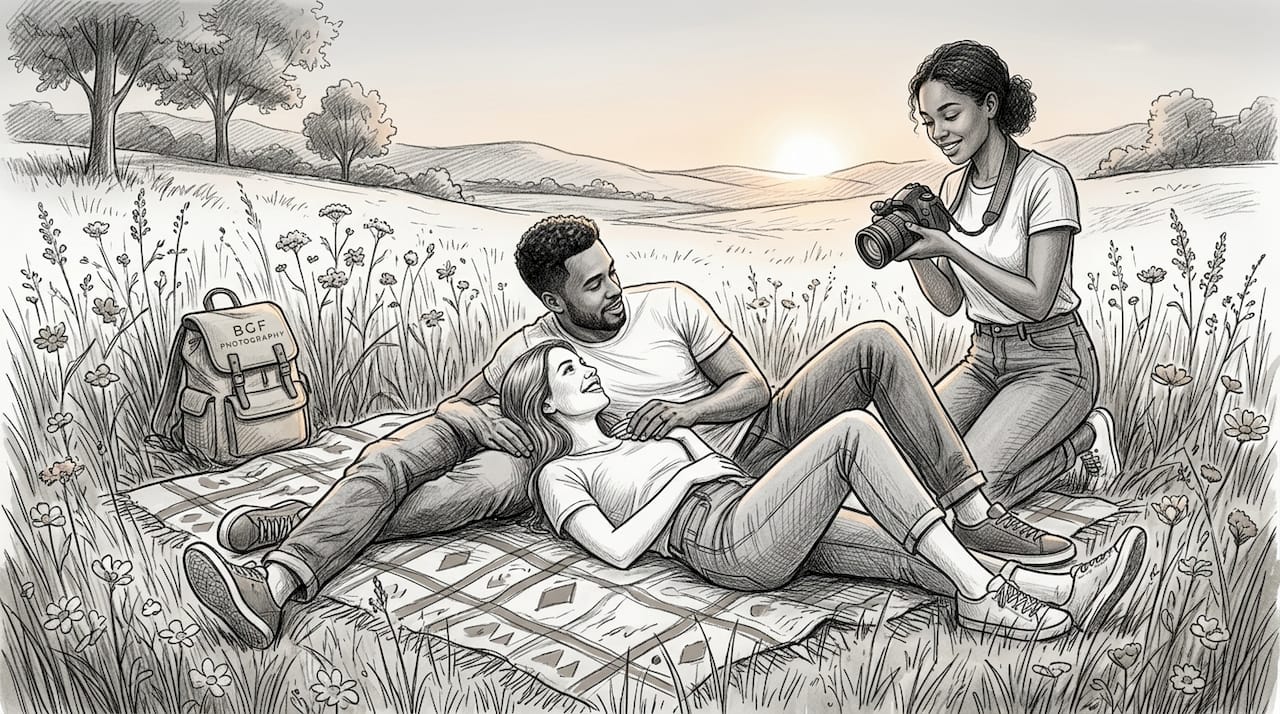
The distinction matters enormously. A technically perfect photo of two people smiling at a camera is a record. A photo of two people genuinely laughing at something only they understand is a memory. The difference between those two outcomes is almost never about lighting or lens choice. It is about whether the couple felt safe enough to forget the photographer was there.
Technical skill is table stakes in modern wedding photography. Every photographer you seriously consider will know how to expose a frame correctly and compose a shot. What separates a gallery you will treasure for decades from one you scroll past is the emotional content, and emotional content requires vulnerability. Vulnerability requires trust. This is why the wedding photographer relationship is not a transaction. It is a collaboration that begins months before your wedding day.
How communication builds trust between photographer and couple
Clear, empathetic communication is the primary mechanism through which trust develops between photographers and clients. Client satisfaction and emotional comfort are closely linked to empathy, openness, and equality in communication throughout the entire photography process. This is not soft advice. It is the structural foundation of a working relationship that will be tested under the pressure of one of the most emotionally charged days of your life.
What strong communication looks like in practice:
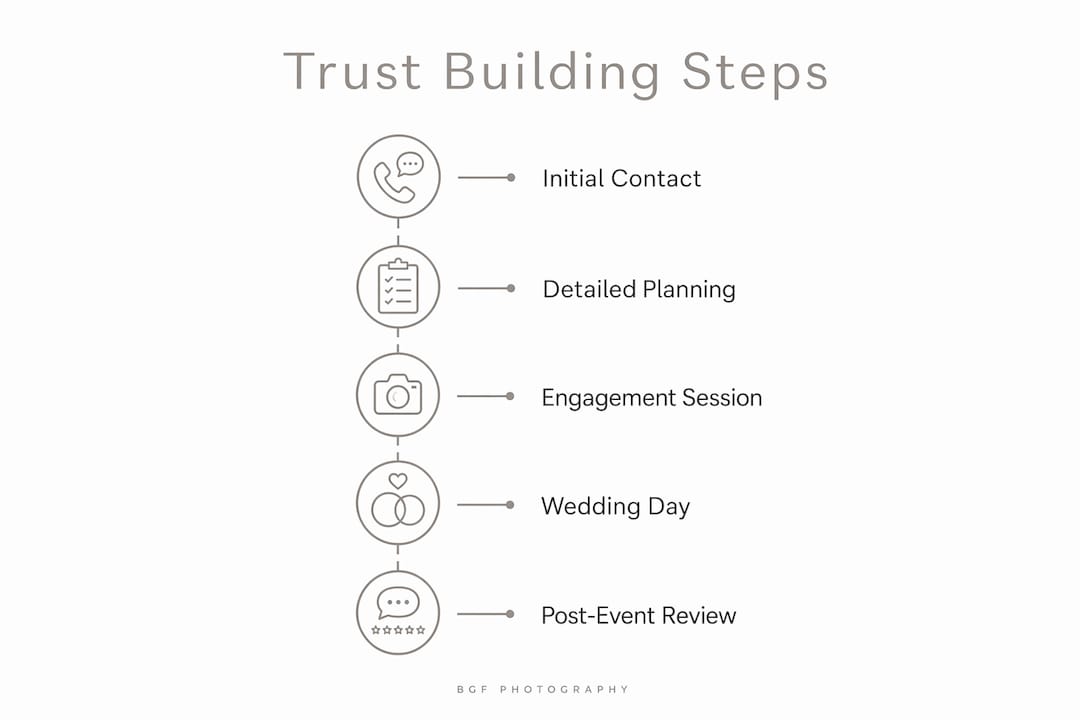
- Pre-booking calls that go beyond pricing to discuss your vision, your anxieties, and what moments matter most to you
- Planning meetings where the photographer asks questions rather than just presenting a shot list
- Engagement sessions that serve as a trust rehearsal, letting you experience the photographer's presence before the wedding day
- Consistent responsiveness to emails and questions in the weeks leading up to the wedding
- Day-of check-ins where the photographer reads the room and adjusts their approach based on your energy
The co-creation model represents a shift in how the best photographers approach client relationships. Instead of presenting couples with a finished plan to approve, photographers using this model involve couples in defining priorities, identifying meaningful details, and shaping the creative direction. Couples who participate in this process trust the photographer's decisions more and feel less like they are managing a vendor. They feel like partners.
Onboarding materials play a larger role than most couples realize. A thorough welcome packet covering logistics, timeline expectations, and what to expect on the wedding day can eliminate roughly 90% of day-of confusion. That reduction in confusion directly reduces anxiety, and reduced anxiety shows up in your photos as relaxed, present expressions rather than distracted or tense ones.
Pro Tip: Schedule a dedicated planning meeting at least four to six weeks before your wedding. Use it to walk through the full day timeline, identify the three to five moments that matter most to you, and ask your photographer how they handle unexpected situations. This single conversation does more for your trust and comfort than any contract clause.
How photography styles affect trust dynamics
The style of photography your photographer practices shapes the entire trust dynamic of your wedding day. Documentary wedding photography and traditional posed photography create fundamentally different relationships between photographer and couple, and understanding the difference helps you choose the right fit.
| Factor | Documentary style | Traditional posed style |
|---|---|---|
| Photographer presence | Unobtrusive, blends into background | Active director, guides positioning |
| Trust requirement | High trust in photographer's judgment | Trust in following direction |
| Couple's role | Passive, focused on each other | Active, responding to prompts |
| Primary output | Candid, emotionally raw moments | Polished, composed portraits |
| Shot list reliance | Minimal, relies on anticipation | Often structured around shot list |
| Risk | Missing a moment | Losing spontaneity |
Documentary-style wedding photography relies on the photographer blending into the background without staging shots, using experience and anticipation rather than checklists to capture what unfolds. This approach demands a specific kind of trust. You are not trusting the photographer to execute your instructions. You are trusting their eye, their instincts, and their ability to be in the right place at the right moment without you directing them there.
Traditional posed photography involves more active direction, which some couples find reassuring and others find disruptive to the natural flow of the day. The tradeoff is real. More control over composition means less spontaneity in expression. Neither approach is objectively superior. The right choice depends on what you value most in your final images and how you personally respond to being directed versus being observed.
Ethical considerations add another layer to the trust dynamic in documentary work. Permission changes photographic outcomes by shifting subjects from guarded to genuine in their responses. This means ongoing consent, not just a signed contract, is part of what makes documentary coverage work. The best documentary photographers revisit consent throughout the day, checking in during intimate moments and respecting when couples or guests signal they want space. That practice of repeated consent and transparency is itself a trust-building act.
Pro Tip: When reviewing a photographer's portfolio, look specifically for images where subjects appear completely unaware of the camera. If every photo looks like the subject knew they were being photographed, the photographer may not have the unobtrusive presence that documentary coverage requires.
What trust does to your behavior and your photos
The psychological effects of trust on how you behave in front of a camera are direct and measurable in the images themselves. When couples feel emotionally safe, they stop monitoring themselves. Performance anxiety, the internal voice asking "do I look okay right now," goes quiet. What replaces it is presence, and presence is what makes a wedding photo feel alive.
Emotionally safe couples show more vulnerability in their photos. Tears during vows, quiet touches between dances, real laughter at a friend's toast. These are the moments couples describe as their favorites when they look back at their galleries years later. They are also the moments that require knowing the photographer will not judge, rush, or interrupt them.
The specific behaviors trust unlocks include:
- Unselfconscious physical contact, where couples hold each other naturally rather than striking a pose
- Emotional release, where tears or laughter are not suppressed out of concern for appearance
- Genuine attention to each other, where couples are focused on their partner rather than the camera
- Relaxed body language, where tension in shoulders, jaw, and hands disappears from the frame
"The best wedding photos are not taken. They are witnessed. The photographer's job is to create the conditions where something real can happen, and then be ready when it does."
Trust also affects how you experience your wedding day, not just how it looks in photos. Couples who trust their photographer report feeling less anxious about the photography portion of the day. They spend less mental energy worrying about whether they are being captured correctly and more energy being present with the people they love. That shift in attention is visible in every frame. A well-structured wedding day timeline supports this by removing logistical uncertainty, which frees you emotionally to be present rather than managing the schedule in your head.
Practical steps to build trust with your wedding photographer
Building trust with your wedding photographer is a process that starts the moment you begin your search and continues through the final image delivery. These steps give you a concrete framework for developing a relationship that produces the photos you actually want.
-
Vet portfolios for consistency, not just highlight shots. Any photographer can produce ten stunning images. Look for galleries that show consistent quality across an entire wedding day, including the quiet moments between events. A candid wedding photographer guide can help you identify what to look for in a portfolio that prioritizes authentic documentation.
-
Prioritize photographers who communicate proactively. Active listening and responsiveness lead to client ease and natural expressions throughout the day. If a photographer takes a week to respond to your initial inquiry, that pattern will continue through your entire engagement.
-
Book an engagement session. This is the single most effective trust-building tool available to you. Spending an hour with your photographer before the wedding day lets you experience their presence, their direction style, and their personality under low-stakes conditions. Most couples arrive at their engagement session nervous and leave feeling genuinely comfortable with their photographer.
-
Attend a planning meeting and come prepared. Bring your timeline, your venue details, and a list of the moments that matter most to you. A thorough wedding photography planning meeting covers logistics, creative priorities, and contingency planning. Couples who walk through the day in detail beforehand arrive at the wedding with far less anxiety.
-
Clarify expectations explicitly, not implicitly. Do not assume your photographer knows you want a photo with your grandmother or that you hate formal group shots. Say it directly. Photographers who welcome this specificity are demonstrating the kind of collaborative approach that builds trust.
-
On the wedding day, let go. This is the hardest step for many couples. Once you have done the work of vetting, communicating, and planning, trust the photographer's expertise. Trying to manage the photography on your wedding day creates tension that shows up in your images.
Pro Tip: Ask every photographer you interview this question: "How do you handle a moment you know is important but cannot interrupt?" Their answer will tell you more about their philosophy and their trust-worthiness than any portfolio image.
Key takeaways
Trust in wedding photography is the foundation that converts technical skill into emotionally authentic images, and it is built through communication, collaboration, and consistent presence long before the wedding day.
| Point | Details |
|---|---|
| Trust enables authenticity | Couples who feel safe stop performing, allowing genuine emotions to appear naturally in photos. |
| Communication builds the foundation | Empathetic, proactive communication before and during the wedding day directly reduces anxiety and increases client comfort. |
| Photography style shapes trust dynamics | Documentary approaches require trust in the photographer's judgment; traditional styles require trust in following direction. |
| Vulnerability produces treasured images | Tears, laughter, and quiet touches only surface when couples feel no judgment from their photographer. |
| Practical steps accelerate trust | Engagement sessions, planning meetings, and explicit expectation-setting are the most effective tools for building rapport before the wedding day. |
Why trust is the secret ingredient most couples overlook
I have photographed weddings where couples arrived nervous, stiff, and hyper-aware of the camera. I have photographed weddings where couples arrived relaxed, focused on each other, and almost forgot I was there. The difference in the final galleries is not subtle. It is the difference between a collection of nice photos and a story you want to tell your children.
What I have observed consistently is that couples who invest in the relationship before the wedding day get fundamentally different results. Not because I photograph them differently, but because they behave differently. They are present. They are not managing me or worrying about whether they are being captured correctly. They have already answered those questions in the months leading up to the day.
The couples who struggle are usually the ones who treated the photographer search as a purely transactional decision. They compared packages, picked the best price-to-portfolio ratio, and showed up on the wedding day meeting a relative stranger. That is not a criticism. It is a pattern I see often, and it is entirely fixable with a different approach to the relationship.
What I would tell every engaged couple is this: the photographer you choose will spend more time with you on your wedding day than almost anyone else. They will be present for your most private moments, your most joyful ones, and the ones you did not plan for. That relationship deserves the same intentionality you bring to choosing your venue or your vows. When you find a photographer you genuinely trust, you will feel it. And your photos will show it.
— Billy
How BGF Photography builds trust from your first conversation
BGF Photography approaches every wedding with the understanding that authentic images start with a genuine relationship. From the first inquiry call through the final gallery delivery, the process is built around open communication, collaborative planning, and a presence on your wedding day that feels supportive rather than intrusive. BGF Photography's candid, documentary-driven approach means your moments are witnessed, not staged, and the hybrid photography and videography coverage creates a single cohesive record of your day under one consistent vision. If you are ready to understand exactly what that looks like for your wedding, explore the packages and FAQ or browse additional resources to take the next step.
FAQ
Why does trust matter more than technical skill in wedding photography?
Technical skill produces correct exposures and sharp focus. Trust produces the emotional safety that allows couples to be genuinely present, which is what makes a photo feel real rather than staged. Both matter, but trust determines the emotional content of your gallery.
How do engagement sessions build trust with a photographer?
An engagement session gives you one to two hours of low-stakes experience with your photographer before the wedding day. Couples who complete an engagement session arrive at their wedding already comfortable with the photographer's presence, direction style, and personality, which directly reduces performance anxiety on the day itself.
What questions should I ask a photographer to assess their trust-building approach?
Ask how they handle unexpected emotional moments, how they communicate with clients between booking and the wedding day, and whether they offer planning meetings. Photographers who describe proactive, empathetic communication practices are demonstrating the approach that builds client ease and natural expressions.
Does documentary wedding photography require more trust than traditional posed photography?
Documentary photography requires trust in the photographer's judgment and instincts because you are not directing the outcome. Traditional posed photography requires trust in following direction. Both require trust, but documentary coverage demands a specific comfort with relinquishing control over how moments are captured.
How early should trust-building with a wedding photographer begin?
Trust-building starts at the first inquiry. Photographers who respond promptly, ask thoughtful questions, and offer clear onboarding materials signal the kind of consistent communication that reduces day-of confusion and builds confidence well before the wedding day arrives.