
TL;DR:
- Storytelling wedding photography captures authentic, emotional moments through candid, documentary, and layered images.
- Preparation, limited priority tasks, and trusting your photographer enhance the narrative flow of your wedding gallery.
Storytelling wedding photography is defined as a narrative-driven approach that captures your wedding day as a sequence of real, emotional moments rather than a series of posed portraits. The best examples of storytelling wedding photos rely on three overlapping styles: photojournalistic, documentary, and candid. Each style prioritizes authentic emotion and context over perfection, revealing the people, relationships, and feelings that made your day unique. If you want a wedding gallery that feels alive when you look back at it ten years from now, understanding what makes these images work is the place to start.
1. What makes a wedding photo tell a story?
A storytelling wedding photo does more than document a moment. It places that moment inside a larger emotional context so the viewer understands what came before and what came after.
Narrative continuity through sequences
Single images are powerful, but sequences are what create a true narrative arc. Documentary photographers aim for 3–5 narrative beats per major event to maintain story continuity. That means your getting-ready sequence, for example, should include the quiet nervousness, the first glimpse in the mirror, and the reaction of your mom seeing you dressed, not just the final polished look.
Emotional progression and candid human connection
The strongest storytelling images capture a feeling in transition. A laugh breaking through tears, a groom steadying his breath before the ceremony, a grandmother reaching for her granddaughter's hand during the vows. These are the moments that photojournalistic photography prioritizes: truthful, low-intervention, and full of context.
Setting and environment as visual storytelling
Your venue, the light, the décor, and even the weather all contribute to the story. A wide shot of your ceremony space with guests leaning forward in their seats tells a completely different story than a tight close-up of your hands. Skilled photographers use both to build depth.
Transitional moments between the big events
Transitional moments, such as quiet glances before or after major events, are vital storytelling shots that couples most often overlook. The exhale after the ceremony ends, the private smile shared during cocktail hour, the moment you two finally sit down together at dinner. These in-between images are the connective tissue of a great gallery.
Posed portraits versus authentic storytelling
Posed portraits have their place. They give you clean, beautiful images of your family and wedding party. But they do not tell a story on their own. Authentic storytelling images show people reacting, connecting, and feeling. The goal is a gallery that balances both, with storytelling images carrying the emotional weight.
Pro Tip: Before your wedding day, walk through the schedule and identify three moments that are not on the official timeline. The quiet walk to the ceremony space, the first time you see your reception room, the last dance when the crowd has thinned. Tell your photographer about these. They are often the most powerful storytelling shots in the entire gallery.
2. Top examples of storytelling wedding photos to inspire your gallery
These are the categories of narrative wedding images that consistently produce the most emotionally resonant galleries.
1. The candid portrait that reveals real emotion
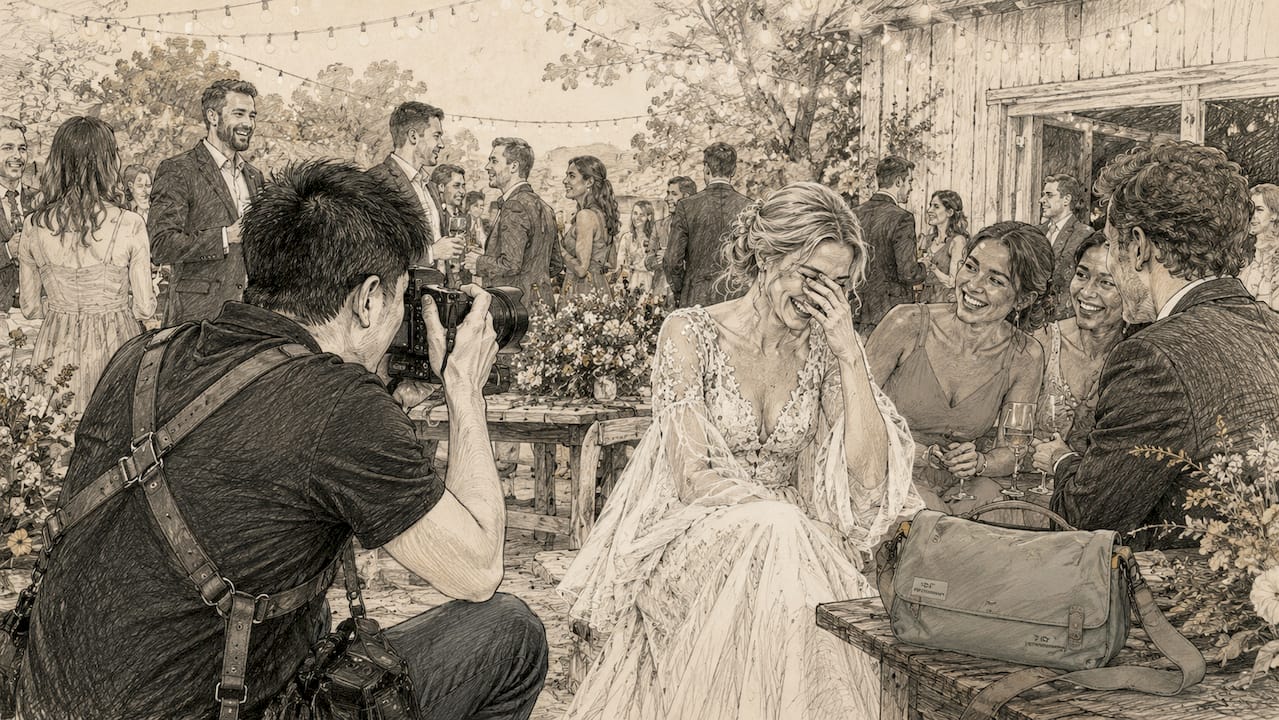
This is not a smile-at-the-camera shot. It is a frame caught mid-feeling: a bride laughing so hard she covers her face, a groom wiping his eyes before his partner reaches the altar. Effective candid storytelling uses deliberate composition strategies, including layering and waiting for peak emotional moments. The photographer positions early and anticipates the reaction rather than chasing it after it starts.
2. The layered scene with multiple interactions
A layered composition captures two or more things happening at once. In the foreground, the couple shares a quiet word. In the background, a bridesmaid adjusts her dress while a groomsman laughs at something on his phone. This type of image rewards a second look and communicates the full, busy reality of a wedding day.
3. The quiet moment before the ceremony
This is one of the most requested and most powerful examples in any storytelling gallery. The groom standing alone by a window. The bride sitting with her father before the processional begins. These images carry enormous emotional weight precisely because nothing "big" is happening. The story is entirely in the stillness.
4. The reaction shot during the vows
Most photographers capture the person speaking their vows. The better storytelling choice is often the person listening. Tears, a trembling lip, a slow smile spreading across a face. These reaction shots are what guests remember feeling but rarely see in real time. A candid wedding moments list should always include this one.
5. Environmental storytelling with the venue
A wide shot of your reception hall before guests arrive tells a story about the care and detail that went into planning. An image of your ceremony space framed through a doorway or window adds depth and context. These environmental shots give your gallery a sense of place that tight portraits cannot provide.
6. The sequence showing an unfolding narrative arc
Think of the getting-ready sequence as a short film. It opens with the chaos of hair and makeup, moves through the quiet moment of putting on the dress, and ends with the first look in the mirror. Viewing your gallery as a visual story, not just a collection of standalone images, is what separates a great gallery from a forgettable one.
7. Detail shots that carry personal meaning
Your grandmother's ring on the bouquet. The handwritten note tucked into your partner's jacket pocket. The worn cover of the book you both love, sitting on the ceremony table. Detail shots work as storytelling images when they connect to a real relationship or tradition. Without that context, they are just pretty pictures.
8. The post-ceremony exhale
The moment immediately after the ceremony ends is one of the most emotionally rich of the entire day. The relief, the joy, the disbelief that it actually happened. This is a transitional moment that successful storytelling galleries always include alongside the signature hero shots.
9. Guests caught in genuine connection
Your wedding is not just your story. It is also the story of the people who showed up for you. An image of two old friends reuniting on the dance floor, or your parents watching you from across the room, adds layers to the narrative that no posed group shot can replicate.
10. The last dance or final moment of the night
The end of the night carries its own emotional tone. The crowd has thinned, the shoes have come off, and the two of you are finally just together. This image closes the visual story of your day with the same intimacy it opened with.
3. How to prepare and communicate your vision for storytelling wedding photography
Preparation is what separates a gallery you love from one you merely like. The way you communicate with your photographer before the wedding directly shapes the quality of the storytelling images you receive.
Share a focused list of priority moments
Limiting priority moments to about five key people or events helps balance structure and spontaneity. When you give your photographer a focused list, they can capture authentic flow instead of working through a rigid checklist. More than five priorities and the day starts to feel like a photo shoot rather than a wedding.
Brief your photographer on family dynamics
Sharing contextual stories about family relationships, such as a grandparent who traveled far to be there, or a sibling who rarely shows emotion, gives your photographer the background to capture meaningful interactions. These supporting characters are often the most powerful narrative anchors in a finished gallery.
Here are the key communication points to cover before your wedding day:
- Identify 3–5 moments that matter most to you personally, not just the standard ceremony and reception beats.
- Name the people who carry emotional weight in your story, with a brief note on why they matter.
- Share any traditions or details that have personal significance so they are not missed.
- Discuss your timeline and flag any gaps where you want natural, unscheduled time.
- Talk about your comfort level with the camera so your photographer knows how much direction you want.
Give your photographer creative freedom
Trusting the photographer's vision, rather than micromanaging every shot, produces stronger authentic storytelling images. Documentary photographers are not passive. They actively position themselves based on light and context to compose meaningful shots. When you give them room to work, they can do their best work.
Build breathing room into your timeline
Over-packed timelines eliminate candid moments. Scheduling 10–15 minute gaps between major events allows natural emotional moments to unfold. A well-planned wedding day timeline is one of the most underrated tools for getting great storytelling images.
Pro Tip: Write a one-page brief for your photographer that includes the names of five key guests, one sentence about each person's relationship to you, and two or three moments you hope they catch. This brief takes 20 minutes to write and can completely change the depth of your final gallery.
4. Common mistakes in storytelling wedding photography and how to avoid them
Even couples who care deeply about authentic photography make avoidable mistakes that weaken the final gallery.
-
Over-scheduling the day. A packed timeline with no gaps is the single biggest threat to candid storytelling. When every minute is accounted for, your photographer cannot wait for a moment to develop naturally. Build in buffer time and protect it.
-
Relying too heavily on posed shots. Posed portraits are useful, but a gallery that is 80% posed images tells almost no story. Ask your photographer to spend at least as much time working candidly as they do directing formal portraits.
-
Failing to brief your photographer on less obvious moments. Your photographer does not know that your uncle always cries at weddings, or that your best friend flew in from overseas and has not seen you in two years. These are the moments that produce extraordinary images, but only if your photographer knows to watch for them.
-
Ignoring the venue's storytelling potential. The architecture, the light, the landscape around your venue all contribute to the visual story. Couples who stay in one spot for portraits miss the environmental context that makes a gallery feel specific to their day.
-
Micromanaging the photographer's process. Storytelling galleries need pacing, and pacing requires the photographer to make real-time decisions about when to shoot and when to wait. Constant direction interrupts that process and produces stiffer, less natural images.
-
Skipping the transitional shots in favor of only hero images. The first kiss, the first dance, the cake cutting. These are the hero shots. But without the quiet images that surround them, the gallery feels like a highlight reel rather than a full story. Narrative pacing requires quieter images to act as connective tissue between the highlights.
Key takeaways
The most powerful storytelling wedding galleries combine candid emotional moments, deliberate narrative pacing, and clear communication between couples and their photographer.
| Point | Details |
|---|---|
| Prioritize transitional moments | Quiet in-between shots carry as much emotional weight as the ceremony and reception highlights. |
| Limit your priority list | Give your photographer 3–5 key moments or people to focus on for the most authentic results. |
| Build gaps into your timeline | Schedule 10–15 minute buffers between major events so candid moments have room to unfold. |
| Brief your photographer on context | Share family dynamics and personal details so supporting characters are captured meaningfully. |
| Trust the photographer's process | Giving creative freedom produces stronger, more natural storytelling images than directing every shot. |
What I've learned about storytelling wedding photography after years behind the lens
Most couples come to me thinking storytelling photography means zero input from them. They picture a photographer floating invisibly through the day, catching magic as it happens. That is part of it. But the galleries I am most proud of always came from couples who did the prep work.
The couples who wrote that one-page brief, who told me about the grandmother who had not seen the bride since childhood, who built a timeline with actual breathing room in it. Those are the weddings where I caught the images that made people cry when they saw the gallery for the first time.
The other thing I have noticed is that couples underestimate the power of imperfection. A slightly blurry image of two people laughing uncontrollably tells a better story than a technically perfect portrait where everyone is smiling on cue. Authenticity reads. Viewers feel the difference immediately, even if they cannot explain why.
My honest advice: look at a photographer's full gallery from a single wedding, not just their highlight reel. A highlight reel shows you their best ten images. A full gallery shows you whether they can sustain a narrative across an entire day. That is the skill that actually matters for unique wedding photography that holds up over time.
— Billy
BGF Photography's approach to wedding storytelling
BGF Photography is built around the belief that your wedding gallery should feel like reading a book about your day, not flipping through a catalog of portraits.
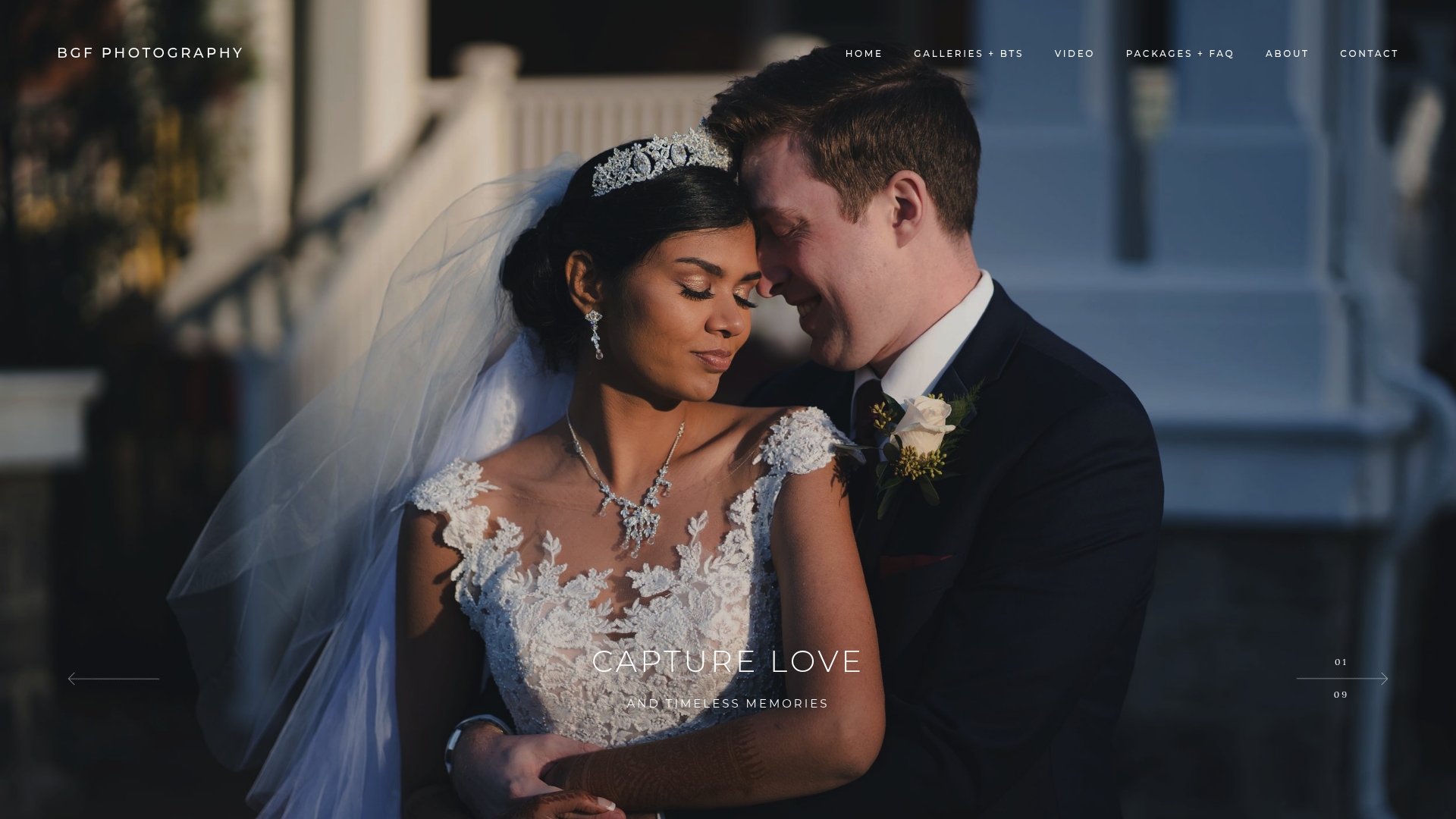
The approach at BGF Photography is candid first, narrative always. Every wedding is covered with the goal of capturing the full emotional arc of the day, from the quiet nervousness of getting ready to the last song of the night. BGF Photography also offers hybrid coverage, combining photography and videography under one cohesive style so your story is told consistently across both formats. If you are ready to see what this looks like in practice, explore the packages and pricing to find the right fit for your wedding day.
FAQ
What is storytelling wedding photography?
Storytelling wedding photography is a narrative-driven approach that captures a wedding day as a sequence of real, emotional moments rather than posed portraits. It draws on photojournalistic, documentary, and candid styles to document authentic feelings, relationships, and transitions throughout the day.
How is candid wedding photography different from traditional photography?
Candid wedding photography prioritizes unposed, natural moments over directed portraits. Traditional photography focuses on formal, staged images, while candid storytelling captures genuine reactions, layered scenes, and emotional connections as they happen.
How many key moments should I give my photographer?
Limiting your list to about five key moments or people gives your photographer enough structure to stay focused without restricting their ability to capture authentic, spontaneous images.
What makes a wedding gallery tell a complete story?
A complete storytelling gallery includes narrative pacing with quieter connecting images between highlights, transitional moments before and after major events, environmental context shots, and candid portraits that reveal genuine emotion throughout the day.
Should I give my photographer a shot list?
A short, focused list of 3–5 priority moments is helpful. A rigid, exhaustive shot list works against storytelling photography because it shifts the photographer's attention from watching and anticipating to checking boxes, which produces stiffer and less authentic images.