
TL;DR:
- Preserving wedding memories for family involves creating a lasting archive of physical keepsakes, digital media, and sensory records that can be experienced across generations. Focusing on emotionally meaningful items that are actively displayed and revisited ensures long-term retention, while digital storage with proper backups and organized files preserves photos and videos effectively. Regular rituals and active involvement of family members keep these memories alive, turning preservation into a living, lasting family tradition.
Preserving wedding memories for family means building a lasting archive of physical keepsakes, digital media, and sensory records that future generations can experience, not just glance at. Most couples photograph the flowers and the cake, then forget to capture the sound of their grandmother laughing or the exact words their best friend whispered during the first dance. Memory preservation, as archivists and professional photographers define it, is the deliberate practice of recording, organizing, and maintaining multiple formats of a single event so the emotional truth of that day survives intact. This guide covers exactly how to do that, from choosing the right physical keepsakes to building a digital archive that will not corrupt or disappear in ten years.
Which wedding keepsakes truly preserve memories long-term?
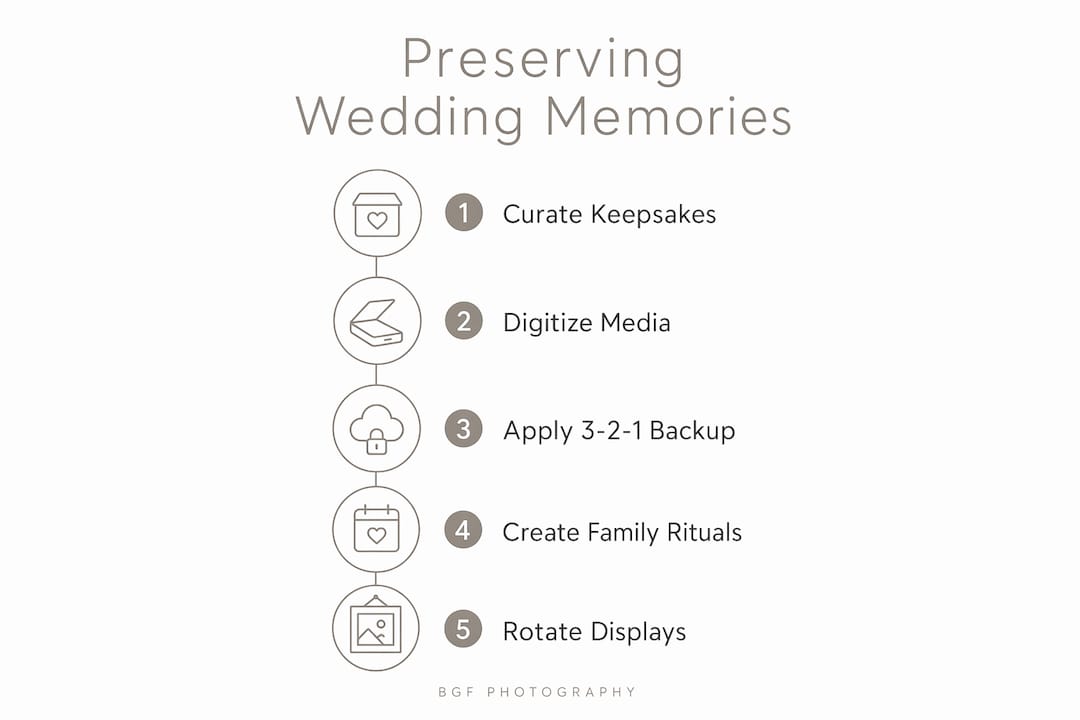
The most durable family wedding keepsakes share one quality: you encounter them without looking for them. A framed vow card on the bedroom wall works harder than a box of wedding favors stored in a closet. Before you decide what to keep, apply what preservation specialists call the 5-year test: will this item be actively displayed, revisited, and meaningful five years from now? Research shows only 5 to 9 items out of a typical haul of 12 to 20 keepsakes actually maintain emotional value over time. That means most of what couples save becomes clutter, not memory.
The items that consistently pass the test fall into a few clear categories:
-
Vow cards framed in matching frames and hung together in a bedroom or hallway. They are read, not stored.
-
Pressed bridal bouquets professionally mounted in resin shadowboxes. Professional pressing and resin framing extend the lifespan of flowers by decades compared to DIY drying.
-
Engraved wedding bands or jewelry worn daily, which carry the memory on the body rather than in a drawer.
-
A single curated wedding album printed on archival paper, placed on a coffee table where guests and children pick it up naturally.
-
Handwritten letters exchanged before the ceremony, stored flat in acid-free tissue inside a light-protected box.
Storing paper keepsakes correctly matters as much as choosing them. Acid-free tissue prevents the chemical breakdown that yellows paper within a decade. Light protection, meaning a box or frame with UV-filtering glass, stops the fading that makes old photos look washed out. These are not expensive solutions. Archival storage boxes from Gaylord Archival or similar suppliers cost under $30 and protect items for generations.
Display strategy is where most couples fall short. Rotating keepsakes through your living space every year or two keeps them visible without overwhelming a room. A shadowbox on the entryway wall, a framed photo on the kitchen shelf, and a small memory tray on a dresser create daily touchpoints without turning your home into a wedding museum.
Pro Tip: Curate fewer items with higher meaning rather than saving everything. Three keepsakes you see every day will do more for your family’s memory than twenty items packed in a bin.
How to preserve and curate wedding photos and videos for families
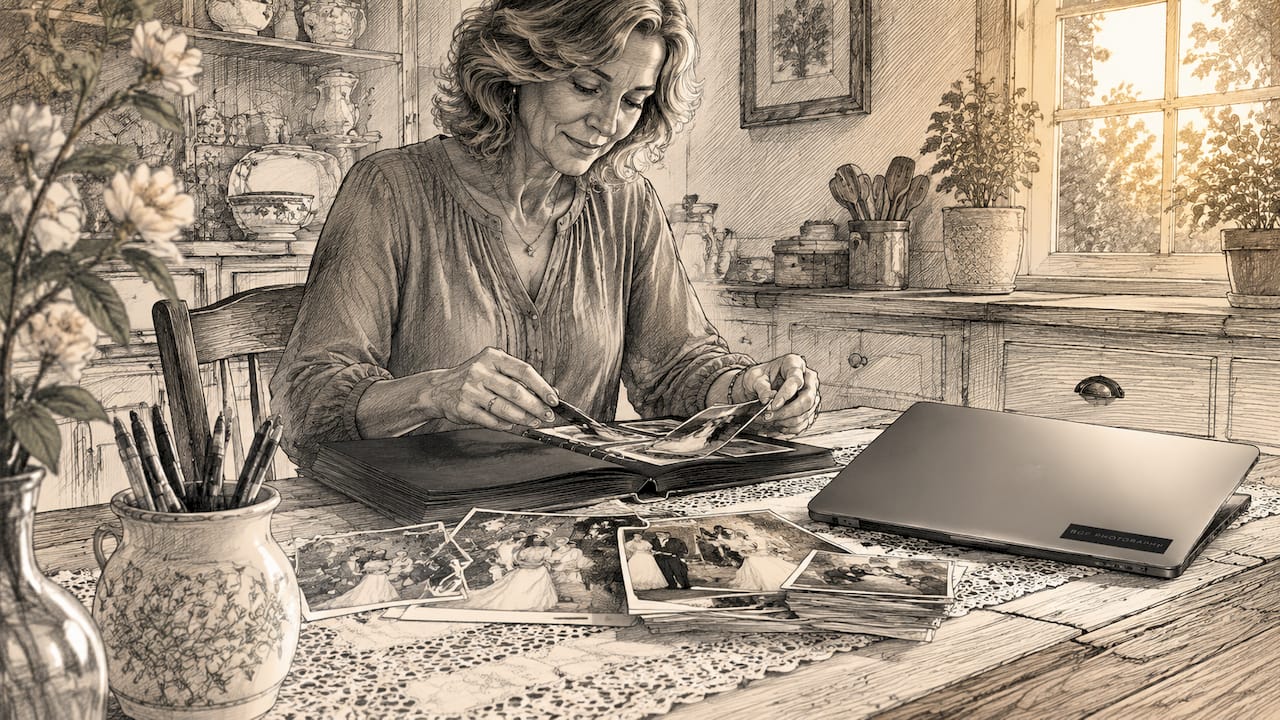
A centralized digital archive is the backbone of any serious effort to save wedding memories. Without one, photos scatter across Google Photos, a photographer’s delivery link, a phone camera roll, and a cousin’s Facebook album. Within five years, some of those sources disappear. The solution is a single master folder, organized by a consistent naming convention that includes the date, event type, and subject. For example: 2026-06-14_Ceremony_Vows or 2026-06-14_Reception_FirstDance. Consistent file naming accelerates future search and makes it possible for someone unfamiliar with the archive to find a specific moment in minutes.
Choosing the right video format
Not all video formats age equally. ProRes and MP4 (H.264 or H.265) are the two formats worth keeping for long-term storage. ProRes preserves maximum quality for archival purposes. MP4 is the sharing format, compatible with virtually every device made in the last fifteen years. Storing both versions of your wedding film gives you an archival master and a shareable copy without sacrificing either. Avoid proprietary formats tied to specific editing software, since those become unreadable when the software is discontinued.
Understanding the difference between video types
| Video Type | Length | Best Use |
|---|---|---|
| Highlight reel | 3 to 5 minutes | Social sharing, anniversaries |
| Short film | 8 to 12 minutes | Family viewings, emotional recap |
| Family documentary | 12 to 20 minutes | Heirloom viewing, future generations |
| Full ceremony recording | 60 to 90 minutes | Legal record, vow reference |
A family documentary film of 30 to 60 minutes is the most effective format for preserving wedding memories across generations. It consolidates raw footage from multiple sources, edits for emotional impact, and exports in multiple formats for both archiving and sharing. Highlight reels are satisfying to watch once. A well-produced documentary gets watched on anniversaries, shown to children, and replayed at family gatherings for decades.
Backing up without losing access
The 3-2-1 backup strategy is the standard used by archivists and IT professionals alike. Keep three copies of your files on two different types of media, with one copy stored off-site. In practice, that means an external hard drive at home, a second drive at a family member’s house, and a cloud storage account such as Backblaze or Amazon S3. Avoid relying solely on consumer platforms like Google Drive or iCloud, since storage terms, pricing, and availability change. Platform lock-in is a real risk: couples who stored wedding videos exclusively on now-defunct services have lost footage permanently.
Metadata matters more than most people realize. Embedding captions, names, and dates directly into photo and video files using tools like Adobe Bridge or ExifTool means the information travels with the file even if it is moved or renamed. Schedule a migration check every five to seven years to confirm files are still readable and to move them to updated formats if needed.
Pro Tip: Produce a 12 to 20 minute family documentary film from your wedding footage. It is the format most likely to be watched repeatedly and passed to the next generation.
What creative keepsakes add emotional depth beyond photos?
Documenting human elements like voices, laughter, and personal stories creates more valuable memories than preserving decor or favors. This is the insight most couples miss when planning their preservation strategy. A centerpiece photograph fades in emotional power within a year. A recording of your father’s toast, complete with the catch in his voice and the room’s laughter, will move you to tears twenty years from now.
Here are the most emotionally resonant creative keepsakes worth considering:
-
Audio guest books using dedicated devices like the Guestbook Audio Book or a simple voice recorder. Audio captures the unique timbre and emotional context of voices better than photos or videos, making it the most emotionally resonant memory format years later. Professionally mixed audio files maintain high fidelity for replay decades later.
-
Framed vows with personal letters written before the ceremony. Seal the letters and open them on your fifth anniversary. The act of writing forces clarity about what the day meant.
-
Pressed flowers and ceremony candles stored in sealed containers. Scent is processed by the brain’s limbic system, the same region that handles emotion and memory, which is why smelling a familiar perfume or candle can transport you back to a specific moment more vividly than a photograph.
-
Voice wave jewelry that converts an audio waveform of a meaningful phrase or vow into a physical piece of jewelry. Companies like SoundWave Art produce these as necklaces or cuffs.
-
Recipe cards for signature cocktails or dishes served at the reception. These become interactive keepsakes: you recreate the drink on anniversaries, which triggers the memory through taste and ritual simultaneously.
-
Shadow boxes combining a small collection of items: a piece of fabric from the dress, a pressed flower, the ceremony program, and a printed photo. One object tells a fragment of the story. A curated shadow box tells the whole day.
Annual rituals amplify the value of every keepsake. Opening an anniversary box each year, pulling out the audio guest book, and listening to a few messages turns preservation into a living practice rather than a one-time effort. Yearly anniversary rituals turn preservation into a joyful tradition rather than a chore, and they give children a structured way to participate in the family’s story.
How to maintain wedding memories as a living family tradition
Preservation is not a task you complete once and file away. The couples who stay most connected to their wedding memories treat the archive as something alive, something that grows and gets revisited on a schedule. Here is a practical framework for making that happen:
-
Set an annual anniversary ritual. On your anniversary each year, open the memory box, watch a portion of the wedding film, and listen to two or three audio guest book recordings. Keep the ritual short enough that it feels like a celebration, not an obligation.
-
Refresh digital formats every five to seven years. Storage technology changes. What plays perfectly on a 2026 laptop may not open on a 2036 device. Schedule a calendar reminder to check file formats, update metadata, and migrate to current standards.
-
Involve family members actively. Share the digital archive with parents and siblings through a shared folder on a platform like Dropbox or a private family server. Ask family members to contribute their own photos and videos from the day. A cousin’s candid shot of the dance floor often captures something the professional photographer missed.
-
Rotate physical displays seasonally. Swap keepsakes between rooms twice a year. Moving the shadowbox from the bedroom to the living room makes it visible to guests and reminds you to look at it again. Static displays become invisible within weeks.
-
Use the wedding album as a storytelling tool with children. Sit down with a printed album and narrate the day. Children who grow up hearing the story of their parents’ wedding develop a stronger sense of family identity and continuity.
Physical prints interrupt the normal flow of daily life and keep memories vivid in a way that digital-only photos rarely achieve. Print your favorite images within 30 days of the wedding and frame at least three for immediate display. The habit of printing, not just storing, is what separates families who actively live with their memories from those who rediscover them by accident years later.
Pro Tip: Create a shared family folder and invite parents and siblings to upload their own photos and videos from the wedding day. You will recover moments the professional photographer never saw.
Key takeaways
Preserving wedding memories for family requires a deliberate combination of curated physical keepsakes, a structured digital archive, and repeating rituals that keep those memories active across generations.
| Point | Details |
|---|---|
| Apply the 5-year test | Keep only keepsakes you will display, revisit, and carry to future milestones. |
| Use the 3-2-1 backup rule | Store three copies of digital files on two media types, with one copy off-site. |
| Prioritize audio and sensory keepsakes | Voice recordings and scent-based keepsakes trigger stronger emotional recall than photos alone. |
| Produce a family documentary film | A 12 to 20 minute edited film is the most replayed and emotionally durable video format. |
| Make preservation a ritual | Annual anniversary reviews and rotating displays keep memories vivid and family bonds strong. |
Why preservation is the most underrated part of your wedding
I have photographed and filmed weddings in Buffalo and Rochester for years, and the pattern I see most often is this: couples spend months planning the flowers, the venue, and the catering, then give almost no thought to what happens to the memories after the day ends. Six months later, the photos are buried in a delivery folder no one has opened. The audio guest book is still in the box.
What I have learned is that the couples who feel most connected to their wedding years later are not the ones who had the biggest budget. They are the ones who treated preservation as part of the plan, not an afterthought. They printed photos within a month. They watched their film on their first anniversary. They kept the vow cards somewhere they could read them.
The sensory keepsakes surprise people most. I have watched couples listen to an audio recording of a grandparent’s voice at a one-year anniversary and be completely undone by it, in the best possible way. That grandparent may be gone now. The photograph exists, but the voice is what makes the memory real. Voice recordings evoke stronger emotional responses than visual media because they capture tone, pauses, and ambient sound that a photograph simply cannot hold.
My honest advice is to prioritize quality and meaning over quantity. You do not need twenty keepsakes. You need five that you will actually live with. You do not need a two-hour wedding film. You need a well-produced short film you will watch every year. The goal is not to archive the day. The goal is to keep it alive.
— Billy
Capture it right the first time with BGF Photography
The best preservation strategy starts with footage and photos worth preserving. BGF Photography serves couples in Buffalo and Rochester, NY, with candid photography and videography that captures genuine emotion rather than posed moments. The hybrid coverage model means your photos and videos share a single cohesive style, making it far easier to build a unified archive and family documentary later. BGF Photography also offers film photography for couples who want a nostalgic, tactile quality that digital alone cannot replicate. Explore photography and videography packages to find the coverage level that fits your wedding vision and gives your family memories worth keeping for generations.
FAQ
What is the best way to preserve wedding memories for family?
The most effective approach combines curated physical keepsakes, a structured digital archive using the 3-2-1 backup strategy, and annual rituals that revisit photos, videos, and audio recordings. No single format is sufficient on its own.
How long do wedding photos and videos last in digital storage?
Digital files stored in open formats like MP4 or ProRes on multiple media types can last indefinitely, but migration checks every five to seven years are necessary to prevent data rot and format obsolescence.
What are the most meaningful family wedding keepsakes to save?
Items that pass the 5-year test, meaning they are displayed, revisited, and travel to future milestones, include framed vow cards, resin shadowboxes with pressed flowers, curated wedding albums, and audio guest book recordings.
Are audio guest books worth it for wedding memory preservation?
Audio guest books are among the highest-value wedding keepsakes because voice recordings capture tone and emotion that photos and videos cannot replicate, and they become irreplaceable once older family members are no longer present.
How do you make wedding memories last for future generations?
Produce a 12 to 20 minute family documentary film from your wedding footage, store it in multiple formats and locations, and establish annual anniversary rituals that involve the whole family in revisiting and sharing the story of the day.