
Yes, keep the shoot. A rainy engagement session usually produces softer light, richer color, and reflections you simply cannot get on a sunny afternoon, and most light-to-moderate rain is safe and workable with the right prep. The only real reasons to reschedule are thunderstorms, high wind, or genuinely unsafe footing. Everything else below is how to make the most of the drops.
TL;DR:
- Overcast skies diffuse sunlight, creating soft, even lighting that enhances close-up portraits and reduces harsh shadows.
- Rain intensifies color saturation, reflects light in puddles, and adds cinematic haze, making puddle reflections and backlit drops especially compelling.
- Pack quick-dry clothing, a clear umbrella, microfiber towels, and plan for shorter sessions with cover options to stay comfortable and protect gear.
- Use props like colorful umbrellas, rain boots, and shared blankets, and opt for low angles and candid movement to maximize rainy-day photo opportunities.
- Communicate plan details and backup locations with your photographer beforehand, and prioritize safety by avoiding lightning, slick surfaces, and overly heavy rain.
Table of Contents
- Why Rain Can Actually Improve Your Engagement Photos
- What to Pack for a Rainy Engagement Shoot
- Creative Poses and Props Worth Requesting
- Best Locations and Timing for Wet-Weather Photos
- How Photographers Protect Gear (and Keep You Comfortable) in the Rain
- How to Talk to Your Photographer About Rain Plans
- Backup Plans: Indoor and Covered Venue Options
- Staying Warm and Comfortable While You Shoot
- Keeping the Mood Light and the Smiles Real
- A Photographer's Take on Chasing the Rain
- Book a Rainy-Ready Engagement Session
- Sources
- FAQ
Why Rain Can Actually Improve Your Engagement Photos
Overcast skies act like a giant diffuser. Clouds scatter the sunlight before it hits your faces, so you get soft, even light with none of the harsh shadows under the eyes or nose that direct sun creates. That softness makes close-up portraits far more forgiving, which is exactly why so many photographers quietly hope for a gray sky on shoot day.
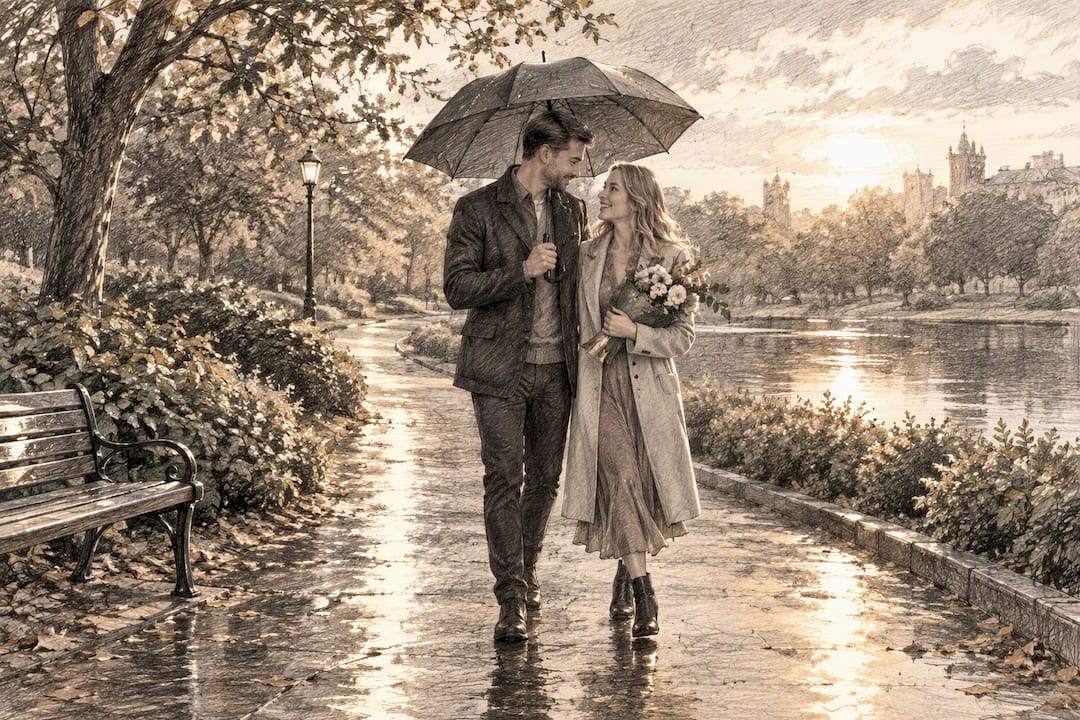
Wet surfaces do their own kind of magic. Rain intensifies color saturation on pavement, leaves, and brick, and puddles turn into makeshift mirrors that double your composition options. Photographers actively plan around these reflections and backlit raindrops rather than treating rain as something to work around.
A few specific effects worth knowing:
- Backlighting raindrops (shooting toward a light source through falling rain) makes each drop catch light like tiny sparks.
- Puddle reflections double as a free second subject, especially shot from low angles.
- Mist and light fog add depth and a cinematic haze between you and the background.
- Wet leaves, cobblestones, and brick read far more vivid than they do dry.
One caveat before you get excited about puddle-jumping: skip the shoot entirely if there's lightning nearby, and stay off wet stone stairs, mossy paths, or anything with visible ice. Creative photos are worth chasing. A twisted ankle is not.
What to Pack for a Rainy Engagement Shoot
The right prep turns "uh oh, it's raining" into "let's go." Pack smart and you'll spend more time posing and less time shivering or hunting for dry socks.
Clothing choices that hold up:
- Quick-dry fabrics over anything cotton, which stays soaked and heavy once it's wet.
- A dress with a short or knee-length hem instead of a long train that drags through puddles.
- A backup outfit in the car, plus a spare pair of shoes and socks for the ride home.
- Closed-toe shoes with some grip. Flip-flops and rain do not mix well on wet stone.
What to stuff in your bag:
- A clear umbrella so light still reaches your faces, (colored umbrellas block more light but add a pop of color).
- A few microfiber towels for hands, faces, and lenses between shots.
- A ziplock bag or dry pouch for your phone and keys.
- Travel-size hairspray or anti-frizz cream, plus deodorant for touch-ups.
Logistics that keep the session on track: Check a radar-based weather app the morning of, not just a general forecast, so you know exactly when bands of heavier rain are likely to pass. Plan a shorter session than usual, since you won't need as much time to get striking shots in flattering light. Scout parking near a covered spot in advance so you're not sprinting three blocks in the rain to warm up.
Pro Tip: Bring a thermos of coffee or hot chocolate. It gives you something to hold in photos and keeps you warm between setups, which matters more than most couples expect.
Creative Poses and Props Worth Requesting
A rainy sky opens up shot ideas a dry, sunny day just can't match. Here are the ones worth texting your photographer before the session so you're both on the same page.
Props that photograph well in rain:
- A clear umbrella, which lets soft light wash over your faces instead of casting a shadow.
- A bold-colored umbrella (red or yellow) for a graphic pop against gray backgrounds.
- Matching rain boots, which read as playful rather than an afterthought.
- A cozy shared blanket for a slower, quieter moment under a shelter.
- A steaming coffee cup, which adds visible warmth and a small prop to hold.
Poses and moments to try:
- Forehead to forehead under one umbrella. It's intimate, it's simple, and it works every time.
- A low-angle shot into a puddle so your reflection doubles the composition.
- Walking shots with intentional motion blur in the rain streaks behind you.
- A spontaneous spin or dance that flings water droplets into the air.
- A silhouette shot with backlighting so the rain itself becomes the texture.
Composition matters as much as the pose itself. Getting low toward a puddle almost always beats shooting from standing height, and storefront lights or streetlamps at dusk create soft bokeh behind you. Mixing candid movement (walking, laughing, spinning) with a few still, close portraits gives your gallery real variety instead of ten versions of the same standing pose. Photographers who shoot rain regularly also lean on specific shutter speed and aperture choices to either freeze each raindrop sharp or blur it into a soft streak, depending on the mood you're after.
Best Locations and Timing for Wet-Weather Photos
Not every spot works equally well in the rain, and timing shifts the mood more than most couples realize.
Locations with partial cover give you the best of both worlds: you can see the rain falling but you're not fully exposed to it. Think building arcades, gazebos, awnings over storefronts, or a covered terrace like the kind you'll find at Bethesda Terrace in Central Park. A covered walkway at a botanical garden works the same way, with greenery as a bonus backdrop.
Urban settings tend to shine in the rain because of reflections:
- Wet pavement doubles storefront and streetlamp light into long, glossy streaks.
- Neon signs and cafe windows at dusk add color you won't find on a clear afternoon.
- Covered transit hubs or train station overhangs make for dramatic, moody frames.
Parks and nature spots offer their own version: tree canopies that thin out the rain overhead, covered bridges, and boardwalks that hold reflections in standing water.
On timing, aim for a lull in the rain, right after a heavier band passes through, or golden hour once the rain lets up. Warm late-day light hitting wet surfaces creates a glow that's hard to replicate any other way.
How Photographers Protect Gear (and Keep You Comfortable) in the Rain
Behind every good rainy-session photo is a photographer quietly managing gear, timing, and comfort so you never notice the juggling act.
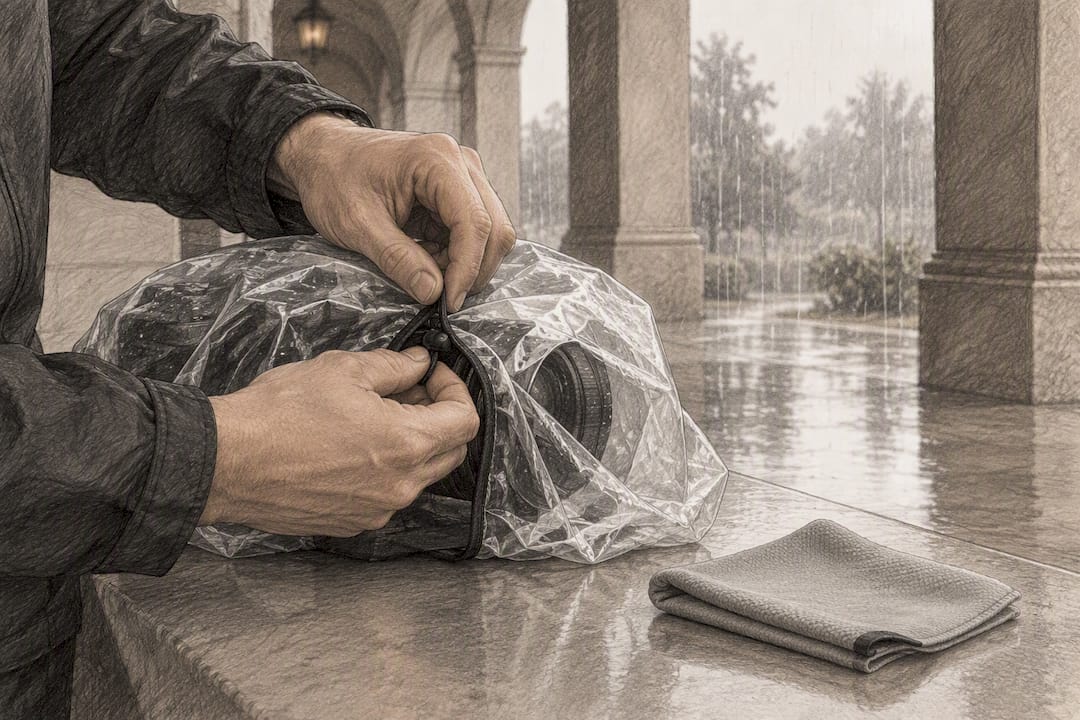
The basics of gear protection matter more than most couples assume. Weather sealing on cameras varies significantly by model and is never a substitute for actual protection, which is why experienced photographers carry:
- Rain covers or sleeves for the camera body and lens.
- A lens hood to keep drops off the front element.
- Multiple microfiber towels, swapped out as they get damp.
- Plastic bags with silica desiccant packs for storing gear after the shoot to prevent internal moisture and fungus.
On the tactics side, shooting in short, focused bursts and locking in the priority shots early protects against a sudden downpour cutting the session short. Many photographers also bring an assistant to hold an umbrella over the gear during lens changes, since swapping lenses in open rain is one of the fastest ways to let water inside a camera body. In windy conditions, a sturdy handheld umbrella beats a tripod-mounted one, which can catch wind and topple.
Safety rules stay non-negotiable: no shooting during lightning, extra caution on slick stone or wet leaves, and a willingness to cut the session short if you're both getting genuinely cold. BGF Photography has built rainy-session experience into how Billy plans shoots, and the rainy wedding day gallery shows what that experience produces in practice.
How to Talk to Your Photographer About Rain Plans
The single biggest factor in a rainy session going well isn't the weather. It's whether you and your photographer talked through the plan beforehand.
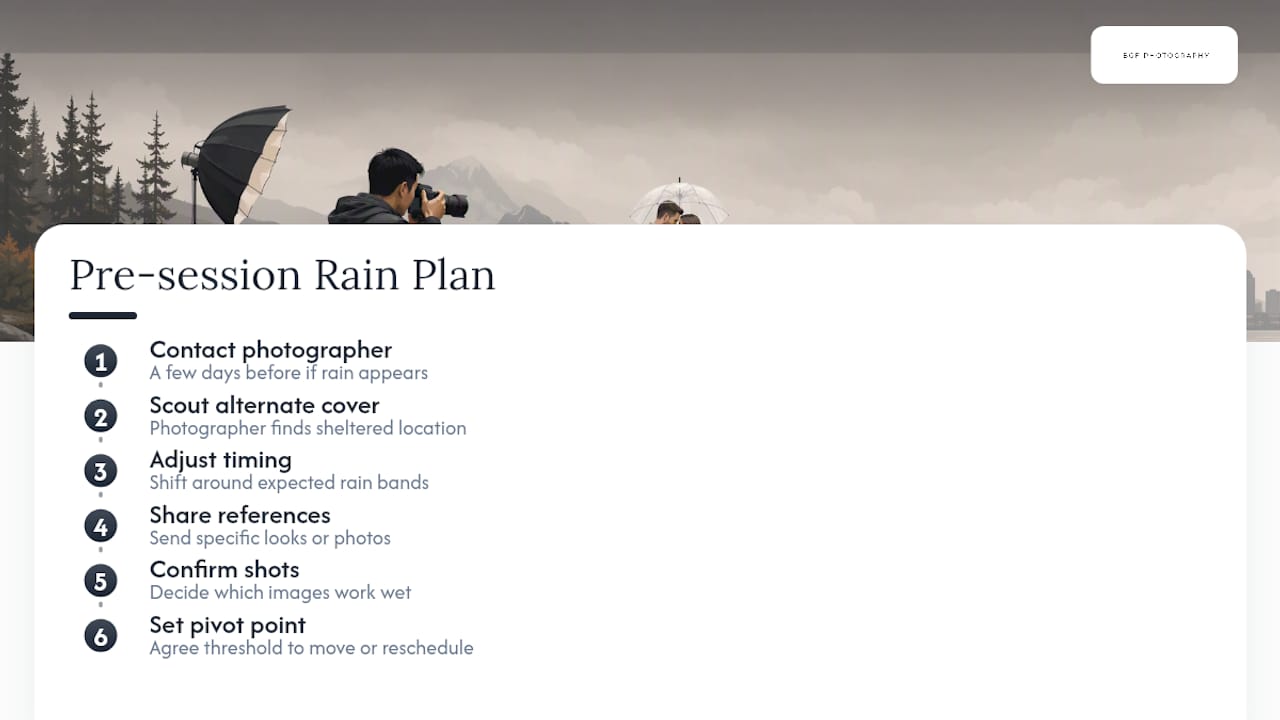
Reach out a few days before the shoot once you see rain in the forecast, not the morning of. That gives your photographer time to scout an alternate location with cover, adjust the timing around expected rain bands, and think through which shots will actually work best in wet conditions. If you have a specific look in mind, whether that's a moody silhouette or a playful puddle-splash moment, say so directly. Sharing reference photos or specific ideas with your photographer beforehand almost always produces better results than describing a vague vibe on the spot.
Ask your photographer directly how they handle rain logistics. Do they carry rain covers for their gear? Do they have a backup indoor location already in mind? A photographer who shoots rain regularly will have concrete answers, not vague reassurances.
It's also worth agreeing on a decision point ahead of time: at what point does light rain become "let's move somewhere covered" or "let's reschedule"? Setting that threshold together, rather than deciding in the moment while you're both getting soaked and stressed, keeps the day feeling collaborative instead of chaotic. Flexibility goes both ways. Your photographer should be willing to pivot fast, and you should trust their read on when conditions genuinely aren't safe anymore.
Backup Plans: Indoor and Covered Venue Options
Even the best rain plan sometimes needs a plan B, and having one ready removes most of the stress from a session that starts getting rained out.
Covered outdoor spots are usually the smoothest pivot because they preserve the mood of rain without full exposure to it. A building arcade, a park gazebo, or a covered terrace lets you keep the atmospheric backdrop while staying dry. If the rain turns heavier than expected, a fully indoor option works just as well: a bookstore with good window light, a conservatory, a train station with architectural character, or even a cozy coffee shop can all produce genuinely great candid photos.
The transition works best when it's quick and low-drama. Your photographer should already have a short list of two or three nearby covered or indoor spots picked out before the shoot even starts, so nobody's standing in the rain scrolling Google Maps. If you booked a specific outdoor location, ask ahead of time whether there's a covered structure nearby you can shift to within a five or ten-minute walk or drive.
Treat the backup location as a real part of the plan, not a disappointing fallback. Some of the most candid, relaxed photos happen indoors precisely because you've stopped worrying about getting soaked and started actually enjoying each other's company. A shift indoors often loosens people up in a way the original outdoor plan never would have.
Staying Warm and Comfortable While You Shoot
Cold, uncomfortable people do not photograph well. Genuine smiles get harder to fake once you're shivering, so managing comfort is just as important as managing the camera gear.
Layer smart from the start. A warm layer you can shed for the photos themselves, then throw back on between setups, keeps your core temperature up without showing in the shots. A thermos of something hot gives you a reason to pause, warm your hands, and reset between poses. Toe warmers tucked into your shoes do more for comfort than people expect, especially on a cool, wet day when standing still for photos gets uncomfortable fast.
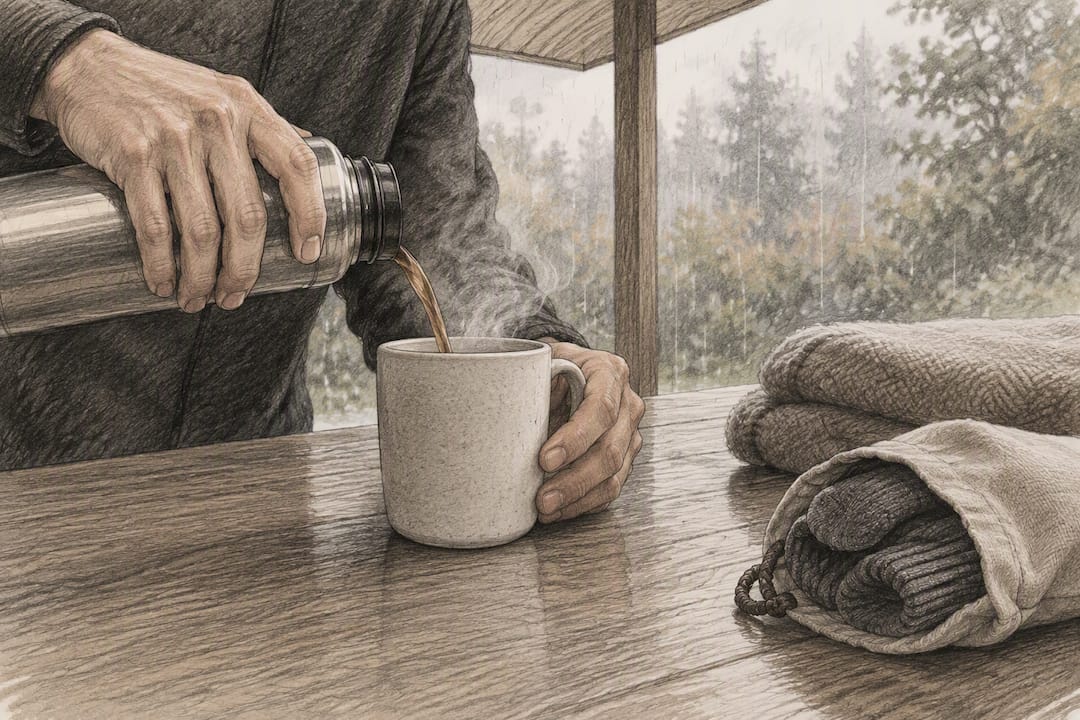
Build short warm-up breaks into the session itself rather than pushing straight through. Ducking under an awning for two minutes to towel off and warm up doesn't just help your comfort. It resets your expressions so the next set of photos doesn't look strained. A spare pair of dry socks in the car for the ride home matters more than most couples think to pack, since wet feet are often the single biggest comfort complaint after a rainy shoot wraps.
Keep the session itself shorter than a typical dry-weather shoot. You don't need ninety minutes of shivering to get a full gallery. A focused 45 to 60 minutes, hitting the priority shots first, usually produces just as strong a set of images with far less discomfort.
Keeping the Mood Light and the Smiles Real
Candid, natural-looking engagement photos depend entirely on you two actually having fun, and rain either kills that or fuels it depending on how you approach it.
Treat the rain as part of the adventure instead of an obstacle to survive. Couples who lean into it, laughing at a sudden gust or intentionally splashing through a puddle, produce far more genuine expressions than couples gritting their teeth through a shoot they wish were sunny. Your photographer can prompt playful moments (a spin, a race to the umbrella, a shared laugh at how soaked you both are), but the energy has to come from you.
Talk to each other during the shoot instead of just posing at the camera. Some of the best candid engagement photos happen in the two seconds after a formal pose, when you both crack up at how ridiculous you look holding an umbrella in a windstorm. A good photographer is watching for exactly that moment, not just the posed shot right before it.
If the rain picks up unexpectedly, take it as an excuse for a quick break and a laugh rather than a crisis. That shift in attitude reads on camera. Couples who stay relaxed and playful through weather hiccups almost always end up with a stronger, more natural gallery than couples who power through stressed and tense.
A Photographer's Take on Chasing the Rain
Some of the most talked-about galleries come from sessions where the forecast looked terrible on paper. A couple huddled under one umbrella, laughing at how drenched they both got walking to the car, tends to produce more genuine emotion than a picture-perfect sunny afternoon where everyone's a little too aware of the camera.
Safety and warmth always come first. A shorter, well-planned session in manageable rain beats a long one where everyone's miserable, and there's no photo worth risking a slip on wet stone or standing outside during a lightning warning. If you want to see what this actually looks like in practice rather than just in theory, the rainy engagement and wedding examples on the BGF Photography blog show real sessions, not staged mockups.
— Billy
Book a Rainy-Ready Engagement Session
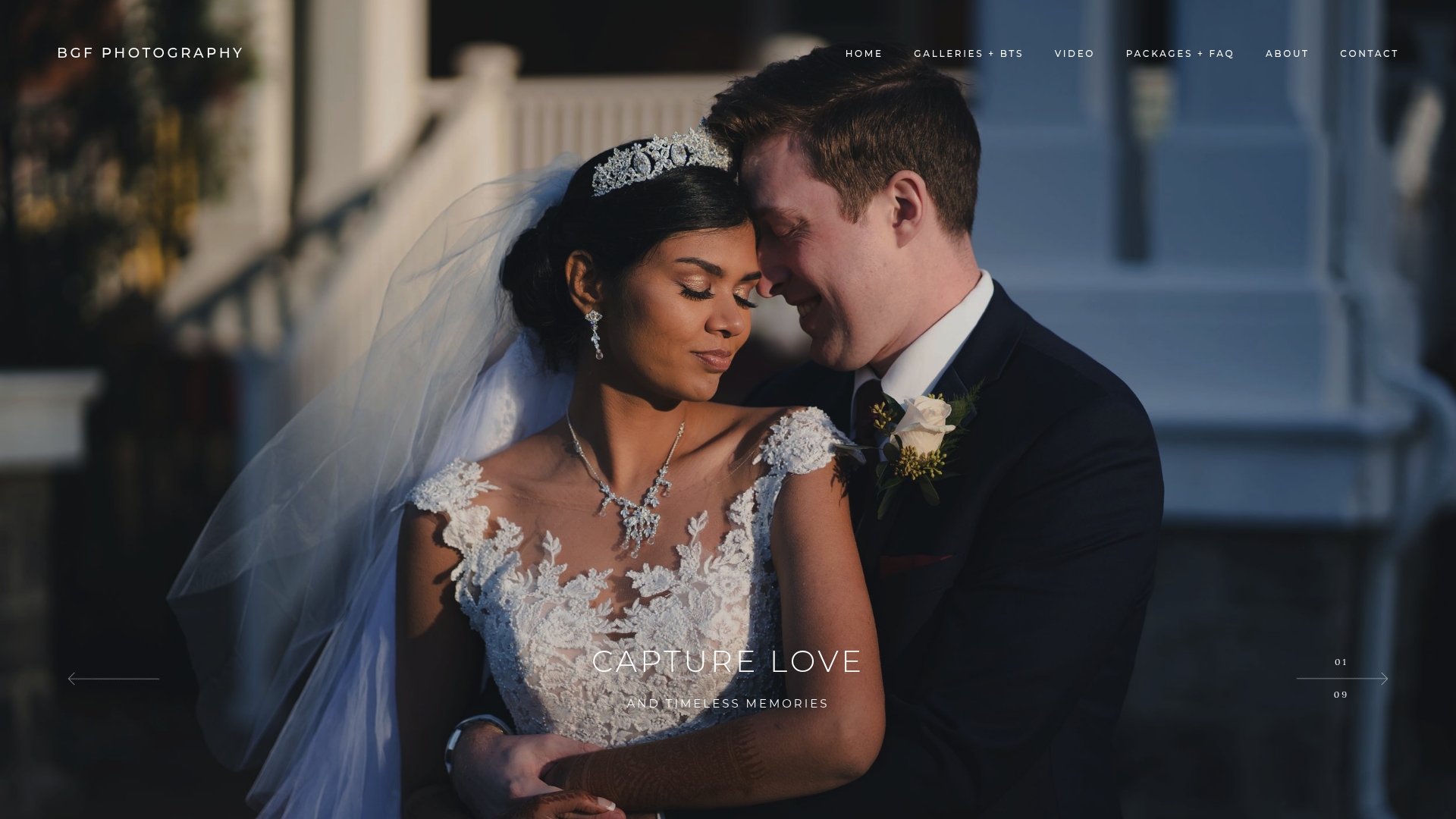
This photographer specializes in candid, unobtrusive photography, a style that thrives in rain. Genuine reactions, spontaneous laughter, and unposed movement all photograph better when you're not stiffly holding a smile, rain or no rain. Hybrid photo and video coverage offers the ability to capture the same rainy session in motion as well as in stills, all under one cohesive visual style.
Booking an engagement session typically includes a conversation ahead of time about your vision, location ideas, and a rain contingency plan, so nobody's improvising on the day of. If a bold color palette or specific prop is on your wish list (rain boots, a favorite umbrella, a shared blanket), mention it early and it becomes part of the plan rather than an afterthought. Before your session, it's worth glancing at outfit and style inspiration so you walk in already knowing what looks best on camera, and if you're timing hair and makeup around the shoot, this photo-ready nail guide is a handy reference for the small details that show up in close-up shots.
Ready to lock in a date? Check current packages and pricing on the investment page and get your rainy-day plan started today.
Sources
- Rainy Day Photography: Essential Tips for Protecting Your Gear | Fstoppers
- Master the Rain Photoshoot: Pro Gear, Settings & Ideas | Insta360 blog
- 10 Tips for Taking Beautiful Photos in the Rain | Photography Life
- How to master the art of rain photography | Skylum Blog
FAQ
What Should You Do if It Rains on Your Engagement Photo Day?
Keep the session unless there's lightning, dangerous wind, or unsafe footing. Light to moderate rain typically produces softer light and richer colors, so most photographers will recommend proceeding with an umbrella, a shorter shoot window, and a backup covered location in mind.
Is $500 a Reasonable Price for Engagement Photos?
Engagement session pricing varies widely by photographer and region, but $500 sits well within a normal, fair range for a professional session. BGF Photography's Engagement Session is priced at $500, which includes candid, natural-style coverage of your session.
What Exactly Is an Engagement Session?
An engagement session is a dedicated photo shoot booked after a couple gets engaged, usually planned separately from the wedding day itself. It gives couples a relaxed, lower-pressure chance to get comfortable in front of a camera, produces images for save-the-dates or invitations, and often lets you test out a photographer's style before the wedding.
What Should You Do if It Rains on the Wedding Day Itself?
The same core principle applies: light rain is rarely a reason to panic, and it often adds dramatic, memorable photos that a clear sky never would. Lean on your photographer's backup covered or indoor locations, keep a few dry towels and an umbrella on hand, and treat any pause in the ceremony or portraits as a chance for a relaxed, candid moment rather than a disaster.
How Do You Pose for Photos in the Rain Without It Looking Awkward?
Simple, natural movements photograph far better than stiff, formal poses in the rain. Try walking hand in hand, standing forehead to forehead under a shared umbrella, or a quick spin that flings water into the air, since motion and genuine reaction read as far more candid than a static, posed stance.