
Rain on your wedding day can produce some of the most striking, emotionally resonant photos of the entire event. Cloudy and rainy conditions create soft, even light that flatters skin tones and deepens colors in ways a bright sunny afternoon rarely does. The three things to do first when rain arrives are:
- Protect your dress, hair, and gear before anything else
- Grab a clear umbrella so your face stays visible in portraits
- Trust your photographer's lighting plan — rain is a tool, not a problem
Key Takeaways
Rain produces some of the most striking wedding portraits precisely because of the light, mood, and empty locations it creates — not in spite of them.
| Point | Details |
|---|---|
| Rain improves light quality | Overcast conditions create soft, even light that flatters skin tones and enriches colors. |
| Clear umbrellas are the top prop | They preserve natural face lighting while keeping couples dry and photogenic. |
| Backlight makes rain visible | A rim flash or strobe behind the couple illuminates raindrops for dramatic, intentional images. |
| Scout covered spots in advance | Identify three to five backup portrait locations at your venue before the wedding day. |
| BGF Photography plans for rain | Every wedding includes backup gear, pre-scouted covered locations, and a flexible lighting plan. |
Table of Contents
- What do beautiful rainy wedding photos actually look like?
- What to do the moment it starts raining on your wedding day
- How to plan ahead so rain doesn't derail your photo goals
- What photography techniques produce the best results in rain?
- Which poses and props photograph well in the rain?
- What should you ask your photographer before a rainy wedding day?
- How BGF Photography shoots in the rain
- Why rain is worth embracing, not just tolerating
- BGF Photography covers rainy days in Buffalo and Rochester
- Sources
- FAQ
What do beautiful rainy wedding photos actually look like?
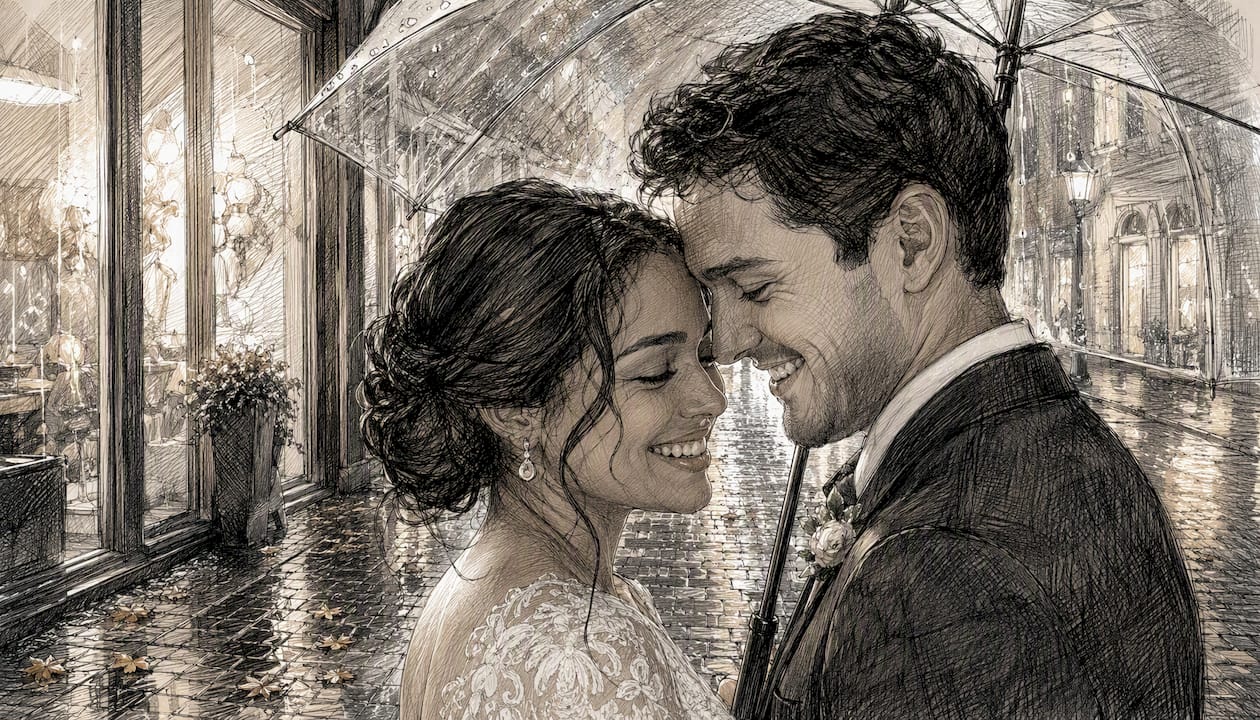
Picture this: two people sharing a clear umbrella on an empty cobblestone street, raindrops catching the light behind them like scattered glass. That image is not an accident. It is what happens when a photographer uses the rain intentionally.
A few shot types that consistently work well:
Shared-umbrella portraits. The umbrella frames the couple, keeps faces dry, and preserves natural light on skin in a way a solid-colored umbrella would block. The result is intimate and clean.
Backlit raindrop silhouettes. Position the couple between the camera and a light source — a window, a street lamp, or an off-camera flash placed behind them. The droplets glow. The couple becomes a dramatic shape against the light.
Puddle reflections. A wet parking lot or stone path doubles the frame. Shoot low, include the reflection, and suddenly a mundane location becomes graphic and editorial.
Empty-street strolls. Rain clears public spaces. Locations that would be crowded on a sunny day become private, cinematic backdrops. A couple walking away from camera down a rain-slicked street reads like a movie still.
For further inspiration, the Reddit wedding planning community has a long thread of real-couple rainy-day images showing creative props and poses across every budget and venue type. Brides.com's gallery of 17 rainy wedding photos is worth bookmarking for your mood board.
What to do the moment it starts raining on your wedding day
Speed matters here. The first 15 minutes set the tone for the rest of the day.
- Pause and assess safety first. If there is lightning, move everyone indoors immediately. Drizzle and steady rain are workable; a storm with lightning is not a photo opportunity.
- Move key portraits under cover or open a clear umbrella. Covered porches, parking structures, and building overhangs all work. Do not wait for rain to stop before shooting — the light during rain is often better than after.
- Protect the dress. Assign a bridesmaid or coordinator to hold a garment bag or large umbrella over the hem when walking between locations. A few seconds of exposure on wet pavement can stain a train.
- Brief your wedding party and vendors. A 60-second huddle prevents confusion. Tell the party where you are moving, who is holding what, and how long you plan to shoot outside.
- Check in with your photographer on the revised shot list. Some outdoor portraits may need to move indoors. Knowing which shots are non-negotiable lets your photographer prioritize.
- Touch up hair and makeup before portraits, not after. Water-resistant products hold better when reapplied before the session rather than mid-shoot.
Pro Tip: Pack a small zip-lock bag with blotting papers, a travel-size hairspray, and a neutral lip color in your bridal bag. A 90-second touch-up before portraits makes a visible difference in the final images.
How to plan ahead so rain doesn't derail your photo goals
The couples who get the best wet-weather images are the ones who planned for rain weeks before the wedding, not the ones who improvised on the day.
Photographers consistently recommend scouting covered and indoor backup locations well in advance. Walk the venue with your photographer at least once before the wedding and identify three to five spots that work in rain: a covered porch, a grand staircase, a barn interior, a parking structure with interesting light. Photograph those spots on your phone so you have reference images to share.
Build a rainy-day timeline and share it with your photographer, planner, and venue coordinator at least two weeks out. This version of the timeline notes which portrait blocks can move indoors, which require covered outdoor access, and how much buffer time exists between ceremony and reception. Understanding how weather affects your wedding videography is equally important if you are booking hybrid photo and video coverage, since video lighting setups take longer to reposition than a single camera.

For Buffalo and Rochester couples, late spring and early fall bring the highest chance of afternoon showers. Scheduling portrait time in the morning or immediately after the ceremony, rather than the golden hour, gives you a weather buffer.
Here is a practical pre-wedding packing checklist organized by who carries what:
| Item | Who Packs It | Why It Matters |
|---|---|---|
| Clear umbrellas (several) | Couple / coordinator | Keeps faces lit; looks clean in photos |
| Waterproof shoe covers / booties | Bride | Protects shoes between locations |
| Garment bag | Bridesmaid or coordinator | Shields dress hem from wet ground |
| Sewing kit and safety pins | Coordinator | Fixes bustle or hem damage quickly |
| Plastic rain sleeves for camera | Photographer | Protects gear without blocking controls |
| Zip-lock bags (assorted) | Photographer | Improvised lens and body covers |
| Makeup touch-up kit | Bride / MOH | Blotting papers, setting spray, lip color |
| Backup camera body | Photographer | Redundancy if primary body fails in wet conditions |
Ask your venue two specific questions before the wedding: "Which covered outdoor spaces can we access for portraits?" and "Can vendors bring lighting equipment into the ballroom or lobby for indoor portraits?" The answers shape your entire backup plan.
What photography techniques produce the best results in rain?
Rain gives a photographer raw material. What they do with it determines whether the images look intentional or accidental.
Backlight is the single most powerful tool. Positioning a rim flash or strobe behind the couple illuminates individual raindrops and separates the subjects from a dark, moody sky. The effect is dramatic without being heavy-handed. Off-camera flash placed at roughly a 45-degree angle behind and above the couple works well; a warming gel (CTO) on the flash matches the color of ambient overcast light so the image does not look artificially lit.
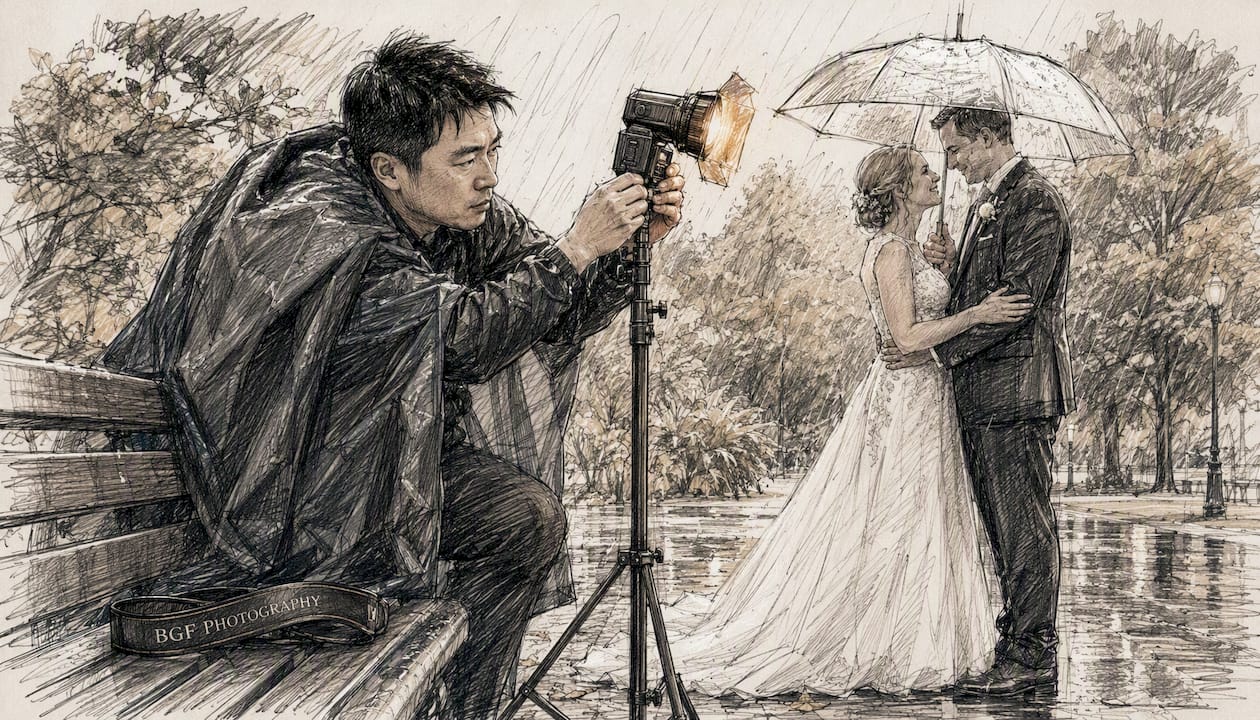
Camera settings matter more in rain than in sun. A shutter speed of 1/500s or faster freezes individual droplets. A wide aperture (f/1.8–f/2.8) isolates the couple from a blurred, rain-streaked background. ISO typically needs to climb under heavy overcast, so a camera body with clean high-ISO performance is worth asking your photographer about specifically.
Reflections deserve their own attention. Wet pavement, puddles, and rain-soaked stone all act as mirrors. Shooting from a low angle and including the reflection in the lower third of the frame adds depth and symmetry. Lighting matters enormously in these compositions because the reflection picks up whatever light source is in the scene.
Post-storm skies are worth waiting for when the schedule allows. The dramatic clouds that follow a heavy shower, combined with the saturated colors on wet surfaces, create cinematic backgrounds that no amount of editing can replicate from a clear-sky shot.
Pro Tip: A white shoot-through umbrella doubles as a portable softbox. Hold it just outside the frame above and in front of the couple to diffuse harsh flash and wrap light around faces — especially useful under a covered porch where ambient light is uneven.
Gear protection is straightforward: rain sleeves designed for DSLR and mirrorless bodies cost under $20 and keep water off the controls. Zip-lock bags work as improvised covers for a second body or a flash unit. A small dry bag in the camera bag keeps extra batteries and memory cards dry.
Which poses and props photograph well in the rain?
The best rainy-day shots tend to be simple. Complexity in posing fights the weather; simplicity works with it.
- Shared-umbrella kiss. Both people under one clear umbrella, faces close, looking at each other or sharing a laugh. The umbrella frames the moment without hiding it.
- Backlit silhouette walk. Couple walking away from camera, umbrella up, flash or street light behind them. Works on any wet street or path.
- Puddle reflection portrait. Photographer shoots from ground level; couple stands above a puddle. Their reflection fills the bottom half of the frame.
- Candid party under a canopy. Wedding party huddled under a venue overhang, laughing or reacting to the rain. Unposed, genuine, and often the most memorable group shot of the day.
- Rain boots and dress. A close-up of the bride's dress hem paired with colorful rain boots. Playful, detail-oriented, and easy to caption.
- Poncho portrait. Transparent ponchos over formal wear create a layered, slightly surreal look that photographs with interesting texture and light refraction.
Props that consistently work: clear bubble umbrellas, matching parasols in a single color for the wedding party, knee-high rain boots in a color that complements the palette, and colorful umbrellas used as a deliberate pop against a gray sky.
Sample captions worth saving to your shot list or sharing with your photographer:
- "Rain couldn't stop this."
- "Best weather we ever had."
- "We danced in it anyway."
What should you ask your photographer before a rainy wedding day?
Confirming capabilities before the wedding is not pessimistic. For practical tips on shooting in varied conditions, see this useful partner photographer resource with practical FAQ. It is the difference between a smooth rainy day and a chaotic one.
- Have you shot weddings in rain before, and can I see examples from those days?
- What backup gear do you bring, and is your primary camera body weather-sealed?
- What is your lighting plan if we lose outdoor light entirely?
- Which indoor locations at our venue do you think work best for portraits?
- If we need to wait out a storm, how does that affect your overtime policy?
- Will you scout the venue before the wedding day to identify covered spots?
- If the timeline shifts due to weather, which shots are you prioritizing first?
A compact rainy-day kit both you and your photographer should have on-site:
- Clear umbrellas (at least two, one for each of you)
- Rain sleeves and zip-lock bags for camera bodies and lenses
- Dry microfiber cloths for wiping lens elements between shots
- Waterproof shoe covers for the couple
- A small LED panel or portable flash for indoor fill light
- Extra batteries (cold and wet conditions drain them faster)
- A printed copy of the rainy-day timeline with covered location names
On the contract side, confirm in writing what happens to deliverables if the timeline shifts. A simple line like "In the event of weather delays, photographer will prioritize [list of shots] and notify couple of any timeline adjustments" prevents misunderstandings. Knowing how to communicate your vision clearly before the day makes these conversations easier and faster.
How BGF Photography shoots in the rain
Three scenarios that come up regularly in Buffalo and Rochester weddings, and how they play out in practice:
Covered porch portraits, late October. Rain started 20 minutes before the couple's portrait session. The ceremony venue had a wide covered porch with columns and string lights. BGF set up an off-camera flash with a warming gel behind the couple, used the column as a natural frame, and shot wide open at f/2.0. The raindrops falling just outside the porch edge caught the backlight. The couple got 40 portraits in 25 minutes, all usable.
Parking structure, summer afternoon storm. A sudden downpour pushed the entire portrait session indoors. The parking structure two blocks from the venue had concrete columns, graphic lines, and a wide opening that let in diffused gray light. BGF used a handheld LED panel for fill and shot the couple against the geometric background. The images looked intentionally editorial, not like a weather backup.
Post-storm golden hour, Finger Lakes. A heavy morning rain cleared by 4 PM, leaving dramatic clouds and saturated vineyard colors. BGF held the portrait session until the storm passed, then shot during the 45-minute window of post-storm light. The clouds acted as a natural backdrop. No flash needed.
BGF Photography's backup equipment procedures include redundant camera bodies, weather-sealed lenses, and portable lighting for exactly these conditions. Full galleries from rainy-day weddings are available on the BGF Photography portfolio.
Why rain is worth embracing, not just tolerating
Most wedding photography advice treats rain as a problem to solve. That framing is wrong, and it costs couples some of their best images.
Rain changes the light in ways that are genuinely difficult to replicate. The soft, directionless quality of overcast illumination wraps around faces without harsh shadows. Wet surfaces add depth and graphic interest to locations that would otherwise read as flat. The absence of crowds in public spaces gives you access to locations that would be unusable on a clear Saturday afternoon.
There is also something emotionally true about rain on a wedding day. The couple who laughs under an umbrella, who holds each other a little tighter because the weather is unpredictable, who decides to walk into the rain anyway — those are the images that end up on walls. Not because they were planned, but because the conditions forced a kind of presence that posed portraits rarely achieve.
Many cultures consider rain on a wedding day to be a sign of good luck, and while that framing is comforting, the more practical truth is this: rain rewards couples who are prepared and photographers who know how to use it. The checklist matters. The scouted locations matter. The lighting plan matters. But so does the decision to stop treating rain as the enemy and start treating it as part of the story.
BGF Photography covers rainy days in Buffalo and Rochester
Rain is not a contingency for BGF Photography — it is a planned part of every wedding package. Hybrid photo and video coverage means both your images and your film are captured under one consistent lighting plan, so nothing looks mismatched when the weather shifts. BGF brings backup camera bodies, portable flash, and weather-sealed lenses to every wedding, and every venue is scouted in advance for covered portrait locations.
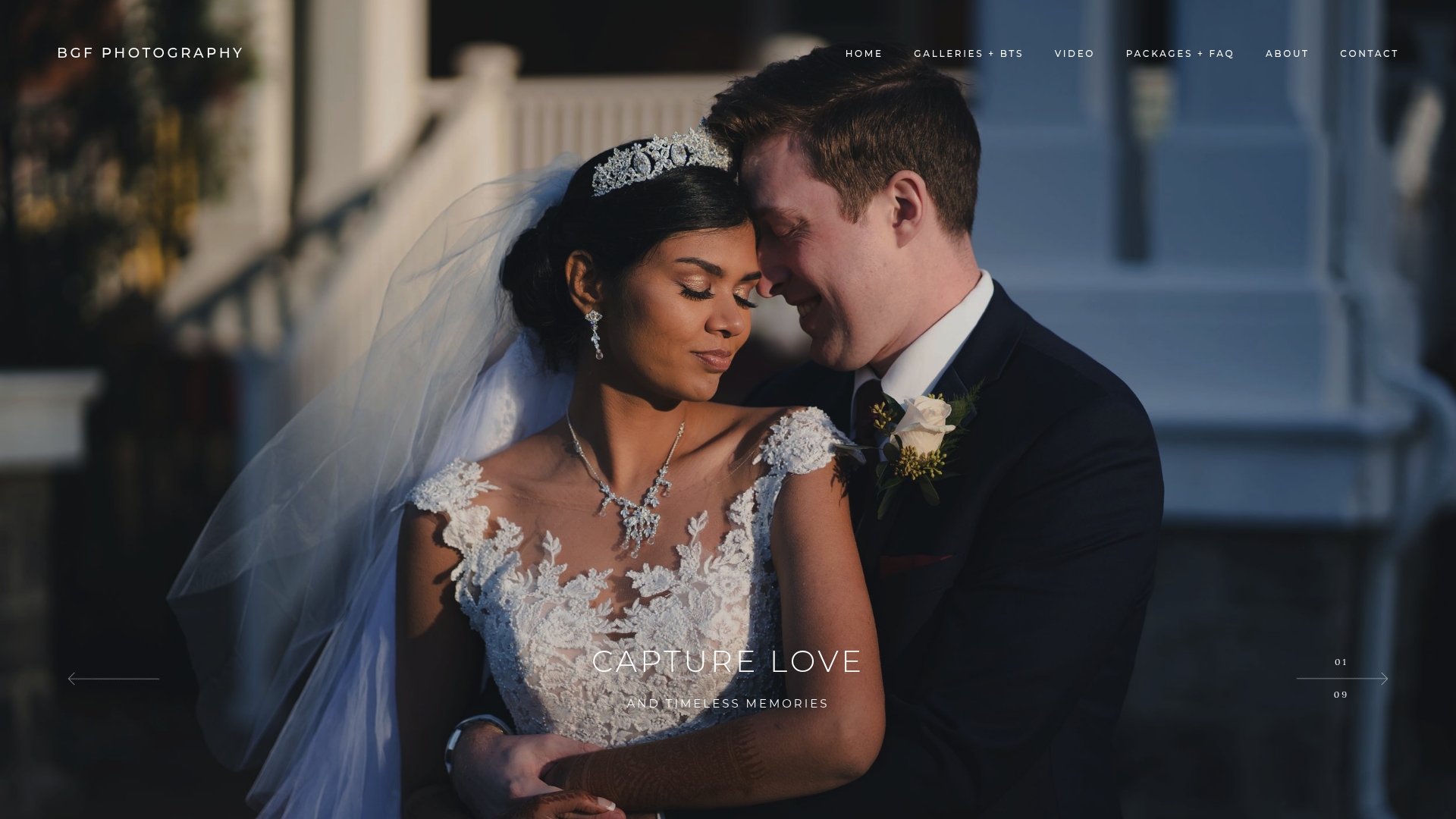
Couples in Buffalo, Rochester, and the Finger Lakes who want candid, emotionally driven coverage regardless of weather can review package options and check date availability on the BGF Photography investment page. Dates fill quickly in spring and fall, so reaching out early gives you the best selection.
Sources
These resources are worth saving to your planning folder or sharing directly with your photographer before the wedding.
SLR Lounge — "8 Rainy Day Wedding Photography Tips You Need to Know" Covers backlight setups, umbrella diffusion, and gear protection with illustrated how-to examples. Share this with your photographer if you want a shared vocabulary for the lighting plan.
Read the full guide at SLR Lounge
Brides.com — "17 Beautiful Photos That Show Rain on the Wedding Day" A curated gallery of real-couple images with photographer commentary on why each shot works. Useful for building a mood board and understanding what is achievable across different venues and budgets.
Browse the gallery at Brides.com
Canva Learn — "7 Practical Rain Photography Tips for Shooting Images in Stormy Weather" Aimed at portrait and landscape photographers, with strong advice on post-storm timing and using dramatic cloud backgrounds. Worth reading if you want to understand the technical reasoning behind your photographer's choices.
Read the tips at Canva Learn
Save images from these galleries to a shared album and send the link to your photographer at least two weeks before the wedding. A visual reference is faster and clearer than a written description of the mood you want.
- 8 Rainy Day Wedding Photography Tips You Need to Know
- 17 Beautiful Photos That Show Rain on the Wedding Day
- 7 practical rain photography tips for shooting images in stormy weather
- Rainy Day Wedding Photos
- The way we see it Rain on a wedding day is good luck!
FAQ
What should you do for wedding photos if it rains?
Grab a clear umbrella, move key portraits to a covered location, and brief your photographer on which shots are non-negotiable. Rainy conditions often produce softer, more flattering light than direct sun, so shooting in light rain is usually worth it.
Is rain on a wedding day considered good luck?
Many cultures and traditions frame rain on a wedding day as a sign of good luck and fertility. Beyond the cultural note, the practical upside is real: rain clears crowds, softens light, and creates reflections that make for striking photos.
Are rainy or cloudy days actually good for photography?
Yes. Overcast skies act as a giant natural softbox, eliminating harsh shadows and producing even, flattering light across faces. Wet surfaces add color saturation and reflections that sunny conditions cannot replicate.
What is the 30-5 rule for weddings?
The 30-5 rule is a general planning guideline suggesting couples allow sufficient time for family formals and a few minutes per pose or grouping. On a rainy day, applying this rule to your covered portrait locations helps keep the session moving without rushing.
How do you protect wedding gear and attire in the rain?
Photographers use rain sleeves and zip-lock bags for camera bodies and lenses. Couples should pack waterproof shoe covers, a garment bag for the dress hem, and a small makeup touch-up kit with water-resistant products for quick refreshes between portrait locations.