
Bridal preparation coverage is the block of photography and video documentation of the bride (and often the wedding party) getting dressed, styled, and ready before the ceremony. It typically runs for a couple of hours and captures detail shots, hair and makeup finishing touches, and the dress-on moment.
Core elements usually included:
- Detail shots (rings, dress, invitations, shoes)
- Candid interactions between the bride and her party
- Hair and makeup finishing touches
- The dress-on sequence and final mirror check
Add it to your package if your wedding has meaningful pre-ceremony moments you want documented, a getting-ready location with good light, or family traditions you don't want to miss. BGF Photography recommends most couples build in a full 1.5 to 2 hour arrival window for complete coverage.
Bridal prep coverage isn't a bonus reel. It's the first chapter of your wedding story, and skipping it means starting the book on page 30.
Key Takeaways
Bridal preparation coverage works best when photographers arrive after hair and makeup finish, giving 1.5 to 2 hours for detail shots, candid moments, and the dress-on sequence.
| Point | Details |
|---|---|
| Definition | Bridal prep coverage documents getting-ready moments, from details to the dress-on sequence, before the ceremony. |
| Timing window | Plan for 1.5 to 2 hours, with hair and makeup finished before the photographer's arrival. |
| Coverage styles | Choose between documentary, editorial/posed, or hybrid based on how candid you want the final gallery. |
| Location matters | Natural light, adequate space, and confirmed venue permissions shape image quality more than gear does. |
| BGF Photography | Builds prep coverage into full-day packages with hybrid photo/video, optional film, and timeline planning support. |
Table of Contents
- What Does Bridal Prep Coverage Include?
- Why Do Couples Add Bridal Prep Coverage?
- What Coverage Styles and Options Should You Consider?
- Where and When Should Getting-Ready Coverage Happen?
- How Do You Choose the Right Prep Coverage?
- What Deliverables and Turnaround Should You Expect?
- How Does BGF Photography Handle Bridal Prep Coverage?
- How to Book Bridal Prep Coverage With BGF Photography
- Sources
- FAQ
What Does Bridal Prep Coverage Include?
A complete bridal prep session covers three categories: detail shots, personnel, and finishing sequences. Detail shots come first, usually while the room is still tidy: rings, the dress on a hanger, invitation suites, and heirloom jewelry. Candid moments follow naturally as hair and makeup wrap up: laughing with bridesmaids, a mother fastening a necklace, the quiet minute before the dress goes on.
Personnel and gear vary by package:
- A primary photographer handling detail shots and candid coverage
- A second shooter, common for capturing both the bride's suite and the groom's prep simultaneously
- A videographer or hybrid photo/video team working the same timeline
- Film photography as an optional nostalgic layer
- Drone coverage, when the venue permits it, for establishing shots of the property
Single-photographer coverage typically runs 1 to 1.5 hours; two-photographer coverage stretches to 2 hours or more so both partners' prep can be documented at once. Groom prep tends to run shorter, 30 to 45 minutes, but adds candid, higher-energy footage that pairs well with the bride's timeline. Popular add-ons include extended coverage time, a dedicated getting-ready highlight video, extra film rolls, and booking a second shooter.
Why Do Couples Add Bridal Prep Coverage?
Prep coverage completes the wedding-day narrative. Without it, your gallery starts at the ceremony processional and skips the entire buildup, the nervous energy, the laughter, the last hug from a parent before you walk down the aisle.
The emotional payoff is real: a father seeing his daughter in her dress for the first time, a letter exchange between partners, a grandmother helping with buttons. These moments happen once and never get restaged.
Practical returns matter too:
- Documentation of heirlooms (rings, veils, jewelry passed down through family)
- A visual record of small details you paid for and might otherwise forget
- Built-in buffer time if the ceremony start shifts
One bride told her photographer she almost skipped prep coverage to save money, then called it "the part of the album I look at most" because it's the only footage of her mother's reaction before the veil went on. Multiply that by every guest who couldn't be in the room, and the value compounds.
What Coverage Styles and Options Should You Consider?
Three shooting approaches dominate prep coverage: documentary/candid, editorial/posed, and hybrid. Documentary style prioritizes unscripted interaction; editorial style leans into styled, directed shots of the dress and details; hybrid blends both, using posed moments for detail shots and candid coverage for everything else.
Format decisions shape your final gallery just as much as style:
- Photography-only: still images of the entire prep window, no motion footage
- Videography-only: motion coverage, often with audio of conversations and toasts
- Hybrid photo/video: both under one team and one visual style, which avoids mismatched aesthetics between your photo album and your wedding film
- Film inserts: analog rolls mixed into a digital shoot for a grainier, nostalgic texture
- Drone: aerial establishing shots where the venue allows it
Each choice trades something for something else: documentary style yields more authentic emotion but less control over composition; posed editorial shots look polished but can feel staged if overused.
Pro Tip: Ask to see a full getting-ready gallery from a past wedding, not just highlight reels. It's the fastest way to see how a photographer actually handles a cluttered hotel room and imperfect light.
Where and When Should Getting-Ready Coverage Happen?
Timing decides whether prep coverage looks calm or chaotic. Photographers generally recommend arriving 15 to 20 minutes before shooting begins to scout the room's light and layout, then blocking 1.5 to 2 hours total for the full sequence: detail shots, hair and makeup finishing, and the dress going on.
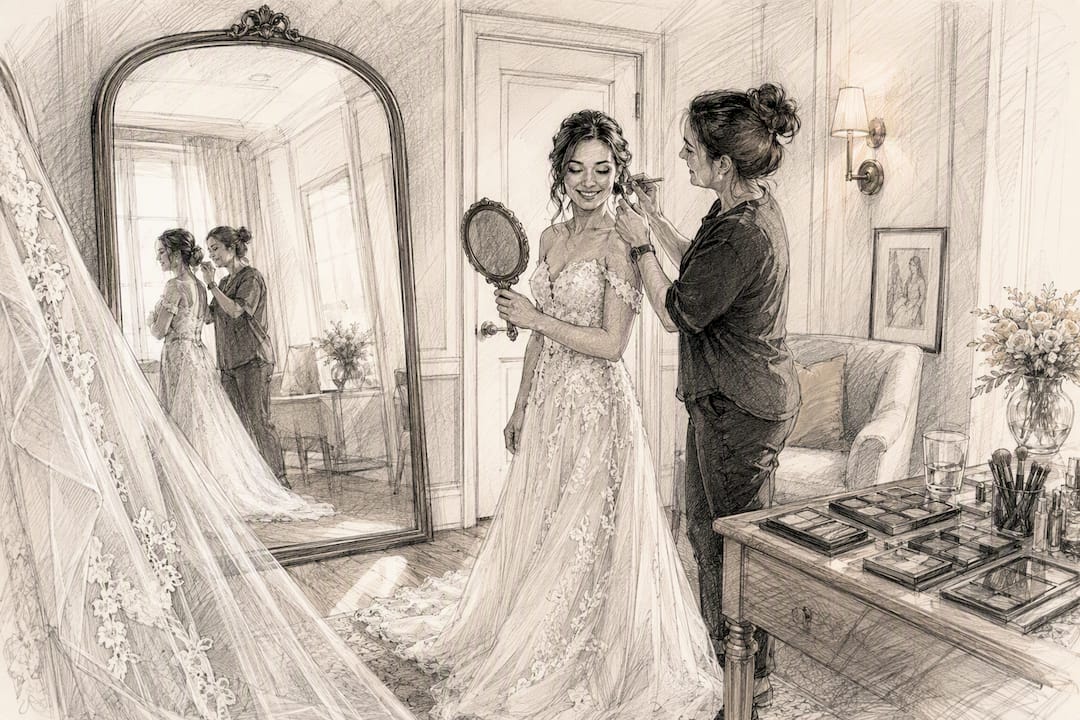
A frequent planning mistake is scheduling the photographer's arrival in the middle of hair and makeup rather than near the end. Couples get the most value when stylists are finished or nearly finished by the time the camera shows up, so coverage focuses on emotional interaction and final touches instead of watching someone curl hair for 40 minutes.
Location checklist:
- Confirm the room has natural light (a window suite beats a windowless hotel room every time)
- Check for space. Stylists, gear, and a photographer need room to move
- Ask about backup lighting in case the space is darker than expected
- Confirm permissions if you're using a rented Airbnb, hotel suite, or venue bridal suite with its own rules
Sample shot list to hand your photographer:
- Details first: rings, dress, shoes, invitations
- Hair and makeup finishing touches
- The dress-on sequence
- Parent or family reactions
- Group candid shots of the full party
Gathering rings, jewelry, and the invitation suite in one spot before the photographer arrives saves real time and prevents meaningful objects from getting left behind. Couples planning ceremonies with varied family structures or traditions may also find value in inclusive planning guidance built specifically around respectful prep-room coordination.
Pro Tip: Schedule your own hair and makeup so you (or your key VIPs, like your mother or maid of honor) finish 15 to 20 minutes before the photographer's call time. It gives the room a beat to settle before the camera starts rolling.
How Do You Choose the Right Prep Coverage?
Comparing quotes gets confusing fast because photographers bundle prep coverage differently. Ask these questions before signing anything:
- What time does coverage actually start and end?
- Is a second shooter included, or is that an add-on?
- What deliverables come from prep coverage specifically (not just the full-day total)?
- Do you shoot film, and if so, is processing included in the price?
- Is drone coverage available, and does the venue allow it?
- What's your backup plan if a stylist runs late or the room changes?
Pricing usually shifts based on four factors:
- Total hours booked
- Whether a second shooter or videographer is added
- Travel distance to your getting-ready location
- Film processing, rush delivery, or licensing fees for specific software or music in a highlight video
Red flags worth walking away from: vague start and end times in the contract, no getting-ready examples in the portfolio, or surprise fees that appear after you've already paid a retainer. When two quotes look wildly different, check whether they cover the same number of hours and the same personnel; a "cheaper" photographer working solo for one hour isn't actually cheaper than a two-person team working two hours once you divide it out. Reviewing a photographer's process before booking usually surfaces these gaps early.
What Deliverables and Turnaround Should You Expect?
Deliverables typically include edited digital images, a contact sheet or online gallery, and a highlight video if you booked hybrid coverage. Film scans arrive separately when film is part of the package.
| Deliverable | Typical Turnaround |
|---|---|
| Digital photo gallery | 4 weeks |
| Highlight or full wedding film | 6 weeks |
| Film scans (if applicable) | 2 to 4 weeks after lab processing |
Before signing, confirm image usage rights, how files get delivered (download link vs. physical drive), and whether the studio keeps a backup of your files after delivery.
- Confirm your gallery delivery date in writing
- Ask whether film scans ship separately from digital images
- Save the delivery method and backup policy in your wedding planning file
How Does BGF Photography Handle Bridal Prep Coverage?
BGF Photography builds prep coverage around one rule: arrive with enough time to find the light and let the room settle before shooting starts. That means scouting the space, confirming hair and makeup timing with the bride ahead of the wedding day, and shifting into candid mode once the formal styling wraps up. Hybrid photo and video coverage runs under one unified style, so your gallery and your film never feel like two different weddings.
Service highlights couples ask about most:
- Second shooter availability for simultaneous bride and groom prep
- Timeline planning support built into the booking process
- Optional film inserts for a nostalgic, grain-heavy layer alongside digital images
Every couple's prep room looks different. Our job is showing up early enough to work with whatever room, light, or chaos we find, and making it look like it was always going to be beautiful.
A Note From Billy on Protecting the Small Moments
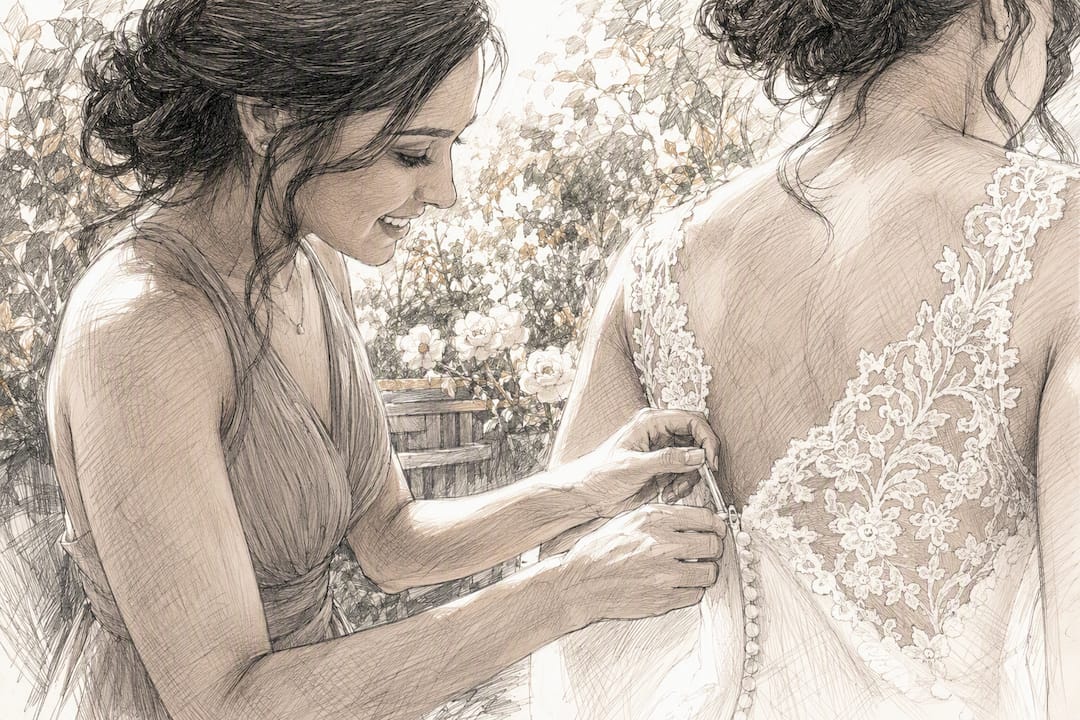
The biggest planning mistake I see is treating prep coverage as filler time before the "real" photos start. Protecting the emotional moments, a sister zipping a dress, a quiet minute alone, means arriving early and staying out of the way until the room needs us. If you're building your timeline and want help figuring out arrival windows, ask. It's the easiest planning conversation to get right and the hardest to fix after the fact.
How to Book Bridal Prep Coverage With BGF Photography
Most full-day packages from BGF Photography already build in a 1.5 to 2 hour prep window, covering detail shots, candid moments, and the dress-on sequence as standard, not an upsell. Couples who want more can add a second shooter for simultaneous bride and groom coverage, drop in film rolls for a nostalgic texture, or upgrade to full hybrid video alongside the photography.
Custom packages are available if your timeline doesn't fit a standard template, and every booking includes timeline planning support so your hair and makeup schedule, photographer arrival, and ceremony start time actually line up on paper before the wedding day arrives. Portfolio examples of past prep sessions are available on request if you want to see how a specific location or lighting scenario turned out.
Check current packages and pricing details to see which tier fits your wedding, then reach out with your date to confirm availability.
Sources
- Bride Getting Ready: A Wedding Photographer's Guide to Prep Coverage
- Planning Guide from an LGBT Wedding Photographer - LemonSharkStudio
FAQ
How Long Does Bridal Prep Coverage Usually Last?
Most sessions run 1.5 to 2 hours, covering detail shots, hair and makeup finishing touches, and the dress-on sequence.
Do I Need a Second Shooter for Getting-Ready Photos?
A second shooter isn't required, but it lets you document both the bride and groom's prep simultaneously instead of choosing one location over the other.
What Should I Confirm Before Booking Prep Coverage?
Ask about start and end times, deliverables specific to prep coverage, second shooter availability, and whether film or drone options are included or added separately.
Does BGF Photography Include Prep Coverage in Its Packages?
Yes, most full-day packages from BGF Photography build in a standard prep window, with add-ons available for extended time, film, or a second shooter.
What's the Biggest Mistake Couples Make With Prep Timing?
Scheduling the photographer's arrival in the middle of hair and makeup instead of near the end wastes coverage time that could capture emotional, unscripted moments.