
An heirloom wedding album is a hand-assembled, archival-grade printed book built with materials and construction meant to survive for generations rather than years. It differs from a standard photobook in three ways: the paper and binding meet archival standards like ISO 18902/18916, the pages are often flush-mount or lay-flat rather than glued into a paperback spine, and every image goes through professional photographic printing instead of a consumer press. BGF Photography treats the album as the final chapter of the wedding story, not an afterthought.
-
Built to last: Archival paper and covers rated for a century or more, not just a few decades.
-
Printed differently: Continuous-tone photographic printing instead of consumer ink-jet or press printing.
-
Made to be passed down: Designed as a multi-generational keepsake, not just a photo storage solution.
Key Takeaways
An heirloom wedding album earns its name through archival paper, flush-mount or lay-flat construction, and continuous-tone photographic printing, not marketing language alone.
| Point | Details |
|---|---|
| Definition matters | An heirloom album uses archival materials and construction rated to last 100+ years, unlike standard photobooks. |
| Printing method is the real difference | Continuous-tone photographic printing avoids the saturation shifts common in consumer press printing. |
| Plan the timeline early | Design, proofing, and production can take several weeks to a few months from gallery delivery to final delivery. |
| BGF Photography builds it in | Album design, proofs, and optional parent albums are included in BGF Photography’s wedding packages. |
Table of Contents
Why Couples Choose an Heirloom Album Over a Standard Photobook
Most couples do not set out planning to spend more on a book. They get there after realizing a photobook is a container, while an heirloom album is an object. It sits on a shelf, gets handed to a mother-in-law at Thanksgiving, and eventually lands on a coffee table in a home neither of you has bought yet.
The practical case is just as strong as the sentimental one. Archival materials resist yellowing and cracking, color accuracy holds up under repeated handling, and the heavier board pages invite people to actually sit down and go through it instead of swiping past twelve photos on a phone.
-
Curated storytelling instead of 500 unsorted gallery images
-
Archival longevity that outpaces consumer paper stock
-
A tactile object built for sharing at family gatherings
-
A one-time cost that, spread across decades of ownership, often runs to just a few dollars per year
What Actually Makes an Album “Heirloom Grade”
The word “heirloom” gets used loosely by vendors, so it helps to know what the term is supposed to mean technically. Three factors decide it: construction, paper, and printing method.
Flush-mount and lay-flat construction means each page is a rigid board with a photographic print bonded to it, and two pages open flat with no gutter cutting through the middle of an image. That matters for panoramic spreads, like a full ceremony shot or a wide reception dance floor, where a seamless spread makes the moment feel immersive instead of split down the middle.
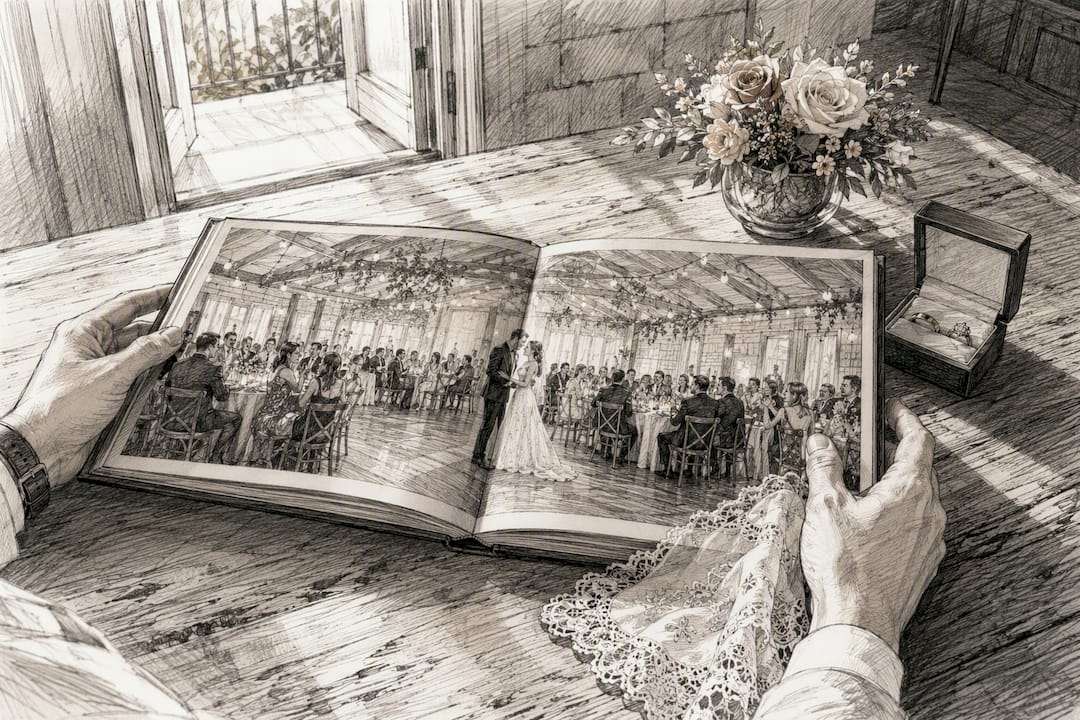
Archival photographic paper is acid-free and manufactured to resist fading, referencing stability standards like ISO 18902. This is not the same stock used in a drugstore photo kiosk.
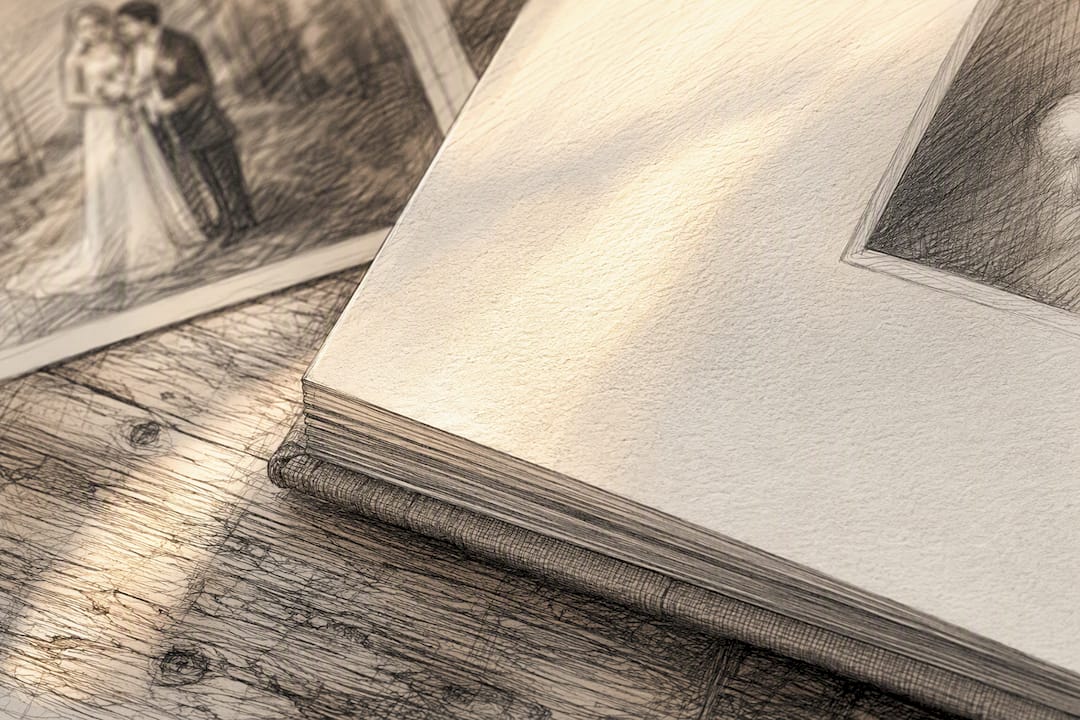
Printing method is where the difference is most visible. Consumer photobooks typically use dot-based press printing, which can show a 15 to 20 percent variance in saturation and brightness compared to continuous-tone professional photographic printing. That gap shows up as muddier skin tones and flatter blacks.
Binding matters too. Stitched signature binding and board-mounted flush-mount pages distribute stress differently than glue-bound consumer books, which is why cheap adhesive bindings tend to crack at the spine after a few years of regular handling.
-
Flush-mount or lay-flat pages, not a glued paperback spine
-
Acid-free, archival-rated paper stock
-
Continuous-tone photographic printing, not press or ink-jet
-
Stitched or board-mounted binding built for repeated handling
Sizes, Covers, and Personalization Options
Shopping for an album means choosing three things: size, cover material, and how much you personalize it. Standard sizes run from 8x8 for a smaller keepsake up to 10x10 or 12x12, with 12x12 being the common choice for a main heirloom album since it gives full-bleed images room to breathe. A typical heirloom-tier book runs 40 to 50 pages, or 20 to 25 spreads, holding somewhere between 80 and 150 images.
Cover material is where personality and budget both show up. Full-grain leather ages into a patina over decades and is the classic choice for a true heirloom. Linen offers a softer, more casual texture. Silk and acrylic covers lean modern, and vegan leather gives couples who avoid animal products a comparable look without the same long-term aging characteristics.
Personalization usually means debossing (a pressed, tone-on-tone impression) or foil stamping (metallic lettering, often gold or silver) with your names and wedding date, or using premium his and hers wedding vow books to add a personalized touch.
-
Main album: 10x10 or 12x12, leather or linen cover, 40 to 50 pages
-
Parent or mini albums: Smaller duplicate copies, often 6x6 or 8x8, priced as gift copies for parents
-
Storage: A walnut wood or fabric-lined presentation box protects the album and looks intentional on a shelf, not like an afterthought
How the Design and Ordering Process Works
Ordering an heirloom album is not a same-week purchase. It moves through a handful of predictable stages, and knowing the timeline helps you plan it around your wedding schedule instead of scrambling six months later.
-
Gallery selection. You choose the images you want considered, ideally within a few weeks of receiving your full gallery.
-
Designer layout. A designer builds spreads based on your selections, typically taking one to three weeks depending on page count.
-
Proof and revisions. You review a digital proof and request changes, usually within a one-week window.
-
Production at a professional lab. Printing and binding take another two to six weeks, longer for rush holiday seasons.
-
Delivery, plus optional parent albums. Your main album ships first, with parent copies following once the design is finalized.
Most studios build in one or two rounds of revisions before additional changes carry a fee, so it helps to gather input from both partners before submitting your first round of edits.
What Heirloom Albums Cost and What Drives the Price
Album pricing generally falls into three tiers: a basic press-printed book, a mid-range premium tier with thicker pages, and the true heirloom tier with archival materials and flush-mount construction. Heirloom albums typically cost more than consumer photobooks, and the gap reflects real material and labor differences, not just a branding premium.
Several factors push the price up or down within that tier:
-
Page count and number of spreads (more pages means more design and printing time)
-
Cover material (leather and silk cost more than linen or vegan alternatives)
-
Custom sizing outside standard dimensions
-
Number of design revision rounds beyond what is included
-
Parent or mini album add-ons
-
Premium packaging like a walnut presentation box
Viewed as a long-term investment rather than a one-time expense, an heirloom album amortized over 30 or 40 years often comes out to a modest annual cost for a physical record of your wedding day. If your budget is genuinely tight, a smaller mid-tier album is a reasonable compromise. Skipping a printed album entirely means your only record lives on a hard drive or cloud account, which carries its own risks.
How to Store and Care for Your Album Long Term
An heirloom album is durable, not indestructible. A few habits make the difference between an album that looks new at your 25th anniversary and one that shows real wear.
-
Keep it out of direct sunlight, which fades even archival inks over time
-
Store it in a climate with humidity below 75 percent
-
Store the album horizontally, not standing on its spine
-
Wash and dry your hands before handling the pages
-
Keep it in its presentation box when not on display
Full-grain leather covers develop a patina with age, which is normal and often considered part of the charm. Bonded or PU leather covers, by contrast, tend to crack and peel rather than age gracefully, which is one more reason cover material matters at the time of purchase. If your album has any water exposure or you notice mold, a paper conservator can assess and treat it before the damage spreads. For more on protecting physical photo memories long term, see BGF Photography’s guide to preserving wedding memories for family.
Pro Tip: Inspect your album once a year, ideally around your anniversary. Catching a loose page corner or early spine wear early is far easier to fix than waiting until the damage has spread across several pages.
Why Photographers Push for the Heirloom Tier
Ask a working wedding photographer why they steer clients toward archival albums, and the reasoning usually comes down to control. A photographer spends months color-correcting a gallery, and a consumer print run can undo that work in a single batch.
-
Color fidelity matters because pro-only labs and calibrated workflows keep printed colors matched to the edited files, not a shifted version of them
-
Archival materials protect the photographer’s work as much as the couple’s memory
-
Designing for print is a discipline of its own. Sequencing images into spreads is different from posting a gallery online, since the physical book becomes the final curated narrative of the day
Studio samples matter more than most couples expect going in. Holding a flush-mount album in your hands, feeling the weight of the pages and the texture of the cover, tells you more in thirty seconds than any product description can.
BGF Photography builds album design into its wedding packages for exactly this reason, pairing candid coverage with a printed keepsake that holds up to the same standard as the images themselves.
Questions to Ask Before You Order an Album
Not every vendor selling a “premium” or “luxury” album is using heirloom-grade materials. A short list of direct questions cuts through the marketing language fast.
-
What printing process do you use, press-based or continuous-tone photographic?
-
What paper specifications or archival standards can you cite?
-
Is the binding stitched, board-mounted flush-mount, or adhesive?
-
Do you offer any warranty or longevity guarantee on materials?
-
How many proof and revision rounds are included?
-
What does a parent or mini album cost as an add-on?
Red flags include vague answers about paper quality, a vendor using “lay-flat” and “press-bound” interchangeably as though they mean the same thing, and no studio samples available to hold before you commit. If a photographer cannot show you a physical album, treat that as a real gap, not a small one. For more guidance on vetting a photographer overall, see how to choose a professional photographer for your wedding.
A Photographer’s Take on Why the Album Still Matters
I have watched couples scroll past hundreds of digital photos in seconds, and I have watched those same couples slow all the way down over a printed spread. The album is where a wedding day stops being a file on a hard drive and starts being something a family actually holds.
Get Help Designing Your Heirloom Album
Choosing paper stock and binding methods is not something most couples want to research alone, and you shouldn’t have to. BGF Photography includes album design as part of its wedding packages, pairing candid photography coverage with a printed keepsake built to the same archival standard discussed throughout this guide.
Packages include guided album design, a proof and revision process, and optional parent or mini album copies for family. Couples can also request to view studio album samples in person, which is the fastest way to judge paper weight, cover texture, and print quality before committing. Production timelines typically run several weeks from final proof approval, so it helps to start the design conversation early in your planning. Check available packages and album options to see what fits your wedding date and budget.
Sources
-
Heirloom Wedding Album Guide (Paper, Binding, Size 2026) - Tov Studio Photo
-
Layflat vs Standard binding: which is better for your wedding album - Photobook Press
-
What Is A Flush Mount Professional Wedding Album | Zookbinders
-
Archival storage for scrapbooks and vintage photo albums - Archival Methods
-
Is a Professional Wedding Album Worth It? 2026 Cost & Verdict - Timeless PV
FAQ
What Makes a Photo Album an “Heirloom”?
An album qualifies as heirloom grade when it uses archival paper rated for a century or more, durable binding like stitched signatures or flush-mount boards, and professional continuous-tone printing rather than consumer press printing.
What Are the Different Types of Wedding Albums?
The main types include flush-mount or lay-flat albums, stitched signature albums, and consumer press-printed photobooks, with parent or mini albums available as smaller companion copies.
Who Usually Pays for the Wedding Album?
There’s no universal rule, but the couple typically covers it as part of their photography package, while parent albums are often purchased separately as gifts for family members.
How Long Does an Heirloom Album Take to Arrive?
From gallery selection through final delivery, expect design, proofing, and production to take a few weeks up to a couple of months, depending on page count and season.