
TL;DR:
- Wedding photography style must align with the couple's natural dynamic to produce authentic images. Misalignment leads to stiff, rehearsed photos that do not reflect the couple's true relationship. Choosing a photographer whose approach matches your personality and preferences increases satisfaction and emotional connection in your wedding photos.
Wedding photography style must match the couple because a misaligned approach produces images that feel like someone else's wedding. The industry term for this alignment is "style fit," and it covers everything from how much a photographer directs you to whether the final images feel emotionally true to your relationship. Couples who prioritize style fit over price or trend report far greater satisfaction with their wedding photos. This guide breaks down the major photography styles, explains the psychology behind style alignment, and gives you a practical framework for choosing a photographer whose approach genuinely reflects who you are as a couple.
Why wedding photography style must match the couple
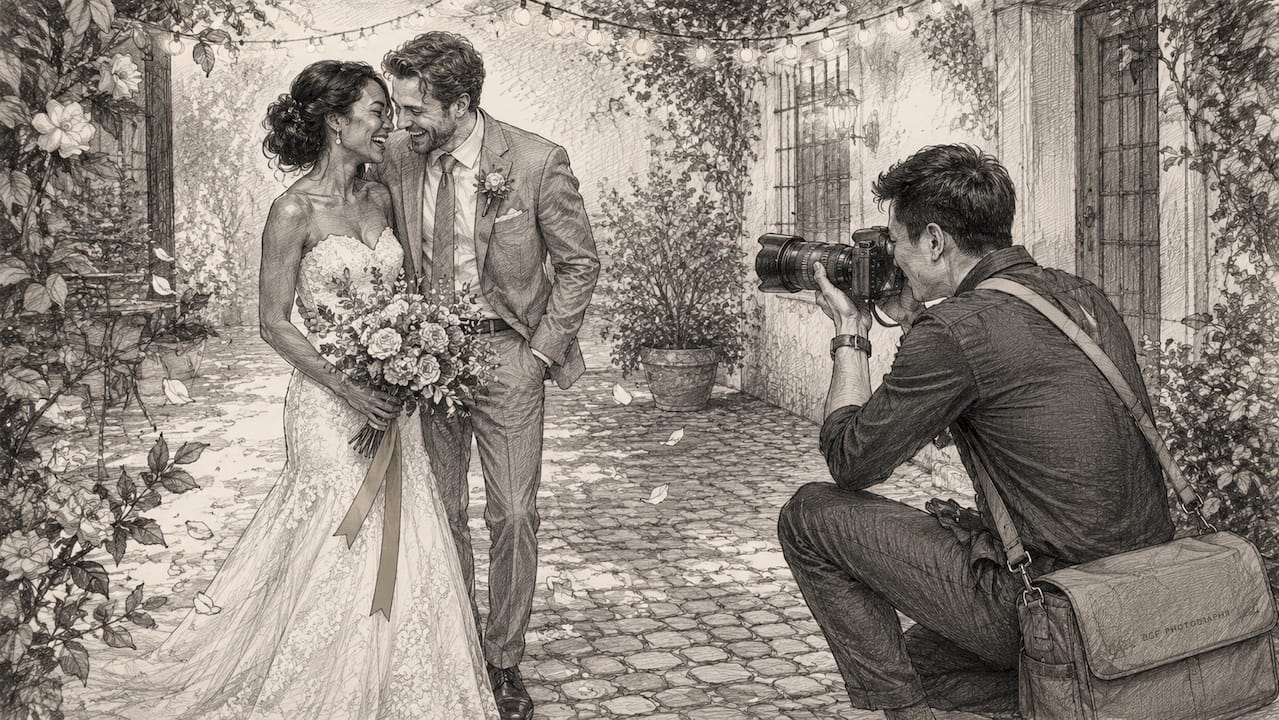
Style fit is the single most important factor in wedding photography satisfaction. Technical skill matters, but if a photographer's aesthetic does not resonate with you, the images may feel like they belong to strangers. You will recognize the problem immediately when you flip through the album: the poses look rehearsed, the expressions look stiff, and nothing in the frame captures how the day actually felt.
The root cause is a mismatch between the photographer's default approach and the couple's natural dynamic. A reserved couple paired with a high-energy, heavily directed photographer will freeze up. A spontaneous, playful couple paired with a rigid traditional photographer will spend the day performing instead of living it. Photographer communication style directly impacts emotional comfort during shoots, which shapes the authenticity of every single frame.
Style fit also determines how comfortable you feel during the most emotionally charged hours of your life. When you trust your photographer's approach and it mirrors your personality, you stop thinking about the camera. That is when the real moments happen.
What are the main wedding photography styles?
Wedding photography style is the combination of posing philosophy, editing aesthetic, and storytelling approach a photographer uses consistently across every wedding. Understanding the major styles helps you identify which one matches your relationship dynamic before you ever book a consultation.
| Style | Posing Level | Emotional Tone | Best For |
|---|---|---|---|
| Traditional/Classic | High direction | Formal, timeless | Couples who want structured portraits |
| Photojournalistic | No direction | Raw, documentary | Couples who want unscripted moments |
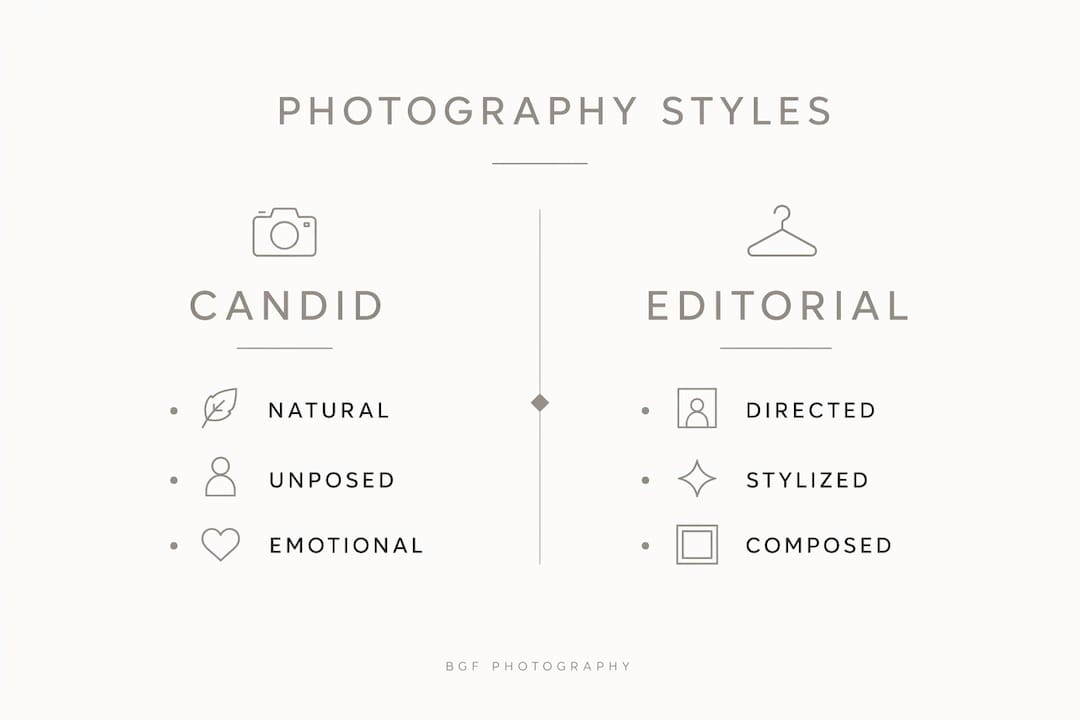
| Editorial | Moderate direction | Polished, cinematic | Couples who want artful, magazine-quality images |
| Candid | Minimal direction | Warm, spontaneous | Couples who feel stiff when posed |
| Fine Art | High direction | Dreamy, painterly | Couples drawn to artistic, stylized imagery |
Here is what separates these styles in practice:
- Traditional/Classic: The photographer places you, tells you where to look, and controls the frame completely. Results are predictable and polished but rarely surprising.
- Photojournalistic: The photographer observes and documents without intervention. Images capture truth but may miss technically strong compositions.
- Editorial: The photographer builds the frame and trusts you to fill it with genuine emotion. This style balances guidance with authenticity more than any other approach.
- Candid: The photographer stays unobtrusive and catches real interactions as they unfold. This style works best for couples who are naturally expressive.
- Fine Art: Heavy emphasis on light, composition, and post-processing. The aesthetic is intentional and often cinematic.
Most photographers do not operate in a single style. They blend elements depending on the moment, which is why understanding the spectrum matters more than finding a perfect label. You can explore unique photography styles across the full range before committing to a direction.
How does style alignment reflect your personality?
Your relationship has a distinct dynamic, and your wedding photos should reflect it. A couple that laughs constantly, teases each other, and moves through the world with physical ease will look wrong in stiff, formal portraits. A couple that is more private and composed will feel exposed and uncomfortable in a purely candid, documentary approach.
Posing levels directly affect how naturally couples interact in front of the camera. When the posing philosophy matches the couple's comfort level, spontaneous moments emerge even during directed shots. When it does not match, couples freeze, expressions go flat, and the photographer has to work twice as hard to get anything real.
The psychological impact of a style mismatch goes beyond awkward photos. Couples who feel uncomfortable with their photographer's approach report higher stress levels on the wedding day itself. That stress shows up in the images. Eyes tighten. Smiles become performative. Body language closes off.
Here is how different dynamics map to style fit:
- Playful and spontaneous couples thrive with candid or photojournalistic approaches where the camera follows them rather than directing them.
- Reserved or private couples often do better with editorial or fine art styles, where light prompting gives them something to do without demanding emotional performance.
- Couples who love attention can handle traditional or editorial styles with heavy direction and still look natural.
- Couples who hate being watched need a photographer who avoids excessive direction and stays physically distant during key moments.
Pro Tip: Before booking, ask yourself how you both behave in group photos at family events. If you always drift to the back or look stiff, you need a photographer who specializes in making people forget the camera exists.
There is no single best photography style. What matters most is emotional recognition: looking at your photos and seeing yourselves, not a curated version of what a wedding is supposed to look like.
How do you evaluate a photographer beyond the portfolio?
Most couples evaluate photographers by scrolling through Instagram highlight reels. That is the wrong approach. Highlight reels show a photographer's best ten images from a hundred weddings. Full galleries show you how they perform across an entire day, including the quiet moments, the transitions, and the less photogenic hours.
The evaluation process should follow these steps:
- Request full wedding galleries. Ask to see two or three complete galleries from weddings similar in size and venue to yours. Look for consistency in quality, not just peak moments.
- Assess emotional resonance. Your gut reaction when reviewing galleries is data. If images make you feel calm, excited, or emotional, that photographer's style is connecting with you.
- Evaluate the directing approach. During a consultation, ask directly: "How much do you direct couples during portraits?" The answer tells you everything about posing philosophy and style fit.
- Test communication style. A photographer who listens carefully, asks questions about your relationship, and adapts their language to your comfort level is demonstrating the same skill they will use on your wedding day.
- Look for variety within consistency. Strong photographers maintain a consistent aesthetic while capturing a wide range of emotional moments. If every image looks identical, the photographer may be over-directing.
Pro Tip: Ask photographers to show you images from a wedding where something went wrong, like bad weather or a venue change. How they handled adversity reveals more about their style and adaptability than their best-case galleries.
Effective interpersonal communication by photographers creates emotional comfort and trust, which directly improves client satisfaction. A photographer who makes you feel heard in a 30-minute consultation will make you feel at ease during six hours of shooting.
Can you blend photography styles for a fuller story?
Blending photography styles is not a compromise. It is the most accurate way to document a wedding day that contains multiple emotional registers. Your ceremony deserves documentary honesty. Your portraits deserve intentional composition. Your reception deserves spontaneous energy. No single rigid style captures all three equally well.
A blend of candid and editorial approaches allows real emotion plus intentional framing. The photographer builds the composition and then steps back, trusting the couple to fill the frame with genuine interaction. This is the approach that produces images that feel both artful and true.
Many photographers use a ramp-up approach that starts with light prompts to ease couples into natural posing. As comfort builds, the photographer pulls back direction and lets real moments emerge. The result is editorial quality without forced performance.
Here is how a blended approach typically maps to the wedding day timeline:
| Part of the Day | Recommended Blend | Why It Works |
|---|---|---|
| Getting ready | Candid/photojournalistic | Genuine emotion, no interruption |
| Ceremony | Photojournalistic | Unscripted truth, no staging |
| Portraits | Editorial with candid elements | Artful composition plus real connection |
| Cocktail hour | Candid | Natural interaction with guests |
| Reception | Candid/photojournalistic | Energy and spontaneity |
| Formal family photos | Traditional | Clarity and structure required |
To communicate your blend preferences to a photographer, be specific about which parts of the day matter most to you. Tell them whether you want portraits that feel like a magazine shoot or portraits that feel like a private moment. That distinction alone shapes the entire directing philosophy for the session.
Editorial candid photography creates conditions for real moments using intentional composition and light while avoiding stiff posing. It is the style BGF Photography leans on most heavily because it respects both the artistry of the frame and the authenticity of the couple inside it.
Practical tips for choosing a style that fits you
Choosing a photography style that genuinely fits your relationship requires honest self-assessment before you ever open a photographer's website. Most couples skip this step and end up chasing trends instead of finding authentic fit.
Start by reflecting on these questions together:
- How do you both behave when someone points a camera at you?
- Do you want photos that look like art, or photos that look like memory?
- Are you drawn to bright and airy images, dark and moody tones, or film-like warmth?
- How important is it that guests and candid moments appear throughout the gallery?
Once you have answers, build a photography style brief based on your relationship characteristics. Include your comfort level with posing, your preferred editing aesthetic, and two or three images that represent the feeling you want. Send this brief to every photographer you consult with. Their response to it tells you whether they listen and adapt or simply execute their default style regardless of the couple.
Consider your venue and timeline as part of the style decision. A dark indoor venue limits candid photography because low light requires longer exposures that blur movement. A golden-hour outdoor ceremony is ideal for editorial and fine art approaches. A tight timeline with back-to-back events favors photojournalistic coverage over lengthy portrait sessions.
Pro Tip: Avoid booking a photographer whose style you love but whose personality makes you tense. You will spend more time with your photographer than almost anyone else on your wedding day. Comfort with the person matters as much as comfort with the style.
The most common pitfall is choosing a photographer based on a single viral image or a trending aesthetic. Trends change. Your wedding photos will exist for decades. Wedding photos that reflect personality age far better than photos that reflect what was popular in a given year.
Key takeaways
Wedding photography style fit determines whether your photos feel like your relationship or like a generic wedding template.
| Point | Details |
|---|---|
| Style fit drives satisfaction | Misaligned style produces stiff, impersonal images regardless of technical skill. |
| Personality shapes style choice | Playful couples need candid approaches; reserved couples often do better with editorial direction. |
| Full galleries beat highlight reels | Evaluate complete wedding galleries to assess consistency, not just peak moments. |
| Blended styles tell fuller stories | Mixing candid, editorial, and photojournalistic elements covers the full emotional range of a wedding day. |
| A style brief improves outcomes | Sharing your relationship dynamics and aesthetic preferences with photographers leads to more tailored, authentic coverage. |
What i've learned after years of watching couples get this wrong
I have photographed enough weddings to know that the couples who regret their photos almost never regret the technical quality. They regret the feeling. They look at their album and see people going through the motions of a wedding instead of two people who are genuinely in love and completely present.
The pattern is almost always the same. They booked a photographer whose work looked beautiful online but whose approach did not match who they are. One couple I worked with had previously hired a heavily directed fine art photographer for their engagement session. They spent two hours being repositioned, told where to look, and asked to hold expressions that felt foreign to them. The photos were technically stunning. They hated every single one.
What I have found is that couples underestimate how much the photographer's personality shapes the experience. A photographer who asks great questions, listens to how you describe your relationship, and adjusts their approach in real time will always outperform a technically superior photographer who treats every couple the same way.
The other thing I have learned is that emotional comfort is not a soft preference. It is the mechanism that produces authentic images. When you feel safe with your photographer, your body relaxes, your expressions become real, and the camera catches something true. When you feel watched or managed, everything closes off. No amount of post-processing fixes that.
Trust your instincts during consultations. If a photographer makes you feel like a subject rather than a person, that feeling will follow you through your entire wedding day. The right style fit should feel like relief, not compromise.
— Billy
How BGF photography matches style to your story
BGF Photography builds every wedding coverage plan around the couple's specific dynamic, not a default template. The consultative approach starts with understanding how you interact, what makes you comfortable, and what kind of images will still feel true to you in twenty years.
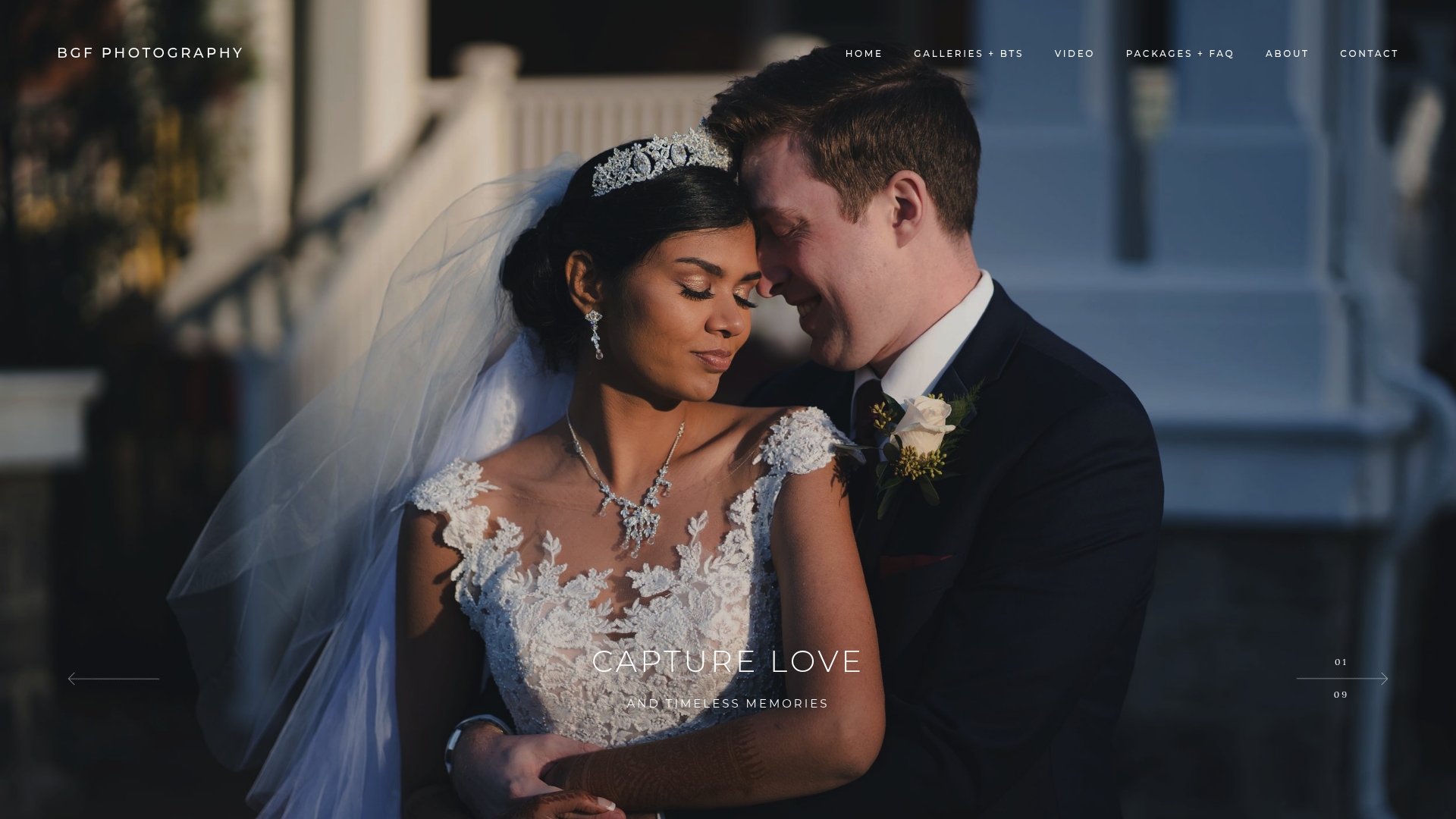
BGF Photography's hybrid coverage model combines photography and videography under one cohesive style, so every image and every frame of footage reflects the same emotional vision. The use of film photography adds a warmth and texture that digital alone rarely achieves. If you are ready to see what style-matched coverage looks like in practice, explore wedding packages and FAQs tailored to couples in the Buffalo and Rochester, NY areas. BGF Photography's portfolio shows full wedding galleries, not just highlights, so you can evaluate the fit before you ever book a call.
FAQ
What does "wedding photography style" actually mean?
Wedding photography style refers to a photographer's consistent approach to posing, composition, and storytelling across every wedding they shoot. It covers how much they direct couples, the editing aesthetic they apply, and whether images feel documentary or artistic.
How do i know which photography style fits my relationship?
Assess how you both behave when a camera appears. Couples who freeze under direction need candid or photojournalistic coverage, while couples who feel lost without guidance often prefer editorial or fine art approaches. Your gut reaction when reviewing a photographer's full gallery is a reliable indicator of style fit.
Can a photographer use more than one style in a single wedding?
Yes, and the best photographers do. A blended approach applies photojournalistic coverage during the ceremony, editorial direction during portraits, and candid documentation during the reception. This produces a gallery that captures the full emotional range of the day.
What questions should i ask a photographer about their style?
Ask how much they direct couples during portrait sessions, whether they can show you a full wedding gallery rather than a highlight reel, and how they adapt when a couple is uncomfortable in front of the camera. The answers reveal their actual directing approach and flexibility.
Why do wedding photos sometimes feel inauthentic?
Inauthentic wedding photos almost always result from a style mismatch. When a photographer's default posing level conflicts with the couple's natural dynamic, couples look stiff and performative. Excessive direction is the most common cause, particularly when couples wanted candid coverage but received rigid posing instead.