
TL;DR:
- Bohemian wedding photography emphasizes candid, unposed moments captured with natural light and earthy tones. It focuses on outdoor venues with landscapes and organic decor, creating a warm, film-inspired aesthetic. Choosing the right photographer involves reviewing full galleries for consistency and experience in natural settings and lighting conditions.
Bohemian wedding photography style is defined as a candid, free-spirited approach that captures authentic moments using natural light, earthy compositions, and nature-oriented settings with soft, warm, slightly desaturated tones that mimic film photography. Known in the industry as “boho” photography, this style sits at the intersection of documentary and fine art wedding photography. It prioritizes landscape, atmosphere, and genuine emotion over formal posed portraits. Couples drawn to outdoor ceremonies, wildflower bouquets, and unscripted laughter find that boho photography reflects their personality more honestly than traditional approaches. BGF Photography’s film-influenced work in the Buffalo and Rochester, NY areas is a strong example of this aesthetic applied with consistency and artistic intention.
What are the key characteristics of bohemian wedding photography?
Bohemian wedding photography is built on a specific set of visual and technical choices that separate it from every other style. Understanding these traits helps couples recognize the style in a portfolio and know what to expect on their wedding day.
Candid, unposed moments
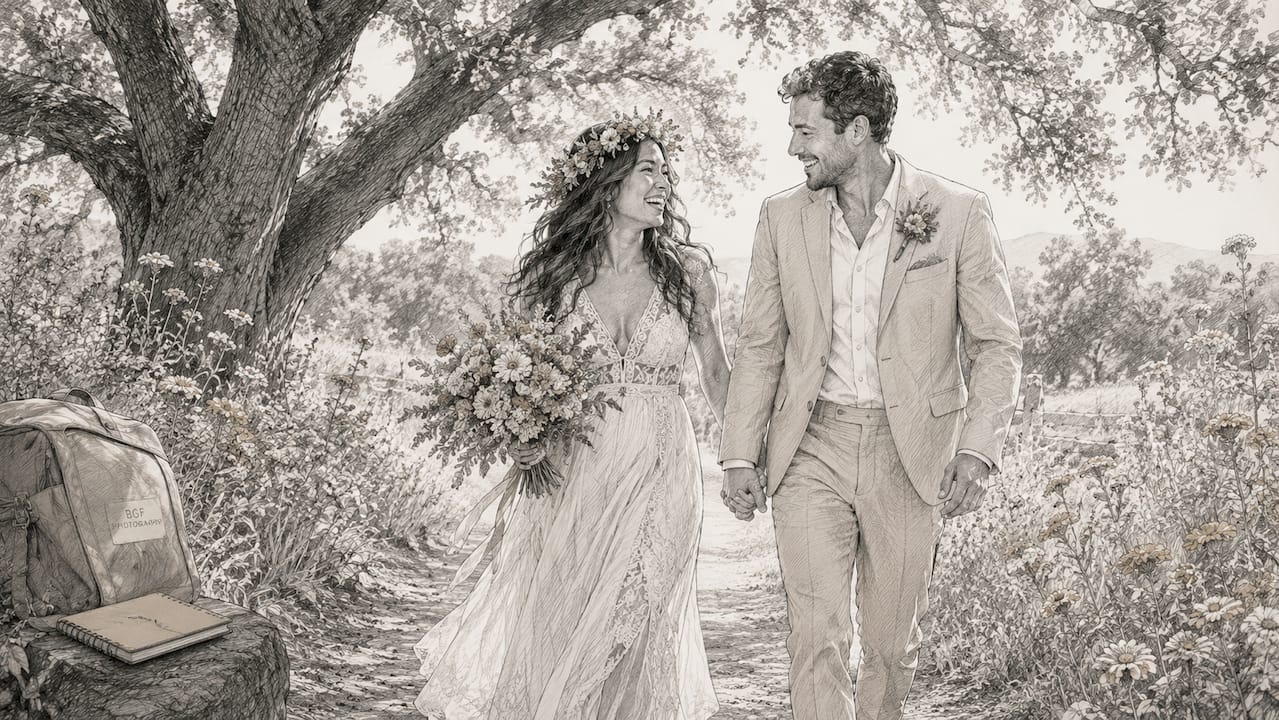
Boho photography emphasizes a lack of staged poses, focusing instead on real moments, closeness, and natural movements. A genuine glance between partners during the ceremony, a burst of laughter at the reception, or a quiet hand-hold before the first look. These are the images that define the style. The photographer creates space for interactions to unfold rather than directing every frame.
Natural light as the primary tool
Boho photographers work almost exclusively with available light. Soft window light, open shade, and the warm glow of late afternoon all shape the mood of the images. Artificial flash and studio lighting contradict the organic feel the style depends on.
Film-influenced color grading
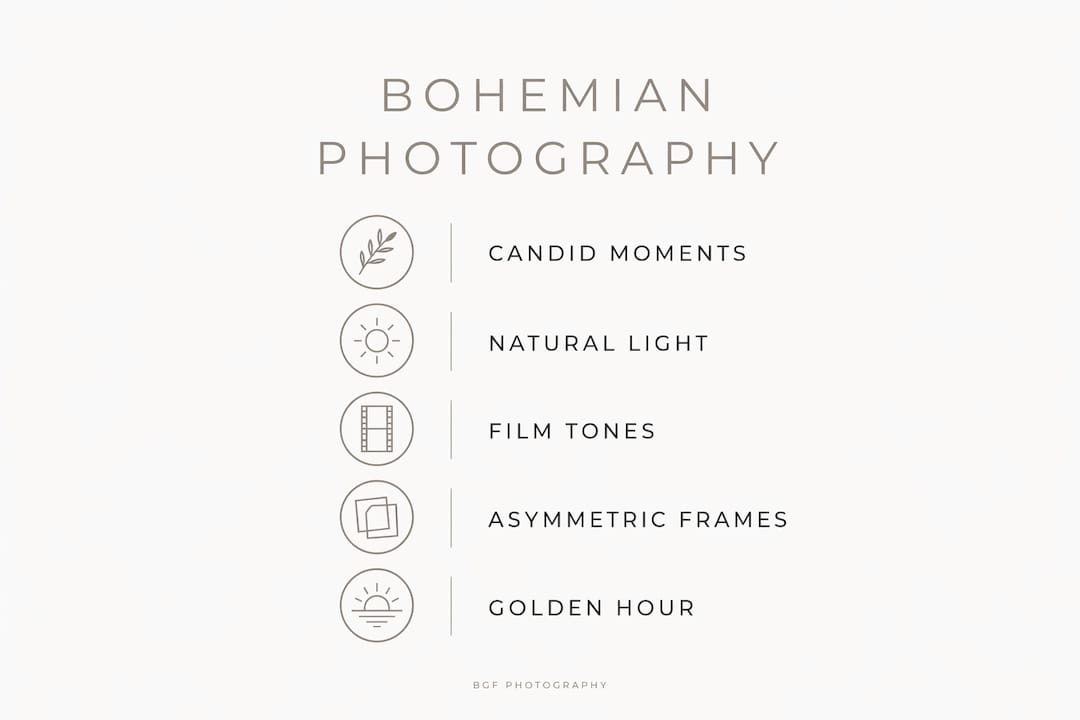
Boho photography often uses film or film-emulating digital processes to produce soft, warm, and slightly desaturated tones. This is not a single filter applied in post-production. It is a combination of in-camera technique, lens choice, and careful editing that produces a cohesive, timeless look across an entire wedding day.
Asymmetric, landscape-aware composition
Boho photographers frame couples asymmetrically and as part of the larger landscape rather than centering them in a formal portrait. A couple standing small against a forest canopy, or walking through tall grass with the horizon behind them. The environment is a character in the image, not a backdrop.
Eclectic, nature-oriented details
Floral crowns, macrame arches, vintage linen, dried pampas grass, and handwritten signage all appear frequently in boho wedding photography. These details give the photographer rich texture and color to work with. They also reinforce the free-spirited, artistic identity of the couple.
-
Candid, unposed emotional moments
-
Natural daylight, especially golden hour and blue hour
-
Soft, warm, slightly desaturated film tones
-
Asymmetric framing with the environment as context
-
Eclectic, nature-driven decor and styling details
Pro Tip: Ask your photographer to show you images from the same wedding taken in harsh midday sun and in golden hour light. How they handle both conditions reveals their true technical range, not just their best shots.
How does bohemian wedding photography differ from other styles?
Couples often encounter several overlapping styles when researching wedding photography. The table below clarifies how boho compares to four other major approaches across the dimensions that matter most.
| Style | Posing level | Light preference | Editing tone | Best venue fit |
|---|---|---|---|---|
| Bohemian | Minimal, candid | Natural only | Warm, soft, desaturated | Outdoor, nature settings |
| Traditional | High, formal | Mixed | Bright, neutral | Ballrooms, churches |
| Documentary | None, observational | Available light | True to life, minimal edit | Any venue |
| Editorial/fashion | High, directed | Controlled or dramatic | High contrast, polished | Studio, urban, luxury |
| Fine art | Moderate | Soft, natural | Airy, light, minimal | Gardens, estates |
Traditional wedding photography centers on formal family portraits, posed couple shots, and a structured timeline. It delivers predictable, clean results. Boho photography trades that predictability for emotional authenticity and artistic unpredictability.
Documentary or photojournalistic photography shares boho’s commitment to candid moments, but it removes the artistic layer entirely. A documentary photographer captures what happens. A boho photographer captures what happens and shapes it through light, composition, and editing into something that feels cinematic and timeless. The difference between styles is most visible in the editing. Documentary images look accurate. Boho images look felt.
Editorial photography moves in the opposite direction. It is highly directed, often using dramatic lighting and fashion-forward posing. Boho photography rejects that level of control. The goal is to look like the couple was simply living their day, not performing for the camera.
Fine art and boho photography overlap the most. Both favor soft natural light, beautiful venues, and careful composition. The distinction is emotional temperature. Fine art tends toward cool, airy, and minimal. Boho runs warmer, earthier, and more textured. Couples who want to feel the heat of the afternoon sun in their photos lean boho. Couples who want their images to feel like a gallery print lean fine art.
Rustic photography shares boho’s love of natural settings and organic materials, but it is more location-specific and less focused on emotional storytelling. Boho photography works in a forest, on a coastline, or in a wildflower meadow. Rustic photography is most at home on a barn property. Understanding which style matches your vision before you start contacting photographers saves significant time and avoids mismatched expectations.
What venues, lighting, and timing best suit bohemian wedding photography?
Venue compatibility is critical for boho photography. The style depends on natural surroundings to create its signature look. Outdoor and nature-heavy locations give photographers the raw material they need.
The strongest boho venues share a few qualities. They offer open sky or filtered canopy light. They include natural textures like stone, wood, water, or wildflowers. They allow the couple to move freely without being confined to a single room or backdrop.
-
Gardens and estates: Lush greenery, soft filtered light, and architectural texture work together beautifully.
-
Forests and woodlands: Dappled light through tree canopies creates a moody, intimate atmosphere.
-
Coastlines and beaches: Wide open light and dramatic natural backdrops suit the asymmetric framing boho photography favors.
-
Meadows and open fields: Golden hour light across tall grass produces some of the most iconic boho images.
-
Desert and canyon landscapes: Warm, earthy tones and dramatic scale amplify the free-spirited feeling.
Timing is as important as location. Golden hour and blue hour lighting are the two most critical windows for boho photography. Golden hour occurs in the 30–60 minutes after sunrise and before sunset. Blue hour follows immediately after sunset, producing cooler, softer tones. Both windows are brief. Missing them means missing the light that defines the style.
Couples planning a boho wedding should build their timeline backward from sunset. If sunset is at 7:30 PM, portraits should begin no later than 6:30 PM. This requires coordinating the ceremony end time, cocktail hour, and family formals to protect that window. A photographer who specializes in boho style will insist on this planning. One who does not mention it is a warning sign.
Seasonal variation also shapes the boho aesthetic significantly. Boho aesthetic varies by season and landscape. A june wedding in a wildflower meadow produces lush, saturated greens and warm golden tones. An october wedding in the same meadow produces amber, rust, and muted earth tones. Both are beautiful, but they are different images. Couples should look at portfolios from the same season and venue type as their own wedding to set accurate expectations.
Indoor venues with artificial lighting require a different approach entirely. Candlelit ballrooms and dimly lit barns can produce beautiful images, but they call for a photographer comfortable with low-light technique. That is a different skill set from the natural-light mastery that boho photography demands. Forcing a boho style into an artificial-light venue produces inconsistent results.
Pro Tip: Share your venue’s address with potential photographers before your first call. Ask them if they have shot there before, or if they have visited the location at the time of day your ceremony is scheduled. Familiarity with the light at a specific venue is a significant advantage.
How to choose and evaluate a bohemian wedding photographer
Selecting a boho photographer requires more than finding someone whose Instagram feed looks appealing. The curated images on social media represent a photographer’s best work across years. What you need to see is their consistent work across a single wedding day.
1. Request 2–3 full wedding galleries.
Experts recommend reviewing 2–3 complete wedding galleries rather than curated portfolio highlights. A full gallery shows how a photographer handles getting-ready shots in a cramped hotel room, family formals in harsh midday light, and reception dancing in low light. Consistency across all of those conditions is what separates a skilled boho photographer from one who only shines in ideal conditions.
2. Build a reference image collection.
Save 20–30 images that represent the look and feel you want. Pull from multiple photographers and sources. When you review a potential photographer’s gallery, compare it against your reference images. Look for consistent color grading, similar compositional choices, and the same emotional temperature. This process makes subjective style decisions concrete and comparable.
3. Narrow to 2–4 finalists.
Narrow your list to 2–4 finalists based on style alignment, availability on your date, and pricing. Do not make a final decision based on price alone. A photographer whose style perfectly matches your vision at a higher price point will produce images you love for decades. A cheaper photographer whose style is close but not quite right will produce images that feel slightly off every time you look at them.
4. Verify venue and season experience.
Ask each finalist whether they have shot at your venue or in similar environments during the same season. Portfolios should be season and venue-specific to set proper expectations. A photographer who excels at summer forest weddings may struggle with a winter coastal ceremony. The light, the color palette, and the logistical challenges are completely different.
5. Ask the right questions.
Strong questions to ask potential boho photographers include: How do you handle family formals while maintaining a candid feel for the rest of the day? What is your approach when the light is not ideal? Can you walk me through how you would structure our portrait session? How do you edit for color consistency when the light changes throughout the day?
6. Trust your initial reaction to their work.
Boho photography is not a simple filter. It is a combination of technique and post-processing that produces a specific emotional response. Couples respond best when they trust their initial gut reaction to a portfolio. If the images make you feel something, that photographer understands the style at a level that goes beyond technical execution.
Pro Tip: Look at the candid wedding photographer guide for a detailed checklist of questions to bring to your photographer consultations. Preparation makes those conversations far more productive.
You can also explore the types of wedding photography styles available in 2026 to confirm that boho is the right fit before you start reaching out to photographers.
Key Takeaways
Bohemian wedding photography produces its most powerful results when natural light, outdoor venues, and a candid approach work together under a photographer with consistent film-influenced technique.
| Point | Details |
|---|---|
| Core definition | Boho photography prioritizes candid moments, natural light, and earthy film tones over formal posed portraits. |
| Golden hour timing | Plan portraits 30–60 minutes before sunset to capture the light that defines the boho aesthetic. |
| Full gallery review | Request 2–3 complete wedding galleries, not just curated highlights, to assess stylistic consistency. |
| Venue compatibility | Outdoor nature settings like forests, meadows, and coastlines produce the strongest boho results. |
| Style vs. filter | Boho is a combination of shooting technique and editing, not a preset applied after the fact. |
What I have learned shooting in the boho style
The question I get most often from couples is whether boho photography is just a filter. It is not, and that misunderstanding costs people real money when they hire the wrong photographer.
The boho look comes from decisions made before the shutter clicks. Where you position the couple relative to the light. Whether you wait for a natural moment or manufacture one. How you read the landscape and find the frame within it. The editing is the last 20% of the result. The other 80% happens in the field, in real time, with natural light that does not wait for anyone.
What I find most rewarding about this style is the permission it gives couples to simply be themselves. When you remove the pressure of posing, something shifts. People breathe differently. They look at each other instead of at the camera. Those are the images that end up framed on walls 10 years later, not the perfectly posed portraits.
The hardest part of boho photography is the light. Golden hour is not a suggestion. It is a 30-minute window that closes whether you are ready or not. I have shot weddings where the timeline ran long and we lost the light entirely. The images from those days are still good, but they are not the images the couple imagined. Planning the timeline around the light is the single most important logistical decision a boho-focused couple can make.
My honest advice: do not let a beautiful venue substitute for a thoughtful timeline. A meadow at 2:00 PM in july looks completely different from the same meadow at 7:00 PM. One of those images is a snapshot. The other is a photograph.
— Billy
BGF Photography and the boho aesthetic
BGF Photography brings a film-influenced, candid approach to wedding coverage in the Buffalo and Rochester, NY areas. The work is built on the same principles that define boho photography: natural light, genuine emotion, and compositions that treat the environment as part of the story.
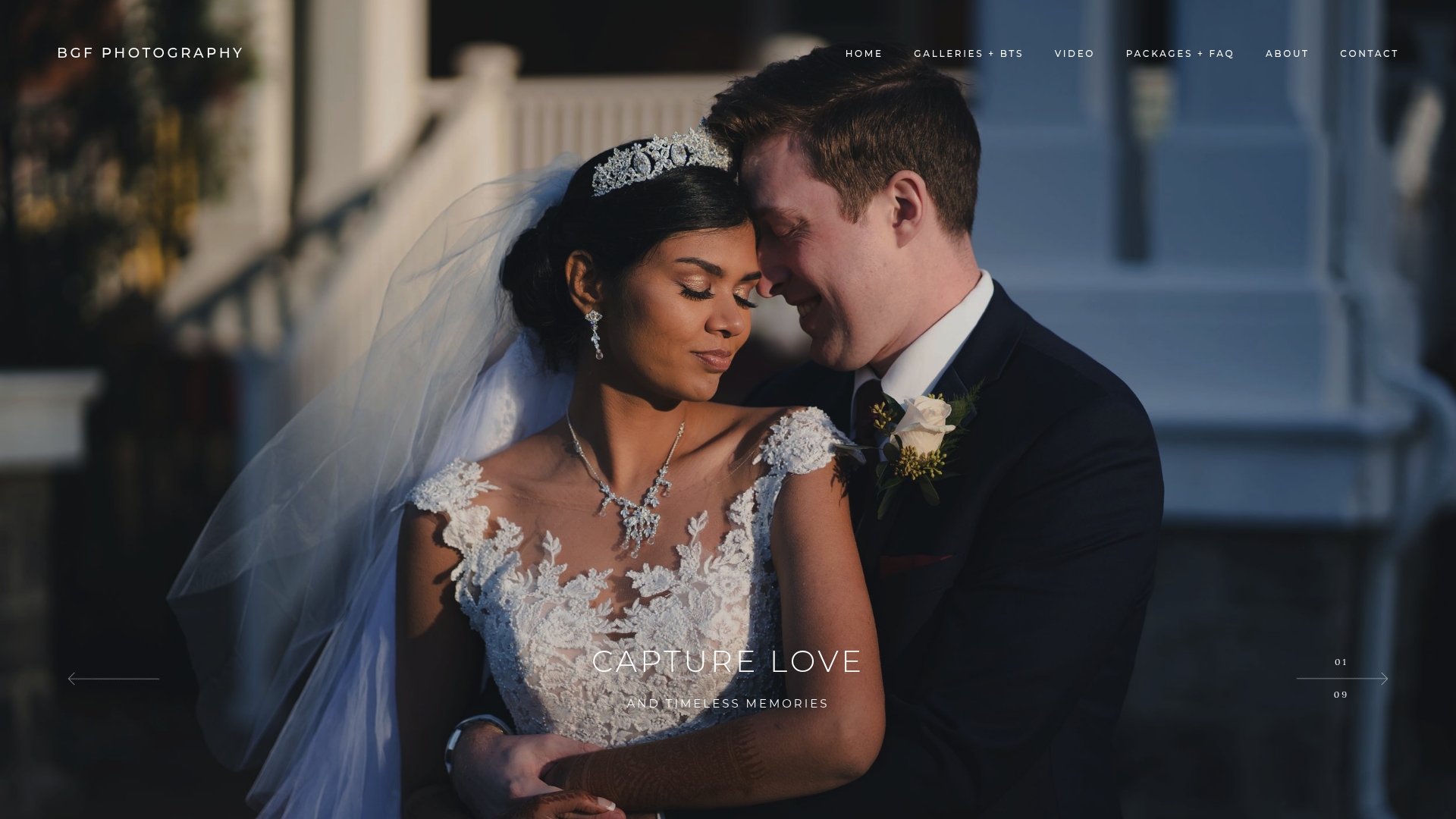
Couples who want to see what this looks like in practice can review full wedding galleries and client testimonials directly through BGF Photography’s packages and pricing page. BGF Photography also offers hybrid coverage, combining photography and videography under one cohesive visual style, so every moment is documented with the same artistic intention. If the boho aesthetic resonates with how you want your wedding day remembered, a consultation is the right next step.
FAQ
What is bohemian wedding photography style?
Bohemian wedding photography style is a candid, free-spirited approach that uses natural light, earthy tones, and outdoor settings to capture authentic emotional moments. It prioritizes atmosphere and genuine interaction over formal posed portraits.
How does boho photography differ from documentary style?
Documentary photography captures events as they happen with minimal artistic intervention. Boho photography adds a layer of intentional composition, film-influenced editing, and light-driven framing that gives images a cinematic, timeless quality.
What venues work best for bohemian wedding photos?
Gardens, forests, meadows, coastlines, and open fields produce the strongest boho results because they provide natural light, organic textures, and the landscape context the style depends on.
When should I schedule portraits for boho wedding photos?
Schedule portraits during golden hour, which begins 30–60 minutes before sunset. This brief window produces the warm, soft light that defines the boho aesthetic and requires careful timeline planning.
How do I know if a photographer truly specializes in boho style?
Request 2–3 full wedding galleries and look for consistent color grading, candid emotional moments, and asymmetric landscape-aware compositions across an entire day, not just a curated highlight reel.