
Most Catholic churches require unobtrusive, no flash photography during the liturgy and demand preapproved photographer access, so the single mandatory step is to ask the priest or wedding coordinator before you book. Guidance from the USCCB and individual basilica policies back this up, and practitioners like BGF Photography build their entire workflow around it. Confirm the specifics in writing well before the wedding day.
TL;DR:
- Most Catholic churches prohibit flash, floodlights, and movement inside the sanctuary during the liturgy to minimize distractions and respect the sacred space.
- Photographers should arrive well in advance, confirm restrictions, and get written authorization from the parish priest and coordinator, preferably during the first booking contact.
- Positioning is limited to designated areas such as the nave or side aisles, with all movement during key moments like communion or readings being generally forbidden or restricted.
- Using fast lenses with wide apertures and high ISO settings is essential for capturing images in low-light church environments without flash, with exposure strategies tailored to mixed lighting conditions.
- Outside Catholic churches, photography policies vary widely, but the same principles of pre-approvals and respect for worship space should guide photography plans.
Table of Contents
- What churches commonly forbid and require for photographers
- Exactly who to contact, when, and what to confirm before the wedding
- Where photographers should stand and when they can move
- Camera settings and lens choices for church light without flash
- Asking for exceptions and understanding venue logistics
- A practitioner-tested church wedding workflow
- Using audio equipment or a quiet shutter without disrupting the Mass
- Photographing weddings in non-Catholic churches
- Balancing candid moments with requests for posed photos
- Respecting privacy and consent inside the church
- Respect the liturgy, and the bookings follow
- Book church wedding coverage with BGF Photography
- Where to check official church photography policies
- Sources
- FAQ
What churches commonly forbid and require for photographers
Every parish sets its own tone, but the core restrictions repeat from diocese to diocese; to ensure a smooth experience, see this guide on att tänka på innan en fotografering for helpful preparation tips. The USCCB's principles for couples preparing for marriage state plainly that photography and videotaping during the wedding liturgy must be inconspicuous, and that flash and floodlights are to be avoided. That single line shapes nearly every rule a photographer will encounter inside a Catholic church.
- No flash or floodlights during the liturgy, since sudden light is treated as a distraction from worship rather than a technical inconvenience.
- Sanctuary and altar areas are typically off-limits to photographers, who must shoot from the nave or a designated side position.
- Choir lofts and side chapels sometimes allow conditional access, usually with prior approval from the coordinator on duty.
- Aisle movement is restricted, and tripods, light stands, or camera rigs that block sightlines are commonly banned outright.
- Drones are rarely permitted inside the building, and many parishes forbid them on the grounds entirely.
- Dress and volume expectations apply too: photographers are expected to dress modestly and keep conversation to a near whisper.
Enforcement is not theoretical. Basilica and cathedral guidelines often specify strict arrival and departure windows, a flash ban during the liturgy and the right to remove personnel who do not comply. One representative basilica photographer policy spells out sanctuary boundaries, prohibits lighting racks, and states that noncompliant photographers may be asked to leave. A first violation might mean a quiet warning, but repeat issues can lead to a permanent ban from that venue and, in some cases, forfeiture of a coordinator's goodwill for future clients.
Exactly who to contact, when, and what to confirm before the wedding
Permissions do not happen automatically, and the earlier you start the conversation, the more flexibility you tend to get.
- Contact the parish priest and wedding coordinator directly, ideally the same week you book your photographer, rather than assuming the venue's general policy covers your case.
- Follow diocesan timelines for marriage preparation, which typically require couples to begin the process at least six months before the wedding, with many parishes recommending eight to twelve months to leave room for paperwork and formation classes.
- Bring proof of liability insurance, a written shot list, and a short equipment list so the coordinator can see exactly what will be used and where.
- Ask whether the photographer may attend the rehearsal, since a walkthrough the night before eliminates most day-of surprises.
- Request written confirmation of any agreed exceptions, including specific arrival and departure windows so nobody is guessing on the wedding day.
- Build a shared checklist with the parish and your photographer that covers staging areas, communion protocol, and post-ceremony portrait time.
Pro Tip: Send your shot list and insurance certificate together in one email at least a month out, and ask the coordinator to confirm receipt in writing.
A wedding photography timeline built with realistic buffers makes this whole process easier, because it gives you a framework to slot church windows into the rest of the day.

Where photographers should stand and when they can move
Positioning inside a Catholic ceremony is less about creativity and more about staying out of the liturgy's way while still catching the moments that matter.
- Processional: shoot from the back of the nave or a side aisle, moving only enough to track the wedding party.
- Vows and ring exchange: a fixed position at the edge of the sanctuary steps usually works, since most parishes forbid standing inside the sanctuary itself.
- Communion: many parishes restrict photography entirely during this moment out of respect for the sacrament, so confirm this in advance rather than assuming access.
- Recessional: this is typically the most open window, with photographers free to move quickly down a side aisle for exit shots.
- No-move moments include the readings, the homily, and the Eucharistic prayer, when even a quiet shift in position can draw attention.
Multiple photographers can handle this smoothly by splitting roles: one works close candid moments and vows from a permitted front zone, while another covers wide shots, back-of-aisle reportage, and guest reactions. This zoning approach reduces movement and keeps both shooters within the boundaries the venue expects. It also solves a common headache: guests holding up phones in the aisle. A calm word to family members beforehand, delivered by the coordinator or officiant rather than the photographer, tends to work better than an in-the-moment correction.
Pro Tip: Print a one-page moment-by-moment position map for both photographers so nobody has to guess where to stand when the processional starts.
Camera settings and lens choices for church light without flash
Shooting a Catholic ceremony without flash means leaning on fast glass and a sensor that handles noise well. A dependable starting recipe is an aperture between f/1.4 and f/2.8 on a 50mm to 85mm prime lens, a shutter speed no slower than 1/60 of a second to freeze movement, and an ISO between 1600 and 6400 depending on how the camera body handles noise.
- Fast primes outperform zooms in dim naves, since the wider aperture lets in far more light without raising ISO to unusable levels.
- In-body image stabilization helps when shutter speed has to drop below 1/60 for a static moment like a reading.
- Native high-ISO performance matters more than megapixel count in a church setting, since noise is the real enemy, not resolution.
- Small continuous lights can sometimes be requested for specific moments like the unity candle, but only with prior permission and placed well outside the congregation's sightline.
- Bracket exposures during unpredictable light shifts, such as when sun moves through stained glass, and lean on RAW files for recovery in post.
A practical no-flash recipe for many churches: f/1.4 to f/2.8 on a 50mm to 85mm prime, shutter no slower than 1/60 for movement, and ISO 1600 to 6400 depending on sensor and noise tolerance.
Setting client expectations matters here too. Images shot at high ISO in mixed church lighting will have a different texture than a bright outdoor portrait, and a quick conversation before the wedding about that tradeoff saves confusion later. For more detail on exposure strategy, see this breakdown of low light wedding photography without flash.
Asking for exceptions and understanding venue logistics
Most parishes will grant a reasonable request if it's framed around protecting the liturgy rather than getting a better shot.
- Escalate to diocesan media relations or cathedral staff only for major venues or high-profile ceremonies, since a parish coordinator usually has full authority over standard weddings.
- Submit evidence with your request: proof of insurance, a written shot list, and confirmation that the photographer plans to attend the rehearsal.
- Ask specifically about post-ceremony portrait windows, which are often limited to 30 to 90 minutes total between the liturgy and photos.
- Expect tradeoffs in exchange for access: no posing during the liturgy itself, a strict time limit for portraits, and a firm rule against standing on pews or kneelers.
Framing your request around the ceremony as a shared, sacred moment rather than a photo opportunity tends to land better with clergy, and offering to attend the rehearsal signals that you take the boundaries seriously.
A practitioner-tested church wedding workflow
A recommended approach to every church wedding is to be candid, unobtrusive, and coordinated well before the ceremony begins. This can include a venue scout, rehearsal attendance whenever the parish allows it, a clear lead and second photographer role split, and applying a 30/5 buffer to the timeline so nobody feels rushed between the ceremony and portraits. That rule recommends building in 30 minutes for tasks that feel like they should take five, which gives photographers breathing room to actually get the shot rather than chase it. After the recessional, our teams move straight into a tight family formals session, an approach detailed further in this guide to unobtrusive wedding photography and family formals.

Using audio equipment or a quiet shutter without disrupting the Mass
Noise discipline matters as much as light discipline inside a church. The USCCB's guidance on covering the Mass stresses minimal interference with prayer, and a loud shutter or an audio recorder placed near the altar can pull attention away from the liturgy just as easily as a flash.
Cameras with a quiet or electronic shutter mode reduce mechanical noise significantly, which matters most during the readings and the homily when the room is otherwise silent. If you plan to record audio separately from video, whether for vows or for the homily, check with the parish first: the same USCCB guidance notes that recording or streaming music may raise copyright and licensing questions that should be cleared with the parish ahead of time. A lapel microphone on the officiant, run through a small wireless system, is usually far less disruptive than a boom or a handheld recorder near the front pew. If a videographer needs synced audio for a highlight reel, coordinating that feed with the parish's own sound system, when one exists, avoids introducing an extra piece of visible equipment into the sanctuary.
Photographing weddings in non-Catholic churches
Rules loosen somewhat outside Catholic parishes, but the underlying etiquette holds. Protestant churches, synagogues, and other houses of worship often have their own written policies, and some are far more permissive about flash and movement than a typical Catholic Mass. Others, particularly Orthodox churches, can be just as strict about sanctuary access and photography during specific rites.
The safest approach is the same regardless of denomination: contact the officiant or wedding coordinator ahead of time, ask directly whether flash, movement, and video are permitted, and get any exceptions in writing. Never assume that a rule learned at one Catholic parish applies at a Baptist church across town, or that a lenient Episcopal policy will transfer to an Orthodox ceremony. When no formal policy document exists, a short phone call with the officiant usually surfaces the same categories of restriction: quiet during specific prayers, no photography during communion or specific blessings, and respect for the space as a place of worship rather than a photo backdrop.
Balancing candid moments with requests for posed photos
Couples often want a mix of genuine, candid coverage and a handful of posed formal shots, and church rules shape how that split plays out. During the liturgy itself, nearly every parish expects fully candid, non-intrusive documentation. Posed shots, like a couple pausing at the altar for a portrait mid-ceremony, are almost universally against the rules and interrupt the flow of the Mass.
The workaround is timing rather than compromise. Candid coverage happens throughout the ceremony, capturing genuine reactions during vows, the exchange of rings, and the recessional. Posed portraits, including any requested by family members, wait until after the liturgy ends, inside the window the parish has approved. Setting this expectation with the couple ahead of time, and looping in family members who might ask for a formal shot mid-ceremony, prevents an awkward moment where a photographer has to decline a request in front of the altar.
Respecting privacy and consent inside the church
A church wedding fills the pews with people who did not necessarily sign up to be photographed, and that matters more inside a place of worship than almost anywhere else on the wedding day. Guests attending a Mass are there to participate in a religious service, not to appear in someone else's photo gallery, and a good photographer treats candid shots of the congregation with the same discretion expected of a guest.
Practical habits help here: avoid close, identifiable shots of guests who are visibly praying or receiving communion unless they are part of the wedding party, and be cautious about publishing images that show private moments, like a grieving relative or a child being comforted, without a clear sense that it is appropriate to share. Coordinators at some parishes will flag specific attendees, such as a cloistered relative or someone under a privacy request, and it is worth asking whether any such requests exist before the ceremony begins.
Respect the liturgy, and the bookings follow
Every rule in this guide points to the same underlying idea: a wedding Mass is a shared prayer, not a photo shoot with a religious backdrop. Photographers who treat it that way get better images anyway, because trust from clergy and coordinators translates into more flexibility, not less.
The photographers who keep getting invited back to the same parishes are rarely the most aggressive ones. They're the ones who showed up to the rehearsal, sent the shot list early, and stayed in their lane during the Eucharistic prayer. That reputation follows you from one referral to the next.
— Billy
Book church wedding coverage with BGF Photography
Church weddings reward photographers who prepare instead of improvise, and that preparation is built into how BGF Photography works every ceremony. We scout the venue, attend the rehearsal whenever the parish allows it, and apply a candid, unobtrusive style that keeps us out of the sanctuary's sightlines while still capturing the moments that matter most.
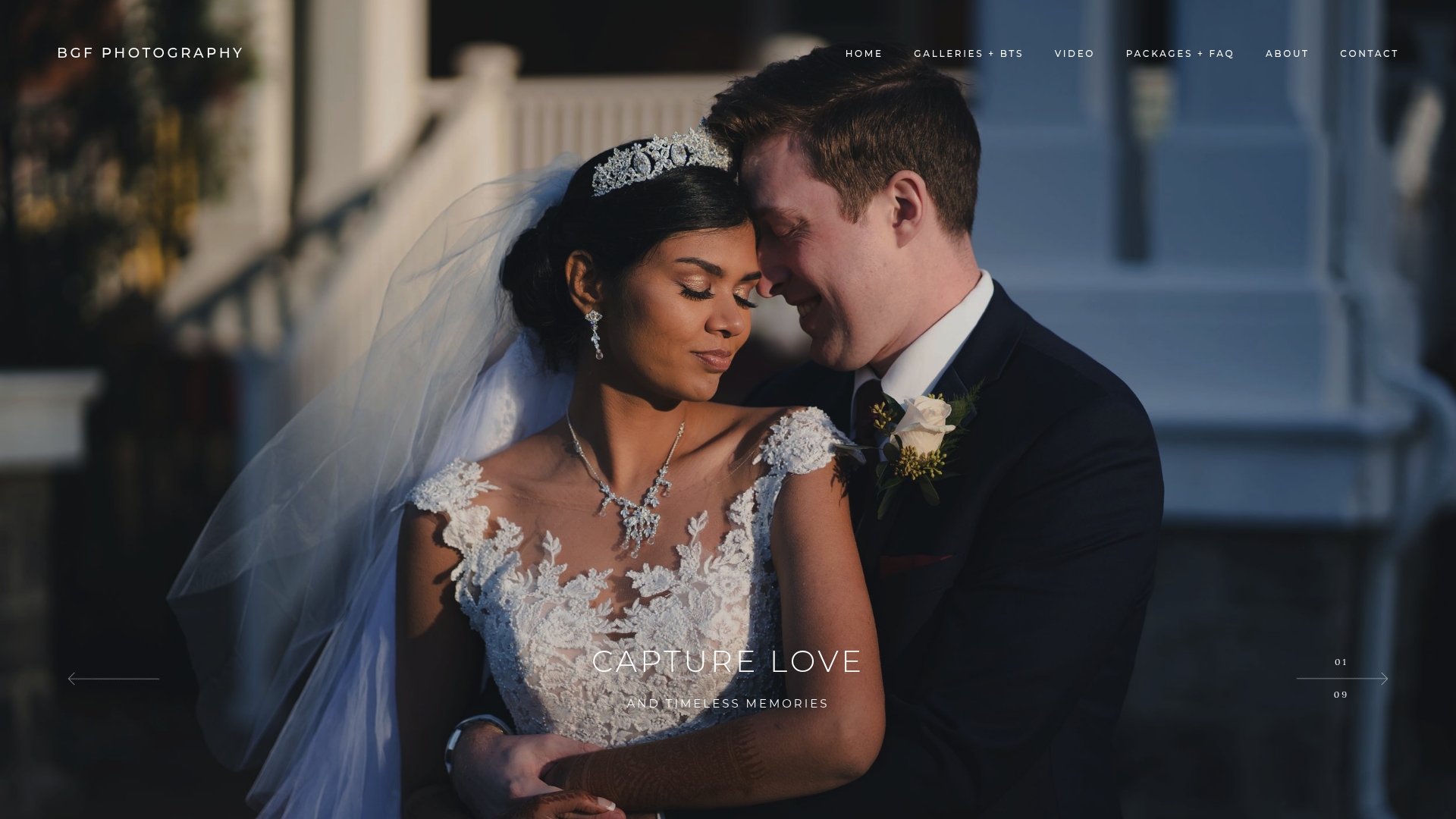
- Full Wedding Day coverage built around your parish's specific rules and timeline.
- Hybrid photo and video service under one team, so your ceremony coverage and your highlight reel share a consistent look.
- Medium Format and 35MM Film available for couples who want a nostalgic texture alongside digital coverage.
If your ceremony is at a Catholic parish, a cathedral, or another house of worship with its own written policy, we build our shot list and positioning plan around it before the wedding day arrives. Check available dates and packages on our investment page to start planning your church wedding coverage.
Where to check official church photography policies
Before you finalize any plan, read the source documents directly rather than relying on secondhand summaries.
- The USCCB's principles for couples preparing for marriage and its guidance on covering the Mass.
- A representative basilica photographer policy showing typical arrival windows and sanctuary boundaries.
- Diocesan marriage preparation timelines for scheduling requirements.
- Always request your own parish's written policy directly from the coordinator.
Sources
- Principles of Ministry to Couples Preparing for Marriage | USCCB
- How to Cover the Mass | USCCB
- Weddings in the Basilica: Guidelines for Photographers/Video Personnel (example)
- Marriage Preparation timelines and requirements (example diocesan guidance)
- What Is the 30/5 Wedding Rule | Unveiled Wedding
FAQ
What are the requirements for a church wedding in 2026?
Requirements vary by diocese, but most Catholic parishes expect couples to begin marriage preparation at least six months before the wedding, with many recommending eight to twelve months. Couples should also confirm photography and videography rules directly with the parish coordinator well ahead of the ceremony.
Are there any photography restrictions at the ceremony?
Yes, most Catholic churches restrict flash and floodlights during the liturgy, per USCCB guidance, and limit photographer access to the sanctuary. Many parishes also restrict movement during communion and require photographers to stay in a designated area.
What is the 20-60-20 rule in photography?
Some photographers use a compositional and behavioral framework to balance posed, candid, and detail shots across a wedding day. It is referenced in wedding photography circles as a general guideline rather than a formal church policy.
What is the 30-5 rule for weddings?
The 30/5 rule recommends planning a 30-minute buffer for tasks that feel like they should take only five minutes. Applying it to church wedding timelines gives photographers breathing room to capture key moments without feeling rushed between the ceremony and portraits.
Who do I ask for permission to photograph a church wedding?
Contact the parish priest and wedding coordinator directly, ideally the same week you book your photographer. Bring proof of insurance and a written shot list, and ask for any agreed exceptions in writing before the wedding day.