
Choose photos if you want wall art, albums, and keepsakes you'll display and revisit casually; choose video if you need to hear your own vows, laughter, and the voices of people who matter most. Most couples who can manage the budget choose both, since hybrid coverage captures still composition and motion without forcing a tradeoff. We build hybrid packages around exactly this choice.
TL;DR:
- When you can afford only one format, prioritize full day photography, then add ceremony video to preserve vows and speeches without buying all day filming.
- A $5,000 budget could cover $3,000 for full day photography, $1,500 for ceremony and speech video, and $500 for prints or an album.
- One studio typically costs less and keeps photos and film visually consistent, but booking together limits your ability to combine different vendors’ styles.
- Keep three copies across two media types, with one stored offsite, and request high resolution master files for future reprints or edits.
Table of Contents
- What Photos and Video Each Actually Capture
- A Decision Checklist: Matching Format to How You'll Use It
- Realistic Costs and How Packages Break Down
- Making Your Photos and Video Last
- How Hybrid Coverage Actually Works on the Day
- How Long Should an Engagement Video Be, and What Should It Include?
- Why Film Photography Adds Something Digital Can't Replicate
- Our Take: Pick the Format That Matches How You'll Actually Use It
- BGF Photography: Coordinated Photo and Video Packages
- FAQ
- Sources
What Photos and Video Each Actually Capture
Photos and video record fundamentally different things, and that difference should drive your decision more than price alone.
A photograph freezes a single decisive moment: the exact angle of a smile, the light on a veil, a held glance between partners. That stillness is what makes photos easy to print, frame, and hang, and it's why they work as permanent household decor in a way video never does. Video, by contrast, captures motion and ambient sound: the shake in someone's voice during a toast, the particular rhythm of your partner's laugh, the noise of a room erupting during a first kiss. Editing shapes how each medium ultimately feels. A photographer's culling and retouching decide which fifty images survive from three thousand frames, while a videographer's choice between a three-minute highlight reel and a thirty-minute full-length film decides whether you get a quick emotional hit or a complete narrative.
Those editing decisions affect what you'll actually rewatch years later:
- Highlight reels compress a wedding into a few emotionally dense minutes, built for repeat viewing.
- Feature-length films preserve full speeches and ceremony dialogue, built for occasional, deeper rewatching.
- Printed albums get touched and flipped through in a way that files on a hard drive do not.
Neither format is strictly better. They solve different problems, which is why the choice usually comes down to how you plan to use the end product.
A Decision Checklist: Matching Format to How You'll Use It
Before you book anything, run through a short list of questions about how you'll actually use these keepsakes, not just what sounds impressive on your wedding day.
- Do you want wall art and an album, or a film you'll sit down and rewatch with the sound on? Your answer here does more to determine your package than any other single factor.
- Who will actually consume these keepsakes? Parents and grandparents often prefer a printed album they can hold, while younger guests and social followers engage more with short video clips.
- If budget forces a choice, what matters more: documenting every hour of the day, or preserving a few irreplaceable spoken moments? A common rule of thumb is to prioritize full-day photography coverage paired with a shorter video package for the ceremony, which still captures vows and speeches without paying for all-day videography.
- Can you trim scope instead of cutting a format entirely? Shorter video packages, ceremony-only coverage, or a highlight reel instead of a feature film all preserve voice and motion at a lower price point than full-day dual coverage.
Running through these questions before you contact vendors makes conversations about packages far more productive, since you'll already know which deliverables matter most to you.
Realistic Costs and How Packages Break Down
Wedding photography and videography pricing varies widely, but a few patterns hold across most markets. Published averages list typical photographer and videographer costs nationally, with photographers generally costing more than videographers, according to wedding cost data compiled by The Knot. Add-ons commonly increase the total cost, with second shooters, drone footage, printed albums, or same-day edits typically priced separately from base packages.
Bundling a photographer and videographer under one vendor typically costs less than hiring two separate specialists, and it usually produces a more consistent visual style across your final photos and film, according to Zola's guidance on wedding videographer costs. The tradeoff is less flexibility: you're committed to one studio's aesthetic for both formats rather than mixing and matching.
If budget is tight, industry guidance commonly suggests prioritizing photography if you can only pick one format, since it's the more durable, everyday keepsake, while reserving a smaller video budget for ceremony-only coverage to preserve vows and speeches, per The Blu List's comparison of photographer and videographer costs.
As a worked example: with a $5,000 visual budget, a couple might allocate roughly $3,000 to full-day photography, $1,500 to a ceremony-and-speeches video package, and $500 to a small album or print set, splitting coverage so both the permanent prints and the spoken moments get preserved.

Making Your Photos and Video Last
Choosing a format is only half the job. Protecting what you receive matters just as much, since digital files degrade, get lost, or become unreadable as formats change.
- Follow a 3-2-1 backup routine: keep at least three copies of your files, stored on two different types of media, with one copy offsite in the cloud.
- Ask your vendor for master files, not just web-compressed previews. High-resolution images and master video files give you the ability to reprint or re-edit years later.
- Organize and label everything by date and event name as soon as you receive it, before files scatter across devices.
Preservation experts treat this as an active, ongoing responsibility rather than a one-time task. The Library of Congress's guidance on film and motion-picture care recommends cool, dry storage with controlled humidity for any physical film, plus protective enclosures and special handling for older film stocks. Digital files carry their own version of this problem: a separate Library of Congress plan on film preservation notes that formats become obsolete without active migration, meaning digital photos and video need periodic transfer to current storage media, not a single backup and forget.
Pro Tip: Set a recurring yearly reminder to check that your backup drives still work and that cloud storage subscriptions are still active.
How Hybrid Coverage Actually Works on the Day
Couples who book both photography and videography from one studio often ask how two crews avoid tripping over each other during the same ceremony or reception. In practice, coordinated hybrid coverage depends on a shared shot list and timeline worked out in advance, so the video crew knows when the photographer needs an unobstructed angle for a formal portrait, and vice versa.
Our candid, unobtrusive approach to both photography and videography means we aim to document genuine interactions as they happen rather than staging them, which keeps a two-person crew from becoming a visible disruption to your day. Couples who book hybrid packages typically receive a combination of deliverables: an engagement session, a highlight reel or featurette, full-day photography, and optional film photography for a more nostalgic look.
Before booking any vendor for hybrid coverage, ask directly what file formats you'll receive, what usage rights you have for printing and social sharing, and what the turnaround time looks like for edited galleries and films. Our guide to questions worth asking a wedding videographer walks through this in more detail.
How Long Should an Engagement Video Be, and What Should It Include?
Engagement videos tend to run shorter than wedding films, usually landing in the one-to-three-minute range as a highlight-style piece rather than a full narrative. Typical content includes candid walking and talking footage, a few posed moments mirrored from the photo session, and often a short clip of the couple answering a simple question about how they met or got engaged, since that audio adds a personal element photos can't provide.
Engagement photo sessions, by comparison, usually run one to two hours and are built around multiple locations or outfit changes rather than a strict runtime. The goal is a varied set of still images, ranging from posed portraits to candid walking shots, that can later populate save-the-dates, a guest book, or wall art.
If you're booking both formats for your engagement session, plan for the videographer to work around the same locations and timeline as the photographer rather than scheduling a separate session, since reusing one setup keeps costs down and the visual style consistent between the final photos and the engagement video. Couples choosing locations for this kind of session often find it useful to review engagement photo locations matched to style and logistics before the day, since lighting and crowd levels affect both formats equally.
Why Film Photography Adds Something Digital Can't Replicate
Film photography brings a distinct visual texture to engagement portraits: softer highlights, a particular grain structure, and color rendering that digital sensors don't naturally produce. For couples drawn to a timeless or nostalgic look, mixing in a roll or two of medium format or 35mm film alongside digital coverage gives the final gallery a noticeably different feel from an all-digital set.

Film also changes pacing on location. Because each roll holds a limited number of frames, a photographer shooting film tends to slow down, which often results in more deliberate posing and a calmer atmosphere during the session, something that can carry over into how comfortable a couple looks on camera for both the stills and any accompanying video.
The same qualities that make film attractive for photos can inform how a videographer approaches color grading in an accompanying engagement video, pulling warmer tones or softer contrast to keep the two formats visually connected. Couples who want this cohesive look across both their photos and video should raise it directly with their photographer before the session, since film needs to be planned into the shot list rather than added as an afterthought. Reviewing engagement session style examples beforehand can help you decide where film fits into your overall vision.
Our Take: Pick the Format That Matches How You'll Actually Use It
Hybrid coverage is the right call whenever your budget allows it, because it removes the tradeoff entirely instead of forcing you to guess which moments you'll regret not capturing. Short of that, lean toward photos if lasting display matters most to you, and toward video if hearing your vows and your people's voices again matters more than a framed print. Whatever you choose, get specific with your vendor about deliverables, file formats, and turnaround before you sign anything, since vague promises cause more post-wedding disappointment than any format choice does. Couples who want one cohesive style across both formats are welcome to look at how we structure hybrid coverage consultations.
— Billy
BGF Photography: Coordinated Photo and Video Packages
We build our packages around the tradeoff this guide walks through: full-day photo coverage, short or mid-length video packages, engagement sessions to test comfort on camera before the big day, and optional film photography for a nostalgic layer across either format. Booking hybrid coverage with one studio means one shared timeline and one consistent visual style, instead of coordinating two separate vendors.
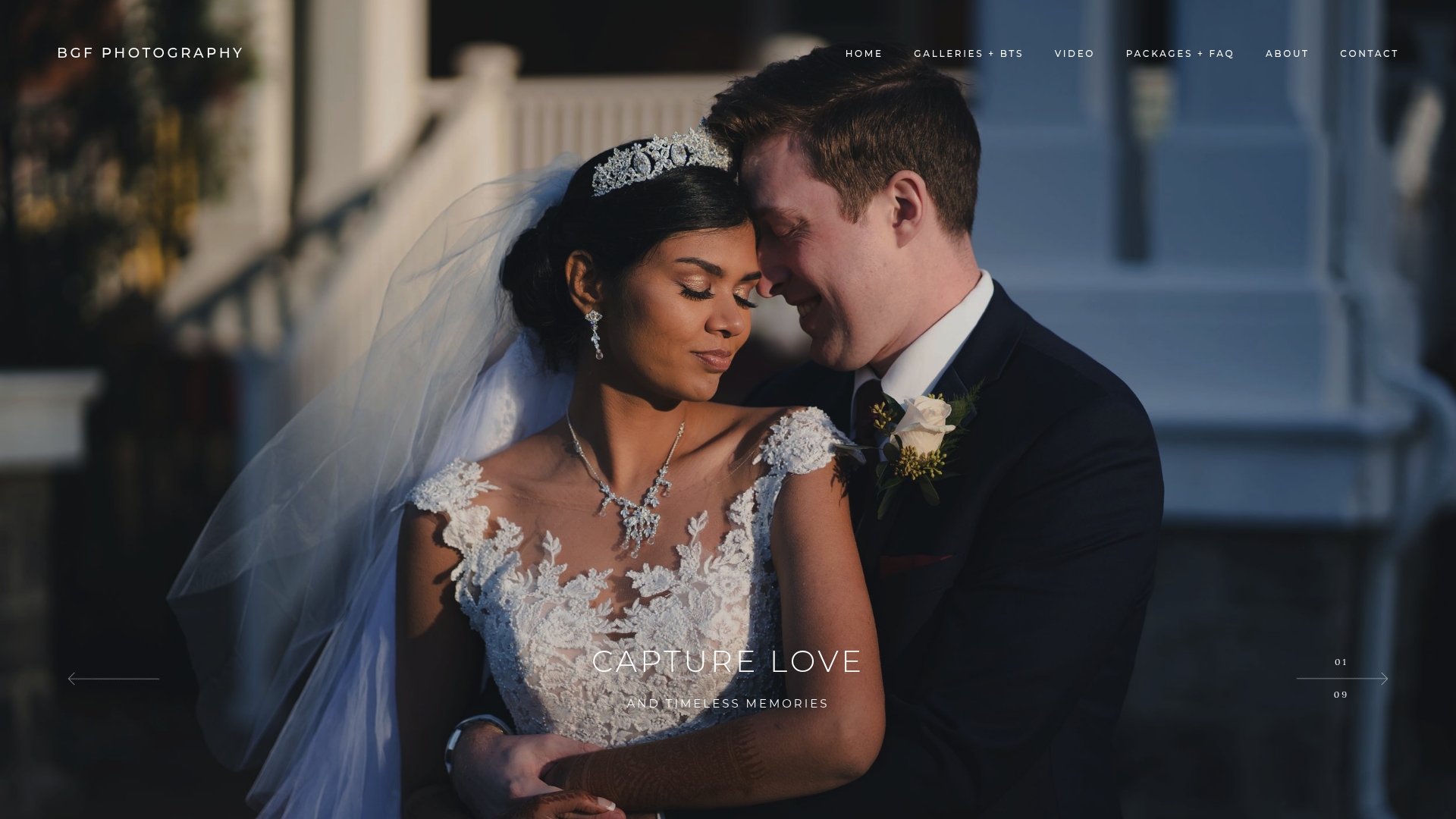
| Package | What it covers |
|---|---|
| Full Wedding Day | 4,500 to 5,200 USD, full-day photography |
| 3 Minute Highlight | 1,400 USD, short highlight video |
| — | 1,800 USD, mid-length video story |
| Engagement Session | 500 USD, pre-wedding photo session |
Check current availability and full package details on our Investment page, or get in touch to talk through a hybrid plan built around your wedding date.
FAQ
What should couples avoid when planning engagement photos?
Avoid overly trendy outfits or props that will date the images quickly, and avoid locations with harsh midday light or heavy crowds that limit your photographer's options. It also helps to avoid scheduling the session too close to the wedding date, since it leaves no time to use the images for save-the-dates or invitations.
Is digital or film better for wedding photos?
Neither is strictly better: digital offers more shots per session and easier editing, while film adds a distinct grain and color quality that many couples find more nostalgic. Many photographers, including our team at BGF Photography, offer both and let couples choose based on the look they want rather than treating one as universally superior.
Is $500 a reasonable price for engagement photos?
Yes, $500 falls within a typical range for a dedicated engagement session, which is the price we list for our own Engagement Session package. Final pricing varies by region, session length, and how many locations or outfit changes are included.
Is video or photo more accurate at capturing a moment?
Video captures motion, sound, and spoken words exactly as they happened, which makes it more accurate for preserving vows, speeches, and reactions in full. Photos capture a single frozen instant with more control over composition and lighting, so each format is accurate to a different kind of truth rather than one being more precise than the other.
Sources
- Care, Handling, and Storage of Motion Picture Film - Collections Care (Preservation, Library of Congress)
- Do You Need Both a Photographer and Videographer? NYC Cost — The Blu List
- Wedding Videographer Cost: Average Prices and Packages - Zola