

Yes, you almost certainly need a sync license — and usually a master-use license too — to legally include commercial music in a paid wedding film. Attorney Aaron M. Arce Stark makes this plain: buying or streaming a song on Spotify does not grant synchronization rights for video. Sprintlaw echoes that position, recommending production libraries or custom compositions as the safer, more affordable path. BGF Photography handles this for Rochester couples as part of the filmmaking process.
Before or during booking, take these steps:
- Ask your videographer which type of license covers your film (sync, master, or both).
- Request written confirmation of who holds the license and what uses it covers (private keepsake, online sharing, vendor promotion).
- Confirm the license scope includes lifetime worldwide sync rights if you plan to post the film publicly.
- Discuss whether your first dance song requires separate clearance.
- If you want a specific commercial track, ask early — clearance takes time and may cost more than a production library alternative.
The single most useful thing you can do right now: ask your videographer to add a music licensing clause to the contract before you sign.
Table of Contents
- What does clearing music actually cost — and how long does it take?
- Questions to ask your videographer before you book
- What to do when your favorite song can't be licensed
- Affordable alternatives when licensing is out of reach
- Common pitfalls — and how to avoid them
- BGF Photography handles music licensing for your Rochester wedding film
- FAQ
What does clearing music actually cost — and how long does it take?
Clearing a well-known commercial track means contacting both the music publisher (for the composition) and the record label (for the recording). Fees vary widely based on the artist, intended use, and distribution scope, and the process can take weeks or longer with no guarantee of approval.
Production music libraries are the practical alternative. Some rights-included licenses bundle sync and master rights with lifetime worldwide commercial use and Content ID clearance, with example pricing starting at €29.90 per track. Services like Track Club offer subscription-based access to curated tracks with synchronization rights appropriate for wedding edits. Either route is faster and far more predictable than chasing a major-label approval.
Questions to ask your videographer before you book
A solid videographer interview should include at least these music-specific questions:
- Do you use licensed production music, or do you clear commercial tracks?
- Will the license cover online sharing on YouTube, Instagram, and TikTok?
- Does the license allow me to share the film publicly, or is it keepsake-only?
- Can you use my film in your portfolio, and is that covered under the same license? A wedding single song license typically restricts the videographer's promotional use — they need a separate business license for that.
- What happens if my chosen song can't be licensed in time?
Get the answers in writing. A vague verbal "we handle it" is not protection.
What to do when your favorite song can't be licensed
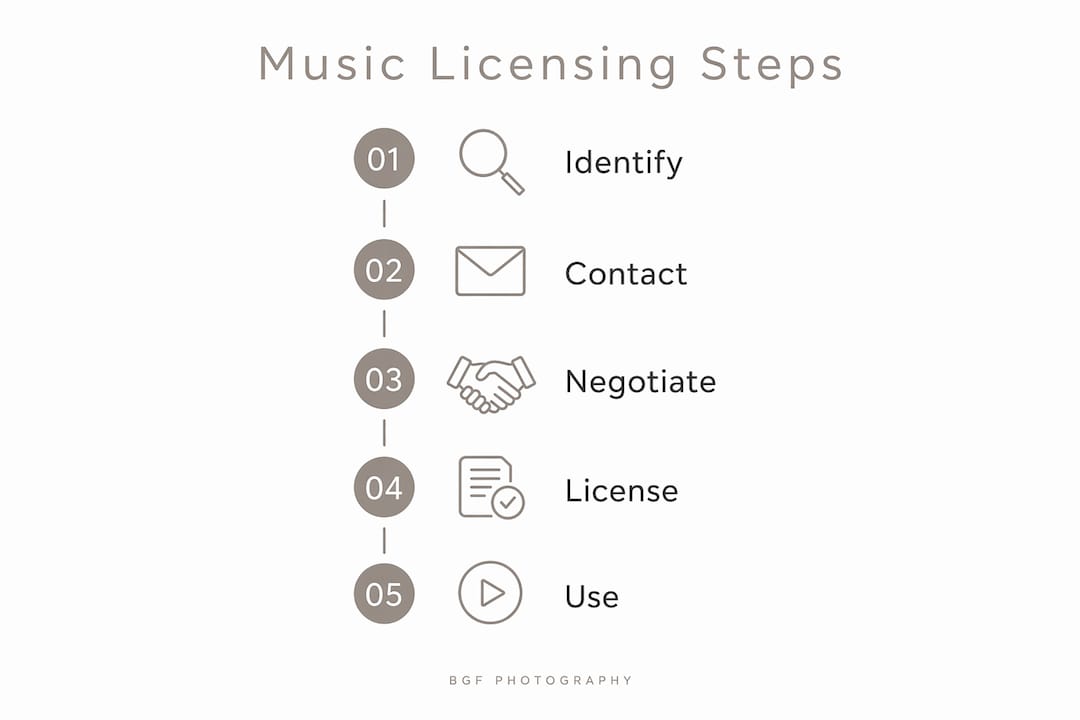
Major-label tracks — think anything currently charting — are often either unavailable for sync licensing or priced beyond a typical wedding film budget. When that happens, you have real options.
Ask your videographer whether an independent artist with a similar sound could work. Many independent musicians will negotiate sync and master rights directly at reasonable rates, and a written agreement locks in the permitted uses. Custom composition is another route: a composer creates an original piece matched to your film's mood, and you own clear rights from the start.
Affordable alternatives when licensing is out of reach
Production music libraries offer the clearest path. Their licenses are documented, fast, and cover the uses that matter: client copies, online sharing, and often promotional use. Social platform music libraries (Instagram's built-in audio, TikTok sounds) are a different story — those platform-specific libraries rarely cover full wedding-film deliverables and cannot be exported for use elsewhere.

Custom scores sit at the premium end but give you complete flexibility. For couples who want something personal without the clearance headache, commissioning a short original piece is worth the cost.
Common pitfalls — and how to avoid them
Assuming a personal purchase covers video use. It does not. Streaming licenses are for personal listening only. Even a private Dropbox delivery of a paid wedding film requires proper sync and master rights when a professional produced it.

Ignoring YouTube Content ID. The system scans even unlisted and private uploads. Three strikes within 90 days can delete a channel — not just a video. If your videographer uploads your film to their portfolio without the right license, you both have a problem.
Letting the couple "take responsibility" for a song. Contracts often include indemnity clauses when clients provide their own tracks, but that language protects the videographer, not you. If the rights aren't cleared, the video can still be taken down.
Forgetting promotional use. Your videographer may want to share your highlight reel. A keepsake-only license does not cover that — they need a separate business license, and you should know whether they have one before signing.
BGF Photography handles music licensing for your Rochester wedding film
BGF Photography takes care of music licensing as part of every Rochester wedding film project. That means using properly licensed production music with documented sync rights, so your film can be shared on YouTube, Instagram, or wherever you want to post it — without takedowns or Content ID claims. Couples receive clarity on what their license covers (personal sharing, online distribution) and what the videographer's promotional rights are, all spelled out before delivery.
Pro Tip: Ask for a written summary of the music license in your contract — the track title, library source, and permitted uses. It takes one sentence to add and protects your film for years.
If you want to review package options or ask about specific songs you have in mind, reach out to BGF Photography before your booking date. Availability in Rochester fills up, and music decisions are easier to sort out early.
FAQ
Do I need a music license for a private wedding film?
Yes. Even a film delivered privately on USB or via a download link requires sync and master rights when a paid videographer produced it — copyright applies regardless of whether the video is public.
What is the difference between a sync license and a master license?
A sync license covers the musical composition (melody and lyrics); a master license covers the specific sound recording. Most wedding films legally require both to avoid Content ID claims or takedowns.
Can my videographer use my wedding film to promote their business?
Not automatically. A wedding single song license covers the couple's use only; the videographer needs a separate promotional or business license to share the same edit publicly for marketing purposes.
What happens if my song gets flagged on YouTube?
YouTube's Content ID system can mute the audio, redirect ad revenue to the rights holder, or issue a strike. Three strikes within 90 days can result in channel deletion, even for unlisted videos.
How does BGF Photography handle music licensing for Rochester couples?
BGF Photography uses licensed production music with documented sync rights on client films, covering personal sharing and online distribution. Couples can review specifics and ask about custom music options when booking a package.