
TL;DR:
A second photographer provides full coverage of parallel moments, capturing emotional reactions and guest interactions.
It adds value especially for large, multi-location, or culturally complex weddings, with costs typically between $500 and $700.
Yes, a second photographer is worth it for most traditional weddings. If you and your partner are getting ready in separate locations, your guest count tops 100, or you want simultaneous coverage of moments happening in different rooms, two photographers close the gaps that one simply cannot.
Here’s the short version of what you gain:
-
Simultaneous coverage of both partners getting ready, no rushing between locations
-
Alternate ceremony angles, including the groom’s reaction while the lead follows the bride down the aisle
-
Candid guest moments during cocktail hour while the lead handles family portraits
-
Equipment and health redundancy so coverage continues if anything goes wrong
-
Richer album storytelling through wider shot variety and complementary perspectives
A full-day second shooter typically adds $350–$700 to a U.S. wedding photography package, with partial-day options available at lower rates depending on hours covered. Read the decision checklist in the “How to Decide” section before your next photographer consult.
Table of Contents
-
What are the real benefits of a second photographer at your wedding?
-
What does a second photographer actually do on your wedding day?
-
What do industry professionals actually say about second shooters?
-
Why BGF Photography recommends second shooters for certain weddings
What are the real benefits of a second photographer at your wedding?
The clearest benefit is coverage of two places at once. While the lead photographer follows the bride, the second is with the groom. While the lead captures the processional, the second is locked on the groom’s face the moment he sees her. That four-second window is one of the most emotional of the entire day, and it happens exactly once.
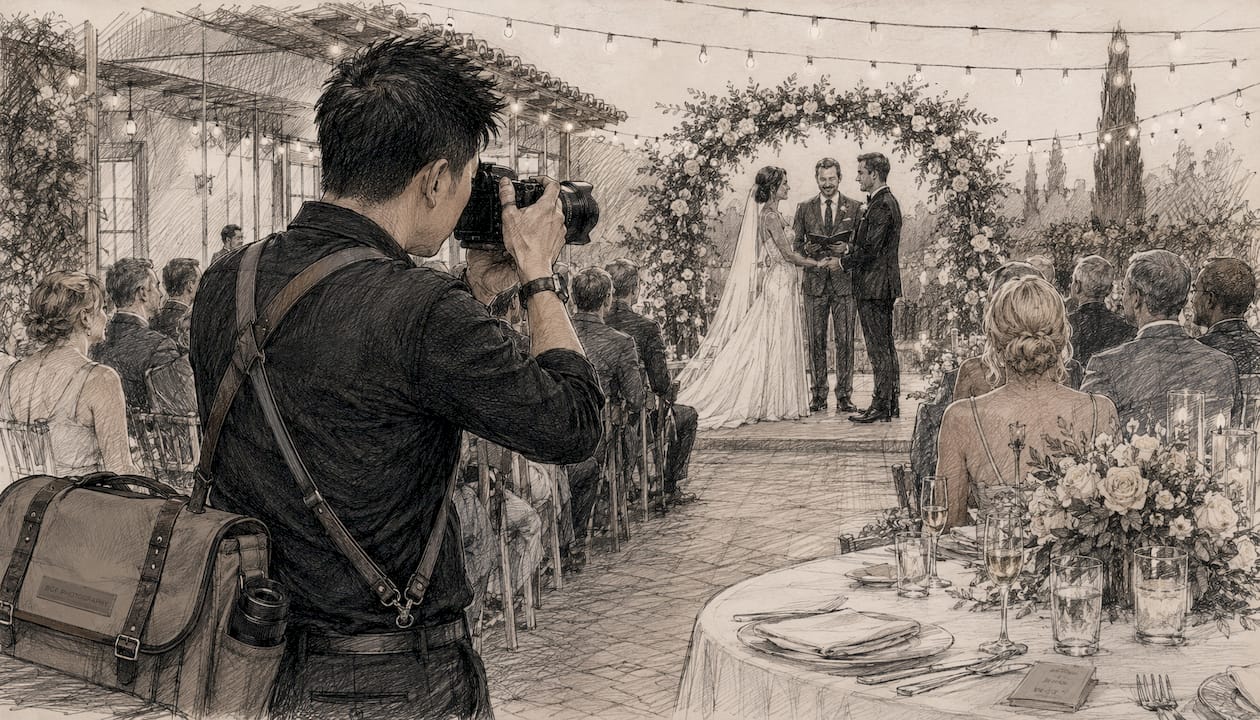
Beyond the ceremony, the advantages stack up across the whole day. During getting-ready, split locations mean pre-ceremony toasts, letters, and family hugs at both suites get documented fully, not selectively. During cocktail hour, the lead is typically running family formals while the second roams the room capturing guest reactions, candid hugs, and table details that would otherwise disappear entirely.
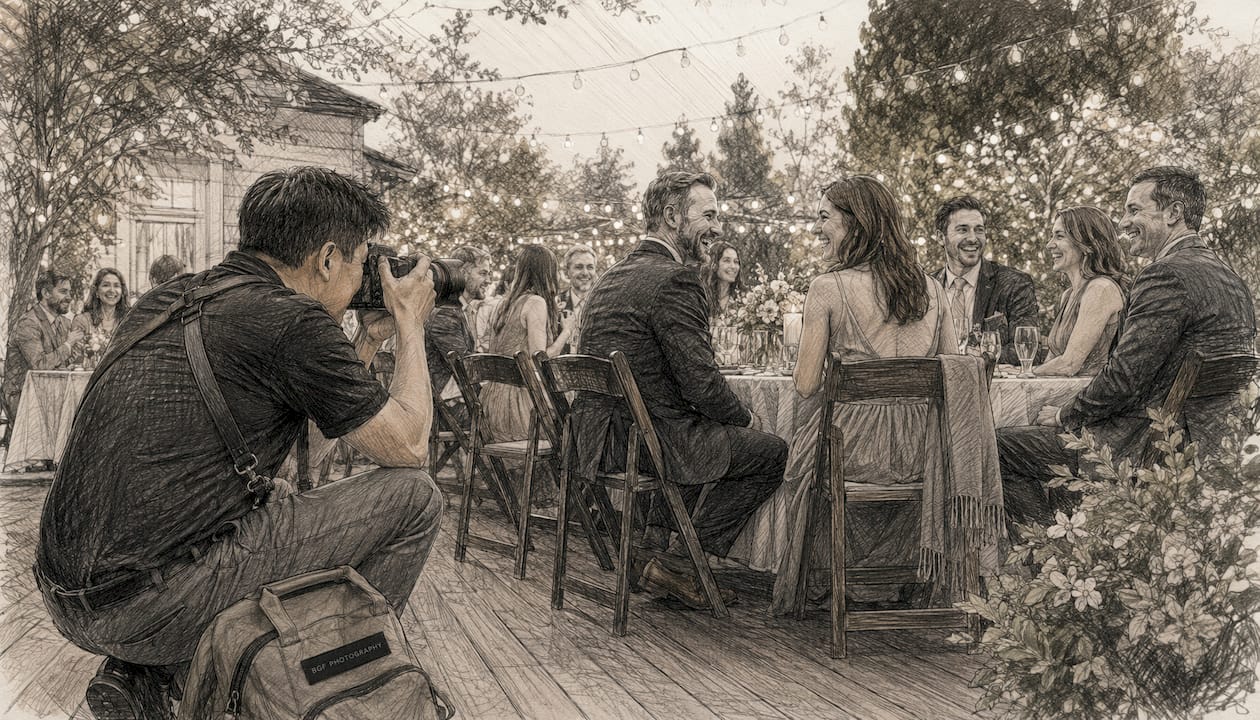
Storytelling variety is the gallery-level payoff. A first dance photographed wide and tight simultaneously gives you two completely different emotional reads of the same moment. Album designers work with those options rather than around their absence.
The backup argument is quieter but real. A second photographer is often the first line of defense if the lead faces an emergency. Because they are already briefed on the day’s flow and the lead’s style, coverage continuity holds even if something goes sideways.
On the operational side, having two photographers speeds up family portrait sessions. One directs the group while the other positions people, cutting the time it takes to move through a long list of combinations. That time goes back into your cocktail hour or golden-hour portraits.
When does a second shooter matter most?
Certain wedding setups benefit far more than others. Use this list to see where yours lands:
-
Separate getting-ready locations. One photographer cannot be in two places. If you and your partner are getting ready at different hotels, homes, or venues, a second shooter is the only way both mornings get fully documented.
-
Larger guest counts. Bigger rooms mean more simultaneous candid moments. A solo photographer focused on the couple will miss the table full of guests laughing during toasts.
-
Multi-venue or multi-ceremony timelines. Church ceremony followed by a reception at a separate venue, or a cultural ceremony with parallel rituals, creates coverage gaps a single photographer cannot bridge.
-
Tight golden-hour portrait windows. When you have limited time for portraits and want both wide environmental shots and close-up expressions at the same time, two photographers deliver that without compromise.
-
Destination or multi-day celebrations. Rehearsal dinners, welcome events, and day-after brunches benefit from consistent coverage across multiple sessions, especially when the lead is managing the primary event.
For large or multi-location weddings, missing a second shooter often creates permanent gaps in the final gallery. Those moments cannot be re-shot.
What does a second photographer actually do on your wedding day?
Lead vs. second vs. assistant
The lead photographer owns the creative direction, the client relationship, and the final edit. The second shooter is a fully independent professional with their own gear, not a helper carrying bags. An assistant is a support role entirely. Second shooters bring professional-grade backup bodies and lenses and are expected to produce images that can stand alone in the gallery.
Typical second-shooter shot list
| Time of Day | Lead Photographer | Second Photographer |
|---|---|---|
| Getting ready | One partner’s suite | Other partner’s suite |
| Ceremony processional | Bride walking the aisle | Groom’s reaction, wide venue |
| Ceremony vows | Close-up couple | Guest reactions, alternate angle |
| Family portraits | Directing groups | Candid guest moments, cocktail hour |
| Golden-hour portraits | Primary couple shots | Creative angles, detail close-ups |
| First dance | Wide full-room shot | Tight expressions, couple close-up |
| Reception | Couple and key moments | Dance floor, guest candids |
How teams divide the day
During the ceremony, the lead holds the primary position while the second takes a complementary angle, often from the side aisle or balcony. For portraits, the lead works directly with the couple while the second either covers cocktail hour or joins the portrait session for creative variety. Reception coverage typically splits naturally: lead follows the couple through key moments, second roams for candids and atmosphere.
All files flow through the lead’s post-production pipeline so the final gallery has unified color, tone, and cropping. Ask about file ownership and the editing workflow during your consult.
Pro Tip: Ask to see side-by-side galleries from a solo wedding and a two-photographer wedding before you book. The coverage difference is immediately visible and will tell you more than any explanation.
How does a second photographer change your timeline?
The most direct timeline impact is on family portraits. With two photographers, one directs the group while the other positions the next combination. A list that might take 45 minutes solo often runs closer to 30. That 15 minutes matters when it comes out of cocktail hour.
A few concrete examples of how the day shifts:
-
Separate getting-ready locations: Both partners’ mornings run on their own schedule without anyone rushing between suites. No moments get skipped to make travel time.
-
Cocktail hour: The lead runs family formals while the second documents the room, florals, and guest arrivals. Couples who skip a second shooter often sacrifice cocktail hour coverage entirely.
-
Multi-space venues: Large estates or venues with separate ceremony and reception spaces benefit from one photographer pre-setting at the reception while the other stays with the couple during the transition.
For more on how timing affects your overall coverage, the wedding day timeline guide on the BGF Photography blog breaks down exactly how scheduling decisions ripple through your gallery.
Logistics-wise, the second shooter needs a briefing on positioning before the ceremony. Your lead photographer handles this, but it helps to share your shot priorities in advance. A candid shot list given to both photographers before the day keeps everyone aligned.
Is a second photographer worth the cost?
A full-day second shooter in the U.S. typically adds a moderate additional cost to your package, with rates varying by experience and hours. Some photographers offer partial-day coverage starting at a four-hour minimum, which lowers the cost but limits the window.
The honest ROI question is not “how many more photos do I get?” It is: what is the cost of the one moment I cannot re-create? For most couples, the groom’s reaction, the mother’s face when she sees her daughter in the dress, or the candid toast at cocktail hour are worth more than any line item on the budget. Missing those moments is permanent.
A few ways to manage the cost:
-
Partial-day second shooter: Covers ceremony through first dance, which is the highest-value window. You get alternate ceremony angles, reception entrances, and first dance coverage without paying for the full day.
-
Emerging second shooter: Less experienced photographers charge lower rates. The trade-off is less predictability and potentially less gear redundancy. Ask to see their portfolio independently.
-
Alternatives: Extra lead coverage hours, a videography add-on, or a friend with a camera each have real trade-offs in consistency and quality. Alternatives exist but carry coverage risks that a vetted second shooter does not.
Questions to ask before committing:
-
How many hours does the second shooter cover?
-
How many images will they deliver, and are they edited or RAW?
-
Are they included in the package or an add-on?
Pro Tip: If budget is tight, prioritize keeping the second shooter for the ceremony through first dance. That window covers alternate vow angles, guest reactions, and reception entrances — the moments most couples wish they had from a second perspective.
How do you decide? Checklist and questions to ask
Use this checklist before your photographer consult. If you check three or more, a second shooter is likely worth it for your wedding.
-
You and your partner are getting ready in separate locations.
-
Your guest count is over 100.
-
Your ceremony and reception are at different venues.
-
You have simultaneous rituals or parallel events (e.g., cultural ceremonies, separate cocktail areas).
-
Your golden-hour portrait window is 30 minutes or less.
Questions to ask your lead photographer
-
Who hires and pays the second shooter — you or the studio?
-
Have you worked with this specific second shooter before?
-
Do their files go through the same editing process as yours?
-
What will the second shooter be doing during family portraits?
-
Can I see a full gallery from a wedding where you had a second shooter?
Vetting the second shooter
Ask to see their portfolio independently, not just images credited to the lead. Confirm they carry their own professional gear and backup bodies. Check whether their shooting style is compatible with the lead’s aesthetic. Reviewing a lead’s solo and two-photographer galleries side-by-side is the clearest way to see whether the coverage difference matters for your specific wedding.
For guidance on communicating your vision to both photographers before the day, the BGF Photography blog covers exactly how to brief a team on your priorities.
What do industry professionals actually say about second shooters?
The consensus among working wedding photographers is that the decision is less about guest count and more about which moments a couple wants captured. Candid reactions, parallel ceremonies, and tight portrait windows are stronger signals than headcount alone.
The backup argument is also more substantive than it sounds. A second photographer who is already briefed on the day’s flow and the lead’s style can maintain coverage continuity if the lead faces an emergency. That is a different kind of insurance than a spare camera body.
One detail couples consistently underestimate: second shooters are not junior helpers. They are experienced image-makers with professional gear who are expected to produce gallery-ready images independently. The lead’s editing process unifies the final output, but the second shooter’s images need to stand on their own before post-production.
The most useful thing you can do before booking is ask to see a full gallery from a two-photographer wedding alongside a solo one. The coverage breadth, the simultaneous moments, and the storytelling depth become immediately obvious — and so does whether the second shooter’s work matches the lead’s aesthetic. That comparison tells you more than any pricing conversation.
For couples interested in how wedding films capture missed moments, combining hybrid photo and video coverage with a second photographer creates the most complete record of the day.
Key Takeaways
A second photographer is worth the investment when your wedding involves separate locations, 100+ guests, or simultaneous moments that one photographer physically cannot cover at the same time.
| Point | Details |
|---|---|
| Simultaneous coverage | Two photographers cover both partners getting ready and parallel moments a solo shooter cannot. |
| Cost range | A full-day second shooter typically adds $350–$700 in the U.S., with partial-day options available at lower rates depending on hours covered. |
| Highest-value window | Ceremony through first dance is the priority window if budget limits full-day second coverage. |
| Vetting matters | Ask to see the second shooter’s independent portfolio and confirm files go through the lead’s edit. |
| BGF Photography | BGF Photography offers second-photographer coverage as part of its packages for Buffalo, Rochester, and Finger Lakes weddings. |
Why BGF Photography recommends second shooters for certain weddings
The candid, unobtrusive approach BGF Photography uses depends on two photographers being able to disappear into the day simultaneously. When one of us is with the couple, the other is reading the room, watching for the grandmother wiping her eyes during the vows, the best man’s nervous laugh before his speech, the flower girl spinning in her dress when she thinks no one is looking. Those frames do not happen on cue.
When BGF brings a second photographer on, that person is briefed on the lead’s editing style, color approach, and shot priorities before the wedding day. Their files run through the same post-production workflow, so the final gallery reads as one cohesive body of work, not two separate photographers’ outputs stitched together.
BGF recommends a second shooter most consistently for estate weddings with multiple spaces, any wedding where partners are getting ready at separate locations, and destination weekends where coverage spans multiple events. For smaller, single-location ceremonies with relaxed timelines, a solo lead is often the right call, and BGF will say so honestly.
BGF Photography’s two-photographer packages
BGF Photography covers weddings across Buffalo, Rochester, and the Finger Lakes with packages that include second-photographer options alongside hybrid photo and video coverage. If your wedding involves separate getting-ready locations, a large guest count, or a multi-venue timeline, adding a second shooter to your BGF package is the most direct way to close the coverage gaps.
Packages include full-day documentation, unified editing across both photographers’ files, optional film photography for a nostalgic layer, and drone coverage where the venue allows. Hybrid photo and video packages let you book both under one cohesive style so nothing feels mismatched in the final delivery.
Check BGF Photography’s packages and pricing to see which coverage tier fits your wedding day, or reach out directly to ask about second-shooter availability for your date.
Useful sources and galleries to review before you book
Before your photographer consult, request these specific gallery types to evaluate coverage quality:
-
Solo vs. two-photographer comparison: Ask to see a full gallery from each. The difference in simultaneous coverage and storytelling depth is immediately visible.
-
Full-day gallery (8+ hours): Confirms the photographer’s consistency across the entire day, not just highlight images.
-
Detail-only gallery: Shows how the team handles florals, venue setup, and reception details, which often fall to the second shooter.
-
Ceremony-only gallery: Lets you see whether alternate angles and guest reactions are present alongside the primary couple shots.
For storytelling inspiration and examples of multi-angle coverage, the BGF Photography blog has full galleries that show how two-photographer coverage reads in a finished album. The Couples Journal at Meet Me Here is also a useful editorial resource for couples evaluating coverage styles and storytelling approaches before booking.
| Resource type | What to look for |
|---|---|
| Side-by-side galleries | Coverage breadth, simultaneous moments, guest reactions |
| Full-day gallery | Consistency of style and quality from morning through reception |
| Second shooter’s solo portfolio | Independent image quality before the lead’s edit |
| Hybrid photo/video sample | Cohesion between photo and film when both are booked together |
Bring the decision checklist from the “How to Decide” section to your consult. Ask to see at least one full two-photographer gallery before committing.
FAQ
Is a second photographer worth it for a 100-guest wedding?
For most weddings with 100 or more guests, yes. Larger guest counts mean more simultaneous candid moments, and a solo photographer focused on the couple will miss reactions, toasts, and candid interactions happening elsewhere in the room.
How much does a second photographer add to a wedding package?
A full-day second shooter typically adds $350–$700 to a U.S. wedding photography package, with partial-day options available at lower rates depending on hours covered.
Will the second photographer’s photos match the lead’s editing style?
Yes, when the studio handles post-production correctly. Second shooter files run through the lead’s editing workflow, producing a unified gallery in terms of color, tone, and cropping. Confirm this process during your consult.
Do I need a second photographer if we’re getting ready in the same location?
Not necessarily, but it still adds value. A second photographer can document venue details and design elements while the lead focuses on the couple, and they provide backup coverage if anything unexpected happens during the morning.
Can BGF Photography add a second shooter to my package?
Yes. BGF Photography offers second-photographer coverage as part of its packages for Buffalo, Rochester, and Finger Lakes weddings. Visit the packages page to see current options or ask about availability for your date.