
TL;DR:
- Photographer invisibility entails moving discreetly through a wedding to capture authentic moments without detection. This approach ensures guests behave naturally, resulting in genuine, unposed images that reflect real emotion. Proper preparation and subtle techniques allow photographers to blend seamlessly into the event while guiding or observing as needed.
Photographer invisibility is the practice of moving through a wedding day so quietly and deliberately that guests forget a camera is present at all. The industry term for this approach is documentary or photojournalistic wedding photography, and it is the foundation of every truly candid wedding image. When a photographer masters this role, couples receive photos that show real tears, real laughter, and real connection rather than posed approximations of those things. BGF Photography builds its entire approach around this principle, treating discretion not as a style choice but as a professional standard.
What is the role of photographer invisibility on the wedding day?
Photographer invisibility means being present without being noticed. The goal is not to disappear literally but to move, position, and behave in ways that never pull attention away from the people and moments that matter. A photographer who constantly repositions during vows, adjusts gear loudly, or calls out directions breaks the emotional spell of the ceremony. Frequent position changes or audible equipment adjustments during vows shift guest attention directly to the photographer.
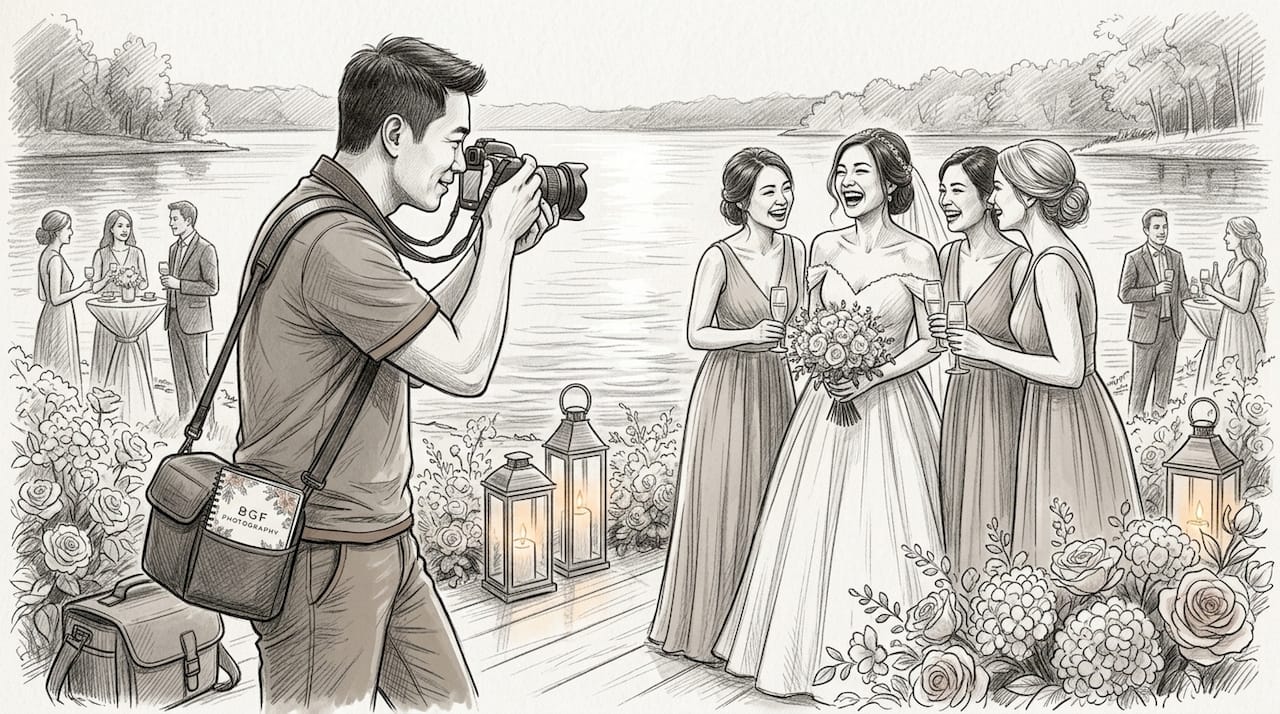
The invisible photographer role sits at the heart of photojournalism on a wedding day. Photojournalism, as a discipline, demands that the observer never alter the scene being documented. Applied to weddings, this means capturing the flower girl’s nervous giggle, the groom’s exhale when he sees his partner walk in, and the grandmother wiping her eyes in the back row. None of those moments survive a photographer who announces their presence.
Couples often underestimate how much a photographer’s behavior shapes the emotional tone of their wedding day. A calm, quiet presence communicates to everyone in the room that the day belongs to them, not to the camera. That feeling shows up directly in the final images as relaxed faces, open body language, and genuine emotion.
How does photographer invisibility enhance authenticity and candid moments?
People behave differently when they know they are being watched. The moment a guest spots a camera pointed at them, their expression shifts. They straighten up, force a smile, or look away. Authentic moments are captured invisibly, allowing guests and couples to remain at ease throughout the day.
The difference between a candid photo and a posed photo is not just visual. It is emotional. A candid image of a bride laughing with her mother carries weight because the viewer can feel that neither person was performing for the camera. That authenticity is only possible when the photographer has made themselves functionally invisible.
“Clients feel the calm and confident presence of an invisible photographer even though it cannot be seen in the images themselves.” — Day-Of Presence
Consider what happens during a first look. If the photographer is shuffling around, whispering instructions, or adjusting a flash, the couple becomes aware of the production around them. Their reactions become partially performative. When the photographer is already positioned and still before the moment begins, the couple’s reaction is entirely their own.
Pro Tip: Ask potential photographers to show you a full wedding gallery, not just their highlight reel. A full gallery reveals how consistently they capture candid moments across an entire day, not just during the peak emotional beats.
-
Guests relax faster when the photographer blends into the crowd rather than standing out with large gear or constant movement.
-
Couples stop noticing the camera within the first hour when the photographer prioritizes bonding over shooting.
-
Emotional reactions during toasts, first dances, and ceremonies are deepest when no one is performing for a lens.
-
Children and elderly guests, who are often the most expressive people at a wedding, respond especially well to an unobtrusive presence.
What tactics do photographers use to stay invisible during a wedding?
Capturing moments discreetly requires preparation that starts well before the wedding day begins. Arriving early and scouting the venue reduces unnecessary movement during the event, making the photographer far less noticeable. A photographer who already knows where the light falls during the ceremony, where the couple will stand for the first dance, and where guests tend to gather during cocktail hour never has to visibly search for position. That searching behavior is one of the most common ways photographers accidentally draw attention to themselves.
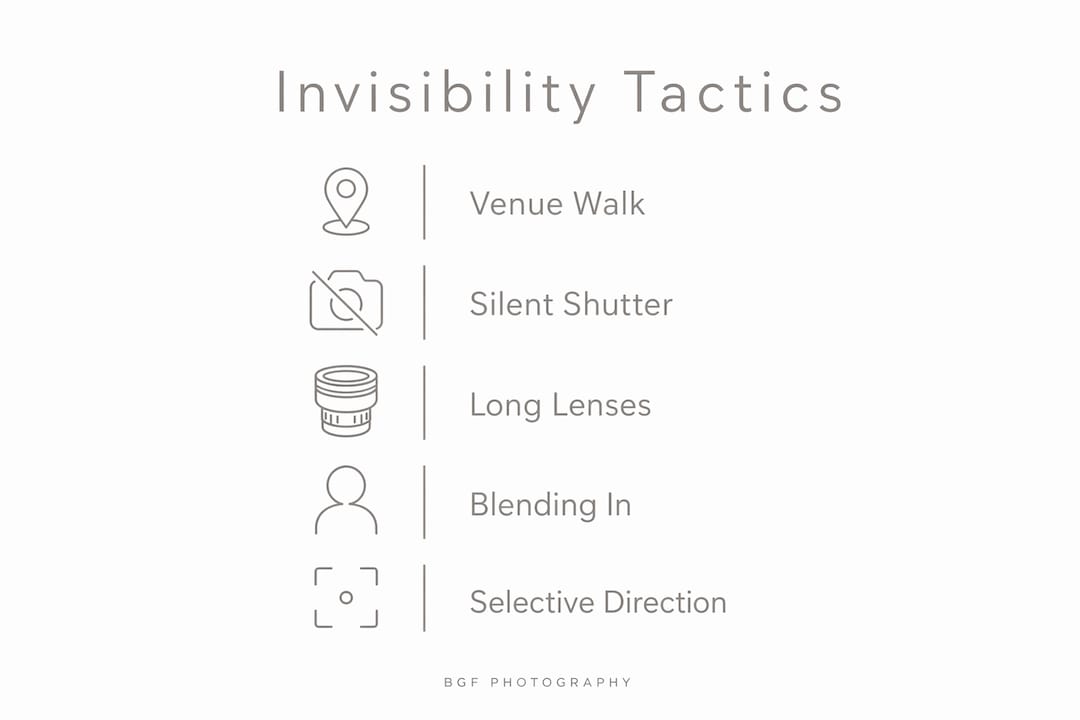
Here are the core tactics that define wedding photographer stealth in practice:
-
Arrive early and scout the venue. Walking the space before guests arrive lets the photographer identify optimal positions, test light conditions, and plan movement paths. Venue knowledge prevents the camera search behaviors that immediately break invisibility.
-
Use silent or near-silent shutter modes. Modern mirrorless cameras from Sony, Canon, and Nikon offer electronic shutter options that produce no audible click. During vows and quiet ceremony moments, this is the difference between invisibility and disruption.
-
Dress like a guest. A photographer in all-black tactical gear stands out at a garden wedding. Dressing in neutral, occasion-appropriate clothing helps the photographer blend into the visual environment naturally.
-
Use longer focal lengths from a fixed position. A 70–200mm lens allows the photographer to fill the frame with a close-up expression from across the room. This eliminates the need to physically move close to subjects during sensitive moments.
-
Practice stillness during the ceremony. Stillness and timing discipline during ceremonies surpass camera technology in achieving true invisibility. Being locked into position before the processional begins means zero movement during the most emotionally charged minutes of the day.
-
Use zone focusing for fast, quiet capture. Pre-setting focus distances on a manual or zone-focus lens allows the photographer to shoot without the audible hunting of an autofocus motor, particularly useful in quiet reception moments.
-
Use reflections, doorways, and natural framing. Shooting through a window reflection or from just outside a doorway creates physical distance between the photographer and the subject. Advanced discretion techniques like using reflections and silent gimbals define high-end documentary coverage.
Pro Tip: When touring venues before your wedding, walk through with your photographer. This gives them a chance to identify natural frames and light sources, which cuts down on the day-of movement that breaks the invisible photographer role.
The equipment choices matter, but they are secondary to behavior. Camera discipline outweighs equipment settings for real invisibility. A photographer with a quiet camera who constantly repositions is more disruptive than one with a louder camera who stays still and reads the room.
How does a photographer balance invisibility with direction?
Pure observation and selective direction are not opposites. They exist on a spectrum, and skilled photographers move between them based on what the moment requires. Invisibility in documentary photography does not mean avoiding direction entirely. The skill is in knowing when to guide a moment and when to let it breathe.
The table below shows how documentary and engagement photography differ in their approach to direction:
| Approach | When it applies | How direction is used |
|---|---|---|
| Documentary (photojournalistic) | Ceremony, toasts, first dance, candid reception | No direction; photographer observes and reacts |
| Light guidance | Getting ready, family portraits, first look | Minimal prompts to adjust position or lighting |
| Engagement style | Formal portraits, couple sessions | Active direction to achieve specific compositions |
Most weddings benefit from all three approaches at different points in the day. The ceremony calls for pure documentary coverage. Family formals require clear direction. The couple’s portrait session sits somewhere in between, using light prompts that feel more like conversation than instruction.
Timing is everything when a photographer does choose to offer direction. A well-timed suggestion, delivered quietly and with confidence, can enhance a moment without breaking its authenticity. Asking a couple to walk toward the light together, for example, creates a natural movement that the camera captures without either person feeling posed. The key is sensitivity to the couple’s comfort level and the emotional temperature of the moment.
-
Direction works best when it mimics something the couple would naturally do anyway.
-
Prompts delivered as questions (“Want to take a slow walk together?”) feel less intrusive than commands.
-
Timing a directional prompt between emotional beats, rather than during them, preserves the candid flow.
-
Couples who discuss their comfort with direction during the booking consultation get better results on the day.
Why does building trust early make the invisible photographer role work?
Trust is the foundation of every candid wedding image. Spending the first 30 minutes of a wedding mostly talking and bonding helps people acclimate to the photographer and reduces self-consciousness during shooting. This is not small talk for its own sake. It is a deliberate technique for lowering the psychological barrier between the camera and the subject.
When a photographer spends time chatting with the bridal party during getting-ready coverage, those people stop registering the camera as a threat. By the time the ceremony begins, the photographer has become a familiar face rather than a stranger with a lens. That familiarity is what allows the invisible photographer role to function at its highest level. Building trust and minimizing direction helps couples relax, resulting in more authentic photos without staged posing.
Pro Tip: Schedule a coffee meeting or engagement session with your photographer before the wedding. Even one hour of relaxed time together dramatically reduces camera anxiety on the day itself.
The trust-building process also extends to how a photographer handles the role of trust in wedding photography. Couples who feel confident in their photographer’s judgment stop second-guessing every moment. They stop wondering whether they should be doing something for the camera. That mental freedom is visible in the photos.
-
Arrive during getting-ready coverage and introduce yourself to family members and the wedding party.
-
Learn a few names early and use them. People respond differently when a photographer addresses them by name.
-
Keep the camera down during initial conversations. Shooting immediately signals that the photographer prioritizes images over people.
-
Match the energy of the room. A calm photographer calms the room. An anxious photographer raises everyone’s stress level.
Key takeaways
An invisible photographer captures more authentic emotion because guests and couples behave naturally when they forget the camera is present.
| Point | Details |
|---|---|
| Invisibility is a behavior, not a setting | Stillness, quiet gear, and deliberate positioning matter more than camera technology. |
| Early arrival earns invisibility | Venue scouting before guests arrive eliminates the searching behavior that draws attention. |
| Trust-building precedes great candid photos | Spending the first 30 minutes bonding with guests reduces self-consciousness throughout the day. |
| Direction and observation coexist | Documentary coverage dominates the ceremony; light guidance supports portraits and formal moments. |
| Calm presence shapes the final images | A photographer’s confident, quiet energy shows up in images as relaxed faces and genuine emotion. |
What I’ve learned about being invisible at a wedding
The biggest misconception couples carry into a wedding is that a great photographer needs to be visible to be effective. I have watched couples scan the room during their first dance, looking for the camera, because they assumed they needed to perform for it. That instinct is understandable. But it costs them the real moment.
The truth is that the best images I have ever captured came from moments when no one in the room was thinking about me at all. A father adjusting his daughter’s veil when he thought I was across the room. Two groomsmen laughing at something private during the cocktail hour. A grandmother reaching for her husband’s hand during the vows. None of those moments survive a photographer who announces their presence.
What couples often miss when choosing a subtle photographer is that invisibility is not a passive quality. It takes more skill and preparation to disappear into a wedding than it does to direct one. Scouting a venue, learning names, reading emotional cues, and knowing when to hold still are all active choices made dozens of times throughout the day.
My recommendation to every couple is this: look at a photographer’s full gallery from a single wedding, not their curated portfolio. If the images from the ceremony look like everyone is aware of the camera, that photographer has not mastered the invisible role. If the images look like you are watching a private moment through a window, that photographer has.
— Billy
BGF Photography’s approach to unobtrusive wedding coverage
BGF Photography treats photographer invisibility as the core of every wedding it covers, not an optional style upgrade.
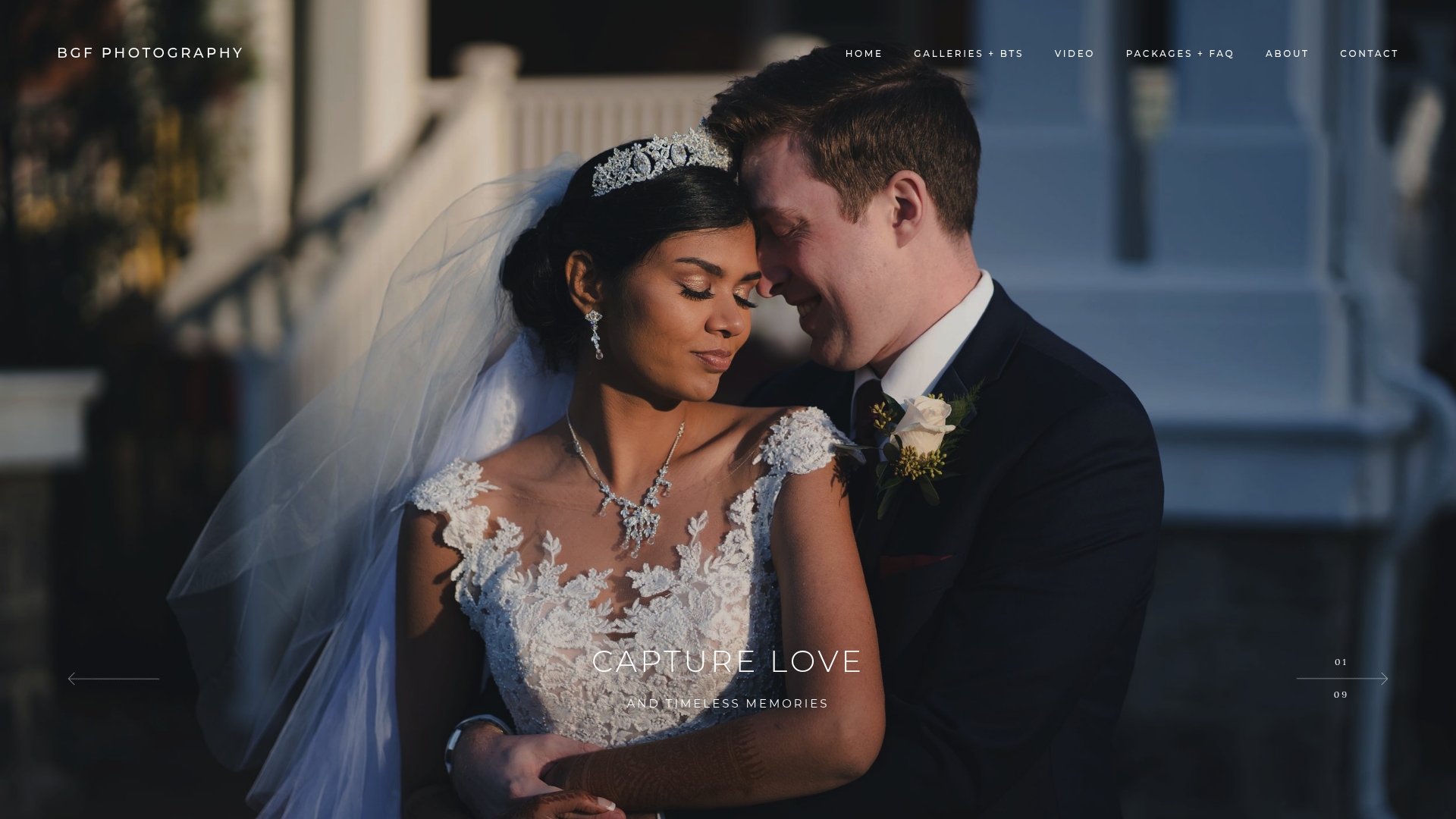
BGF Photography serves couples in the Buffalo and Rochester, NY areas with a documentary-first approach that prioritizes candid emotion over posed production. The hybrid photography and videography coverage means both your photos and film are captured under one consistent, unobtrusive vision. Every package is built around the principle that the best wedding images come from a photographer no one noticed. You can review available packages and pricing to find the coverage level that fits your day, or visit the BGF Photography links page to get in touch directly and start a conversation about your wedding.
FAQ
What is the invisible photographer role at a wedding?
The invisible photographer role means moving through the wedding day so quietly and deliberately that guests forget a camera is present. The goal is to capture genuine emotions without altering anyone’s behavior.
How do photographers stay discreet during the ceremony?
Photographers use silent shutter modes, long lenses, and fixed positions established before the processional begins. Stillness during the ceremony is the single most effective tool for avoiding disruption.
Does an invisible photographer ever give direction?
Yes, but selectively. Direction is used during portraits and light guidance moments, never during the ceremony or spontaneous emotional beats.
How do I choose a subtle photographer for my wedding?
Review a full wedding gallery from a single event rather than a highlight portfolio. Consistent candid coverage across an entire day signals mastery of the unobtrusive approach. You can also read the candid photographer guide for a detailed breakdown of what to look for.
Does photojournalism on a wedding day mean no posed photos?
No. Documentary coverage dominates the ceremony and reception, while light direction supports formal portraits and the couple’s session. Most photographers blend both approaches based on what each moment requires. Learn more about photography styles for couples to understand how these methods work together.