
A Buffalo snowstorm will not cancel your wedding, but it will test every decision you made months earlier. The couples who come through it calmly share three things: an indoor backup that fits the whole ceremony, written weather triggers that someone other than them can act on, and a photo and video team that already knows how the day bends when the weather turns. This guide walks through each of those, in the order you will need them.
TL;DR
- Choose a venue whose indoor backup space you actually like, and confirm in writing that it holds your full guest count and ceremony layout.
- Write weather triggers as complete sentences (condition, measurement, time, action) and name one person to make the call, so you are not deciding on the morning of the wedding.
- Start watching the forecast seven days out, send guest travel advisories at 48 hours, and lock the plan at 24 hours.
- Add buffer to the photo and video timeline, plan indoor portrait spots with window light, and keep outdoor photos to short bursts.
- Read the force majeure and rescheduling clauses in every vendor and venue contract before you sign.
Table of Contents
- Why a Buffalo Wedding Needs a Snow Plan
- Build the Backup While You Book the Venue
- Write Triggers a Coordinator Can Follow
- The Countdown: Seven Days to Wedding Morning
- Keeping Guests and Vendors Moving
- Photo and Video When the Weather Turns
- What to Ask Before You Sign
- Our Perspective
- Cover the Whole Day With One Team
- FAQ
- Sources
Why a Buffalo Wedding Needs a Snow Plan
Western New York weather swings fast, and lake-effect snow can bury one neighborhood while the next stays clear. That matters for a wedding because your day depends on people reaching one place at one time: guests, the DJ, the florist, the cake, and the people documenting it all. The county health department lists the risks of a winter storm plainly: higher risk of car accidents, hypothermia, frostbite and carbon monoxide poisoning, and it advises staying off the roads and finding shelter under a Winter Storm Warning. That is the safety baseline for every decision below. No photo, centerpiece or schedule is worth a drive that officials say to avoid.
The good news is that a snowy wedding, planned well, is often the one couples love most. Quiet streets, soft light and a room full of people who made the effort to be there tend to produce honest, emotional moments. We cover how the season shapes the work in why Buffalo wedding season affects photography, and if you are still choosing a date, winter versus summer weddings lays out the tradeoffs.
Build the Backup While You Book the Venue
Planners consistently say the backup plan belongs in the venue decision, not after it. Wedding planner Christine Ferguson, quoted by Brides, says a well-rounded backup plan covers an alternate ceremony or reception location, tent logistics, layout changes, lighting, vendor re-coordination and a revised timeline, and that it should be in place while you are booking.
That has a practical consequence: if a venue's indoor option is a cramped hallway you would hate, that is a reason to keep looking, not a problem to solve in January.
Test the Indoor Space on Paper
An indoor backup has to hold the entire ceremony, not just the guests. Before you sign, work out on paper:
- Where the aisle runs and whether every seat has a sightline to the couple.
- Where the arch, florals or other design pieces go, and who moves them.
- Whether the room can switch from ceremony to cocktail hour without a long gap while guests stand around in coats.
- Where the band or DJ plugs in, and whether the lighting works for a space that was not your first choice.
- Where coats, boots and wet umbrellas go. In Buffalo, this is a real question.
Walk the backup space in person if you can. Pictures of a room with no chairs in it tell you very little.
Plan the Arrival Too
Snow changes how people get in, not just where they sit. Ask the venue who clears the lot and the walkway, how early they start, and who is on call that morning. Get a name and a phone number, not just a policy. Ask where guests can be dropped off close to the door, and whether there is a covered entrance for the bride and her dress.
Write Triggers a Coordinator Can Follow
The most useful idea in cold-weather planning is that a backup plan is unfinished if it needs the couple to weigh in on the morning of the wedding. One guide to cold weather wedding backup plans recommends writing each trigger as a full sentence naming the condition, how it is measured, when it is checked and what happens next. Its example reads like this: at 10:00 a.m. on the wedding day, if the forecast high for 4:00 p.m. is below 42°F, sustained wind is above 15 mph, precipitation is forecast between 3:00 and 5:00 p.m., or the lawn is unstable at the morning site check, the ceremony moves indoors and the coordinator notifies all vendors by 10:30 a.m.
The same source points out that wind is often the deciding factor. It affects guest comfort, whether an arch or aisle decor stays upright, whether microphones are usable and whether patio heaters do anything at all. For a Buffalo wedding, that is worth building into your thresholds from the start.
Your numbers will differ with your venue, but the structure should not:
- Name one decision maker, ideally a planner, a day-of coordinator or the venue manager, and not you or your parents.
- Write the conditions that trigger the move indoors.
- Write the time the decision is made and the time everyone is told.
- Share it with every vendor and the wedding party in one document.
The Countdown: Seven Days to Wedding Morning
A simple rhythm keeps you from either panicking early or reacting late. The same cold-weather guide suggests this pattern, which we have laid out as a table for you to adapt:
| When | What to Do |
|---|---|
| 7 days out | Start watching the forecast daily. Review your written triggers with your coordinator. |
| 72 hours out | Act on long-lead items such as tent or heater changes. If a winter storm watch or warning covers the venue or guest hotels, move to 48-hour actions now. |
| 48 hours out | Send guests a weather update and travel advisory. Post a dated note on your wedding website. |
| 24 hours out | Lock the plan. Reconfirm shuttle pickup times and vendor arrival times. |
| Wedding morning | Site check around 7:00 a.m. and a final call around 10:00 a.m. |
Forecasts get more reliable as the storm gets closer, so the 24-hour lock is usually where the picture is clearest. Do not skip the earlier steps just because the long-range forecast looks fine.
Where to Watch Conditions
The Erie County Department of Health tells residents to sign up for BUFFALERT, text "Erie" to 333-111, and follow NWS Buffalo, 511NY and the NYS Thruway Authority website during winter storms. Give your coordinator and a couple of reliable relatives the same list, so more than one person sees a road closure or travel ban at the same moment. If your wedding is in Rochester or the Finger Lakes, use the equivalent alerts for the county where your venue and your guests' hotels are.

If your event is large, outdoor or tightly timed, a dedicated event forecast can add detail. This guide on weather contingency planning explains how to build a plan around the forecast rather than around hope.
Keeping Guests and Vendors Moving
Most snowstorm wedding stress comes from people not knowing what is happening. A few habits fix that.
Guests
At 48 hours, send a short message: the forecast, the plan, the travel advisory and the contact person. Remind out-of-town guests to check their flights, and give them the hotel block contact in case they need an extra night. Brides recommends building in an extra travel day for snowy-season flights and offering transportation so guests can avoid driving. Reconfirm any shuttle pickup times at 24 hours. For a practical way to keep flights, hotels and rides in one place, this destination wedding guest travel checklist is a useful template for the messages you send.
Ask someone other than yourselves, a sibling or a friend, to send updates if conditions change. You will be busy, and a calm message from a third party reads better anyway.
Vendors
Tell every vendor your trigger plan before the week of the wedding. The cold-weather guide above suggests vendors add 30 to 45 minutes to winter drives, so loosen load-in times for florists, rentals, the band and the cake. Ask each one how they will reach you if roads are bad and who their backup is. The question is not rude. Vendors who have worked in Buffalo winters usually have a ready answer.
Photo and Video When the Weather Turns
This is where a snowstorm plan often has the biggest gap. Couples plan seating and heaters, then assume the photos will sort themselves out. They do not, because snow changes the light, the pace and the places you can stand.
Build Buffer and Scout Indoors
Guidance on winter wedding photography recommends scouting at least one indoor portrait location with side window light, confirming access in writing, and adding 15 or more minutes to every winter drive. Winter golden hour can shrink to 20 to 30 minutes, compared with close to an hour in summer, so look up the exact sunset time for your date and build the timeline backward so portraits finish before the light fades.
A local Buffalo photographer's guide suggests 30 to 45 minutes of buffer in the photo schedule and outdoor sessions in bursts of 15 to 20 minutes. In practice that means:
- Do your portraits in short outdoor rounds, then warm up inside.
- Keep hand warmers, a wrap, waterproof boots and dry socks within reach.
- Arrange transportation for the wedding party so no one is hunting for a parking spot in a drift.
- Choose a second portrait spot indoors before the day, such as a lobby, a staircase or a room with large windows.
Notting Hill Farm's Buffalo tips make the same point more simply: think through changes in advance, such as umbrellas for guests and a change in photography locations.
Candid Coverage Suits a Storm
In bad weather, the unposed moments are often the best ones: a groomsman shoveling the front steps, a flower girl running through snow, a grandmother laughing as she shakes off her coat. Our approach is natural and unobtrusive, so a delay or a room change becomes part of the story instead of a disruption to a rigid shot list. Because we handle both photo and video, the same team sees the whole day and one plan covers both. You can read how that works in hybrid photo and video coverage in Buffalo.

Film adds something too. Medium format and 35mm film have a soft, grainy look that suits overcast winter light, and we offer it as an optional add-on. If you want to know how we prepare for equipment problems in the cold, read our post on backup equipment in Buffalo wedding photography.
Use Your Engagement Session as a Rehearsal
An engagement session in cold weather shows you how you look and feel in the conditions you may face on the day. It also gives you time with your photographer before the wedding. We cover this in the real role of engagement sessions in Buffalo photography.
What to Ask Before You Sign
The contract is where a snowstorm becomes either a manageable inconvenience or an expensive argument. Before you sign with a venue or vendor, ask and get answers in writing:
- Which space is the backup, and what does it hold? The capacity should be stated for your layout, not a standing reception.
- What triggers the move, who decides, and by when? One guide puts the usual decision window for tent or backup rentals at 24 to 48 hours before the event, though tents themselves need earlier notice.
- What does the force majeure clause name? A good one lists events such as severe weather and says whether the result is a refund, a credit or a free date change, for both sides. A contract checklist from Your Wedding Copilot explains what to look for.
- Can you reschedule once without a penalty? Ask whether deposits carry over to a new date.
- How does the cancellation scale work? The same checklist describes a sliding scale, with less owed the further ahead you cancel.
Terms vary a lot. One published venue agreement, for example, requires both sides to work in good faith to reschedule within six months with deposits applied to the new date, and also lets the operator limit or cancel outdoor space in a snowstorm without liability, leaving adverse-weather insurance to the client. Reading that clause before signing is the difference between a plan and a surprise. If a contract is unclear, a lawyer who handles event contracts can review it, and an insurance agent can explain event cancellation coverage.
When you review our terms, the same questions apply, and we are glad to answer them. Our wedding packages are listed on our investment page.
Our Perspective
We have watched Buffalo weather rearrange plenty of wedding days, and the pattern is consistent: the couples who enjoy their photos most are the ones who stopped fighting the forecast early.
The reason is simple. A candid approach is built for a day that does not go to script. We stay unobtrusive, we let people be where they are, and we document what happens. A ceremony moved indoors, a bridal party laughing in the snow, a father warming his daughter's hands: those moments are what the wedding actually was.
We also think photo and video belong to one plan. When the same team covers both, the portrait window, the indoor fallback and the film look all fit together, so a weather change is one conversation instead of two. That is why we offer hybrid coverage, and why couples in Buffalo, Rochester and the Finger Lakes can add film and drone coverage to the same cohesive style.
Give us your backup venue, your sunset time and your trigger plan, and we will build the photo and video schedule around them.
Billy
Cover the Whole Day With One Team
If you want your snowstorm plan to include the people capturing it, we offer full wedding day coverage for $4,500 to $5,200. Video options start with a 3 to 6 minute highlight at $1,400, with a 9 to 15 minute featurette at $1,800 and a 30 to 60 minute full-length film at $2,600. An engagement session is $600, and film is $100 per roll. Drone coverage can be added with an additional drone pilot for $500 to $700. See everything on our investment page.
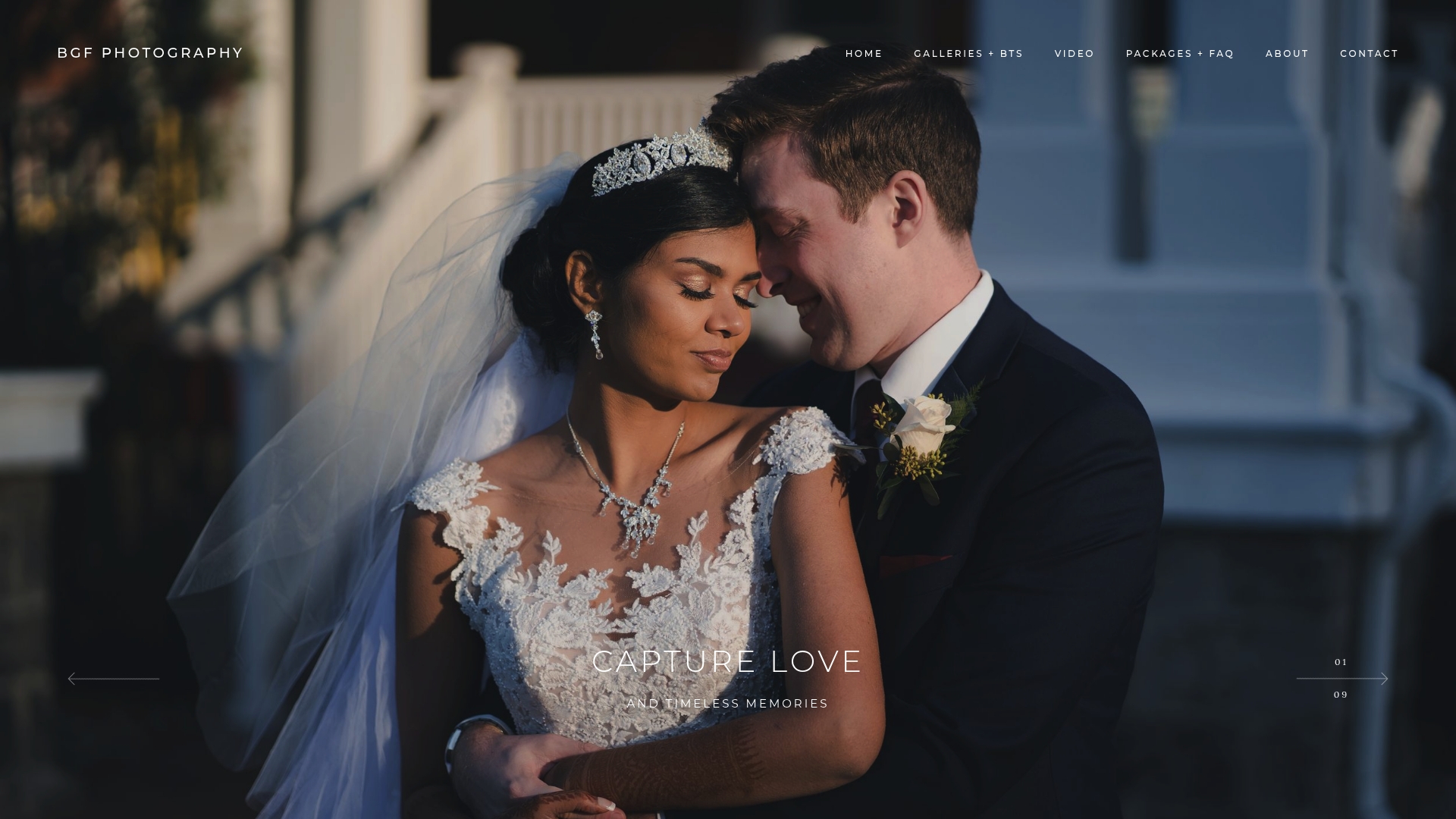
We photograph and film weddings across Buffalo, Rochester and the Finger Lakes, and our site has the full portfolio and ways to get in touch.
FAQ
How far in advance should we decide to move the wedding indoors?
Begin watching the forecast seven days out and act on long-lead items such as tent or heater changes at 72 hours. Lock the plan 24 hours before, then do a site check on the morning of the wedding. If a winter storm watch or warning covers your venue or guest hotels, move to your 48-hour actions right away.
Is it safe for guests and vendors to drive during a Buffalo snowstorm?
Under a Winter Storm Warning, the Erie County Department of Health advises people to stay off the roads and find shelter. Build extra travel time into every schedule, offer shuttles where you can, and give your coordinator the authority to delay or adjust the timeline. Safe arrival matters more than starting on time.
Do we need a tent as a backup?
Not if your venue has an indoor space that fits your full ceremony and reception. A tent adds cost and has its own lead time, so ask your venue what the tent decision deadline is and who makes it. For a winter date, an indoor backup you like is often the simpler plan.
What should we ask our photographer and videographer about snow?
Ask how the schedule will flex, where indoor portraits can happen and how long outdoor sessions should run. Winter light fades quickly, so tie the timeline to your sunset time. We are happy to walk through this with you before your date.
Sources
- How to Create a Backup Plan for Your Wedding, Brides
- Winter Storms and Extreme Cold, Erie County Department of Health
- Be Prepared with a Cold Weather Wedding Backup Plan
- Winter Wedding Photography: Low-Light Planning
- The Ultimate Wedding Day Tips for Couples in Buffalo, NY
- 47 Questions to Ask a Wedding Venue Before Booking
- Wedding Vendor Contract Checklist
- Venue Terms and Conditions (Levelten)
- Weather Contingency Planning: Build a Plan That Holds
- Destination Wedding Guest Travel Checklist