
TL;DR:
- A wedding videographer's role involves unobtrusively capturing clear audio and visuals of key ceremony moments to preserve the event's authenticity. They prepare in advance through site walkthroughs, coordinate closely with other vendors, and use multiple cameras and microphones to ensure full coverage. Proper audio and careful spatial awareness are essential for creating an emotional, seamless wedding film.
A wedding videographer's role on ceremony day is to document the event naturally and unobtrusively, capturing both visuals and clear audio of every key moment so the couple can relive their wedding in full. This is not simply pressing record. Professional ceremony videography, the industry term for this specialized coverage, requires early technical setup, multi-angle camera positioning, wireless audio systems, and real-time coordination with photographers and venue staff. The role of wedding videographer on ceremony day spans sound engineering, emotional storytelling, and logistical planning, all executed without disrupting the ceremony itself. BGF Photography approaches this work with a candid, unobtrusive style that lets authentic moments unfold naturally.
What are the key responsibilities of a wedding videographer during the ceremony?
A wedding videographer's ceremony responsibilities fall into three categories: technical setup, live capture, and real-time problem solving. Each category demands skill and preparation before a single frame is recorded.
Arrival and setup
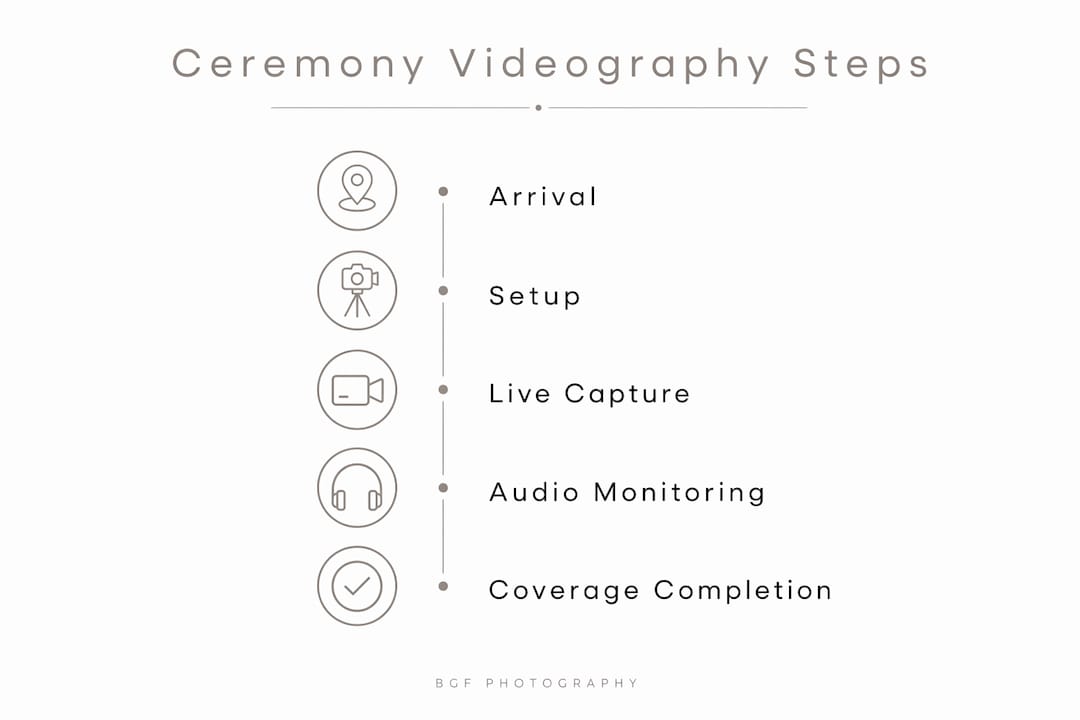
Videographers typically arrive 1–2 hours before the ceremony starts. That window is not downtime. It covers camera placement, audio testing, lighting assessment, and a final walkthrough with the venue coordinator. Arriving late collapses that buffer and forces rushed decisions that show up in the final film.
Camera positioning and coverage
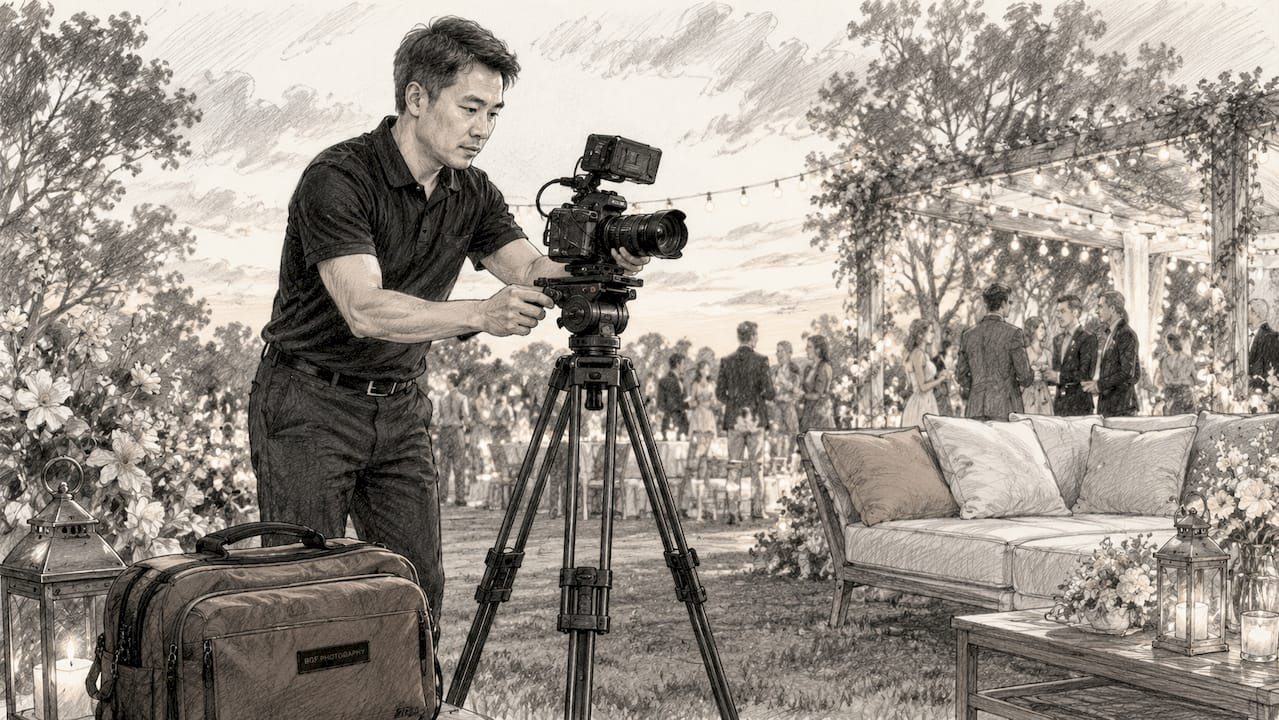
Using at least two filmmakers and three cameras is the current standard for full ceremony coverage. Multiple angles capture the processional, vows, ring exchange, first kiss, and recessional simultaneously. No single camera can cover all of these without missing something. A second angle also catches guest reactions, which add emotional texture to the final edit.
Shot list execution
A shot list guides priorities during the ceremony, with vows, ring exchange, and the pronouncement receiving top focus. The shot list functions as a flexible priority map, not a rigid script. Live events are unpredictable, and an experienced videographer adapts without losing the essential moments.
Pro Tip: Ask your videographer to share their shot list before the wedding day. Reviewing it together takes 15 minutes and confirms that your priorities match theirs.
Audio capture and monitoring
Audio is half the film. Wireless lavalier microphones on the groom and officiant, combined with a backup recorder near the altar, give the videographer multiple audio layers to work with in post-production. Monitoring those feeds in real time catches problems before they ruin the vow recording.
Guest reactions and environmental details
The ceremony is not only about the couple at the altar. A skilled videographer scans the room continuously, catching a parent wiping tears, a child fidgeting in the front row, or sunlight breaking through a stained glass window. These details transform a ceremony recording into a film with emotional depth.
How do wedding videographers prepare and coordinate with other vendors on the ceremony day?
Successful ceremony footage depends on videographer-photographer coordination to avoid blocking shots and maintain flow. That coordination starts weeks before the wedding, not on the morning of.
Pre-wedding venue walkthroughs
Pre-wedding venue walkthroughs help videographers plan camera positions to remain unobtrusive and avoid blocking guest sightlines, especially in religious venues with strict rules about movement. A walkthrough reveals where natural light falls, where the officiant stands, and which aisles are too narrow for a tripod. That knowledge eliminates guesswork on the day.
Coordination with the photographer
The videographer and photographer share the same physical space during the ceremony. Without communication, they block each other's shots. A pre-ceremony conversation establishes who covers which angle, when each person moves, and how they signal each other during key moments. BGF Photography's hybrid coverage model, where photography and videography are booked together under one cohesive vision, removes this friction entirely because both roles operate from a shared plan.
Communication with officiants and musicians
The officiant controls the ceremony's pace. A videographer who knows the ceremony order, the length of the readings, and the cue for the first kiss can anticipate moments rather than react to them. Musicians affect audio quality significantly. Knowing when a soloist performs lets the videographer adjust microphone levels before the music starts.
Here is what effective pre-ceremony coordination covers:
- Confirm ceremony order and timing with the officiant
- Identify restricted zones for cameras in religious venues
- Establish movement signals with the photographer
- Test all microphone feeds and backup recorders
- Locate power outlets for any wired equipment
- Confirm where the couple will stand during vows
Pro Tip: Send your videographer the ceremony program at least one week before the wedding. It gives them the exact order of events and removes every timing surprise.
Remaining invisible to guests
Experienced videographers master invisibility, moving without attracting attention, which is especially important in religious venues. This skill comes from pre-planning, not improvisation. Knowing exactly where to stand, when to move, and how to move quietly keeps the videographer out of guests' awareness and preserves the ceremony's atmosphere.
Why is professional audio capture crucial during the wedding ceremony?
Poor audio ruins a wedding film more completely than poor video. Blurry footage is disappointing. Inaudible vows are irreplaceable losses. Professional videographers treat audio capture as a primary responsibility, not an afterthought.
How videographers act as sound engineers
Professional videographers act as sound engineers, testing multiple microphones before the ceremony starts. The standard setup for a ceremony includes:
- A wireless lavalier microphone clipped to the groom's lapel or hidden in his collar
- A second lavalier on the officiant to capture readings and the ceremony script
- A backup audio recorder placed near the altar or podium
- A camera-mounted directional microphone as a third redundant layer
Each layer serves a specific purpose. The groom's mic captures vow exchanges at close range. The officiant's mic catches everything spoken at the front of the room. The backup recorder saves the audio if a wireless signal drops. The camera mic provides ambient sound that helps in the edit.
Common audio challenges and how they are solved
Church acoustics create echo. Outdoor ceremonies fight wind noise. Indoor receptions compete with HVAC systems. A videographer who has scouted the venue knows which challenge to expect and brings the right equipment to address it. Windscreens on outdoor microphones, directional mics in echo-heavy spaces, and gain adjustments before the ceremony starts all prevent problems that cannot be fixed in post-production.
Pro Tip: Ask your videographer specifically how they handle audio in your venue type. A confident, specific answer signals experience. A vague answer signals a gap.
Why audio quality shapes emotional connection
The vows are the emotional center of the wedding film. Couples who watch their film years later describe hearing their own voices as the most powerful part of the experience. Clear, warm audio of the vows, the officiant's words, and the guests' laughter creates an emotional connection that visuals alone cannot replicate. Wedding video editing builds on that audio foundation, using the spoken words to pace the entire film.
What techniques ensure ceremony videography captures authentic emotion without disruption?
The best videographers combine technical skill with emotional understanding to capture authentic couple moments without breaking the ceremony's atmosphere. This balance is the hardest part of the job.
Reading emotional cues in real time
A videographer watches the couple's body language continuously. A trembling lip, a slow exhale, a hand squeeze during the vows. These micro-moments last two seconds on screen and define the film. Capturing them requires anticipation, not reaction. An experienced videographer reads the couple's emotional state and positions the camera before the moment peaks.
Balancing documentary style with cinematic storytelling
Documentary style means capturing events as they happen without staging or direction. Cinematic storytelling means selecting and framing those events to create a narrative arc. The best ceremony films do both. The processional establishes the setting. The vows carry the emotional weight. The first kiss provides the climax. The recessional delivers the release. A videographer who understands this structure makes editorial decisions in real time that shape the final film.
"The ceremony is the one part of the wedding day that cannot be repeated or restaged. Every frame captured there is irreplaceable. The videographer's job is to be present enough to catch everything and invisible enough that the couple forgets they are there."
Using multiple cameras for varied perspectives
Multiple cameras solve a fundamental problem in live event filming: you cannot be in two places at once. While one camera holds a wide shot of the altar, a second captures close-up reactions from the couple. A third, positioned at the back of the venue, catches the full processional without obstructing any guest's view. This multi-angle approach gives the editor material to build a film that feels alive rather than static.
Key emotional moments that benefit most from multi-angle coverage include:
- The first look at the partner during the processional
- The exchange of vows, captured from both the couple's perspective and the guests'
- The ring exchange, which requires a tight close-up that a wide shot cannot provide
- The first kiss and the immediate reaction from family in the front row
- Pre-ceremony interviews that capture raw anticipation and add narrative depth to the final film
Pro Tip: Ask your videographer how many cameras they use during the ceremony and where each one is positioned. Two cameras is a minimum. Three is the standard for full coverage.
Staying invisible through spatial awareness
Spatial awareness is the videographer's most underrated skill. Knowing where not to stand matters as much as knowing where to stand. A videographer who drifts into a guest's sightline or crosses in front of the photographer during the first kiss creates a problem that no amount of editing can fix. Pre-planning eliminates most of these risks. Discipline during the ceremony eliminates the rest.
Key Takeaways
The role of wedding videographer on ceremony day requires technical preparation, real-time coordination, and emotional intelligence working together to produce a film that captures the day authentically.
| Point | Details |
|---|---|
| Early arrival is non-negotiable | Videographers arrive 1–2 hours early to set up audio, test cameras, and coordinate with venue staff. |
| Audio quality defines the film | Multiple wireless microphones and backup recorders protect the vow recording from technical failure. |
| Coordination prevents coverage gaps | Pre-ceremony communication with the photographer, officiant, and musicians prevents blocking and timing errors. |
| Multiple cameras capture the full story | Three cameras covering different angles give editors the material to build a complete, emotional film. |
| Invisibility is a trained skill | Experienced videographers plan their positions in advance so they move through the ceremony without disrupting it. |
What I've learned from being in the room when it matters most
The part of this job that nobody talks about enough is how much happens before the ceremony even starts. I have walked venues at 7:00 AM to figure out where the light will fall at 2:00 PM. I have taped microphone cables under suit jackets while the groom was still getting dressed. I have had a quiet conversation with an officiant to confirm the exact moment he would pause before announcing the couple as married, because that pause is where the best shot lives.
Couples often ask me whether they really need a videographer if they already have a photographer. My honest answer is that photography and videography capture different things entirely. A photograph of the first kiss is a single frame. The film of that moment includes the exhale before it, the sound of the guests reacting, and the way the couple laughs immediately after. Those three seconds of audio and motion carry more emotional weight than any still image can.
The coordination between a photographer and a videographer also matters more than most couples realize. When both roles operate from a shared plan, the coverage is tighter, the moments are cleaner, and neither person is working around the other. That is exactly why BGF Photography's hybrid photography and videography approach works so well. One style, one vision, zero territorial conflicts on the day.
My advice for any couple selecting a videographer: ask them to describe their ceremony-day process in detail. A videographer who can walk you through their audio setup, their camera positions, and their coordination plan with your photographer is a videographer who has done this enough times to have a real system. That system is what protects your memories when something unexpected happens, and something always does.
— Billy
BGF Photography's approach to ceremony-day videography
Choosing the right videographer means choosing someone whose process you trust completely before the day arrives.
BGF Photography serves couples in the Buffalo and Rochester, NY areas with candid, unobtrusive wedding videography that captures the ceremony exactly as it unfolds. The hybrid coverage model means your photographer and videographer share a single creative vision, so every moment is covered from both angles without conflict. BGF Photography's team handles audio setup, multi-camera positioning, and vendor coordination so you never have to manage those details yourself. Review the full packages and FAQ to find the coverage level that fits your ceremony and your wedding day.
FAQ
What does a wedding videographer do during the ceremony?
A wedding videographer captures the processional, vows, ring exchange, first kiss, and recessional using multiple cameras and wireless audio systems. They also monitor guest reactions and manage real-time audio feeds to protect the vow recording.
How early should a wedding videographer arrive on ceremony day?
Videographers typically arrive 1–2 hours before the ceremony starts to set up cameras, test microphones, and coordinate with the photographer and venue staff.
How many cameras does a wedding videographer need for the ceremony?
Three cameras is the current standard for full ceremony coverage, with at least two filmmakers operating them. This setup captures wide shots, close-ups, and guest reactions simultaneously.
Why does audio matter so much in a wedding film?
The vows are the emotional center of the wedding film, and inaudible audio cannot be recovered in post-production. Professional videographers use multiple wireless microphones and backup recorders to protect every word spoken during the ceremony.
How do I choose a wedding videographer for my ceremony?
Ask the videographer to describe their audio setup, camera positions, and coordination plan with your photographer. Review their questions to ask before booking, and confirm they have experience filming in your specific venue type.