
TL;DR:
- Detail photography captures styled images of personal objects at wedding start and builds the album's visual story. Proper preparation and scheduling 30 to 45 minutes for it ensure cohesive, meaningful images that preserve ephemeral decor and personal choices. These shots are essential for creating a complete, emotionally resonant wedding album that reflects the couple's style and decisions.
Detail photography at weddings is the professional practice of capturing styled images of key personal objects, such as rings, invitations, shoes, and floral arrangements, before the main event begins. These shots are not filler. They are the foundation of a complete wedding album, providing the visual context that transforms a collection of portraits into a cohesive story. Couples who understand what detail shots are, why they matter, and how to prepare for them walk away with galleries that feel designed and personal rather than generic. BGF Photography treats these images as a first priority on every wedding day, not an afterthought.
What is detail photography at weddings, and what does it include?
Wedding detail photography is the practice of capturing styled images of meaningful personal objects at the start of the wedding day. The industry term photographers use is "detail shots," and they cover everything from small jewelry pieces to large floral installations. These images anchor the visual narrative of the album, giving viewers a sense of place, taste, and personality before the ceremony even begins.
The range of items that appear in detail shots is broader than most couples expect. Common subjects include:
- Invitation suite: The full set of cards, envelopes, and inserts that represent the wedding's design theme
- Rings: Both the engagement ring and the wedding bands, including the groom's ring, which photographers often have to request specifically
- Bridal shoes and accessories: Heels, flats, veils, hair pins, and headpieces
- Vow books: Handwritten or printed vows, often styled with a ribbon or floral accent
- Heirlooms: A grandmother's brooch, a borrowed necklace, or a family handkerchief
- Perfume bottles: Especially when the bottle itself has a beautiful or sentimental design
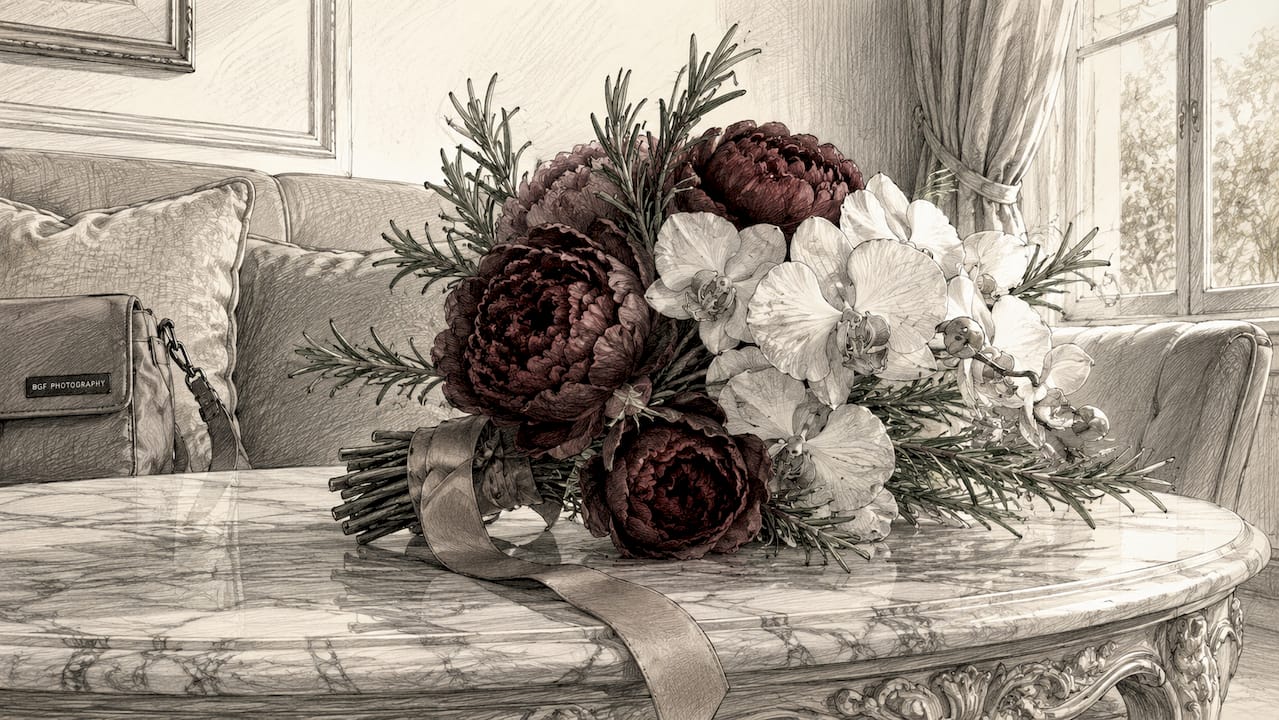
- Florals and bouquets: The bridal bouquet, boutonniere, and any loose blooms used for styling
Fresh florals deserve special attention. A bouquet photographed in the morning light looks dramatically different from the same bouquet photographed four hours later. Photographers capture florals early because the blooms are at their peak, and the light is softer and more flattering.
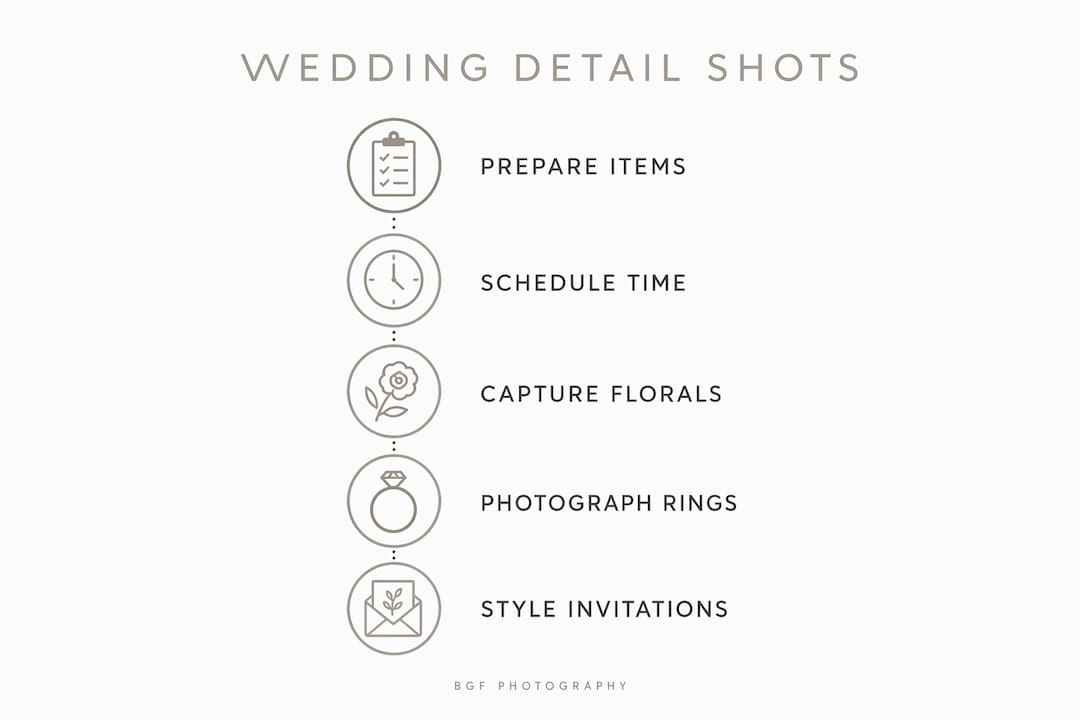
Pro Tip: Prepare a small box or bag the night before your wedding with every item you want photographed. Remove jewelry from its packaging, clean your rings, and set aside a pristine copy of your invitation suite. This single step saves your photographer 20 to 30 minutes on the morning of your wedding.
The condition of your invitation suite matters more than most couples realize. A copy that traveled through the mail often arrives with bent corners or smudged ink. Extra pristine invitation copies give the photographer flexibility to style multiple arrangements without worrying about damage. One clean copy is the minimum; two is better.
Why are detail shots important in wedding photography?
Detail shots serve as the connective tissue in a wedding album. Without them, a gallery jumps from getting-ready portraits directly to ceremony images, leaving a visual gap that makes the album feel incomplete. These images slow viewers down and make albums feel designed and personal rather than generic or interchangeable.
The emotional weight of detail photography becomes clearer years after the wedding. Floral arrangements wilt. Table settings get packed away. The invitation suite ends up in a drawer. A well-executed detail photo preserves these ephemeral elements permanently. Items like handwritten notes and table settings hold emotional weight years later in ways couples rarely anticipate on the day itself.
"Detail photography is often dismissed as filler work by couples who haven't seen a truly complete wedding album. The moment they flip through a gallery where every transition is supported by a beautifully styled detail image, they understand. These shots don't just fill space. They carry the story forward, preserve design intentionality, and remind couples of choices they made with care."
The narrative role of detail shots works on multiple levels:
- Context: A photo of the ceremony space means more when the viewer has already seen the invitation suite, the florals, and the table card design. The detail shots establish the visual language of the wedding.
- Rhythm: Albums need visual breathing room. A detail image between two emotional portraits gives the viewer a moment to pause before the next peak moment.
- Identity: The specific rings, shoes, and heirlooms a couple chooses reflect who they are. Detail shots preserve that identity in a way that group portraits cannot.
- Documentation: Decor exists only on the wedding day. A photographer who captures the centerpieces, the cake table, and the escort card display creates a permanent record of choices that took months to plan.
Detail photography also captures the couple's wedding aesthetic in a way that candid moments alone cannot. The color palette, the typography on the invitation, the texture of the veil — these elements communicate the couple's taste and the overall design vision of the day.
How to prepare for detail photography at your wedding
Preparation is the single biggest factor in the quality of your detail shots. A photographer who arrives to find rings still in their boxes, invitations buried in a bag, and no florals available will spend the first hour of your wedding day solving logistics instead of making art. The details box is the solution professionals recommend most consistently.
Follow these steps to prepare effectively:
- Gather everything the night before. Collect every item you want photographed and place it in one dedicated box or bag. Do not leave this task for the morning of the wedding.
- Remove jewelry from packaging. Rings photographed inside a velvet box look staged and flat. Rings photographed on a natural surface, a book, a flower petal, or a piece of linen look alive.
- Clean your rings. A quick soak in warm water with a drop of dish soap removes oils and residue. Clean rings catch light dramatically better than dull ones.
- Set aside extra invitation copies. Mail-worn invitations rarely photograph well. Keep at least one untouched copy specifically for photography.
- Confirm the groom's ring is included. Grooms' rings are often overlooked and photographers frequently have to track them down on the morning of the wedding. Put it in the details box the night before.
- Communicate with your photographer. Tell them which items carry sentimental meaning. A heirloom bracelet that belonged to your grandmother deserves more than a passing shot.
Timing is equally critical. Detail shots generally require 30 to 45 minutes and should be scheduled as a dedicated block, not squeezed between hair and makeup appointments. Rushing this session consistently produces results that disappoint couples when they see their final gallery. Your wedding day timeline should protect this window.
| Item to prepare | Why it matters | When to prepare |
|---|---|---|
| Rings (all bands) | Clean rings catch light; missing rings cause delays | Night before |
| Invitation suite (pristine copy) | Mail copies are often damaged and unsuitable for styling | Purchase extras when ordering |
| Bridal shoes and accessories | Shoes are a signature detail shot; accessories add variety | Pack the night before |
| Heirlooms and sentimental items | These require extra care and intentional styling | Identify and pack early |
| Loose florals or petals | Used for flat lay styling; adds texture and color | Coordinate with florist |
Pro Tip: Ask your florist to set aside a small bundle of loose blooms and greenery for your photographer to use during the detail session. These extra florals give the photographer styling flexibility and often produce the most visually striking images in the entire gallery.
Working with a wedding venue or planner who understands photography timing makes this preparation significantly easier. When the venue coordinator and photographer communicate directly, the detail session happens in a clean, well-lit space before the room fills with guests.
What photography techniques do professionals use for detail shots?
Professional photographers approach detail shots with the same intentionality they bring to portraits. The goal is not simply to document that an object exists. The goal is to make the viewer feel something when they look at it.
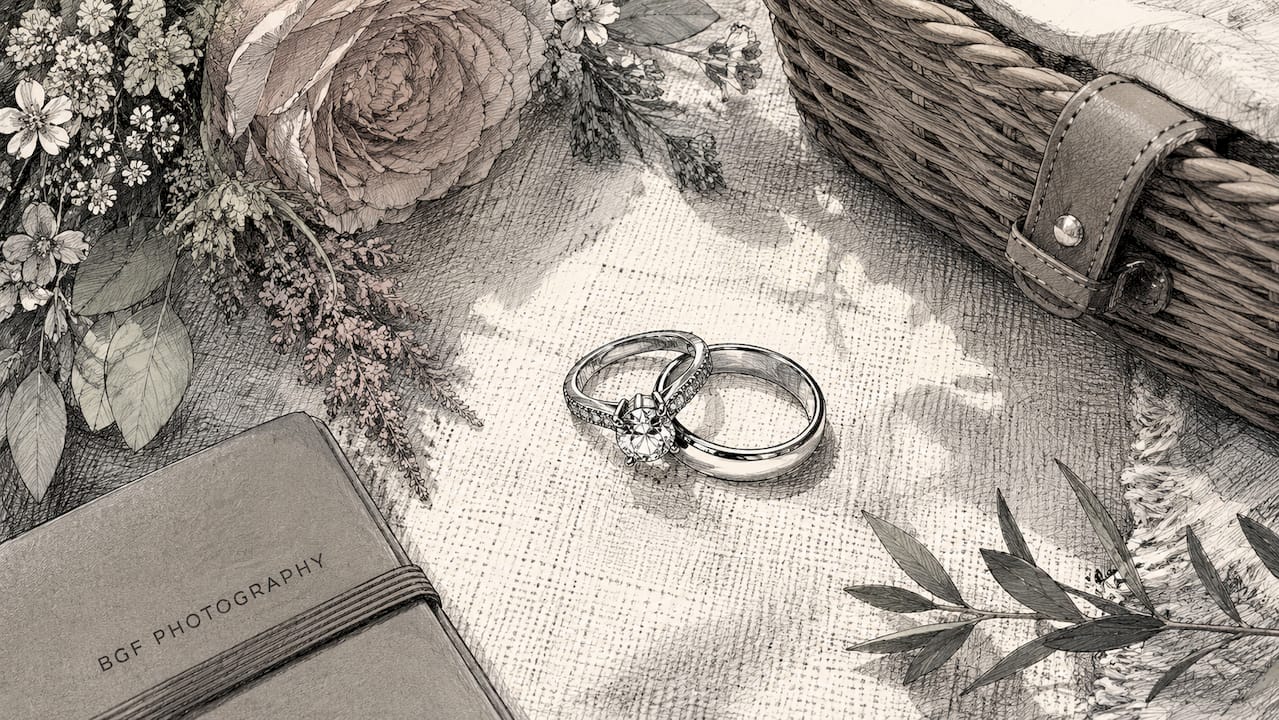
The most effective detail images blend macro shots with wider shots. A macro shot of a ring captures the engraving inside the band and the way light refracts through the diamond. A wider shot of the same ring resting on the invitation suite shows scale, color relationship, and design cohesion. Both images are necessary. Neither alone tells the full story.
Key techniques professional photographers use include:
- The rule of odds in flat lays: Odd-numbered groupings of objects appear more visually appealing than even-numbered ones. Three rings, five florals, or seven invitation elements create natural visual tension that draws the eye across the frame.
- Natural morning light: Detail shots taken in soft window light during the getting-ready phase have a quality that artificial light cannot replicate. The light is directional, warm, and flattering to both jewelry and fabric.
- Backlighting for translucency: Holding a veil or a floral arrangement against a bright window creates a glowing, translucent effect that photographs beautifully and adds a romantic quality to the image.
- Texture layering: Placing a ring on a linen napkin, a leather journal, or a wooden surface adds visual depth. The contrast between the hard jewelry and the soft or rough surface creates interest.
- Negative space: Leaving empty space around a subject draws attention to it. A single ring centered on a white marble surface communicates elegance more effectively than a crowded arrangement.
The cohesion of the detail photo series matters as much as any individual image. A skilled photographer thinks about how these images will appear together in the album. They choose backgrounds, surfaces, and styling elements that share a consistent color palette and visual tone. This is why photography styles and composition training matters so much for detail work. It is not point-and-shoot photography. It is applied visual design.
The quiet details that shape wedding photography are often the ones couples remember most vividly. A gallery without them loses scale and design context, and the memory of ephemeral decor fades faster than couples expect.
Key Takeaways
Detail photography is the foundation of a complete wedding album, and couples who prepare a dedicated details box the night before their wedding consistently receive stronger, more cohesive galleries.
| Point | Details |
|---|---|
| Definition of detail shots | Detail photography captures styled images of rings, invitations, florals, and personal objects at the start of the wedding day. |
| Narrative role | Detail shots serve as connective tissue in albums, preventing visual gaps between major moments and preserving design intent. |
| Preparation is critical | A dedicated details box with clean rings, pristine invitations, and loose florals saves 20–30 minutes and improves image quality. |
| Timing allocation | Schedule 30–45 minutes specifically for detail photography; rushing this session consistently produces disappointing results. |
| Technique and composition | Professionals blend macro and wider shots, use the rule of odds in flat lays, and rely on natural morning light for the best results. |
Why I think couples underestimate detail photography every time
Most couples come to me focused on the big moments: the first look, the ceremony, the first dance. That focus makes sense. Those are the moments that feel most significant on the day itself. But when couples sit down with their finished gallery six months later, the images they linger on longest are almost never what they expected.
It is the close shot of the grandmother's ring resting on the invitation suite. It is the backlit veil catching the morning light. It is the groom's boutonniere sitting on a leather journal next to his handwritten vows. These are the images that make people cry at gallery reveals. Not because they are technically impressive, but because they preserved something that no longer exists.
The flowers are gone. The table settings are packed in a storage unit. The invitation suite is in a drawer somewhere. Detail photography is the only record that those choices were made with care, that the couple thought about every element of their day and selected it intentionally. When those images are missing from a gallery, something irreplaceable is gone.
The misconception I encounter most often is that detail shots are a luxury, something you add if there is extra time. The reality is the opposite. Detail shots are taken first, before the schedule gets busy, because they require a clean environment and focused attention. They are not squeezed in at the end. They set the tone for everything that follows.
My advice to every couple: treat your details box with the same seriousness you give your vows. Pack it the night before. Clean your rings. Set aside a perfect copy of your invitation. Then hand it to your photographer the moment they arrive and let them do what they do best.
— Billy
How BGF Photography approaches your wedding detail shots
BGF Photography builds detail photography into every wedding coverage package as a core deliverable, not an optional add-on.
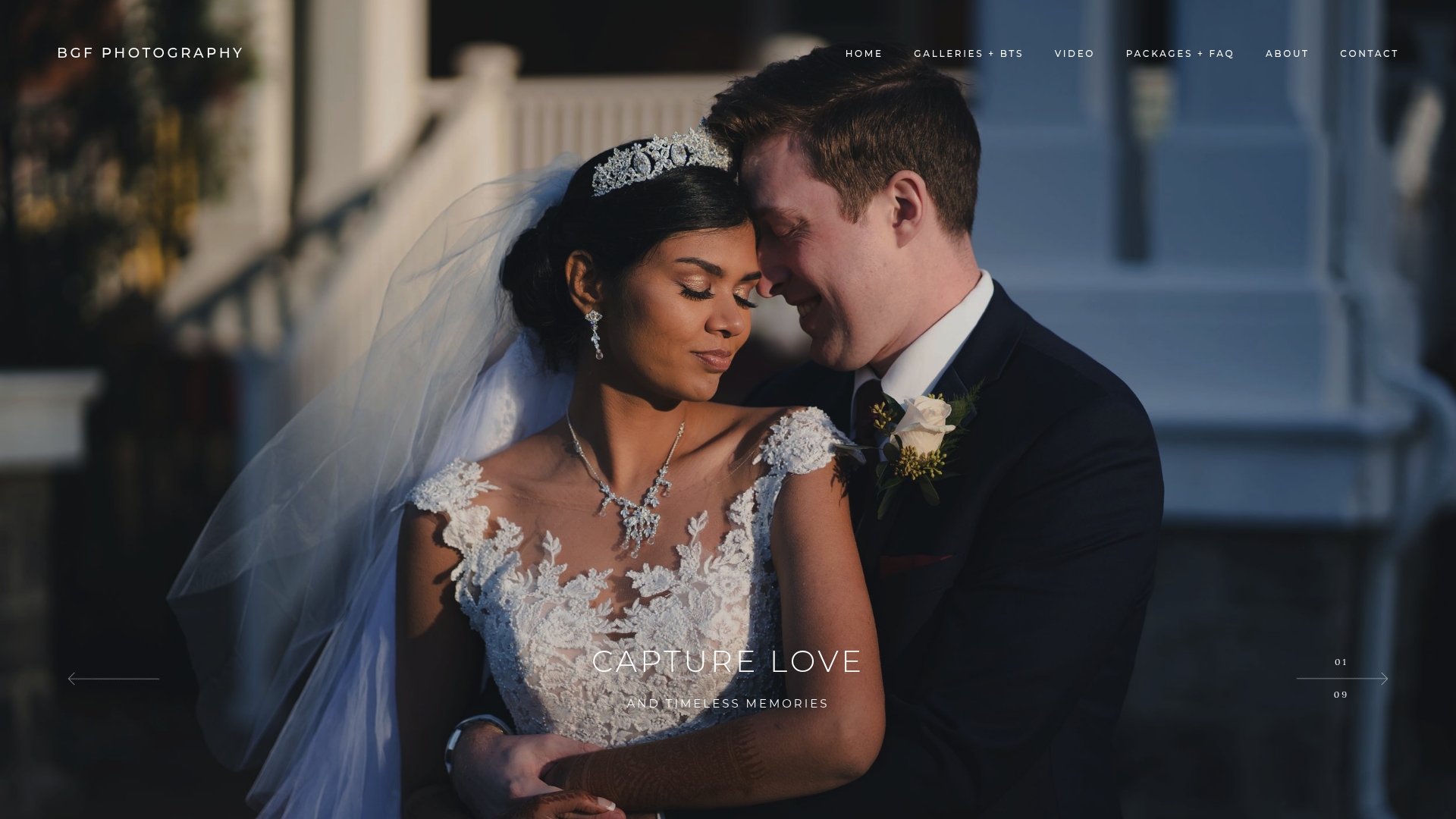
BGF Photography's approach starts before the wedding day. Couples receive preparation guidance that covers exactly what to include in their details box, how to organize items for efficient styling, and how to communicate their sentimental priorities. On the day itself, the detail session happens first, in the best available light, with the full attention it deserves. The result is a gallery where every section of the album feels intentional and complete. Couples in the Buffalo and Rochester, NY areas can review wedding photography packages to see how detail coverage fits within BGF Photography's full-day hybrid photography and videography services.
FAQ
What are wedding detail photos?
Wedding detail photos are styled images of personal objects such as rings, invitations, shoes, florals, and heirlooms captured at the start of the wedding day. They provide visual context and narrative flow throughout the wedding album.
How long do detail shots take at a wedding?
Detail shots generally require 30 to 45 minutes and should be scheduled as a dedicated block early in the day, before the getting-ready schedule becomes busy.
What should I put in my wedding details box?
Your details box should include all rings (cleaned and removed from packaging), a pristine copy of your invitation suite, bridal shoes, accessories, vow books, heirlooms, and any loose florals your florist can set aside for styling.
Why do photographers take detail shots first?
Detail shots are taken first to capture a clean, quiet environment before the wedding schedule fills up. This timing also ensures the best natural light and the freshest condition of florals and decor.
Do detail shots really matter for the final wedding album?
Detail shots are the connective tissue of a wedding album. Galleries without them lose design context, feel visually incomplete, and fail to preserve the ephemeral decor and personal objects that reflect the couple's identity and choices.