

What is editorial wedding photography?
Editorial wedding photography is a fashion-inspired, story-driven approach that combines magazine-level polish with the real emotional weight of your wedding day. Think of it as the midpoint between a Vogue shoot and a wedding album: every frame is intentionally composed, lit with purpose, and styled to feel timeless, yet the emotion in the image is completely real.
The term "editorial" comes from fashion and lifestyle magazines, where photography tells stories rather than simply sells products. Applied to weddings, it means the photographer approaches your day as an art director, not just a documentarian. Composition, light, posture, and setting all work together to create images that feel elevated without feeling manufactured.
Defining characteristics of editorial wedding photography:
- Intentional composition using negative space, architectural lines, and layered depth
- Polished, directional lighting (natural or artificial) used as a storytelling tool
- Fashion-influenced posing that guides rather than stiffens
- Emotional presence prioritized over performance
- A curated final gallery with visual rhythm and narrative flow
- Consistent style across every image, not just the portfolio highlights
Couples are drawn to this style because it produces images that age well. Trends fade. Filters date themselves. But timeless art principles keep these photographs feeling relevant and deeply personal decades later.
Key visual features that define the editorial style
The look of editorial wedding photography comes from a specific set of technical and artistic choices working together. No single element creates it. The combination does.
Lighting is the foundation. Editorial photographers work with early morning window light, dramatic golden-hour side light, and even bold midday sun when it serves the story. Artificial light, when used, stays subtle. The goal is imagery that feels timeless rather than trend-dependent.
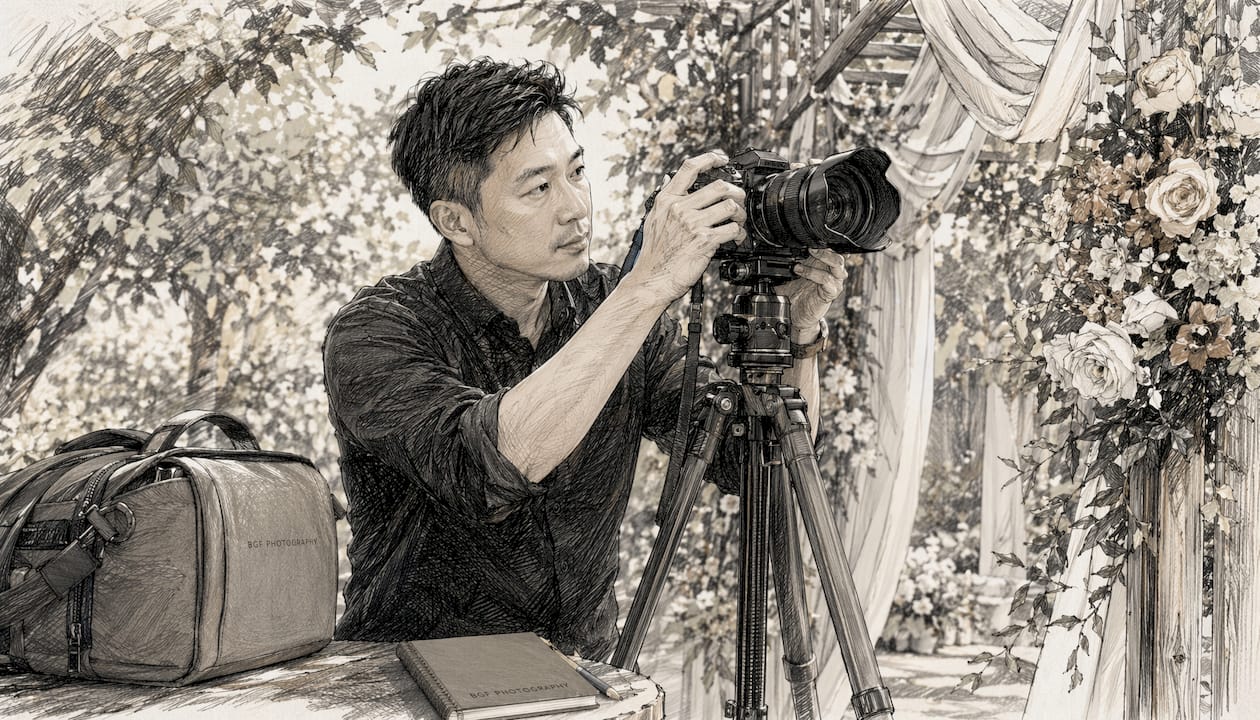
Composition goes beyond the basics. Prime lenses, particularly 35mm and 50mm, mimic cinematic perspective and allow photographers to work with visual weight, symmetry, and negative space in ways that zoom lenses simply cannot. Shooting through doorways, curtains, or foliage adds intimacy and context. Sometimes the most powerful image places the couple small within a vast architectural space, letting scale do the emotional work.
Pro Tip: When reviewing a photographer's portfolio, scroll past the first ten images. Editorial consistency shows up across a full gallery, not just the hero shots. If the style shifts dramatically from image to image, the photographer is still finding their voice.
Posing is guided, not scripted. The photographer gives direction to create confidence and natural movement, not to manufacture a look. A subtle adjustment in posture or hand placement can transform a stiff frame into something that feels genuinely alive. The best editorial portraits look like they were caught mid-breath.
Key visual hallmarks to look for:
- Clean, uncluttered backgrounds that let the couple breathe within the frame
- Color treated with restraint (natural skin tones, whites that stay white)
- Layered depth with foreground, middle ground, and background all in play
- "In-between" moments captured between formal directions
How editorial compares to documentary and traditional wedding photography
Understanding what editorial photography is becomes much clearer when you set it beside the other two styles couples most often encounter.
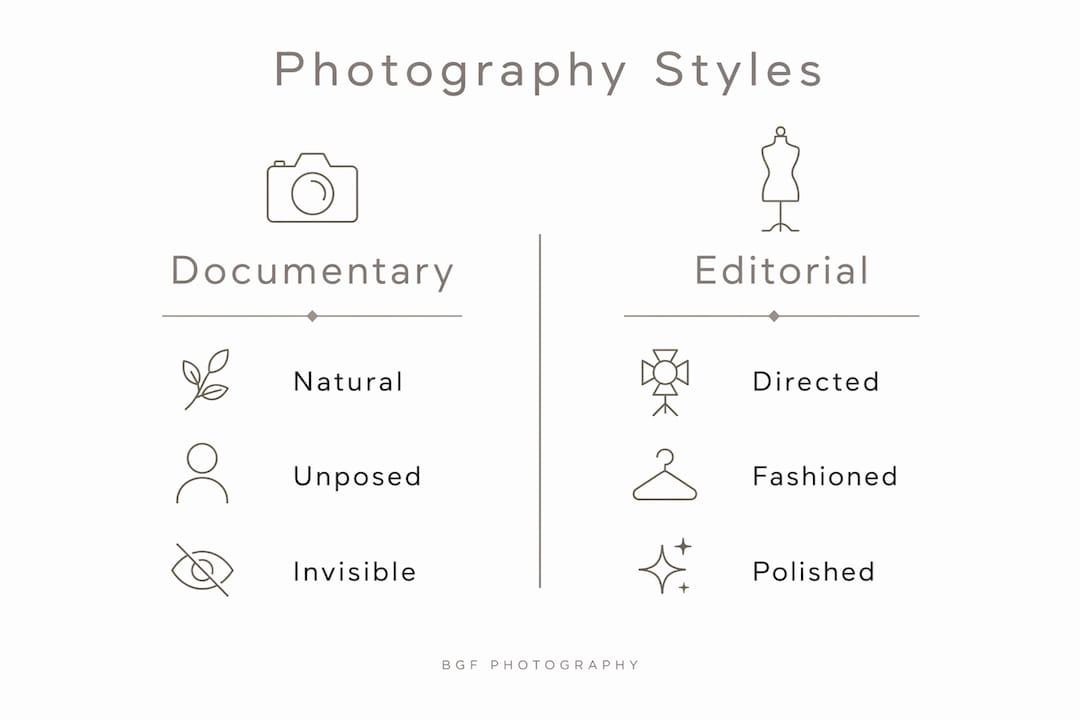
Documentary photography observes and records the day as it unfolds. The photographer stays largely invisible, anticipating moments rather than creating them. The result is raw, emotionally honest, and deeply narrative. What you sacrifice is polish: a documentary image captures what happened, not necessarily how it looked at its best.
Traditional photography works from a checklist. Ceremony, first kiss, family portraits, cake cutting. The photographer directs every grouping with clear instructions. The images are formal, well-lit, and comprehensive. Every important person gets documented. The tradeoff is spontaneity.
Editorial photography sits in a different position entirely. The photographer acts as an art director, shaping the environment and guiding subjects to ensure every frame carries intention. Real moments still happen, but the photographer is actively looking for the frame that makes them extraordinary.
| Feature | Documentary | Traditional | Editorial |
|---|---|---|---|
| Posing | None or minimal | Heavy direction | Guided, intentional |
| Photographer role | Observer | Director | Art director |
| Mood | Natural, emotional | Formal, polished | Dramatic, fashion-forward |
| Guest comfort | High | Moderate | Lower |
| Storytelling | Strong narrative arc | Portrait-focused | Concept-driven |
| Portrait time | Minimal | 45–60 min | 2–3 hours |
For editorial wedding photography, couples should expect portrait sessions lasting 2–3 hours, requiring active collaboration and more direction than traditional or documentary coverage.
A useful question to ask yourself: do you want to remember how the day felt, how it looked, or who was there? Documentary leans toward feeling. Traditional covers who was there. Editorial produces art.
Most photographers today blend elements of two or three styles. A photographer who describes themselves as "documentary with editorial portraits" typically observes the day candidly but dedicates a focused portrait session to more intentional posing and creative lighting.
What to expect when you hire an editorial wedding photographer
The experience of working with an editorial photographer is genuinely different from other styles, and knowing what to expect helps you get the most from it.
Portrait sessions run longer. Editorial portrait work typically requires 2–3 hours of dedicated time, compared to 45–60 minutes common in traditional coverage or minimal time in documentary style. That time goes into finding the right light, exploring the venue as a visual environment, and allowing real emotion to surface between directions. Build this into your wedding day timeline from the start.
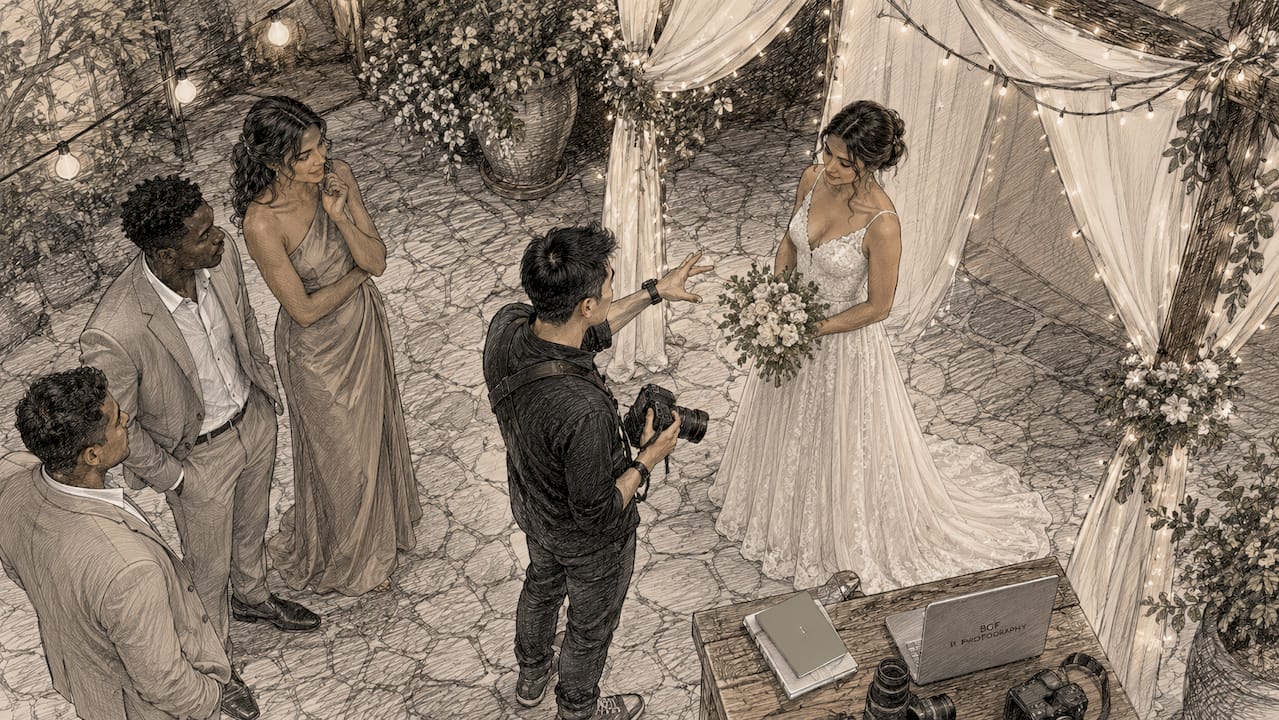
The photographer communicates before the day. Expect conversations about your attire, the venue's architectural features, your preferred lighting conditions, and the overall mood you want the gallery to carry. This isn't small talk. It's how an editorial photographer builds the visual brief they'll work from.
Direction feels collaborative, not performative. The goal of conscious image-making is to guide you into a state of genuine presence, not to turn you into a model. A good editorial photographer watches how you move together naturally before giving any instruction, then offers minimal, specific adjustments that let your personality come through.
Your final gallery tells a story. Editorial galleries are curated with narrative flow and visual rhythm, sequencing images from quiet anticipation through celebration like chapters in a magazine feature. Expect a smaller, tighter gallery than you might get from a documentary photographer. The discipline of curation is part of the craft.
What to prepare before your shoot:
- Discuss attire details (structured silhouettes, bold tailoring, and couture details photograph particularly well)
- Share venue photos so the photographer can scout light and composition in advance
- Build buffer time around portrait sessions so neither of you feels rushed
- Trust the process, even when a direction feels unfamiliar
Expert insights on what makes editorial photography work
True editorial photography is defined by artistic restraint and intentionality, not by a specific filter or a trendy pose. The photographers who do it best understand that presence matters more than performance.
The technical side is real. Consistent style across an entire gallery requires knowing when to direct and when to step back entirely. Calm, specific guidance during portrait sessions. Quiet observation when emotion is already in the room. The two modes require completely different instincts, and the best editorial photographers switch between them without the couple ever noticing the shift.
Pro Tip: Ask any photographer you're considering to send you a full wedding gallery, not just their portfolio highlights. Editorial work lives or dies by consistency. A gallery that holds its visual identity from the getting-ready shots through the last dance is the real proof of skill.
BGF Photography approaches this balance by combining editorial portraiture with candid documentary coverage, offering hybrid wedding coverage that captures both the artistry of directed portraits and the unguarded moments in between. The result is a gallery that feels cohesive from start to finish, whether you're looking at a composed portrait or a stolen glance across the reception.
Which venues and wedding themes suit editorial photography best
Editorial photography adapts to almost any setting, but certain environments amplify its strengths considerably.
Architecture-rich venues give the photographer natural compositional tools: symmetry, leading lines, doorways to shoot through, and grand scale that makes intimate moments feel cinematic. Historic estates, industrial lofts, and cathedral spaces all work beautifully. The venue becomes a visual collaborator, not just a backdrop.
Natural landscapes offer light and texture that editorial photographers love. Open fields at golden hour, coastal cliffs, dense forests, and mountain settings all provide dramatic contrast between the couple and their environment. The key is scale: editorial photography often places the couple deliberately small within a larger scene to create emotional depth.
Design-forward weddings align naturally with the editorial approach. When a couple has invested in thoughtful florals, custom stationery, and intentional styling, an editorial photographer documents those details with the same care given to portraits. Every element within the frame is considered.
Themes that photograph particularly well:
- Minimalist and architectural (clean lines, neutral palettes)
- Garden and botanical (layered depth, natural framing)
- Luxury destination (scale, dramatic light, unique environments)
- Vintage and film-inspired (tonal restraint, nostalgic texture)
Heavily themed or maximalist weddings can also work, but they require a photographer experienced enough to find visual calm within a busy frame. The editorial instinct is always toward restraint, even in a visually complex setting. For couples exploring how photography style matches their wedding vision, the venue and theme are often the clearest starting point.
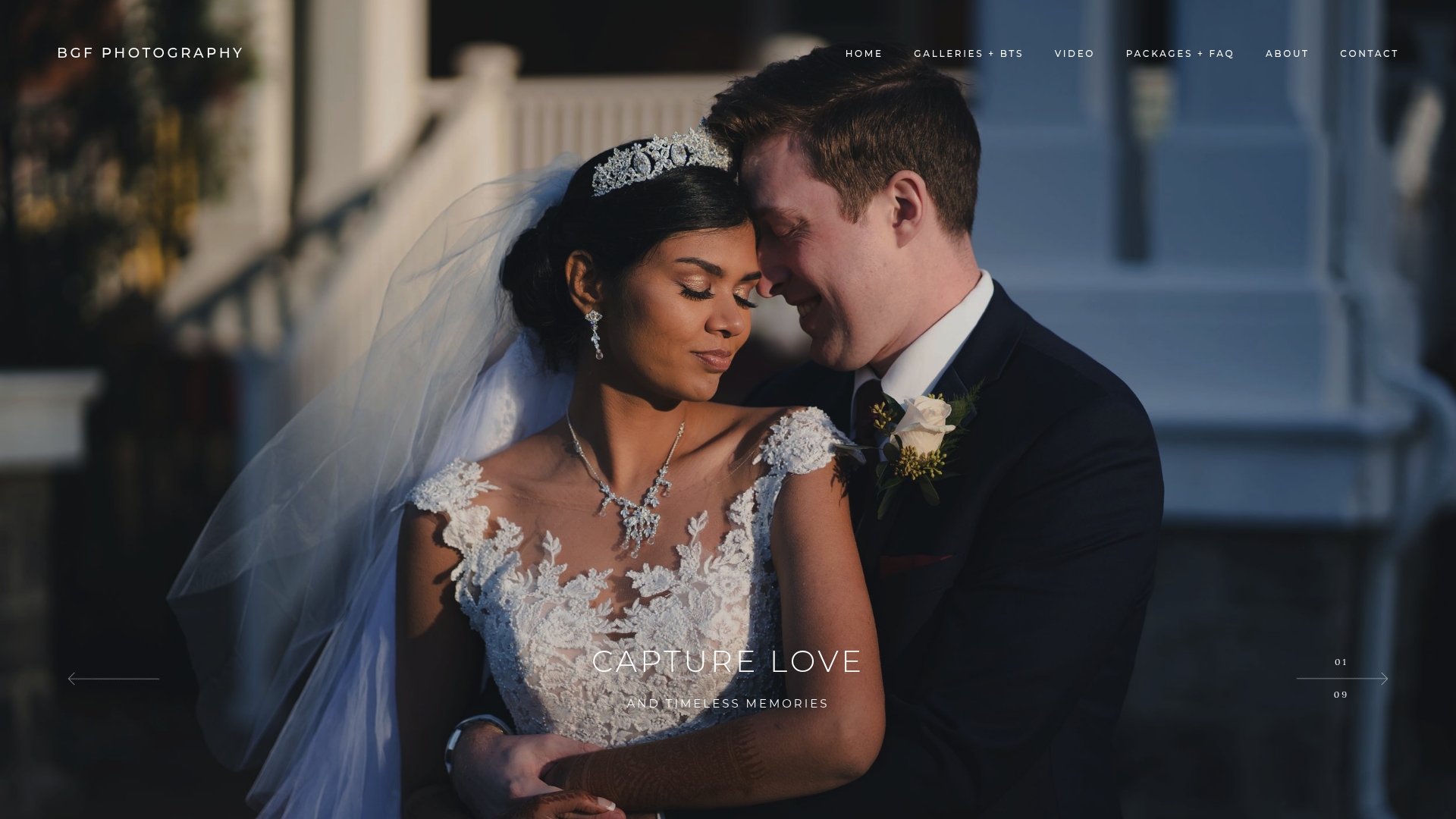
Ready to see what editorial coverage looks like for your wedding?
BGF Photography serves couples in the Buffalo and Rochester, NY areas with hybrid photography and videography coverage that blends editorial portraiture with candid storytelling. Every gallery is built around your day, your light, and your real moments. Explore wedding packages and pricing to find the coverage that fits your vision.
Key Takeaways
Editorial wedding photography combines fashion-magazine polish with genuine emotion, producing timeless images through intentional composition, directional lighting, and a curated gallery narrative.
| Point | Details |
|---|---|
| Core definition | Editorial photography blends magazine-level polish with real wedding storytelling through intentional composition and light. |
| Portrait session length | Expect 2–3 hours of dedicated portrait time for editorial sessions, with traditional sessions averaging 45–60 minutes and documentary minimal formal portrait time. |
| Photographer's role | The photographer acts as an art director, guiding posture and placement while preserving authentic emotion. |
| Gallery curation | Final galleries are sequenced with visual rhythm and narrative flow, like a magazine feature rather than a photo archive. |
| Best fit | Couples who want images that feel like art and are comfortable with extended, collaborative portrait sessions. |
FAQ
What does editorial mean in wedding photography?
Editorial wedding photography is a consciously composed, fashion-led approach that prioritizes intentional lighting, composition, and styling to create images that feel magazine-worthy while still preserving genuine emotion from the day.
What is the difference between classic and editorial wedding photography?
Classic (traditional) wedding photography follows a structured checklist of formal, posed portraits covering key moments. Editorial photography treats the venue, attire, and light as creative elements, producing images driven by artistic vision rather than a coverage checklist.
What is the difference between editorial and documentary wedding photography?
Documentary photography observes the day with minimal direction, capturing moments as they naturally unfold. Editorial photography adds intentional art direction, guiding couples and shaping the environment so every frame carries both emotional truth and visual polish.
Do you need modeling experience for editorial wedding photos?
No. Confidence typically builds during the session itself. Editorial images come from gentle guidance and trust, not natural modeling ability. The photographer's direction is designed to help you feel present and relaxed, not to perform.
How do you choose the right editorial wedding photographer?
Review full wedding galleries, not just portfolio highlights, to confirm consistent style across an entire day. Ask about portrait session length, pre-wedding communication, and how they balance direction with candid coverage.