
The best alternatives to posed wedding portraits are candid documentary coverage, activity-based couple sessions, narrative environmental portraits, micro-session editorial moments, and guest-included storytelling frames. Each approach prioritizes connection and movement over static direction, and candid wedding photography is the leading trend in 2026 because couples want images that capture how the day felt, not just how it looked.
Here is the short version of what works:
- Candid documentary coverage — photographer stays unobtrusive; real moments unfold naturally
- Activity-based portraits — arcade, picnic, beach walk, brewery; something to do kills the stiffness
- Environmental portraits — venue architecture and quiet corners frame the couple without posing them
- Micro-session editorial moments — two to three intentionally guided minutes scattered across the day
- Guest-included storytelling — hugs, confetti throws, and group laughter that pulls the couple in
One success criterion covers all of them: prioritize connection, movement, and a short set of action prompts over static direction. Schedule two or three short pockets of five to fifteen minutes rather than one long portrait block, and plan the most important shots around golden hour. BGF Photography uses exactly this structure, and the 30-5 rule (thirty minutes maximum for formal portraits, five minutes per setup) keeps the day moving without sacrificing the gallery.
Key Takeaways
The most reliable path to authentic wedding photos is replacing one long portrait block with several short, activity-driven portrait pockets spread across the day, guided by specific prompts rather than static direction.
| Point | Details |
|---|---|
| Short portrait windows work better | Plan two to three pockets of 5–15 minutes each rather than one long block. |
| Prompts beat "be natural" | Use one specific cue per shot: a whisper, a question, or a movement instruction. |
| Golden hour is non-negotiable | Protect 15–20 minutes before sunset; it is the highest-return portrait window of the day. |
| Activity ideas remove stiffness | Walking, arcade, picnic, or beach sessions give couples something real to do. |
| BGF Photography | Offers candid-first hybrid coverage in Buffalo, Rochester, and the Finger Lakes with short-burst portrait scheduling built in. |
Table of Contents
- What counts as an alternative to posed wedding portraits?
- Activity-based portrait ideas you can request from your photographer
- Practical prompts and cues that produce genuinely natural reactions
- When to schedule alternative portraits on your wedding day
- How to brief your photographer with a one-page shot list
- What to wear and which props help candid shots
- Your printable 10-shot checklist to hand the photographer
- How BGF Photography captures candid portraits in practice
- Why gentle prompts beat "just be natural"
- BGF Photography's candid-first packages for Buffalo and Rochester couples
- Sources
- FAQ
What counts as an alternative to posed wedding portraits?
A non-posed portrait is any image where the couple is doing something rather than holding a position. Natural wedding portraits land in the middle ground between zero direction and heavy staging: the photographer gives a gentle prompt, the couple reacts, and the camera catches what happens next. That reaction is the photograph.
The benefits over traditional posed portraits are real and practical:
- More authentic emotion. Laughter triggered by a whispered joke reads differently than a posed smile. Viewers feel the difference.
- Faster sessions. A walking shot takes ninety seconds. A formal group arrangement can take fifteen minutes.
- Better aging. Trendy staged poses date quickly. A candid forehead touch from 2026 will still feel timeless in 2046.
- Accessibility-friendly. Seated compositions, close-up reaction shots, and bench moments work for guests or couples with mobility considerations.
Formats that qualify include documentary wedding photography, date-style engagement shoots, editorial environmental portraits, and guest-interaction frames. Any of them can replace or supplement a traditional portrait block.
Activity-based portrait ideas you can request from your photographer
The simplest way to get natural photos is to give the couple something to do. Walking shots and simple movement are one of the easiest ways to create unposed wedding photos because they give hands and eyes a real purpose. Below are ten activity and location ideas with quick logistics notes.
- Arcade or pinball hall. Play a game together; the photographer shoots from behind or beside. Logistics: call ahead to confirm photography is allowed; avoid peak weekend hours.
- Mini golf. Competitive and playful, which produces genuine reactions. Best for: post-ceremony or engagement session; wear comfortable shoes.
- Coffee or brunch date. Sit across from each other at a café table. Works beautifully in window light. Logistics: book a corner table in advance; morning light is softer.
- Favorite bar or brewery with board games. Relaxed, personal, and full of props. Best for: evening golden hour window; confirm the venue allows photography.
- Ice cream stop. Short, sweet, and almost always produces real laughter. Logistics: plan for five to ten minutes max; bring napkins.
- Picnic in a park. A blanket, a basket, and a bottle of something sparkling. Logistics: check permit requirements for your city's parks; bring a ground cloth.
- Beach walk. Bare feet in the sand, walking away from the camera. Best for: golden hour; plan for wind and footwear changes.
- Short hike or nature trail. Works especially well for adventurous couples. Logistics: scout the trail in advance; wear practical shoes under the dress.
- Museum stroll. Quiet, architecturally rich, and climate-controlled. Venue architecture and quiet corners naturally frame couples without any posing. Logistics: confirm photography policies; weekday mornings are least crowded.
- Backyard or home session. The most personal option. Familiar surroundings reduce nerves fast. Best for: morning-of or engagement session; no permits needed.
Pro Tip: Flag which ideas need advance vendor coordination (permits, venue approval) at least two weeks before the wedding. Activity ideas that require no permits, like a neighborhood walk or a home session, are the easiest to add last-minute.
Practical prompts and cues that produce genuinely natural reactions
A curated list of couple prompts grouped by cue helps photographers and couples execute natural-looking images quickly. The key is one specific instruction per prompt, not a general "look natural."
- Almost-kiss. Cue: "Get close enough to kiss, then stop and just breathe." The anticipation reads on camera better than the kiss itself.
- Forehead touch. Cue: "Press your foreheads together and close your eyes for three seconds." Simple, intimate, works for every couple.
- Walk. Cue: "Walk toward that tree and talk about your honeymoon plans." The conversation does the work; the camera follows.
- Twirl. Cue: "Spin her/them once, slowly." Works best with a full skirt; adapt by asking both partners to spin toward each other for same-sex couples.
- Dip. Cue: "Dip your partner back like you just won something." Keep it brief; the laugh at the end is the shot.
- Back hug. Cue: "Wrap your arms around from behind and say something only they would understand." The whisper and the reaction are the photograph.
- Under the veil. Cue: "Pull the veil over both of you and look at each other." A private moment in plain sight.
- Slow dance. Cue: "Dance like nobody's watching, because we're not." Works without music; the sway is enough.
- Jump shot. Cue: "Jump on three, land however you want." The landing is always more interesting than the jump.
Pro Tip: Small scripted cues trigger authentic laughter faster than general instructions. Try whispering "Tell them the worst thing that happened this week" or "What's the most embarrassing thing about your partner?" The reaction is immediate and completely real. For couples with mobility considerations, swap any standing prompt for a seated version: a forehead touch on a bench, a back hug from a chair, or a close-up of hands.
When to schedule alternative portraits on your wedding day
Short, focused portrait windows of roughly 10–30 minutes in calm locations outperform long staged portrait blocks for natural results and guest satisfaction. The 30-5 rule is a useful shorthand: cap the total formal portrait time at thirty minutes, and spend no more than five minutes on any single setup.
Here is a sample micro-schedule for a typical wedding day:
- First look (15 minutes, pre-ceremony). The most emotionally charged moment of the day. Schedule it in a quiet spot with good light. No guests, no pressure.
- Post-ceremony stroll (10 minutes). Walk from the ceremony to the reception venue or a nearby garden. The couple is still buzzing; the photos show it.
- Golden hour couple session (15–20 minutes). The single most valuable portrait window. Soft, directional light flatters every skin tone and every outfit. Confirm the exact sunset time for your venue and plan to start fifteen minutes before it.
- Reception pockets (5 minutes each, two or three times). Slip away briefly during cocktail hour, between courses, or after the first dance. These produce some of the most relaxed images of the day.
Pro Tip: Couples who plan several short portrait pockets across the day report better photos and less anxiety than those who block off one long session. For mobility-friendly timing, schedule the most active shots (walking, twirl, dip) during the first look or golden hour when energy is highest, and save seated or close-up compositions for later in the evening. Check how to organize family portraits so formal shots don't eat into your candid pockets.
How to brief your photographer with a one-page shot list
The best natural portraits come from gentle prompts, not heavy staging. Hand your photographer this list at the rehearsal or via email one week before the wedding.
Sample printable shot list (copy and text to your planner):
- Walking away from camera, back hug in motion
- Forehead touch, eyes closed, quiet moment
- Laughing reaction (photographer uses a whispered cue)
- Activity moment: [your chosen activity from the list above]
- Under-the-veil close-up
- Environmental portrait: couple in venue architecture or doorway
- Guest interaction: confetti throw or group hug
- Detail shot: hands, rings, bouquet used naturally
- Slow dance or sway, no music needed
- Golden hour silhouette or backlit walking shot
Exact lines to say to your photographer:
- "We don't want to be told where to stand. Give us something to do instead."
- "Use whispered cues to make us laugh. We'll react better than if you ask us to smile."
- "Keep the portrait windows short: five to fifteen minutes each, spread across the day."
- "Flag the golden hour window on the timeline and protect it."
For accessibility, note any mobility considerations in writing so the photographer can plan seated alternatives in advance. Prioritize the hardest or most time-sensitive shots (golden hour, veil shot) early in each window. Share the list with your coordinator so they can keep the schedule on track. You can also use the candid wedding photos must-have list as a starting point and customize from there.
What to wear and which props help candid shots
Wardrobe and props either help or hurt candid photography. A few practical choices make a real difference.
Wardrobe:
- Choose comfortable layers you can move in. A tight mermaid hem makes walking shots awkward; an A-line or flowy skirt photographs beautifully in motion.
- Textures (lace, linen, velvet) catch candid light better than flat satin, which can blow out in bright conditions.
- Avoid matching outfits that are too identical; slight tonal variation creates visual depth in the frame.
Props that create genuine reactions:
- Drinks (champagne flutes, coffee cups, craft beer cans) give hands something to hold and naturally pull couples together.
- Confetti or dried flower petals for a throw shot. Check venue and local permit rules before bringing confetti.
- A cozy blanket for a picnic or outdoor session; it anchors the couple and creates a relaxed, home-like feel.
- The bouquet used playfully (twirled, held behind the back, used to hide a kiss) rather than carried formally.
Mobility-friendly alternatives:
- Seated compositions on a bench, steps, or low wall work for any couple.
- Close-up reaction shots (hands, faces, a shared laugh) require no standing at all.
- Plan a footwear change for outdoor or walking sessions; a second pair of shoes in the bag takes two minutes to swap and saves the dress from mud. See how to prepare for candid wedding photos for a full pre-wedding prep checklist.
Your printable 10-shot checklist to hand the photographer
Copy this list into a text message or print it on a single page. Each shot includes a one-line timing note.
- Walking-away back hug — post-ceremony stroll or golden hour
- Laugh-spray reaction — any portrait pocket; photographer uses a whispered cue
- Quiet forehead touch — first look or golden hour
- Activity moment — scheduled activity session (arcade, picnic, walk)
- Under-veil close-up — first look or pre-ceremony
- Environmental/architectural frame — any time at the venue; no special light needed
- Guest confetti throw or group hug — guest interactions produce genuine reactions and add personality to the gallery; schedule during cocktail hour
- Detail shot: hands and rings in motion — any quiet moment between events
- Slow dance or sway — reception pocket, between courses
- Golden hour silhouette or backlit walk — fifteen minutes before sunset; protect this window
How BGF Photography captures candid portraits in practice
BGF Photography's workflow is built around the short-burst, unobtrusive approach this article describes. Before the wedding, every couple fills out a questionnaire covering their activity preferences, mobility needs, and the two or three moments that matter most to them. That information shapes the day's micro-schedule.
On the wedding day, the workflow looks roughly like this:
- Morning prep coverage. Documentary shooting begins during getting-ready; no posing, just presence.
- First look (pre-ceremony). A quiet, private moment with a single gentle prompt if needed.
- Post-ceremony stroll. Five to ten minutes of walking coverage while the couple is still emotionally charged.
- Golden hour session. Fifteen to twenty minutes, protected on the timeline, using the short-burst prompt list.
- Reception pockets. Two or three five-minute windows for candid couple frames between toasts and dancing.
BGF Photography's hybrid photo and video coverage means both the photo and video teams follow the same micro-schedule and the same unobtrusive style, so the couple never feels pulled in two directions. The optional film photography layer adds a grain and warmth that suits candid, movement-based images particularly well.
BGF Photography serves couples in Buffalo, Rochester, and the Finger Lakes region of New York.
Why gentle prompts beat "just be natural"
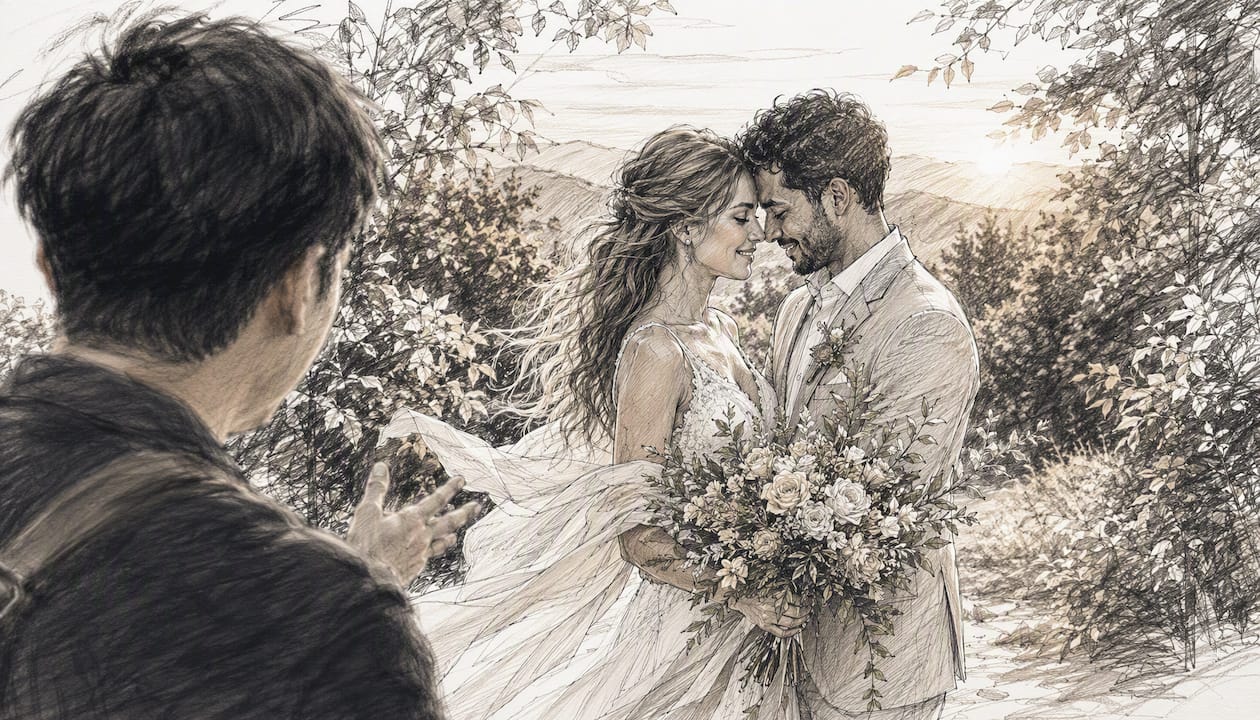
Telling a couple to "just be natural" is the single least useful instruction a photographer can give. Natural does not mean undirected. Unposed photography is a guided middle ground, not an absence of direction, and the couples who get the best galleries are the ones whose photographers gave them something specific to do.
The trick that most photographers underuse is environmental anchoring: place the couple in a doorway, against a textured wall, or at the edge of a field, and the location does half the compositional work before anyone moves. Then one small prompt, a whisper, a question, a prop, releases the tension. The couple responds to each other instead of to the camera, and that shift shows in every frame.
BGF Photography's candid-first packages for Buffalo and Rochester couples
Couples who want the looks described in this article without spending the day being directed into poses will find BGF Photography's approach fits naturally. The focus is on unobtrusive coverage: a pre-wedding questionnaire, a micro-schedule built around short portrait pockets, and hybrid photo and video under one cohesive style so nothing feels disjointed.
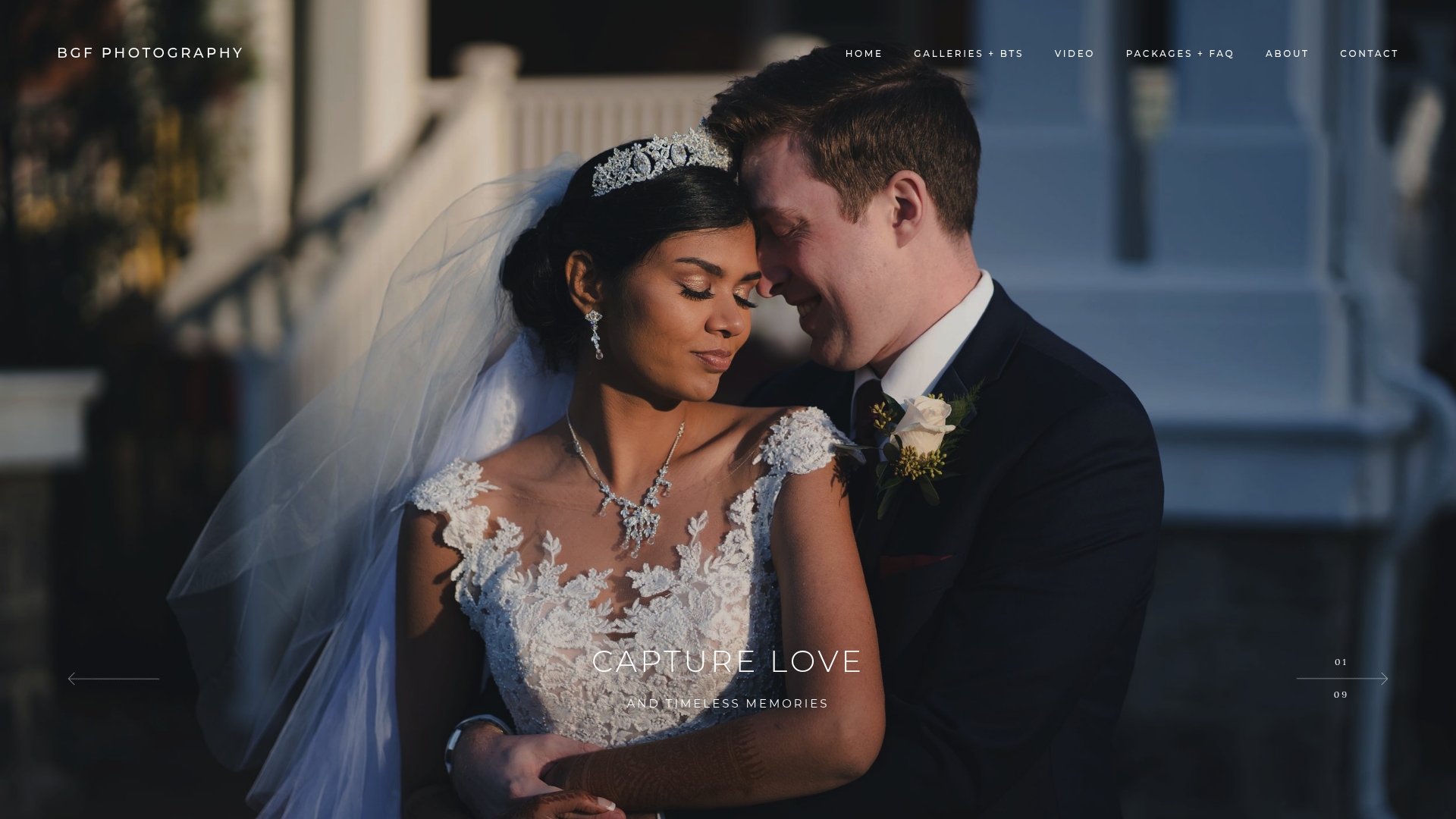
Film photography is available as an add-on for couples who want that warm, grain-forward aesthetic in their candid frames. Drone coverage is also available where permitted. Portrait windows stay short by design, typically five to twenty minutes each, so you spend the day with your guests rather than in front of a camera.
To see packages and check availability for your date, visit the BGF Photography investment page.
Sources
- 46 Wedding Couple Poses That Look Effortless When You Feel Anything But - Love & Lavender
- The 'No-Pose' Guide: 9 Tips for Natural Wedding Portraits
- 11 Unposed Wedding Photography Ideas - Tom Stenlake Photography
- Candid vs Posed Wedding Photography
FAQ
What is the 30-5 rule for wedding portraits?
The 30-5 rule is a scheduling shorthand: cap total formal portrait time at thirty minutes and spend no more than five minutes on any single setup. It keeps the day moving and reduces the stiffness that comes from long, static portrait blocks.
How long should a candid couple portrait session last?
Short, focused windows of 10–30 minutes in calm locations typically produce better results than a single long block. Two or three five to fifteen minute pockets spread across the day, including a golden hour window, cover most couples' needs.
What are inexpensive alternatives to photo booths at weddings?
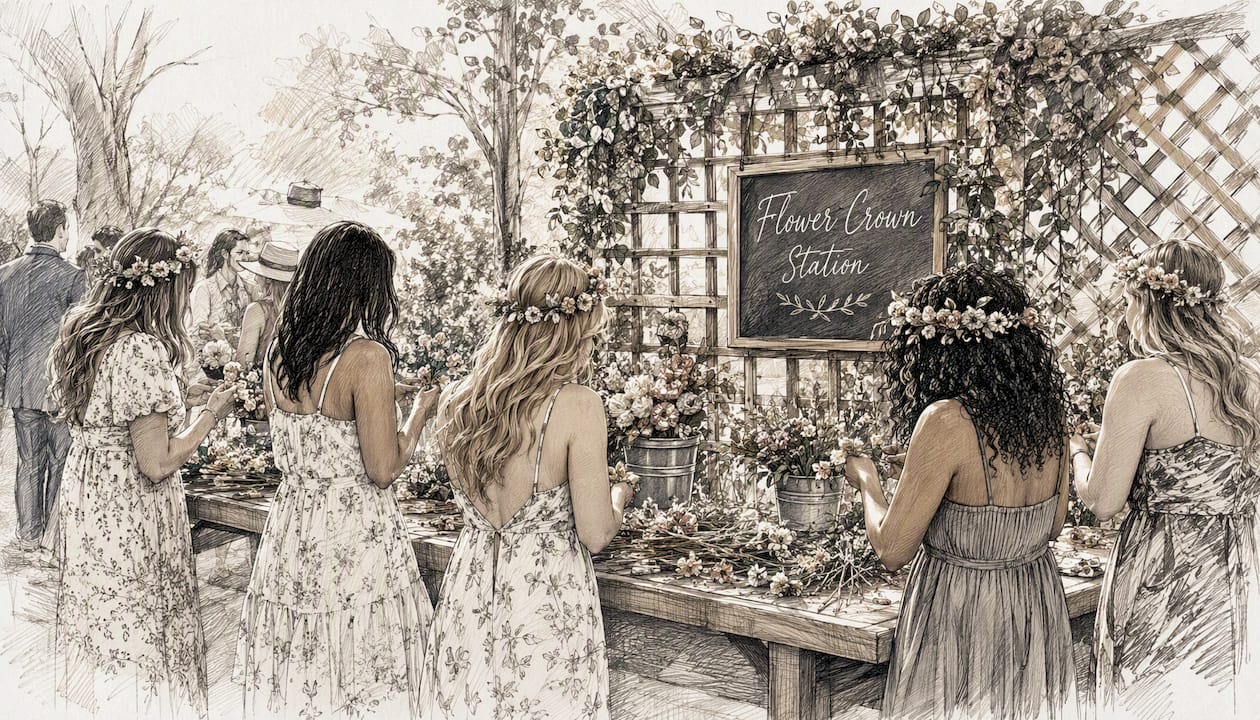
A QR code guest photo collection (where guests upload phone photos to a shared album) costs very little and captures candid moments from every angle in the room. Activity stations like a confetti throw, a polaroid camera on a table, or a simple backdrop with props serve the same social function at a fraction of the cost.
How do I get my photographer to take more candid shots?
Hand them a written shot list that specifies prompts rather than poses, and tell them explicitly: "Give us something to do instead of telling us where to stand." Specific whispered cues produce authentic laughter faster than general smile instructions, so ask your photographer to use them. BGF Photography builds this approach into every wedding package by default.
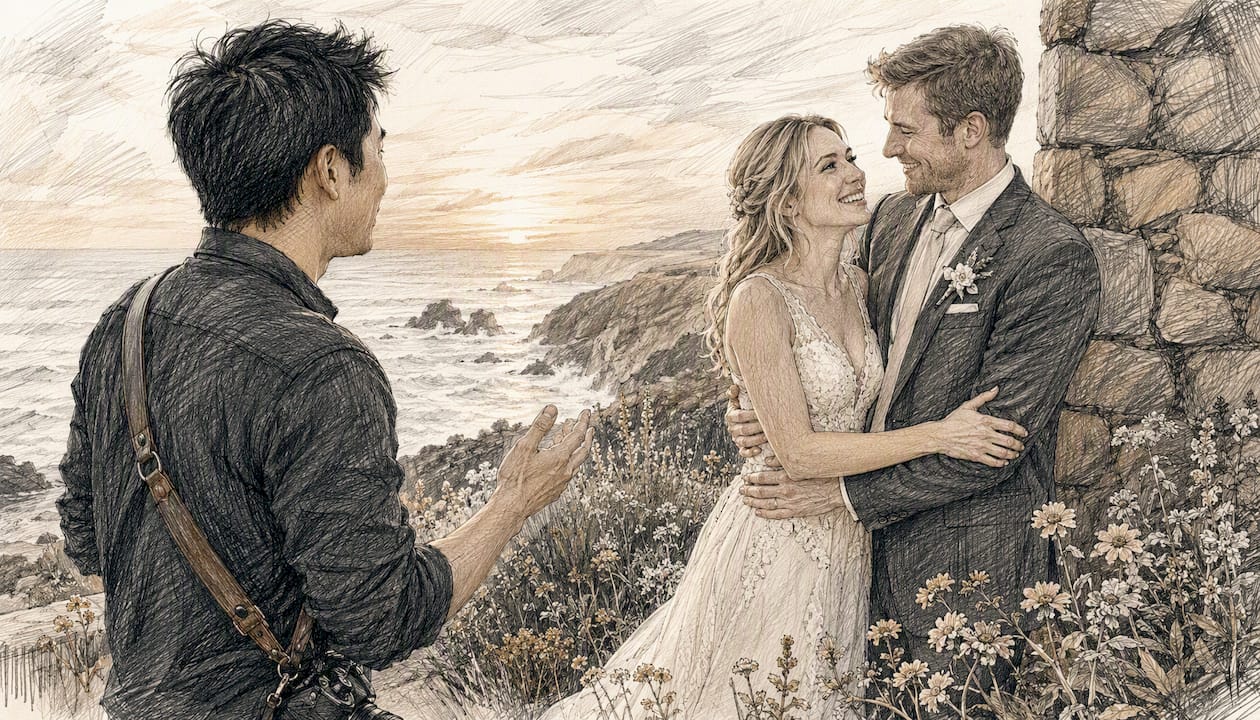
Do non-posed portraits work for same-sex couples or couples with mobility considerations?
Every prompt in this article adapts easily. Twirls work for any partner combination; back hugs, forehead touches, and slow dances require no gender assignment at all. For mobility considerations, seated compositions, close-up reaction shots, and bench moments produce equally strong images without requiring standing or movement.