
Cinematic videography turns raw footage into emotionally driven stories that hold attention, build trust, and leave viewers wanting to watch again. The benefits of cinematic videography are most tangible for three groups: marketers who need video that converts, couples who want their wedding day preserved with real emotional weight, and social creators who need content that stops the scroll.
- Engagement and retention: Cinematic pacing, motivated camera movement, and intentional sound design keep viewers watching longer than standard footage.
- Storytelling and emotional impact: Deliberate lighting, composition, and color grading guide viewers through a narrative arc rather than a simple record of events.
- Credibility and brand perception: Premium cinematic footage raises viewer expectations for quality and strengthens perceived trust before a single word is spoken.
Key Takeaways
Cinematic videography produces measurably higher engagement, emotional retention, and perceived credibility than standard footage because it applies deliberate visual grammar — lighting, composition, movement, sound, and color — to serve a defined emotional story.
| Point | Details |
|---|---|
| Story-first discipline | Define the feeling you want viewers to have before choosing any gear or technique. |
| Sound is non-negotiable | Bad audio undermines even the best cinematography; invest in a dedicated microphone at every budget level. |
| Cinematic post takes longer | Music-led editing for wedding films and brand videos takes days, not hours; plan timelines accordingly. |
| Measure what moves | Track view-through rate, average watch time, rewatch rate, and micro-conversions to quantify cinematic ROI. |
| BGF Photography | Offers hybrid photo/video wedding coverage in Buffalo, Rochester, and the Finger Lakes with a music-first, unobtrusive cinematic approach. |
Table of Contents
- Why does cinematic videography change how viewers pay attention?
- How cinematic choices shape storytelling and viewer behavior
- What cinematic elements and techniques actually produce the look?
- What does cinematic videography deliver for marketing, weddings, and social media?
- How do you integrate cinematic videography into a project?
- What gear and software do you actually need?
- How do you measure whether cinematic upgrades actually work?
- What mistakes kill the cinematic look before it starts?
- How BGF Photography approaches cinematic wedding films
- The part most guides get wrong about cinematic video
- BGF Photography: cinematic wedding films for Buffalo, Rochester, and the Finger Lakes
- Sources
- FAQ
Why does cinematic videography change how viewers pay attention?
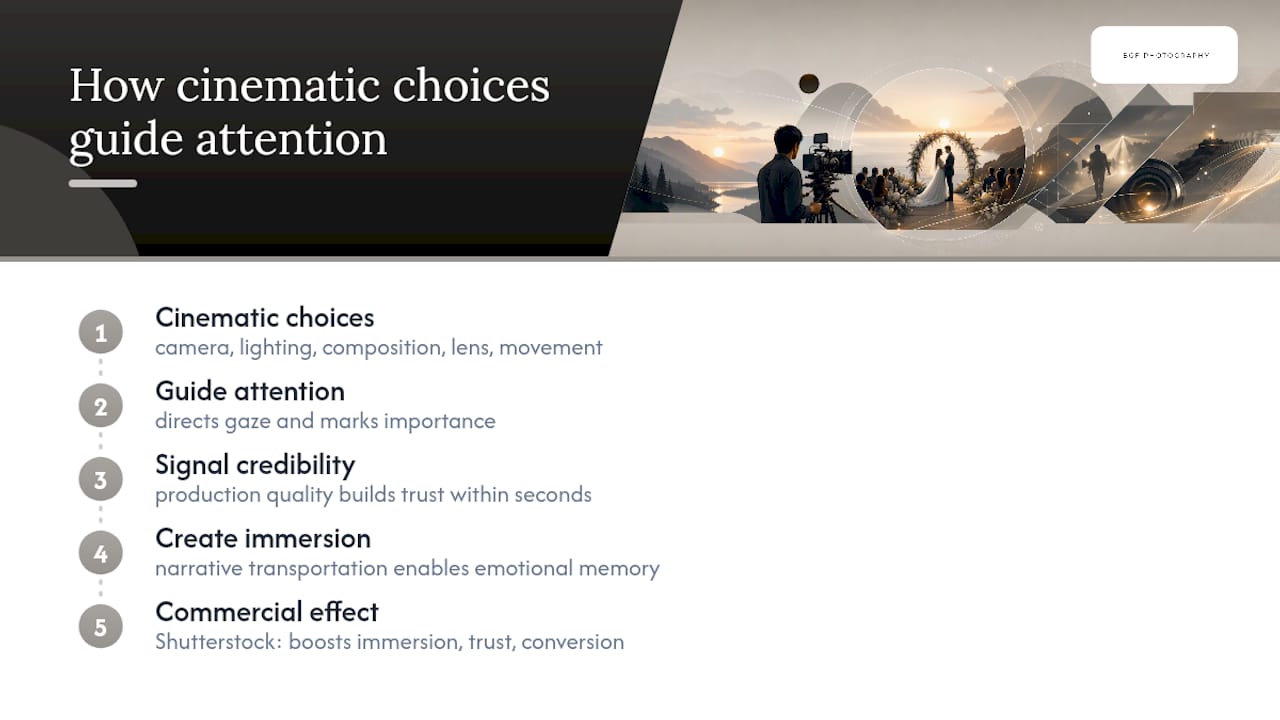
Cinematography is the craft of shaping a project's visual language through camera placement, lighting, composition, lens choice, and movement. Those choices do not just make video look prettier. They guide where the eye goes, what the brain encodes as important, and how much emotional weight a moment carries.
Perceived production quality maps directly to credibility. Viewers form trust judgments within seconds of a video starting, and a poorly lit, shaky, flat-color clip signals low investment before the message even lands. The reverse is also true: a well-composed frame with intentional light and a clean audio track reads as professional, which transfers to the brand, couple, or creator behind it.
Statistic: Shutterstock's research on cinematic footage found that premium cinematic footage improves viewer immersion and raises expectations for brand quality, strengthening perceived trust and improving conversion context for commercial uses.
Narrative transportation is the psychological mechanism at work. When visual choices are consistent and purposeful, viewers stop evaluating the video and start living inside the story. That state of immersion is where emotional memory forms, and it is why a well-made wedding film still produces tears on the tenth viewing while a shaky handheld clip fades from memory in a week.
How cinematic choices shape storytelling and viewer behavior
Cinematography techniques form a visual grammar that, when used intentionally, produces narrative transportation and stronger viewer immersion. Each technical choice is a lever that pulls a specific emotional response.
Lighting sets the emotional temperature before dialogue begins. Warm, soft light signals safety and intimacy. Hard, directional light creates tension or drama. A cinematographer choosing between a golden-hour backlight and a flat overcast exposure is not making an aesthetic call — they are writing the viewer's first emotional impression.
Composition and framing direct focus without the viewer noticing. A subject placed in the lower third of the frame with negative space above reads as vulnerable or reflective. A tight close-up on hands during a ceremony communicates nervous anticipation in a way a wide shot never could.
Lens choice and depth of field create or destroy intimacy. A wide-angle lens at close range distorts and distances; a longer focal length compresses the scene and pulls the subject forward, making the viewer feel physically closer. Shallow depth of field isolates the subject and blurs the world behind them, which is exactly the visual shorthand for "this moment matters."
Camera movement controls pacing and immersion. A slow push-in signals growing emotional intensity. A handheld follow shot creates urgency. Unmotivated movement — the camera moving just to move — breaks immersion and reminds the viewer they are watching a video.
Sound design is the most underestimated element. Music sets emotional valence before the first image registers. Ambient sound (the rustle of a dress, a crowd exhale before vows) grounds the viewer in the physical space and deepens the sense of presence.
Three scenarios where this plays out
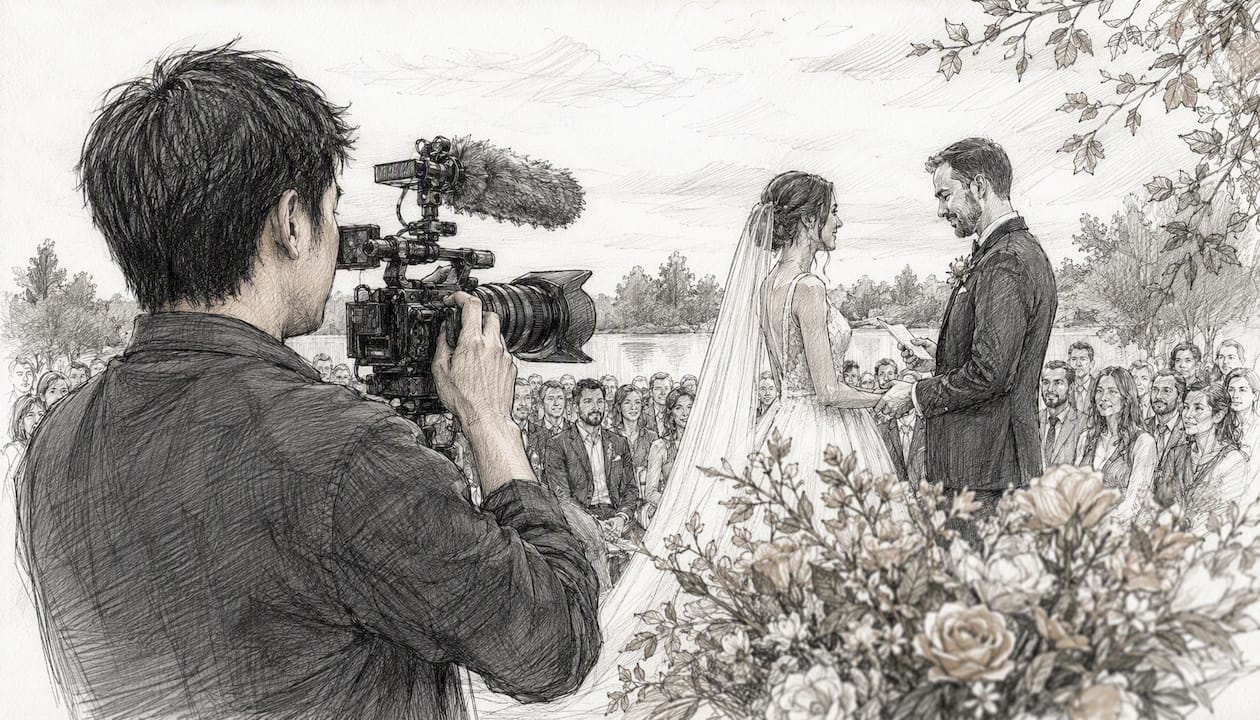
Wedding vows: A slow push-in on the partner listening, paired with ambient room tone and a soft piano swell, produces a completely different emotional experience than a static wide shot of the same moment. The viewer feels the weight of the words rather than just hearing them.
Product reveal: A tight macro shot pulling focus from blurred packaging to a sharp product face, lit with a single clean source and no ambient noise, communicates precision and quality. The same product shot on a phone under fluorescent light communicates the opposite.
30–60 second social hook: Short-form cinematic clips that engineer rapid emotional valence shifts within 30–90 seconds maximize retention on social platforms when structured around a clear emotional arc. The opening frame has to earn the next three seconds; cinematic choices do that work faster than any caption.
"Think of cinematography as a vocabulary: lighting, movement, lens choice, and color are words you use to write the emotion you want the viewer to feel." Pixflow, Cinematography Techniques and Visual Storytelling Guide
What cinematic elements and techniques actually produce the look?
The cinematic look is not one thing. It is a stack of deliberate choices that compound. Here are the core elements and what each one does:
- Lighting: Use motivated light sources (a window, a practical lamp, a bounce card) rather than flat on-camera fill. Three-point lighting builds dimension; single-source setups create mood.
- Lenses and depth of field: Fast primes (f/1.4–f/2.8) at longer focal lengths (50mm–85mm equivalent) produce the shallow depth of field that reads as cinematic. Zoom lenses are convenient but rarely match the rendering of a prime at the same aperture.
- Camera movement: Gimbals produce smooth, motivated movement. Sliders add controlled lateral motion. Handheld, when used intentionally, adds energy. The rule: every move should have a narrative reason.
- Composition: Apply the rule of thirds, leading lines, and foreground framing. Vary shot size deliberately — wide establishing shots, medium coverage, tight close-ups — so the edit has range to work with.
- Color grading: Warm grades (lifted shadows, orange-tinted midtones) increase viewer reports of intimacy and comfort; cool palettes increase perceived distance. Research cited in The Complete Guide to Cinematic Wedding Video references Valdez and Mehrabian's work on color-emotion associations, a finding that wedding filmmakers and brand directors use strategically.
- Sound design: Record clean audio on a dedicated microphone. Layer ambient sound under music. Never rely on camera-mounted audio for anything that matters.
- Frame rate and shutter: Shoot at 24fps for the most film-like motion cadence. Follow the 180-degree shutter rule (shutter speed = 2x frame rate) to get natural motion blur. Slow-motion inserts (60fps or 120fps) work as emotional punctuation, not as a default.
Pro Tip: Prioritize motivated movement over gear upgrades. A $200 gimbal used with intention produces more cinematic results than a $5,000 camera on a static tripod.
Documentary vs. cinematic: how the approach differs
| Element | Documentary approach | Cinematic approach |
|---|---|---|
| Lighting | Available light, minimal intervention | Motivated, shaped, and supplemented |
| Camera movement | Reactive, follows action | Intentional, narrative-driven |
| Depth of field | Deep, everything in focus | Shallow, subject isolation |
| Color grade | Neutral, true-to-life | Stylized to match emotional intent |
| Editing rhythm | Event-driven, chronological | Music-led, emotionally paced |
| Post-production time | Hours | Days |
What does cinematic videography deliver for marketing, weddings, and social media?
Marketing: brand trust and conversion context
Cinematic video functions as an emotional design system. When a brand defines the feeling it wants to deliver — confidence, warmth, aspiration — cinematic choices systematically build that feeling before the product is ever shown. The result is higher engagement, stronger rewatch intent, and a conversion context where the viewer already trusts the brand before they read a headline.
Concrete deliverable: a 60–90 second founder story video for a landing page, shot with a shallow-depth-of-field interview setup, warm grade, and ambient b-roll, consistently outperforms a talking-head clip shot on a laptop camera in time-on-page and click-through metrics.
- Highest-leverage techniques: shallow depth of field on interview subjects, warm color grade, clean lavalier audio, b-roll that shows rather than tells.
Weddings: emotional preservation and rewatchability
Cinematic wedding highlights rely on motivated camera movement, selective storytelling, and music-led editing, which increases rewatching and sharing. A 4–6 minute highlight film built around the emotional arc of the day — not a chronological record of it — is the deliverable couples return to for decades.
The distinction matters practically: a documentary edit shows what happened; a cinematic edit makes the viewer feel what it was like to be there. That difference is what drives couples to share the film with family and friends who were not at the wedding.
- Highest-leverage techniques: long-lens coverage of candid moments, music-first editing, warm grade for ceremony and reception, ambient sound layered under score.
For a deeper look at what this process involves, BGF Photography's guide to cinematic wedding videography walks through the approach in detail.
Social media: short-form immersion and watch-through rates
On social platforms, the first two seconds determine whether a viewer stays or scrolls. Cinematic choices — a striking composition, a color grade that pops against a feed of flat phone clips, a sound design that rewards headphones — create an immediate signal of quality that earns those extra seconds.
A 30–60 second social edit structured around a clear emotional arc (tension, release, payoff) performs better than a longer clip that meanders. Cinematic techniques compress emotional impact into a short window, which is exactly what social algorithms reward.
- Highest-leverage techniques: strong opening frame, fast-prime shallow depth of field, music-led pacing, color grade that reads well on mobile screens.
How do you integrate cinematic videography into a project?
Pre-production checklist
Good cinematic video is planned, not improvised. Before a shoot:
- Write a creative brief: define the feeling you want the viewer to have at the end.
- Build a shot list: include wide, medium, and close-up coverage for every key moment.
- Choose music early: for wedding films and social content, the edit follows the music, so selecting tracks before the shoot shapes what you capture.
- Brief talent or subjects: people who know what to expect move and speak more naturally on camera.
- Scout locations: identify light sources, potential noise problems, and background options.
- Confirm gear and backup: a second camera body and a spare audio recorder are not luxuries on a wedding day.
For guidance on briefing a creative team, how to communicate your vision to your wedding photographer applies equally well to videography.
Budget tiers
| Budget tier | Typical range | What it gets you |
|---|---|---|
| Low (DIY/smartphone) | $0 | Smartphone with cinematic mode, basic gimbal, clip-on mic, free editing software |
| Mid (prosumer) | $500 | Mirrorless camera, fast prime lens, gimbal, audio recorder, basic lighting, DaVinci Resolve |
| Professional | $3,000 | Cinema-grade camera, professional lenses, full lighting kit, dedicated audio, professional editor and colorist |
Timeline expectations
| Phase | Low budget | Mid budget | Professional |
|---|---|---|---|
| Pre-production | 1–2 days | 2–4 days | 1–2 weeks |
| Shoot day | Half day | 1 full day | 1–3 days |
| Post-production | 4 hours | 1–3 days | Several days to weeks |
| Delivery | Same week | 1–3 weeks | 4 weeks |
Cinematic edits take substantially longer than documentary cuts because editors typically choose music first and shape the entire edit to the score, as noted in The Complete Guide to Cinematic Wedding Video. Budget post-production time accordingly.
When to hire a pro vs. DIY
Hire a professional when the event is unrepeatable (a wedding, a product launch, a brand campaign), when the deliverable will live on a public-facing page for years, or when the gap between your current skill level and the desired output is wider than a few months of practice. DIY is a reasonable path for social content, internal communications, and projects where iteration is possible. For understanding what a videographer actually does on the day, that context helps clarify what you are paying for.
What gear and software do you actually need?
Smartphone tier
- Camera: iPhone 15 Pro or Samsung Galaxy S24 Ultra with cinematic mode, which simulates shallow depth of field by tracking subjects and blurring the background.
- Stabilization: DJI OM 6 or Insta360 Flow gimbal.
- Audio: Rode Wireless GO II clip-on mic.
- Editing: CapCut (free, mobile-first) or DaVinci Resolve (free desktop version).
Prosumer tier
- Camera: Sony ZV-E10 II, Fujifilm X-S20, or Canon EOS R50.
- Lenses: 35mm f/1.8 or 50mm f/1.8 prime for shallow depth of field.
- Stabilization: DJI RS 3 Mini gimbal; a basic slider for lateral moves.
- Lighting: Aputure Amaran 100x or a collapsible reflector for natural-light work.
- Audio: Rode VideoMicro II on-camera or Zoom H1n field recorder.
- Editing: DaVinci Resolve (free) for color grading; Adobe Premiere Pro for timeline editing.
Professional tier
- Camera: Sony FX3, Canon EOS C70, or Blackmagic Pocket Cinema Camera 6K.
- Lenses: Sigma Art or Zeiss prime set; anamorphic adapters for widescreen rendering.
- Stabilization: DJI RS 3 Pro or Tilta float system.
- Lighting: Aputure 300x or ARRI Skypanel S30 for controlled environments.
- Audio: Sound Devices MixPre-3 II with Sennheiser MKH 416 shotgun mic.
- Editing and grading: DaVinci Resolve Studio for full color science; Adobe Premiere Pro for complex multicam timelines.
Pro Tip: ND (neutral density) filters are the single most overlooked accessory at every budget tier. Without them, shooting at f/1.8 in daylight forces a shutter speed that kills natural motion blur and breaks the cinematic look entirely.
How do you measure whether cinematic upgrades actually work?
The impact of cinematic videography shows up in specific, trackable metrics. Watch these:
- View-through rate (VTR): The percentage of viewers who watch past a defined threshold (typically 50% or 75%). Cinematic pacing tends to hold viewers longer than static or poorly edited clips.
- Average watch time: Absolute seconds watched per view. A 90-second cinematic social clip with a 70-second average watch time outperforms a 3-minute talking-head video with a 40-second average.
- Retention at key timestamps: Most platforms show a retention graph. Look for drop-off points and correlate them with specific editing choices.
- Rewatch rate: Particularly relevant for wedding films and brand hero videos. High rewatch signals emotional resonance, not just passive consumption.
- Micro-conversions: Email sign-ups, link clicks, or saves/shares tied to a video view. These are often the clearest short-term signal that cinematic quality influenced behavior.
- Assisted conversions: In longer attribution windows, video views that precede a purchase or inquiry often show up as assisted conversions in Google Analytics 4 or Meta Ads Manager.
Measurement tip: Run an A/B test with the same core message delivered as a standard talking-head clip and as a cinematic edit. Track VTR, average watch time, and micro-conversions over a 30-day window. The gap between the two versions is your cinematic ROI signal.
For short-form social content, a 30-day window is usually sufficient to see engagement differences. For brand campaigns and wedding films, rewatch and sharing behavior often builds over 3–6 months as couples share with family or brands repurpose clips across channels.
What mistakes kill the cinematic look before it starts?
Avoiding these traps matters as much as applying the right techniques. For a deeper look at real-world errors, common videography mistakes at Rochester weddings covers several of these in a live-event context.
- Overemphasizing gear: The most common mistake. A $10,000 camera with bad lighting and no shot list produces worse results than a $1,500 mirrorless with a thoughtful plan. Story and light come first. Always.
- Over-editing: Lens flares on every cut, speed ramps every 10 seconds, and heavy vignettes signal effort, not craft. Restraint is cinematic; excess is not.
- Inconsistent color grading: Cutting between warm and cool grades within the same sequence without narrative reason breaks immersion. Establish a grade and hold it.
- Ignoring sound: A beautiful image with muddy audio reads as amateur. Viewers will forgive a slightly soft image before they forgive bad sound. Record clean audio on every shoot, no exceptions.
- Slow pacing with no narrative payoff: Slow motion and long takes are cinematic tools, not defaults. If a slow shot does not carry emotional weight, cut it. Pacing should serve the story, not the editor's preference for a particular shot.
The fix for all of these is the same: decide what you want the viewer to feel, then ask whether each choice serves that feeling. If it does not, cut it.
How BGF Photography approaches cinematic wedding films
A typical BGF Photography wedding engagement begins with a pre-production consultation where the couple shares their vision, preferred music direction, and the moments that matter most to them. That conversation shapes the shot list and the editorial approach before the wedding day arrives.
On the day, BGF Photography uses a hybrid photo/video approach, capturing both stills and motion from the same unobtrusive position. Long lenses allow coverage of candid moments without disrupting them. The camera stays at a distance during vows, first looks, and family moments so the couple never feels directed or watched.
Post-production follows a music-first editorial process. The score is selected before the edit begins, and the film is shaped around emotional peaks in the music rather than a chronological timeline. Color grading uses warm tones for ceremony and reception coverage to reinforce the intimacy of the day.
Client outcomes from this approach consistently include:
- High rewatch frequency, with couples and family members returning to the film repeatedly in the weeks after delivery.
- Organic sharing with extended family and friends who were not present at the wedding.
- Strong perceived value relative to the investment, driven by the emotional specificity of the edit rather than runtime alone.
BGF Photography also offers optional film photography coverage, which adds a nostalgic, grain-forward aesthetic to the still imagery that complements the cinematic video grade. For couples in Buffalo, Rochester, and the Finger Lakes region, local cinematic videography examples show what this approach looks like in practice.
The part most guides get wrong about cinematic video
Most articles about cinematic videography spend the majority of their words on gear. The lens recommendations, the camera comparisons, the lighting kit rundowns. That information is useful, but it misses the point in a way that costs people real money.
Cinematic video is an editorial discipline, not a production one. The gear gets you to a starting point. What happens in the edit, and more importantly what was decided before the shoot, determines whether the final film moves someone or just looks expensive.
The couples and brands that get the most from cinematic videography are the ones who invest time in the brief. They know what feeling they want the viewer to have at the end. They have thought about music. They have communicated what moments matter most. That clarity gives a skilled videographer something to work with that no amount of camera gear can substitute.
The other thing most guides understate: sound. A viewer will tolerate a slightly soft image. They will not tolerate bad audio. If you are allocating a budget and have to choose between a better camera and a better microphone, take the microphone every time.
BGF Photography: cinematic wedding films for Buffalo, Rochester, and the Finger Lakes
BGF Photography offers hybrid wedding coverage that combines candid photography and cinematic videography under one cohesive style, so couples get a consistent look across every deliverable without coordinating two separate creative teams.
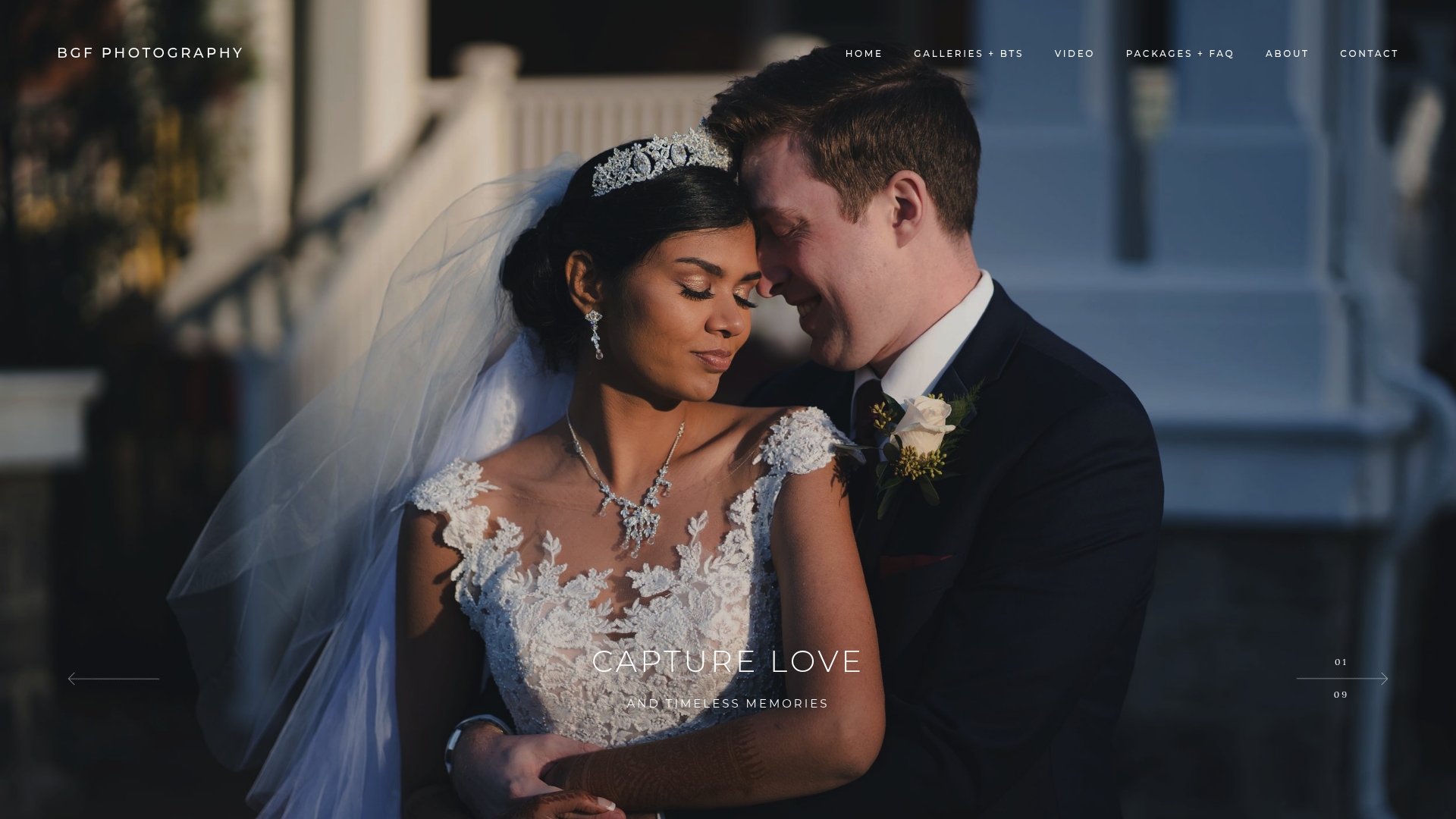
The videography approach is unobtrusive by design: long lenses, motivated movement, and a music-first editorial process that produces 4–6 minute highlight films built around emotional peaks rather than event timelines. Optional film photography coverage is available for couples who want a nostalgic, grain-forward complement to the cinematic video grade.
BGF Photography serves couples across Buffalo, Rochester, and the Finger Lakes region. To see packages and investment details, visit the packages and investment page. If you have questions before you are ready to book, that page also includes a contact form where you can ask about date availability and coverage options.
Sources
- Cinematography | Adobe
- Cinematography techniques and visual storytelling guide
- Cinematic Wedding Video: The Complete Guide
- Why Cinematic Video Transforms Your Brand Storytelling
- The Business Benefits of Premium Cinematic Footage - Shutterstock
- Intro to Cinematic mode video in Motion - Apple Support
FAQ
What are the main benefits of cinematic videography?
Cinematic videography increases viewer engagement, emotional retention, and perceived credibility by applying deliberate visual choices — lighting, composition, lens depth of field, camera movement, and color grading — to serve a defined emotional story rather than simply recording events.
What are the benefits of cinematic mode on a smartphone?
Cinematic mode simulates shallow depth of field by tracking subjects and blurring the background, making professional-looking subject isolation accessible without a dedicated camera or fast prime lens. It is a practical starting point for social content and low-budget projects.
What are the benefits of videography for a wedding?
Wedding videography preserves the emotional experience of the day in a way that photography alone cannot, capturing ambient sound, spoken vows, and the pacing of moments. A cinematic edit built around music and selective storytelling produces a film couples rewatch and share for years.
How long does a cinematic video take to produce?
A professional cinematic wedding highlight film typically takes several days to weeks in post-production because editors choose music first and shape the entire edit to the score. A short-form social cinematic clip at the prosumer level usually takes one to three days from shoot to delivery.
When should you hire a professional instead of going DIY?
Hire a professional when the event is unrepeatable, when the deliverable will live on a public-facing page for years, or when the skill gap between your current ability and the desired output is wider than a few months of focused practice can close.