

Documentary wedding photography means your photographer observes and captures the day as it actually happens, with minimal posing and no forced setups. It suits couples who want genuine reactions over stiff arrangements and who don't mind a handful of imperfect, real frames mixed in with the polished ones. Expect a short family photo session, a brief portrait block, and a request to review a full wedding gallery before you book.
TL;DR:
- A full day of documentary wedding photography typically yields between 400 and 800 images, depending on hours and editing style.
- Most couples book a hybrid approach with a short family photo session of 10 to 15 minutes and a 15 to 30-minute portrait block for relaxed photos.
- For comprehensive coverage, hiring a second shooter is recommended, with clarity on their hours and positioning during key moments.
- Pre-wedding preparation includes building a prioritized shot list for family formals and avoiding a fixed shot list for candid moments.
- To evaluate a photographer's documentary skill, review full galleries for consistency, sequence quality, emotional range, and diverse lighting conditions.
Table of Contents
- What Is Documentary Wedding Photography?
- Why Choose Documentary Coverage: The Benefits and the Tradeoffs
- What a Documentary Wedding Day Actually Looks Like
- How to Prepare and Communicate With a Documentary Photographer
- Evaluating Portfolios: What Actually Shows Documentary Skill
- BGF Photography: A Documentary Approach in Practice
- Why I Favor a Documentary-First Approach
- Book Documentary Coverage With BGF Photography
- Sources
- FAQ
What Is Documentary Wedding Photography?
Documentary wedding photography, also called photojournalistic or reportage wedding photography, focuses on capturing candid moments and authentic emotion as the day unfolds. There's no script. The photographer watches for the story, the small gestures, the unguarded looks between your grandmother and your new spouse, and builds a narrative out of hundreds of individual moments rather than a series of arranged poses.

The core job description reads more like reporting than directing. A documentary-style approach means the photographer stays alert to what's about to happen, not just what's already happening, which takes real anticipation and technical fluency in changing light.
You'll hear a few overlapping terms in portfolios and consultations:
- Photojournalistic: essentially interchangeable with documentary, borrowed from news photography.
- Reportage: a more European term for the same observational approach.
- Candid wedding photography: often used loosely for unposed shots, though it can also describe a single moment rather than a full-day philosophy.
- Editorial: a different animal entirely. It borrows fashion-shoot styling and deliberate composition, closer to traditional posed work than to documentary.
Traditional wedding photography leans on formal lineups and directed poses. Documentary work leans on patience and timing. Most working photographers today land somewhere between the two, which brings us to the actual tradeoffs.
Why Choose Documentary Coverage: The Benefits and the Tradeoffs
The upside is straightforward: you get genuine emotion instead of camera-aware smiles, images that hold up decades later because they weren't stylized to a trend, and far more time actually spent with your guests instead of standing in front of a backdrop.
The tradeoff is control. You won't get every single composition perfectly symmetrical, and a documentary photographer will sometimes keep a slightly imperfect frame because it tells the story better than a technically cleaner one would. That's the philosophy working as intended, not a flaw.
Benefits:
- Authentic, unscripted emotional moments
- Photos that age well because nothing about them is trend-dependent
- More time celebrating, less time posing
Tradeoffs:
- Less say over individual compositions
- A few "imperfect" frames kept intentionally for narrative value
- Requires more trust in the photographer's judgment
Almost nobody books pure, zero-direction documentary anymore. The practical market norm is a hybrid: mostly observational coverage, with a short, protected window carved out for portraits and family groupings. If a photographer promises pure fly-on-the-wall coverage with zero guidance at all, ask how they handle group shots and lighting setups, because someone still has to organize those.
What a Documentary Wedding Day Actually Looks Like
A realistic day-of schedule for documentary-style coverage runs something like this:
- Getting ready — candid coverage of both sides, no posing, just the actual chaos and calm of the morning.
- Ceremony — fully observational, positioned to catch reactions rather than staged looks.
- Family formals — a tight, prioritized 10 to 15 minutes, moving fast through a pre-agreed list.
- Golden-hour portrait block — 15 to 30 minutes set aside for relaxed, semi-guided portraits of the couple.
- Cocktail hour through dancing — back to fully documentary coverage: toasts, first dances, the moment someone's uncle starts the electric slide.
That 10 to 15 minute window for family formals isn't arbitrary. Documentary-focused photographers typically request a short, prioritized shot list and move through it efficiently, in contrast to traditional coverage that might work through 30 to 40 formal combinations. The portrait block runs longer, 15 to 30 minutes, because it's meant to feel unhurried even though it's technically directed.
For full-day coverage, a second shooter is worth the extra line item. One photographer can't be in the ceremony aisle catching the groom's face and simultaneously catching the bride's father wiping his eyes in the back row. A second shooter doubles the narrative depth by covering the reactive moments the lead photographer physically cannot reach.
Pro Tip: Ask your photographer directly how many hours of coverage come with a second shooter included, and at what point in the day they position them. If the answer is vague, that's worth pressing on before you sign anything.

How to Prepare and Communicate With a Documentary Photographer
Preparation for this style looks different than prepping for a fully posed shoot. You're not building a shot-by-shot storyboard. You're removing obstacles so the natural moments can actually happen.
Start with the interview. Ask to see a full gallery from one wedding, not just a highlight reel, and ask what their backup plan looks like if a second shooter gets sick or gear fails.
- Build a short, prioritized family photo list of 10 to 15 groupings, ranked by importance in case time runs short.
- Don't hand over a shot list for candid moments; that defeats the point. Instead, flag people or relationships you especially want captured (a grandparent, an old friend flying in).
- Build buffer time into your timeline. Adding 20 to 30 minutes of slack at transitions like ceremony-to-cocktail-hour gives room for the unrepeatable in-between moments.
- Pick a venue and ceremony time with natural light in mind. Documentary photographers rely heavily on available light rather than heavy strobe setups.
Interestingly, pure hands-off observation isn't always the best move. Many experienced photographers use subtle, expert-led prompts, something as simple as "walk over there and tell each other a secret," to produce a more natural reaction than standing back and hoping something happens on its own.
Evaluating Portfolios: What Actually Shows Documentary Skill
Highlight reels are curated by definition. Every photographer's best-of gallery looks good. The real test is asking to see one complete wedding gallery start to finish, morning prep through last dance, so you can judge consistency instead of cherry-picked wins.
Look for a few specific signs:
- Sequence quality, not just standout frames. Image runs that show build-up, climax, and reaction reveal far more skill than one great isolated shot.
- Range across mixed lighting, dim reception halls, harsh midday sun, backlit doorways.
- Emotional range beyond the couple, parents, wedding party, even distant relatives caught genuinely reacting.
- Consistent editing style across the entire gallery, not a noticeably different look in the "documentary" section versus the posed portraits.
Two red flags matter most. First, a "documentary" gallery padded with obviously staged shots dressed up as candid ones. Second, a suspiciously low image count for a full day of coverage. Full-day documentary work typically produces 400 to 800 edited images depending on hours booked and editing style. If a photographer quotes significantly fewer images for extensive coverage, it is reasonable to inquire about the cause.
BGF Photography: A Documentary Approach in Practice
BGF Photography works from the same philosophy this article has been laying out: candid, unobtrusive coverage that captures real reactions instead of manufactured ones, paired with hybrid photo and video services so couples can book both under one cohesive vision. Couples can also add film photography for a nostalgic, textured look that stands apart from typical digital-only coverage.
What shows up in a BGF Photography gallery is the same thing you should look for anywhere: a story that holds together from morning prep through the last dance, not just a handful of polished standout frames.
- Candid, hybrid photo and video coverage under one team and one visual style
- Optional film photography for a nostalgic aesthetic
- Full-day event documentation across the region
- Client testimonials reflecting the same unobtrusive, story-driven approach described throughout this guide
| What to request | Why it matters |
|---|---|
| A full gallery from one wedding | Confirms consistency, not just curated highlights |
| Sample day-of timeline | Shows how family formals and portrait blocks are actually scheduled |
| Second shooter details | Confirms coverage depth for reactive, full-day moments |
| Image count expectations | Sets realistic expectations for final deliverables |
Why I Favor a Documentary-First Approach
Balancing invisibility with actual craft is the hardest part of this job. You have to read the light, anticipate the next thirty seconds, and step back enough that people forget you're there, while still nudging things gently when a moment needs a little help to happen. Couples consistently respond better to galleries that read like a story than to a stack of technically perfect but emotionally flat poses. That's not a trend. It's just what people actually want to look back on ten years later. If you're evaluating photographers right now, ask to see full galleries before you decide anything else.
— Billy
Book Documentary Coverage With BGF Photography
BGF Photography offers candid, story-driven coverage without gambling on a photographer whose "documentary" claim only holds up in a curated highlight reel. Because photography and videography come from one team working under one shared vision, this avoids mismatched styles and duplicated coordination that come from booking two separate vendors, and offers the option to add nostalgic film photography for a look that doesn't show up in most digital-only portfolios.
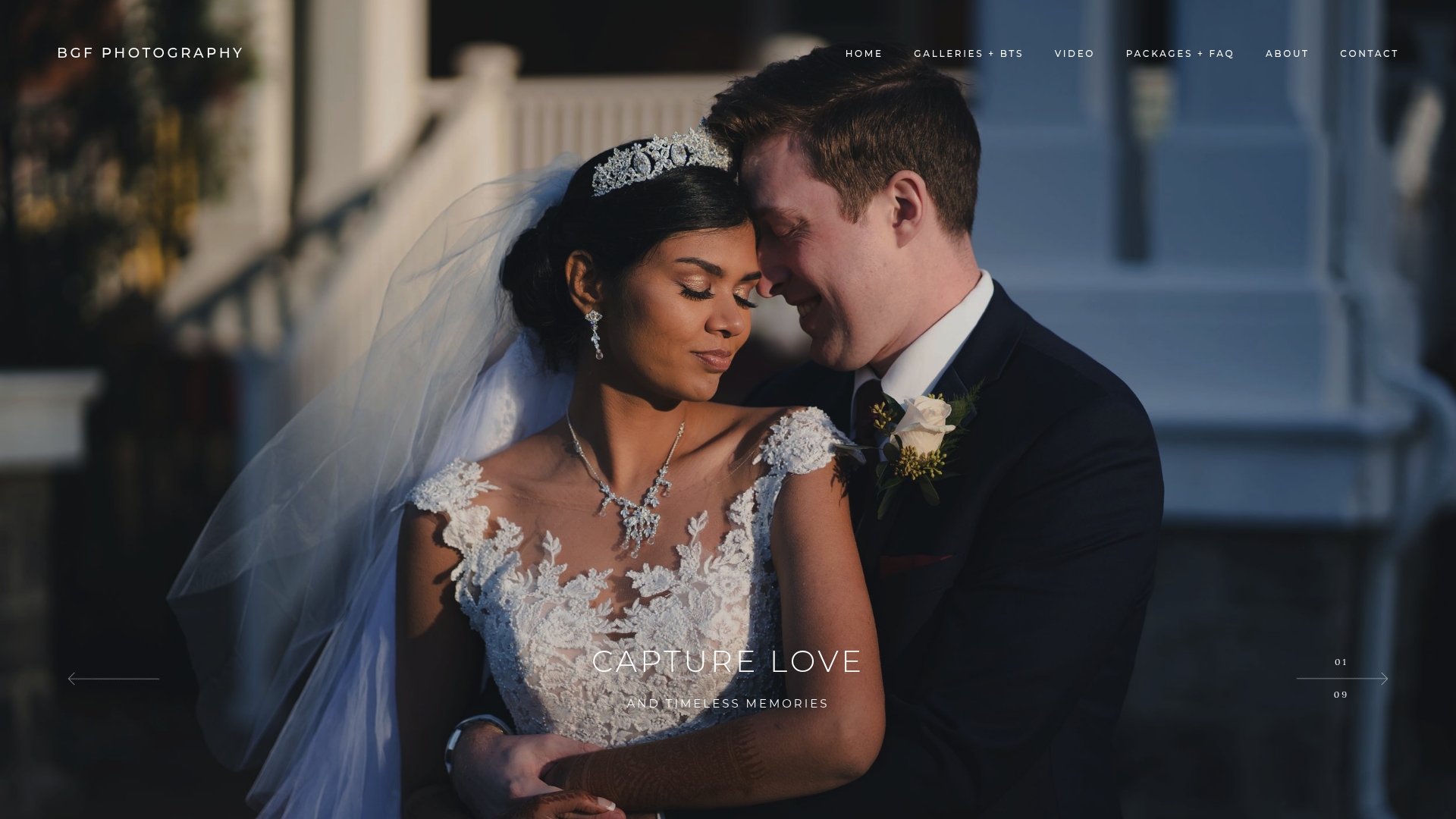
If the timeline advice, second-shooter guidance, and gallery-evaluation tips in this article resonated with how you want your day documented, the next step is simple: check package details and pricing for your date and ask to see a full wedding gallery before you commit to anyone.
Sources
- Documentary photography guide — Zola
- Documentary Wedding Photography: Essential Guide — Shotkit
- Documentary style wedding photography guide — TWA
FAQ
What Is Documentary Wedding Photography?
It's a candid, story-first approach where the photographer observes and captures the day as it happens, using minimal posing and directing only when a moment needs a gentle nudge.
How Long Do Family Formals Take With a Documentary Photographer?
A prioritized shot list of 10 to 15 groupings typically takes 10 to 15 minutes when the list is built ahead of time.
Do I Need a Second Shooter for Documentary Coverage?
Yes, for full-day coverage a second shooter is recommended because it lets one photographer cover the main narrative while the other catches reactive moments elsewhere in the venue.
How Many Photos Should I Expect From a Full Day of Documentary Coverage?
Full-day documentary coverage typically delivers between 400 and 800 edited images, depending on hours booked and editing style.
How Is Documentary Photography Different From Traditional Wedding Photography?
Traditional photography relies on formal poses and extensive group combinations, while documentary photography prioritizes candid, unscripted moments with a much shorter formal-photo window, often blended with a brief portrait block for balance.
Does BGF Photography Offer Documentary-Style Coverage?
Yes, BGF Photography specializes in candid, unobtrusive photo and video coverage, with optional film photography, for couples in the Buffalo, Rochester, and Finger Lakes areas.