
Nontraditional venues give couples greater personalization, a more memorable atmosphere, real vendor flexibility, and distinctive photography, with trade offs in logistics and potential extra rental costs. A barn, a rooftop, a family backyard, or a gallery space carries its own character before a single decoration goes up, which means the space itself does storytelling work that a hotel ballroom simply can't.
Part of this shift is cultural. Pew Research found that a significant portion of U.S. adults identified as religiously unaffiliated as of recent years, and that shift has opened the door to more secular, personalized ceremony formats that do not require a church or chapel setting. Pair that with The Knot's planning data on how couples budget today, and BGF Photography sees the pattern play out constantly in Buffalo, Rochester, and the Finger Lakes: couples want a place that already looks like them.
The core benefits break down like this:
- Personalization: the venue reflects your story instead of a generic banquet hall template
- Memorable atmosphere: guests remember a converted warehouse or lakeside dock long after a standard ballroom fades
- Vendor flexibility: no in-house preferred-vendor list forcing you into someone else's catering or photography contract
- Photography payoff: raw textures, natural light, and candid moments that don't need heavy staging
- Intimacy: smaller, unconventional spaces often suit tighter guest lists better than a venue built for 300
The trade-off: nontraditional venues rarely come with built-in staff, tables, chairs, or restrooms, so budget for rentals, permits, and a coordinator who can run the day without a venue manager's help.
Key Takeaways
Nontraditional wedding venues succeed when couples pair the space's built-in character with careful logistics planning and a coordinator who can run the day without on-site staff.
| Point | Details |
|---|---|
| Personalization drives the appeal | A venue with existing character reduces decor needs and makes the space part of your story. |
| Budget for hidden costs | Rentals, permits, restrooms, and staffing can offset any savings from a lower base venue fee. |
| Vendor freedom is real | Nontraditional sites rarely enforce in-house vendor lists, letting you hire who actually fits your vision. |
| Hire a day-of coordinator | Venues without dedicated staff need someone managing setup, timeline, and vendor coordination. |
| Photography benefits from authentic settings | BGF Photography's candid, hybrid approach and optional film coverage are built for the natural light and texture unique venues provide. |
Table of Contents
- Nontraditional Wedding Venue Benefits That Shape a More Personal Day
- Cost Realities and Vendor Flexibility: Where You Save and Where Costs Hide
- Your Planning Checklist for a Nontraditional Wedding Venue
- Creative Venue Ideas and When to Choose Each One
- How to Evaluate and Pick the Right Nontraditional Venue
- How BGF Photography Approaches Nontraditional Venues
- Environmental and Sustainability Benefits of Nontraditional Venues
- Potential Challenges and Drawbacks to Weigh Before You Book
- Guest Capacity and Facilities: Nontraditional Versus Traditional Venues
- A Photographer's Note on What Actually Matters
- Book Photography Built for Your Nontraditional Venue
- Sources
- FAQ
Nontraditional Wedding Venue Benefits That Shape a More Personal Day
The biggest advantage isn't cost or convenience. It's that the venue becomes part of the narrative instead of a neutral backdrop. A converted dairy barn, a family orchard, or a downtown loft already has texture, history, and mood built in, so you spend less energy manufacturing atmosphere with rented drapery and more energy making the day feel like yours.
Industry observers describe unique spaces as active participants in a couple's story rather than passive containers for a reception, and that framing matters because it changes how you plan. Instead of asking "how do we decorate this blank room," you start asking "how do we let this space do the talking." A greenhouse wedding needs almost no floral installation because the greenery is already there. A historic home with original woodwork needs a lighting plan, not a backdrop.
Guest experience shifts too. Arrival becomes part of the show: walking into a reclaimed warehouse with exposed brick, or down a gravel path to a vineyard tasting room, creates a moment of anticipation a hotel lobby never will. Guests who might scroll their phones during a standard cocktail hour tend to explore, take photos, and engage with an environment that feels distinctive.
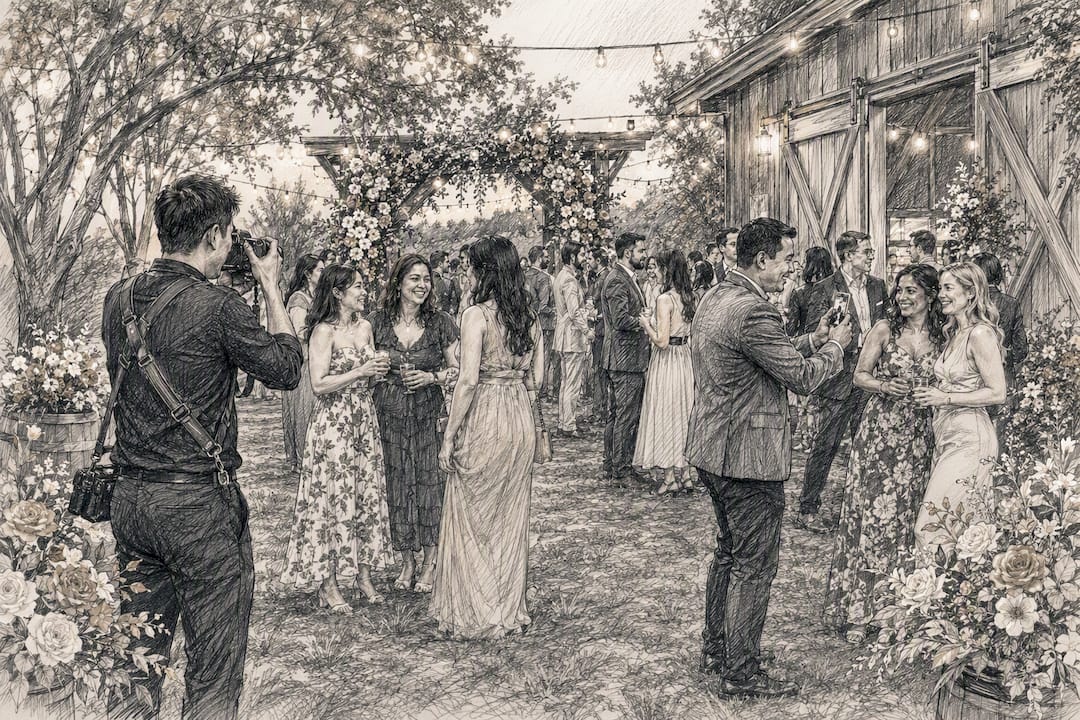
For photography, this is where things get genuinely interesting. Uneven, character-rich light (skylights in a gallery, string lights in a barn rafters, golden hour bouncing off a lake) gives a documentary-style photographer far more to work with than a beige function room lit by fluorescent panels. BGF Photography's approach leans on candid, unobtrusive coverage, and nontraditional venues are where that style shines brightest, because genuine reactions happen more naturally in a space that already feels personal rather than corporate. Readers can see how venue character drives storytelling in these examples of storytelling wedding photos.
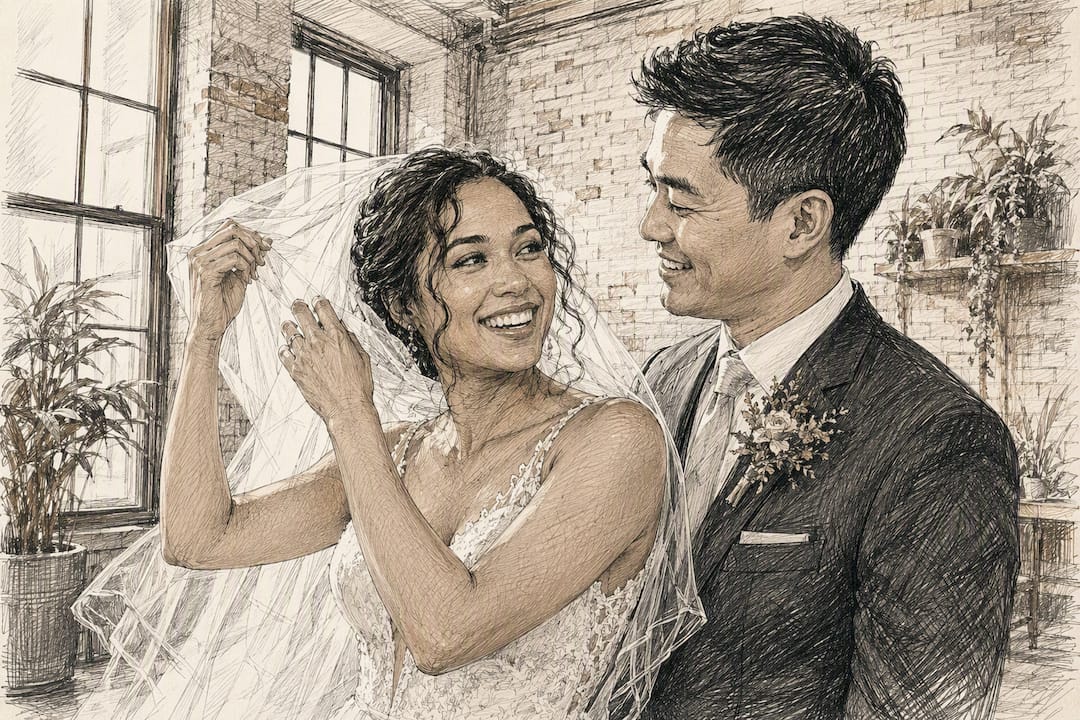
Consider a couple who married in a family friend's restored 1920s farmhouse instead of a hotel. The peeling paint, the wraparound porch, and the overgrown apple trees became recurring visual motifs across the whole gallery, tying formal portraits, candid reception shots, and detail photos into one coherent visual story. No hotel ballroom offers that kind of built-in continuity.
Pro Tip: Walk the venue at the exact time of day your ceremony will happen, not just whenever the site visit is scheduled. Light changes drastically between a 2 p.m. site tour and a 5:30 p.m. ceremony, and that difference determines whether your photos glow or go flat.
Cost Realities and Vendor Flexibility: Where You Save and Where Costs Hide
Roughly 6 in 10 engaged couples say the economy affected their wedding planning, and that pressure pushes many toward venues that look cheaper on paper. Whether a nontraditional space actually saves money depends entirely on what the rental fee includes and what you have to bring in yourself.
Trade coverage of the shift toward barns, historic homes, and public parks shows just how wide the range runs: some site rentals land at a few hundred to a few thousand dollars, while fuller all-inclusive packages at other nontraditional properties run substantially higher, according to reporting on the rise of nontraditional venues. A bare lot or empty barn at the low end usually means you're supplying everything; a converted event space at the high end may already include tables, chairs, and a coordinator.
That gap is where hidden costs creep in. Before you sign anything, budget for:
- Table, chair, linen, and tent rentals if the space is truly empty
- Portable restrooms for any site without plumbing
- Generators or additional power for lighting, bands, and catering equipment
- Extra staffing (setup crews, cleanup crews, parking attendants)
- Municipal permits for parks, beaches, or public land
- Post-event cleaning fees, sometimes with a security deposit attached
The average couple spends around $1,800 on event rentals alone, a useful ballpark when a bare-bones venue price looks tempting until you start adding furniture back in.
The upside balances the ledger. The Knot's data notes that nontraditional venues rarely enforce restrictive in-house vendor lists the way hotels and country clubs often do. That freedom lets you hire the caterer, florist, and photographer who actually match your vision and your price point, rather than choosing from a short list that pads the venue's margins. When negotiating, ask directly whether the quoted price includes setup, breakdown, and a contingency for weather. Vague answers on any of those three usually mean a surprise invoice later.
Your Planning Checklist for a Nontraditional Wedding Venue
Booking a barn or a park pavilion means you're taking on jobs a hotel banquet team would normally handle. Work through this checklist before you sign a contract:
- Confirm guest capacity in writing. A "cozy for 150" claim from an owner means nothing without a fire-code capacity number.
- Ask about insurance. Many nontraditional sites require you to carry event liability insurance, and some require the venue to hold its own policy naming you as an additional insured.
- Check permit requirements early. Public parks, beaches, and some historic sites require municipal permits, and timelines vary by town, sometimes taking several weeks to process, so start that paperwork the moment you book the date.
- Map restroom needs. If there's no plumbing, you're renting portable units, and higher-end trailer units cost more than couples expect.
- Plan electricity and sound. Bands, DJs, string lights, and catering equipment all draw power a barn or field may not have without a generator.
- Verify ADA access. Gravel paths, stairs, and uneven lawns can strand guests with mobility limitations unless you plan alternate routes or surfaces.
- Build a weather contingency. Outdoor and semi-outdoor venues need a tent, indoor backup space, or both, decided in advance, not the week of.
Responsibility for each item splits differently depending on the venue. A working barn owner might handle the land and parking but expect you to source everything else. A rental home might restrict noise after a certain hour due to neighbor agreements. Get every responsibility spelled out in the contract rather than assumed in conversation.
Because most nontraditional venues don't have staff running the event, experts strongly recommend following this detailed planning guide from an LGBT wedding photographer who emphasizes inclusive planning and practical venue considerations specifically for such unique sites. A coordinator catches the small failures (a generator that trips, a delivery truck that's late) before they cascade into bigger ones.
Pro Tip: Get every logistical promise, from included tables to who handles trash removal, in writing inside the venue contract. A verbal "don't worry about it" from an owner means nothing when your wedding is six weeks away and the porta-johns haven't shown up.
Creative Venue Ideas and When to Choose Each One
Every nontraditional venue category comes with its own scale, mood, and hidden requirements. Here's how the most popular options actually stack up.
Backyard weddings work best for intimate gatherings of 30 to 100 guests and offer maximum personalization since it's literally your family's land. Watch for neighborhood noise ordinances and whether your homeowner's insurance covers a large gathering.
Rental homes and estates suit 50 to 150 guests and often come furnished, which cuts rental costs significantly. Many enforce strict noise curfews and guest-count caps tied to septic system limits, so ask before falling in love with the listing photos.
A barn or working farm handles 100 to 250 guests comfortably and delivers instant rustic character with minimal decor investment. Expect dirt or gravel flooring, limited climate control, and possible livestock smells depending on the season.
Vineyards fit 75 to 200 guests and pair naturally with an outdoor ceremony and covered reception space. Harvest season (typically September through October) often carries premium pricing and limited date availability.
Art galleries work beautifully for 50 to 150 guests who want a modern, minimalist aesthetic where the art itself becomes decor. Many require you to work around existing exhibitions and prohibit anything that could damage artwork, including confetti or open flames.
Warehouses and industrial lofts flex from 75 to 300 guests and offer a blank, moody canvas of exposed brick and steel beams. Acoustics can be harsh, so budget for sound treatment if you're hosting a band or DJ.
Rooftops suit 50 to 150 guests and deliver skyline views no ballroom can match. Weight limits, elevator capacity for guests with mobility needs, and strict weather backup plans are non-negotiable here.
Public parks accommodate 30 to 200 guests depending on the site and almost always require a municipal permit, sometimes booked a year ahead in popular locations.
Museums and libraries fit 50 to 200 guests and bring built-in grandeur without heavy decorating. Expect restrictions on food near collections and firm end times tied to security staffing.
Boats and harbor venues typically cap at 50 to 150 guests due to vessel capacity limits and deliver a genuinely unforgettable arrival and departure. Weather cancellation policies deserve close reading before you book.
Historic homes work for 50 to 175 guests and offer architectural detail that photographs beautifully without staging. Many restrict where candles or open flames can be used given older wiring and materials.
Treehouse and glamping venues suit smaller, 20 to 80 guest weddings for couples prioritizing atmosphere over scale, and they usually come with the fewest built-in amenities of any category, meaning the highest rental burden per guest.
How to Evaluate and Pick the Right Nontraditional Venue
Choosing among these options gets easier with a simple framework: rank each finalist against your three real constraints, budget, guest experience, and logistics complexity, on a scale of 1 to 5. A gorgeous rooftop that scores a 5 on guest experience but a 1 on logistics (no elevator, no weather backup, strict noise curfew) might lose to a barn that scores 4 across all three.
Before you sign, ask every venue owner or manager these questions directly:
- Does the rental fee include tables, chairs, and linens, or are those separate?
- What insurance do you require, and do you carry your own liability policy?
- What's the backup plan if it rains or the power goes out?
- Are there local noise ordinances, curfews, or permit requirements tied to this address?
- Is there a preferred vendor list, or can we hire anyone we choose?
Watch for these red flags during the process:
- No written rules on noise, timing, or guest count, only verbal assurances
- A timeline that sounds unrealistic for setup and breakdown (a few hours to transform an empty barn is rarely enough)
- Reluctance or refusal to confirm insurance requirements in writing
- Pressure to book without a site visit at your actual ceremony time
How BGF Photography Approaches Nontraditional Venues
Photographing a barn, a rooftop, or a family backyard takes different prep than a hotel ballroom. BGF Photography scouts each site at the time of day the ceremony will actually happen, checks drone feasibility for aerial shots where local rules allow, and plans for natural light instead of fighting it with heavy flash.
Requests that consistently improve results:
- Early access for a light check before guests arrive
- A private ten-minute photo window right after the ceremony
- A heads-up on any venue restrictions affecting camera angles or drone use
A short private window right after the ceremony, before the receiving line and cocktail hour pull everyone's attention, is often the single easiest way to guarantee a handful of genuinely candid, unposed portraits.
See more approaches to unposed portrait alternatives that work especially well in unconventional spaces.
Environmental and Sustainability Benefits of Nontraditional Venues
Choosing a nontraditional venue often means choosing a space that already exists rather than one built solely for events. A barn, a historic home, or a warehouse gets reused rather than left vacant, and that adaptive reuse carries a lower environmental footprint than constructing or maintaining a single-purpose event hall that sits empty most of the year.
Outdoor venues cut decor waste dramatically. A vineyard or a forest clearing needs little beyond what's already growing there, which means fewer trucked-in floral installations, less single-use decor destined for a dumpster, and less packaging waste overall. Couples marrying in a family backyard or an existing farm structure also tend to source food locally more often, since farm-to-table catering pairs naturally with a rural or agricultural setting.
Smaller guest counts, common at many nontraditional venues, reduce the resource footprint of catering, transportation, and rentals proportionally. A 60-person backyard wedding simply consumes less than a 250-person ballroom reception, from food waste to parking lot emissions.
None of this makes a nontraditional wedding automatically "green." Generators, extra rental deliveries, and long-distance guest travel can offset the gains. But choosing a venue that already exists, sourcing locally where the setting allows, and keeping the guest list intentional gives couples a meaningfully lighter footprint than the default hotel-ballroom-and-fresh-flowers approach.
Potential Challenges and Drawbacks to Weigh Before You Book
Weather dependency tops the list for any outdoor or semi-outdoor nontraditional venue. A vineyard, park, or backyard wedding needs a real contingency plan, not a hopeful glance at the forecast, and that usually means renting a tent or securing an indoor backup space well in advance.
Accessibility is the second major concern. Gravel paths, uneven lawns, narrow barn doors, and buildings without elevators can genuinely exclude guests with mobility limitations unless you plan alternate routes or surfaces ahead of time. This isn't a minor detail; it affects whether grandparents or guests using wheelchairs can fully participate.
Limited amenities create a steady drip of smaller headaches: no built-in climate control, no on-site kitchen for catering, spotty cell service for vendors coordinating logistics, or restrooms that need renting rather than existing. Each gap adds a line item to your budget and a task to your checklist.
Noise ordinances and neighbor relationships matter more than couples expect, especially for backyard and rental-home weddings. A curfew you didn't know existed can end your reception early if you haven't confirmed it in writing.
Finally, without dedicated venue staff, someone has to run the day: setup crews, timeline management, vendor coordination. That's exactly why a day-of coordinator earns its cost at these venues far more than at a full-service hotel.
Guest Capacity and Facilities: Nontraditional Versus Traditional Venues
Traditional venues (hotels, banquet halls, country clubs) are built around consistency: known capacity limits, in-house catering kitchens, climate control, and staff who run the event from load-in to last call. That consistency is genuinely valuable for large guest lists, typically 200 and up, where infrastructure matters more than atmosphere.
Nontraditional venues trade some of that infrastructure for character and flexibility, and capacity varies enormously by category. A backyard tops out around 100 guests comfortably; a warehouse or industrial loft can flex up to 300; a boat or historic home usually caps lower, often 150 to 175, due to structural or vessel limits. There's no single answer, the way there often is with a hotel ballroom's published capacity chart.
Facilities differ just as much. A hotel ballroom typically includes climate control, an on-site kitchen, restrooms, and often a built-in AV system. A barn or park pavilion typically includes none of that, which is why the rental and logistics checklist earlier in this piece matters so much. The couple choosing a converted warehouse gets more visual character and vendor freedom; the couple choosing a hotel gets more built-in convenience and predictable capacity. Neither is wrong. It's a genuine trade-off between infrastructure and atmosphere, and knowing which one you're prioritizing makes every other decision easier.
A Photographer's Note on What Actually Matters
After documenting weddings across barns, backyards, and reclaimed industrial spaces, one thing stands out: the venue matters less than what it lets happen naturally. A rustic barn or a quiet orchard tends to relax people faster than a formal ballroom, and that relaxation is where the real, unposed moments come from. Readers can see that play out in these authentic wedding moments captured across very different settings.
Book Photography Built for Your Nontraditional Venue
Barns, rooftops, backyards, and warehouses all photograph differently than a hotel ballroom, and that's exactly the territory BGF Photography works in every season. The documentary, unobtrusive approach pairs naturally with unconventional spaces because it captures what's actually happening rather than staging what should happen, and hybrid photo and video coverage means you're not managing two separate vendors with two separate visions for your day.
For couples who want a nostalgic edge, the option to add film photography gives your gallery a texture that digital alone can't replicate, especially in venues with strong natural light like vineyards, orchards, and sunlit lofts. BGF Photography also scouts nontraditional sites ahead of the wedding day to plan light windows, private photo time, and drone shots where local rules allow, so nothing gets improvised on the day itself.
Ready to see how this works for your venue? Review Packages and FAQ to explore coverage options and book a consultation for your date in Buffalo, Rochester, or the Finger Lakes.
Sources
- Religious 'Nones' in America: who they are and what they believe — Pew Research
- Weddings in 2024 — The Knot
- Love don't cost a thing? Behind the rise of nontraditional wedding venues — Stacker
FAQ
What Is the 50/20/30 Rule for Weddings?
Nontraditional venues often shift that split since more of the "venue" money goes toward rentals instead of a facility fee.
Who Does the Bride Sleep With the Night Before the Wedding?
This is simply a tradition, not a rule. Many couples today spend the night before together, especially at rental homes or venues that include on-site lodging, while others keep the classic separate-rooms tradition for sentimental reasons.
What Is the Rarest Month to Get Married?
January and February are traditionally the least popular wedding months in most of the U.S. due to colder weather, though nontraditional indoor venues like galleries, warehouses, and historic homes make winter weddings far more viable than an outdoor-dependent venue would.
What Are Some Creative Ideas for a Nontraditional Ceremony?
Popular options include vow exchanges in a vineyard row instead of at a formal altar, ceremonies held during golden hour on a rooftop, unity rituals tied to a family property's history, and first-look sessions timed around a venue's best natural light rather than a fixed church schedule.
Does Choosing a Nontraditional Venue Affect Photography Style?
Yes. Textured, character-rich spaces like barns, galleries, and historic homes give documentary-style photographers like BGF Photography more natural light and genuine backdrop to work with, which typically results in more candid, less staged imagery compared to a uniform ballroom setting.