
An unplugged ceremony is a wedding ceremony where the couple asks guests to silence and put away phones, tablets, and cameras for the duration of the event. The single most important step you can take right now: start communicating that request across multiple channels, from your wedding website to the officiant's opening words. Resources like The Knot, Offbeat Wed, and BGF Photography all point to the same conclusion: the couples who pull this off successfully are the ones who communicate early, warmly, and often.
Key Takeaways
A multi-layered communication strategy, anchored by an officiant announcement before the processional, is the most reliable way to run an unplugged ceremony that guests actually respect.
| Point | Details |
|---|---|
| Start communicating early | Use your wedding website, invitations, program, signage, and officiant script across every channel. |
| Officiant announcement is highest-impact | A brief script before the processional increases compliance more than signage alone. |
| Aim for high compliance, not perfection | Reducing device usage significantly still delivers cleaner photos and more present guests. |
| Compromises are valid | Entrance-only or vows-only unplugged protects key moments without full enforcement effort. |
| BGF Photography coordinates the plan | BGF Photography advises on scripts, placement, and delivery so the unplugged request pays off in the final gallery. |
Table of Contents
- What is an unplugged ceremony and why do couples choose it?
- Pros and cons: what you gain and what you risk
- How to tell guests: multi-layered communication and exact wording templates
- Sign ideas, placement, and phone check-in station options
- How to enforce it on the wedding day and handle resistant guests
- What photographers actually need from an unplugged ceremony
- Alternatives and compromises if full unplugged feels too strict
- What I've seen from behind the lens
- BGF Photography supports your unplugged ceremony from planning to delivery
- Sources
- FAQ
What is an unplugged ceremony and why do couples choose it?
At its core, a phone-free wedding ceremony is a request, not a rule enforced by law. You're asking guests to be present with you rather than behind a screen. The Knot describes it as asking guests to put down devices so the couple and their hired professionals can capture the day without interference, while guests stay emotionally present.
The scope varies. Some couples go fully unplugged from processional to recessional. Others ask guests to stay device-free only during the vows, or only while the wedding party walks in. A few extend the request to cocktail hour or the full reception, though that's less common and harder to enforce.
Couples choose an unplugged ceremony for a handful of concrete reasons:
- Photography quality. Guest phones in the aisle block sightlines, create distracting screen glare, and pull faces away from the moment.
- Genuine presence. Guests who aren't filming tend to react more naturally, laugh louder, and cry more openly.
- Privacy control. Some couples don't want unedited photos circulating on social media before they've seen their own gallery.
- Avoiding early posts. A guest's blurry iPhone shot posted before the professional images are delivered can undercut the reveal couples have been waiting months for.
Pros and cons: what you gain and what you risk
The case for going unplugged:
- Photographers capture unobstructed, emotionally rich images because guests are looking at the couple, not a screen. Windswept Photo Design notes that guests who aren't filming react naturally, which directly improves the emotional quality of the final gallery.
- Guests report feeling relieved when given explicit permission to put their phones away. It removes the social pressure to document the moment themselves.
- You control when images go public, which matters if you're planning a magazine submission or a coordinated social reveal.
- The ceremony feels quieter and more intimate without the glow of screens.
The real downsides:
- Some guests, particularly older relatives or those with cultural traditions around documentation, may feel restricted or confused.
- Enforcement takes effort. Someone has to be responsible for reminders, and that creates a small logistical layer on an already busy day.
- Partial compliance is realistic. Experienced photographers advise aiming for high compliance, not perfection. Reducing device usage significantly still delivers the main benefits.
- If you have guests who need to stay reachable for urgent reasons (a parent of a young child, a caregiver), a strict unplugged policy needs a clear exception plan.
The pros outweigh the cons for most couples who care about photo quality and guest presence. Where it gets complicated is large weddings with guests who don't know each other well, or ceremonies where a family member insists on filming for a relative who couldn't attend.
How to tell guests: multi-layered communication and exact wording templates
The most effective approach is layered. About Wedding recommends hitting guests across multiple touchpoints: wedding website, invitations or save-the-dates, the ceremony program, signage at the entrance, and an officiant announcement right before the processional. Each channel reinforces the last.
Here's how to work through each one:
-
Wedding website. Add a short note to your ceremony details page. Something like: "We're hosting an unplugged ceremony. We ask that you silence your phones and keep them tucked away so you can be fully present with us — and so our photographer can capture the moments we'll treasure forever."
-
Invitations or save-the-dates. A single line is enough. "Please join us for an unplugged ceremony — phones and cameras away so you can be right there with us."
-
Ceremony program. Place a note near the top, before the order of service. "We kindly ask that you silence your phone and enjoy this ceremony screen-free. Our photographer will share images with you soon."
-
Entrance signage. Guests see this as they walk in. Keep it short and warm (more on sign copy in the next section).
-
Officiant announcement. This is the highest-impact step. Katherine Hunter Celebrant confirms that a brief announcement immediately before the processional substantially increases compliance compared with signage alone. Give your officiant a script.
Officiant script options:
Warm and sincere: "Before we begin, the couple has a small request. They'd love for you to put your phones and cameras away for the ceremony. They've hired a wonderful photographer to capture every moment, and the greatest gift you can give them today is your full presence. Thank you."
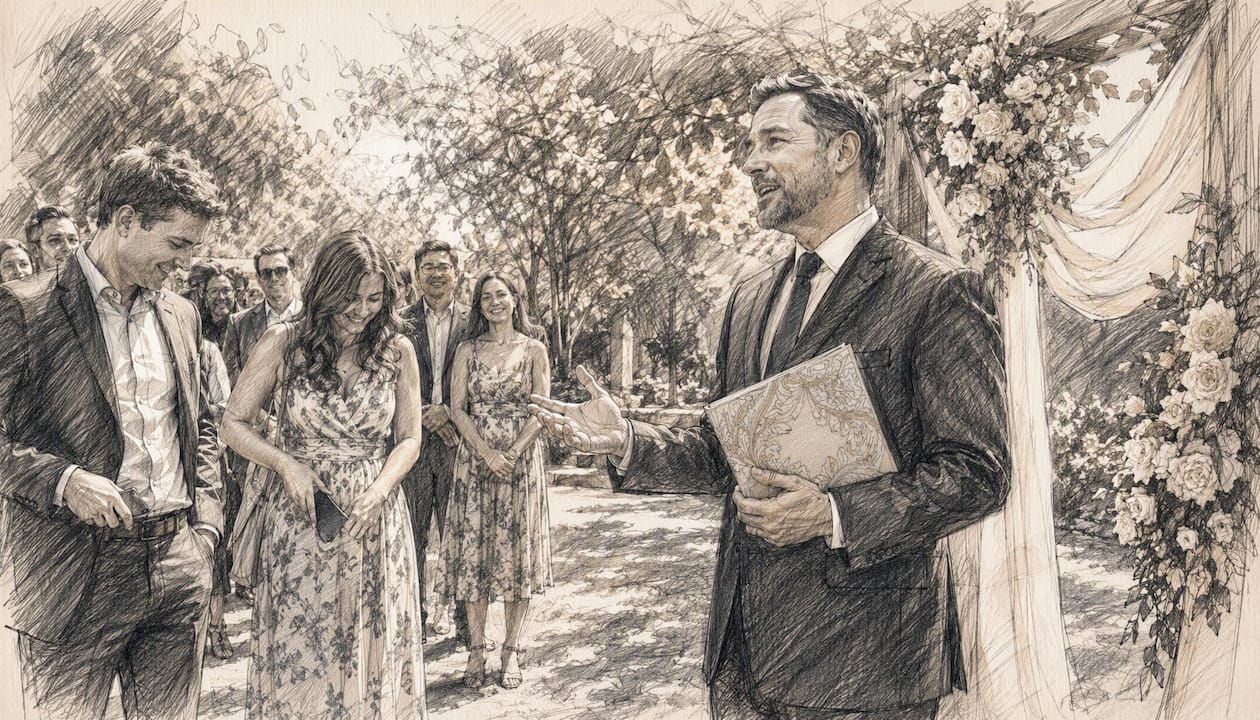
Light-hearted: "Quick housekeeping: phones away, please. The couple wants to see your faces, not your screens — and trust me, their photographer has a much better camera than any of us."
Formal: "The couple respectfully requests that all guests refrain from photography and recording during the ceremony. A professional photographer is present to document the occasion."
Plan A Wedding advises framing the request around presence and shared experience rather than restriction. The tone matters. "We want to see your faces" lands differently than "no phones allowed."
For guests who need to stay reachable: Add a note in your program or on your website. Something like: "If you need to remain available for an urgent call, please sit near the aisle and step out quietly if needed." That small acknowledgment prevents the awkward moment where a caregiver feels forced to choose between your request and their responsibility.
Offbeat Wed's template collection is worth bookmarking for ready-to-use copy across all these channels.
Sign ideas, placement, and phone check-in station options
Signs work best when they're impossible to miss and easy to read in under five seconds. Placement matters more than design.
Where to put signs:
- At the ceremony entrance, ideally on both sides of the aisle entry
- On the program table or in a frame next to the guest book
- At the end of each pew row, if your venue allows small cards
Sign copy examples:
Minimal: "Unplugged ceremony. Please silence and stow your phone. Thank you."
Warm: "We're getting married! Please put your phone away and be here with us. Our photographer will capture everything."
Poetic: "The best camera here is your memory. Please keep your phone in your pocket and your eyes on us."
Practical: "No photos during the ceremony, please. We'll share our professional photos soon — and they'll be worth the wait."
Avoid sarcasm. Signs that read as passive-aggressive ("Yes, that means you") create friction before the ceremony even starts.
Phone check-in and drop station options:
Some couples go further and offer a physical place for guests to leave their phones. Vancity Officiant's guide recommends choosing a solution that balances guest comfort with security.
- Labeled basket or box at the entrance. Simple and low-cost. Works well for smaller weddings where guests trust the setup. The downside: no receipt system, so guests may feel uneasy about leaving an expensive device unattended.
- Staffed phone-check table. A coordinator or trusted usher hands out numbered tags and keeps phones in a secure container. More reassuring for guests, but requires a dedicated person.
- Soft check-in (honor system). No physical collection, just a clear ask. Most couples use this approach. It relies on goodwill, which is usually enough when the request has been communicated warmly across multiple channels.
Pro Tip: If you use a staffed check-in table, tell guests in advance on your wedding website. Surprises at the door create resistance; advance notice creates buy-in.
Ushers are your best asset here. Brief them the morning of the wedding with a simple script: "We're doing an unplugged ceremony today. As guests arrive, please let them know phones should be silenced and put away before they take their seats."
How to enforce it on the wedding day and handle resistant guests
Enforcement is mostly about preparation. The more clearly you've communicated the request in advance, the less you'll need to intervene on the day.
Who handles what:
- Officiant: Delivers the announcement before the processional. This is the single most effective enforcement moment.
- Ushers: Remind guests as they're seated. A friendly, low-key word as guests arrive is far less disruptive than a mid-ceremony correction.
- Wedding coordinator or planner: Oversees the overall flow and can step in if a guest is actively filming in the aisle.
- Wedding party members: Not responsible for enforcement, but can quietly nudge a nearby guest if needed.
Usher script for real-time reminders:
"Hi, welcome! Just a heads-up — the couple is having an unplugged ceremony today, so phones should be silenced and put away before we start. Thanks so much!"
Handling common resistance:
- Elderly guests who don't hear the announcement: Seat them near an usher who can give a personal, gentle reminder before the processional.
- Guests who want to livestream for a relative who couldn't attend: Address this before the wedding day. If you're open to it, designate one person with a specific, agreed-upon setup. If not, offer to share the professional video with that relative afterward.
- Guests who film anyway: If someone pulls out a phone mid-ceremony, the officiant can give a brief, calm second reminder to the room without singling anyone out. "Just a reminder, phones away — thank you." Most people comply when addressed collectively.
When to let it go: if a guest in the back row is quietly filming on their phone and your photographer has a clear sightline, intervening mid-ceremony may cause more disruption than the phone itself. Experienced photographers note that the goal is reducing device usage significantly, not achieving zero. A good photographer adapts.
What photographers actually need from an unplugged ceremony
From a photographer's standpoint, an unplugged ceremony isn't just a nice-to-have. It directly affects what ends up in your gallery. Windswept Photo Design explains that when guests aren't looking through screens, they look up, react genuinely, and give photographers the emotional expressions that make a ceremony gallery worth looking at.
Here's what photographers need to make an unplugged plan work:
- Clear aisle sightlines. No phones or tablets jutting into the aisle. This is the single biggest physical obstruction in ceremony photography.
- Coordination with the officiant. Share the announcement script with your officiant in advance and confirm they'll deliver it before the processional, not after guests are already seated and distracted.
- Staging awareness. Photographers benefit from knowing where the couple will stand, where the officiant will be, and whether there's a raised platform. These details affect lens choice and positioning.
- A second shooter for complex venues. A second photographer covers angles the primary shooter can't reach, which matters especially when a guest does break the rule and creates an obstruction on one side.
Pro Tip: Brief your photographer on your enforcement plan before the wedding day. If they know the officiant will make an announcement and ushers will remind guests, they can position themselves confidently rather than spending the processional watching for phones.
When someone does break the rule, a skilled photographer adapts rather than stops. They shift angles, wait for a clear moment, or use the obstruction creatively. The candid, unobtrusive approach BGF Photography uses means working around imperfections rather than requiring a perfect setup.
On photo delivery: one of the implicit promises of an unplugged ceremony is that guests will eventually see the professional images. Honor that. Tell guests in your program or at the reception when they can expect to receive a link to the gallery. That timeline sets expectations and makes the unplugged request feel like a fair exchange rather than a one-sided restriction.
For couples in Buffalo and the surrounding area, BGF Photography's ceremony filming guide covers local venue-specific logistics worth reading before your wedding day.
Alternatives and compromises if full unplugged feels too strict
A fully unplugged ceremony isn't the only option. Several middle-ground approaches protect the moments that matter most without asking guests to go completely device-free.
Practical compromise options:
- Entrance-only unplugged. Ask guests to put phones away only for the processional. This protects the most photographed moment while giving guests freedom during readings or other parts of the ceremony.
- Vows-only unplugged. The most intimate moment gets full protection. Guests can photograph the rest.
- "Get the shot" moment. The officiant pauses after the couple is in position and says: "Take your photo now, then phones away for the ceremony." Guests get their shot; the photographer gets the rest.
- Designated phone-photo rows. Assign the back two rows as "photo-friendly" sections. Guests who want to photograph can sit there; the main sightlines stay clear.
Here's a qualitative look at how these approaches compare:
| Approach | Enforcement difficulty | Guest satisfaction | Photo clarity | Privacy control |
|---|---|---|---|---|
| Fully unplugged | Moderate | High (once guests comply) | Best | Strongest |
| Entrance-only | Low | High | Good for key moments | Moderate |
| Vows-only | Low | Very high | Good for vows | Moderate |
| "Get the shot" moment | Very low | Very high | Good | Low |
| Designated photo rows | Low | High | Good (main aisle clear) | Low |
The "get the shot" moment is worth considering if you're worried about guest pushback. It acknowledges that people want to participate in documenting the day, gives them a sanctioned moment to do it, and then asks for their full attention. Most guests find that a reasonable trade.
What I've seen from behind the lens
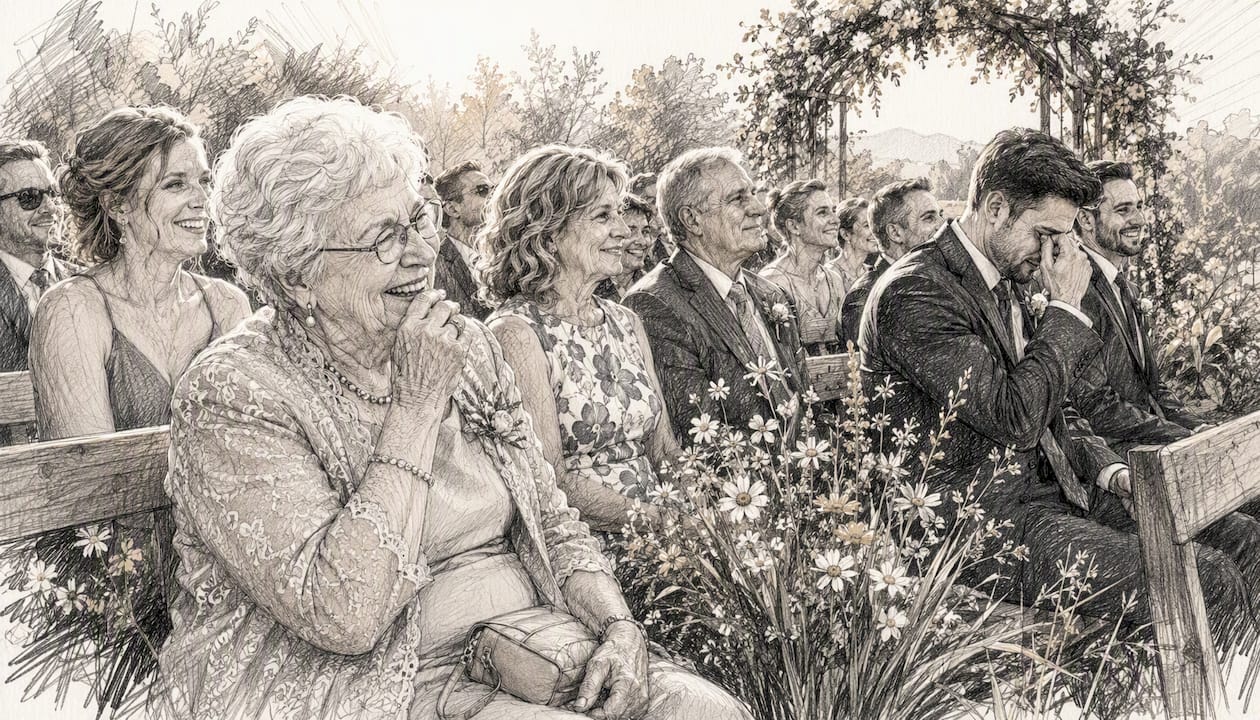
After photographing ceremonies where guests were glued to their phones and ceremonies where every face was turned toward the couple, the difference in the final gallery is real and immediate. The unplugged ceremonies produce images where you can see the emotion in the room, not just on the couple's faces. A grandmother laughing without a phone in front of her face. A best man wiping his eyes. Those are the photos couples come back to years later.
The couples who pull off an unplugged ceremony well aren't the ones who police it hardest. They're the ones who communicate it kindly, give their officiant a good script, and trust their guests to respond. Most people, when asked warmly and given a reason, are happy to put their phones away. The ceremony is twenty minutes. The photos last a lifetime.
Prioritize presence over policing. Communicate clearly, then let it go.
BGF Photography supports your unplugged ceremony from planning to delivery
Coordinating an unplugged ceremony is easier when your photographer is already part of the plan. BGF Photography works with couples in Buffalo, Rochester, and the Finger Lakes to handle the logistics that make an unplugged ceremony actually work: sharing officiant script suggestions, advising on sign placement, and coordinating with your planner on day-of enforcement timing.
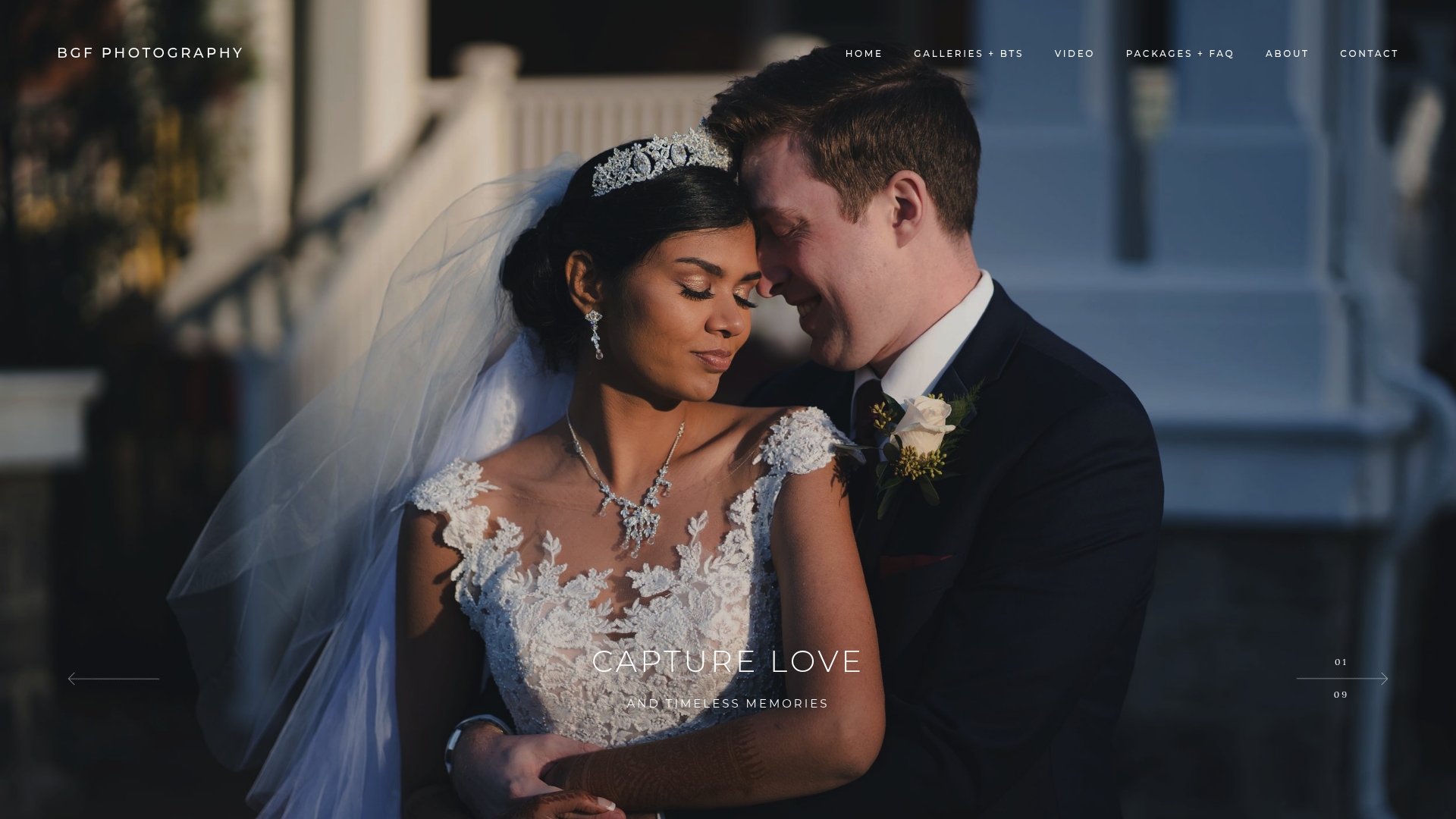
BGF Photography's hybrid photo and video coverage means your ceremony is documented in one cohesive style, with both photography and videography handled under a single creative vision. Film photography options are available for couples who want a nostalgic, timeless quality alongside digital delivery. After the ceremony, BGF Photography delivers a gallery link you can share with guests, honoring the implicit promise of the unplugged request. Check packages and availability to see what's open for your date.
Sources
- Unplugged ceremony how to ask guests | About Wedding
- About Hosting an Unplugged Wedding Ceremony or Reception
- How to have an unplugged wedding: copy 'n' paste wording and templates • Offbeat Wed (was Offbeat Bride)
- Unplugged Wedding Ceremony: How to Ask Guests to Put Their Phones Away | Plan A Wedding
- Screens Down, Hearts Up: How to Plan the Perfect Unplugged Wedding Ceremony
- What Is an Unplugged Wedding Ceremony? Wording, Timing and Guest Etiquette | Vancity Officiant Guide
- Unplugged Wedding Ceremonies, An Honest Take
FAQ
What is an unplugged ceremony?
An unplugged ceremony is a wedding ceremony where the couple asks guests to put away phones, cameras, and tablets for the duration of the event. The goal is to keep guests present and give professional photographers unobstructed sightlines.
How do you politely ask for an unplugged ceremony?
Frame the request around presence and shared experience rather than restriction. Warm wording like "We want to see your faces, not your screens" tends to get better compliance than a flat "no phones" rule, according to Plan A Wedding.
Is an unplugged ceremony worth it?
For most couples who care about photo quality and guest presence, yes. Photographers report that unplugged ceremonies produce more emotional, unobstructed images because guests react naturally instead of looking through a screen.
Why do people do unplugged weddings?
Couples choose a digital-free ceremony to protect professional photo quality, keep guests emotionally present, control when images go public, and prevent unedited guest photos from appearing on social media before the professional gallery is delivered.