

Golden hour wedding photography captures portraits during the brief, luminous window just before sunset, when the sun sits low on the horizon and bathes everything in warm, amber light. Photographers and cinematographers also call this the “magic hour,” and for good reason. The light during this period is softer, redder, and far more flattering than anything the midday sun produces. For wedding portraits specifically, it creates smooth skin tones, gentle shadows, and a romantic, cinematic glow that no artificial lighting can fully replicate.
Golden hour occurs twice daily, after sunrise and before sunset, but the sunset window is the one that works for weddings. The timing fits naturally into a reception schedule, and the warm evening light tends to feel more intimate than the cool, sharp quality of early morning. Planning around this window takes some coordination, but the results are consistently among the most memorable images from the entire day.
Key characteristics that define golden hour light:
-
Soft, diffused quality with minimal harsh shadows
-
Warm color tones in the red, orange, and gold spectrum
-
Lower contrast between highlights and shadows, making exposure easier to balance
-
Natural backlighting and halo effects around subjects
-
A narrower dynamic range that reduces the risk of blown highlights
Table of Contents
What makes golden hour light so different from midday sun?
The science behind golden hour comes down to the angle of the sun and what happens to light as it travels through the atmosphere. When the sun is high overhead at midday, light passes through a relatively thin slice of atmosphere, arriving at full intensity with a color temperature around 5,500 K. That produces the harsh overhead lighting that creates unflattering shadows under eyes and chins in portraits.
During golden hour, the sun sits close to the horizon, so its light travels through a much thicker layer of atmosphere. That extra distance scatters the shorter blue and violet wavelengths, leaving the longer red, orange, and gold wavelengths to dominate. The result is a warm, directional light that wraps around subjects rather than hammering down on them.
“Because the contrast is less during the golden hour, shadows are less dark, and highlights are less likely to be overexposed. It is the best time of day for natural photography when diffuse and warm light is desired.” — Wikipedia, Golden hour (photography))
Geography and season shape how long this window actually lasts. Near the equator, golden hour duration can shrink to as little as 15 minutes because the sun drops steeply below the horizon. At higher northern latitudes, the sun descends at a shallower angle, stretching the window considerably longer. A June wedding in upstate New York gives you a noticeably longer golden window than a December wedding in Miami.
Key benefits of golden hour for wedding portraits
The advantages stack up quickly once you understand what this light actually does to a photograph.
-
Flattering skin tones. The warm, soft light minimizes blemishes, evens out complexion, and gives skin a natural, healthy glow without heavy retouching.
-
Reduced harsh shadows. Unlike midday sun, golden hour light wraps around faces and bodies, eliminating the unflattering dark patches that a fill flash would otherwise need to correct.
-
Natural backlighting. When the couple stands with the sun behind them, the light creates a luminous rim or halo effect that adds depth and separates them from the background beautifully.
-
Romantic color palette. The amber and gold tones feel warm and intimate in a way that cool, neutral light simply does not.
-
White dress enhancement. Ivory and white fabrics pick up the warm tones without washing out, giving wedding gowns a rich, dimensional look.
-
Cinematic quality. The 1978 film Days of Heaven was acclaimed for its cinematography) precisely because it was shot almost entirely during golden hour. That same quality translates directly to wedding portraits.
-
Candid moments feel natural. Soft, even light lets photographers focus on genuine emotion and movement rather than fighting exposure problems, which produces the most memorable wedding images.
How to plan golden hour photos into your wedding day
Start with the exact sunset time for your venue’s location and your wedding date. Free tools like the U.S. Naval Observatory’s sunrise/sunset calculator or the TimeandDate.com golden hour calculator give you precise figures. From there, count back roughly an hour to identify when the window opens.
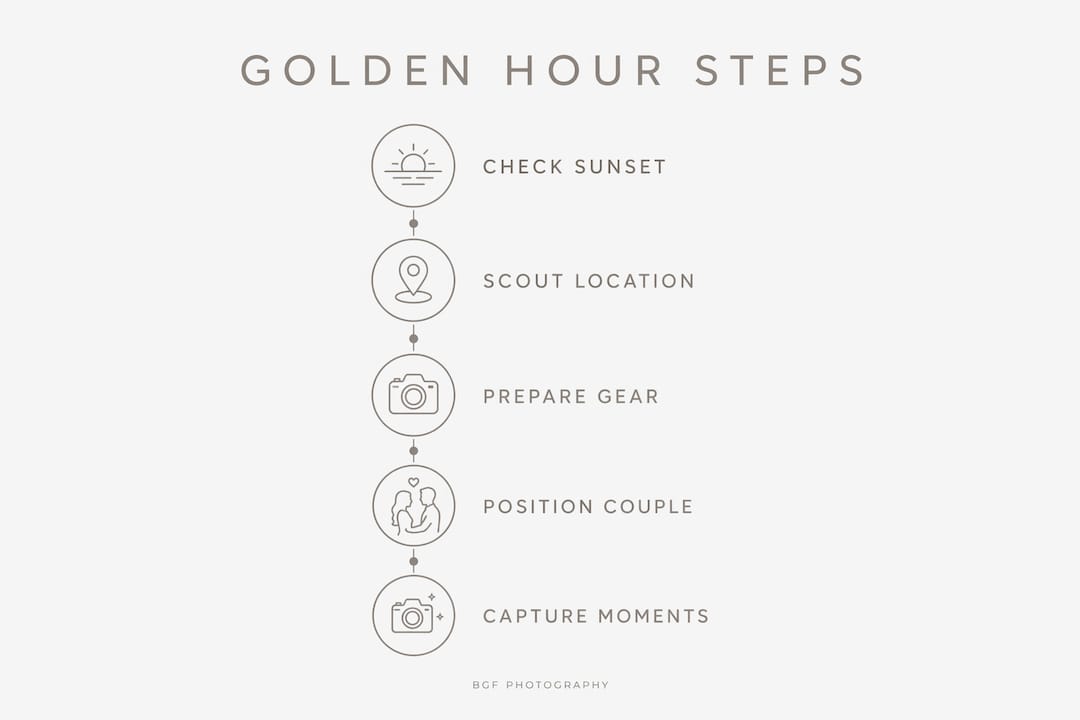
Pro Tip: Build a 15–20 minute buffer before your planned golden hour portraits. Weddings run behind schedule more often than not, and losing even ten minutes of this window to a delayed cake cutting can cost you the best light of the day.
A few practical steps that make a real difference:
-
Scout your location in advance. You want an unobstructed western view, ideally with an interesting backdrop. Open fields, rooftop terraces, lakefronts, and tree lines all work well.
-
Coordinate with your planner. Slot the couple’s portrait session during cocktail hour so guests are occupied and the couple can slip away without disrupting the flow.
-
Communicate your shot list. Share your vision with your photographer well before the day. A clear shot list prevents wasted time and ensures the photographer knows which moments matter most to you.
-
Start wide, then go tight. Begin with environmental shots that show the venue and landscape bathed in golden light, then move to tighter portraits and silhouettes as the sun drops lower.
-
Have a backup plan. Overcast skies mute the golden tones but still produce soft, flattering diffused light. West-facing windows indoors can serve as a workable alternative.
Golden hour is also, as planning experts note, one of the few quiet moments a couple gets on their wedding day. Stepping away from guests for 20 minutes to just be together, with a camera nearby, often produces the most emotionally resonant images of the entire event.
Common challenges and limitations to expect
Golden hour is not without its complications. Knowing them ahead of time makes them manageable.
-
The window is short. Depending on latitude and season, you may have anywhere from 15 minutes to just over an hour. There is no recovering lost time once the sun drops.
-
Weather is unpredictable. Heavy cloud cover can eliminate the warm golden tones entirely, though overcast conditions still offer soft, diffused light that many photographers actually prefer for portraits.
-
Venue obstructions matter. Tall buildings, dense tree lines, or east-facing ceremony sites can block the low sun entirely, reducing or eliminating the golden effect.
-
Lower light requires faster glass. As the sun drops, light levels fall quickly. Photographers need fast lenses (f/1.4–f/2.8) and are often shooting at higher ISO values, which demands skill to manage noise and sharpness.
-
Backlight requires technique. Shooting into the sun risks lens flare and overexposed backgrounds without proper metering and positioning. An experienced photographer knows how to use this creatively rather than fight it.
-
Schedule conflicts are common. A delayed ceremony, a long receiving line, or an extended first dance can push the couple’s portrait session past the golden window entirely.
What golden hour wedding photos actually look like
Picture a couple standing at the edge of a field, the sun just above the tree line behind them. Their faces are lit with a warm, amber glow. The background blurs into soft bokeh of orange and gold. The bride’s dress catches the light along its edges, creating a subtle luminous outline. That is the classic golden hour portrait.
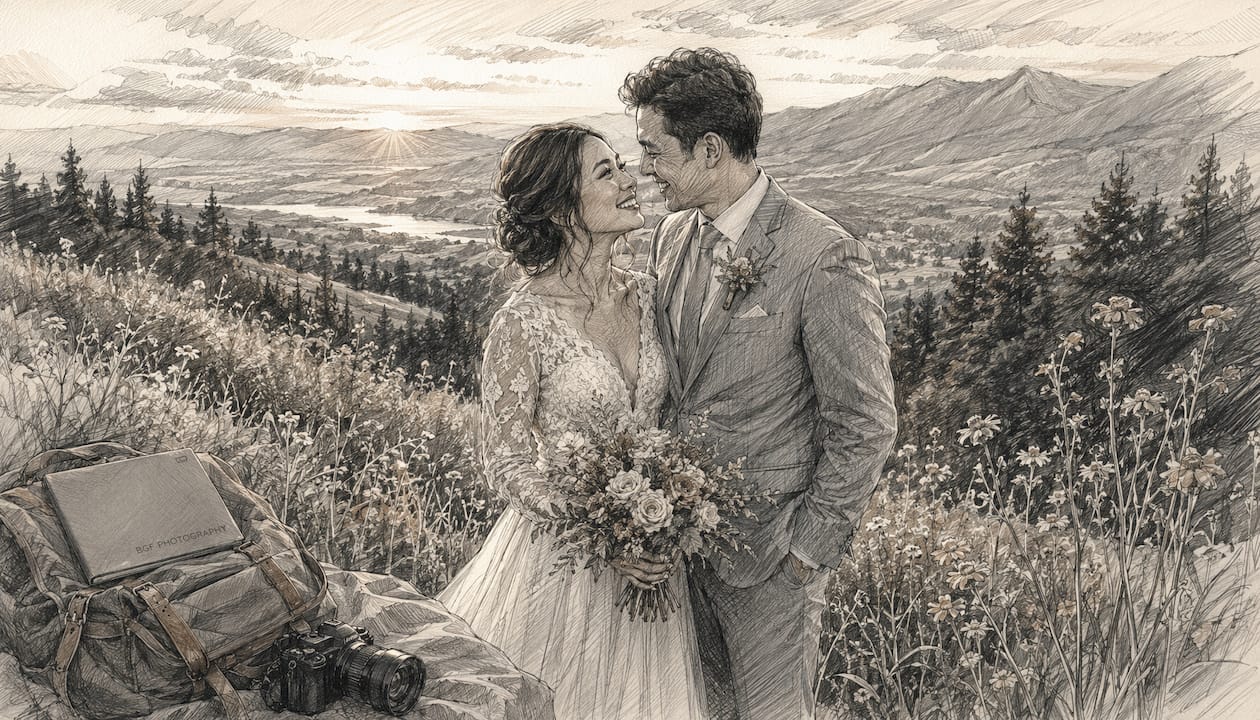
Silhouettes are another signature look. With the couple backlit against a blazing sky, the photographer exposes for the background, rendering the subjects as dark, elegant shapes against a canvas of orange and pink. These images tend to be among the most shared from any wedding album.
Lens flare, used deliberately, adds a dreamy, cinematic quality. A photographer who positions the sun just outside the frame can let a single streak of light cut across the image, giving it the feel of a film still rather than a snapshot. The wedding aesthetic of the entire album shifts when even a handful of images carry this quality.
How golden hour changes different photography styles
Golden hour light does not work the same way across every style of wedding photography, and understanding the difference helps you set realistic expectations.
For formal portraits, the warm directional light is nearly ideal. It sculpts faces with gentle shadows, adds dimension to clothing, and gives the couple a natural, glowing look without any artificial fill. A skilled photographer can position subjects to use the sun as a rim light, a front light, or a backlight depending on the mood they want.
Candid and documentary photography benefits in a different way. The soft, even light means a photographer can move freely without worrying about harsh shadows ruining an unplanned moment. When the couple laughs, spins, or steals a quiet look at each other, the light is already doing its job. BGF Photography’s candid approach is particularly well suited to this window because the goal is genuine emotion, not a posed setup, and golden hour light is forgiving enough to let those moments unfold naturally.
Film photography responds to golden hour in a way that digital sensors can only approximate. The warm tones render beautifully on film stock, with a richness and grain that feels timeless rather than processed. For couples who want images that look like they belong in a different era, golden hour on film is hard to beat.
Camera settings and equipment for golden hour
Photographers working in golden hour light typically reach for a specific set of tools and settings.
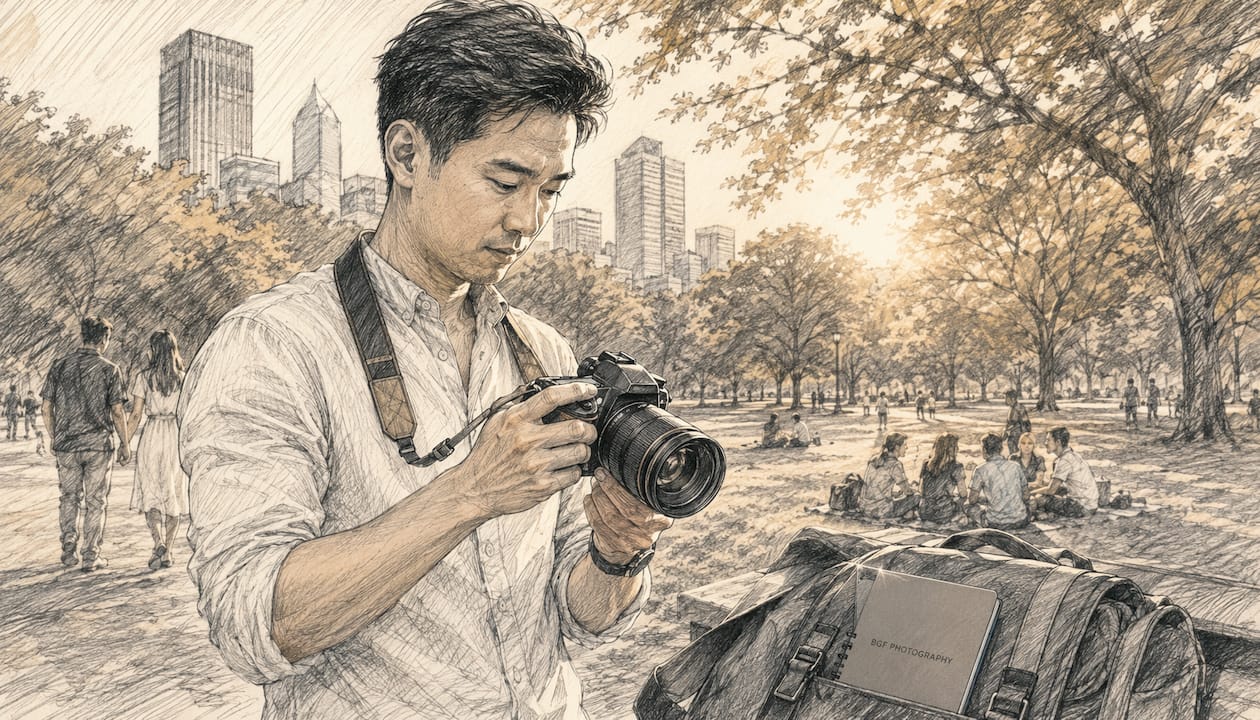
Lenses: A fast prime lens in the 35mm–85mm range covers most golden hour work. The 50mm f/1.4 and 85mm f/1.8 are workhorses for this kind of shooting because they let in enough light as the sun drops and produce the background separation that makes portraits pop.
Aperture: Wide apertures (f/1.4–f/2.8) are standard. They let in more light as the sun drops and create the shallow depth of field that blurs distracting backgrounds into soft color.
Shutter speed and ISO: As light fades, photographers raise ISO gradually, typically staying as low as possible to preserve detail. Shutter speed needs to stay fast enough to freeze movement, especially for candid shots.
White balance: Setting white balance manually to around 5,500–6,500 K preserves the warm golden tones. Auto white balance sometimes corrects the warmth away, which defeats the purpose entirely.
Reflectors: A simple collapsible reflector bounces golden light back onto the couple’s faces, filling in any shadows without introducing artificial color. It is one of the most effective tools a photographer can carry for this kind of work.
Tips photographers use to get the most from golden hour
The best golden hour images come from preparation and instinct working together.
Arrive early and pre-visualize. A photographer who walks the location 30 minutes before the session knows exactly where to stand, which direction to face, and which backgrounds will catch the light. Improvising during a 20-minute window is a recipe for missed shots.
Shoot in RAW format. Golden hour light changes color temperature rapidly as the sun drops. RAW files give the photographer latitude to adjust white balance and exposure in post without degrading image quality.
Use the sun as a hair light. Positioning the couple so the sun grazes the tops of their heads and shoulders creates a natural rim of warm light that separates them from the background. It is one of the most flattering and cinematic techniques available without any additional gear.
Prioritize movement over poses. Genuine movement and emotion produce the most iconic golden hour images. Walking together, a whispered word, a spontaneous laugh: these moments, caught in warm light, are what couples remember years later.
Watch the light, not the clock. The window does not end at a fixed minute. A photographer who watches how the light changes second by second, rather than watching the time, will catch the exact moment when the color peaks.
BGF Photography captures golden hour the way it deserves
Golden hour is the most technically demanding and emotionally rewarding window of the entire wedding day. Getting it right requires a photographer who already knows your vision, has scouted the location, and can move quickly without making you feel rushed.
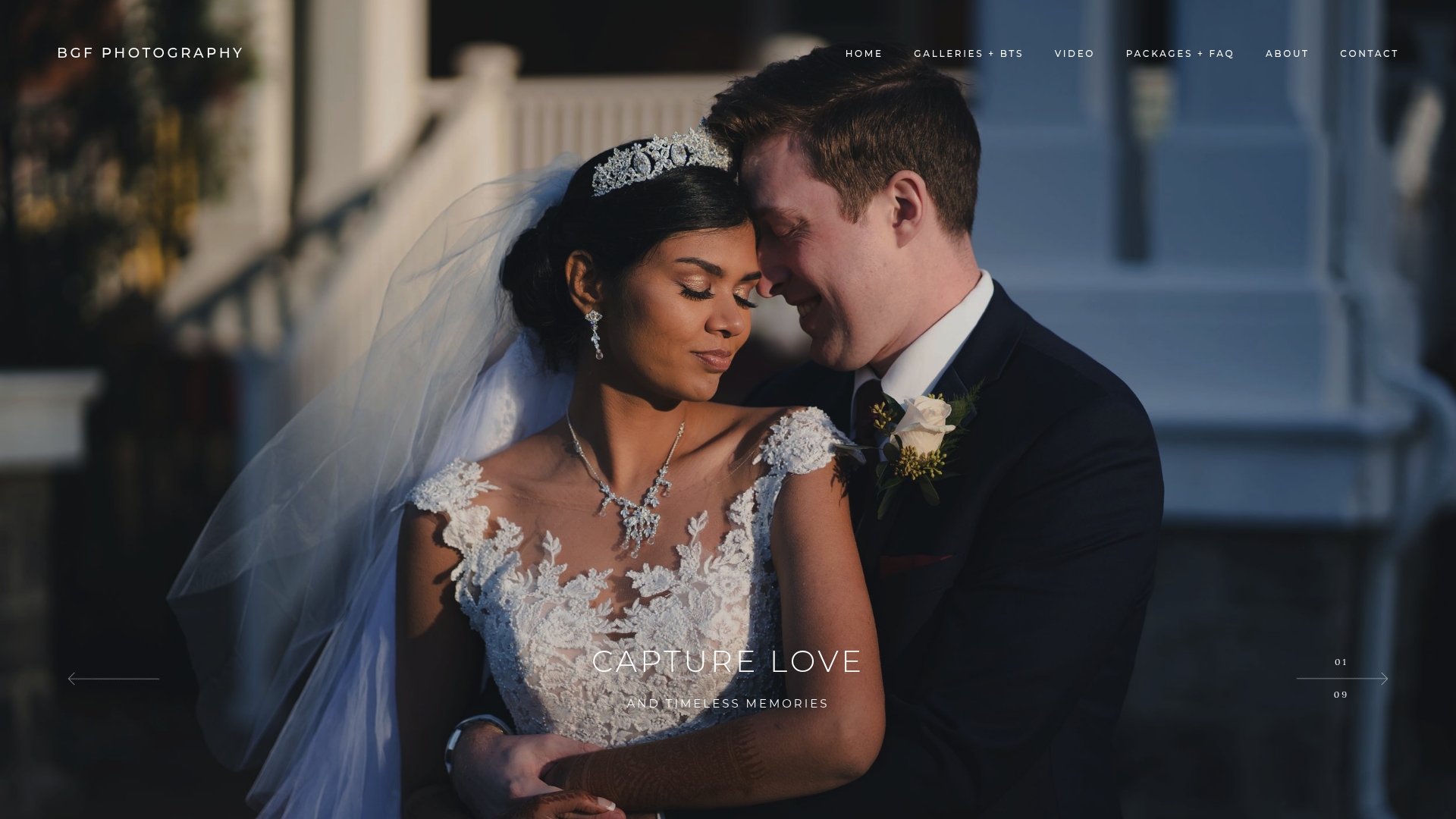
BGF Photography works with couples in the Buffalo and Rochester, NY areas, specializing in candid coverage that treats golden hour as a genuine moment rather than a photo obligation. The approach is unobtrusive: you step away from the reception, the light does what it does, and the camera captures what actually happens between you. BGF Photography also offers hybrid coverage, pairing photography with videography under one cohesive style, so your golden hour portraits and the film footage from that same window share the same warmth and tone. If you want to see how this looks in practice or check availability for your date, view packages and pricing to get started.
Key Takeaways
Golden hour wedding photography produces the most flattering and romantic portraits of the day because the low sun creates warm, soft light that no other time of day can replicate.
| Point | Details |
|---|---|
| Timing varies by location | Golden hour duration depends greatly on location and season; near the equator it is brief, while at northern latitudes it can be much longer; check your exact date and venue. |
| Build in a buffer | Schedule a 15–20 minute buffer before portraits to absorb the delays that almost every wedding runs into. |
| Soft light flatters everyone | Golden hour reduces harsh shadows and narrows dynamic range, making exposure easier and skin tones more even. |
| Candid beats posed | Movement and genuine emotion during golden hour produce more memorable images than stiff, formal poses. |
| BGF Photography fits this moment | BGF Photography’s candid, hybrid approach is designed for exactly this kind of unscripted, light-driven coverage in Buffalo and Rochester, NY. |
FAQ
What is golden hour for wedding photos?
Golden hour is the period roughly an hour before sunset when the sun sits low on the horizon, producing warm, soft, and directional light that is ideal for flattering wedding portraits.
Are golden hour photos worth it for a wedding?
Yes. The soft, warm light minimizes imperfections, creates a romantic atmosphere, and produces cinematic images that are consistently among the most treasured from the entire wedding day.
How long does golden hour actually last?
Duration depends on your location and the time of year. Near the equator it can be as short as 15 minutes; at higher latitudes like upstate New York it can stretch considerably longer, especially in summer.
What should you wear for a golden hour photoshoot?
Warm, earthy tones and soft neutrals photograph beautifully in golden light. Avoid very bright whites or neon colors, which can blow out or clash with the amber tones of the light.