

TL;DR:
4K wedding films provide sharper detail, better editing flexibility, and long-term durability compared to 1080p.
Resolution benefits become most apparent on large screens and future high-resolution displays, ensuring memories remain vivid over time.
Video resolution is defined as the total number of pixels captured in each frame of your wedding film, and it directly determines how sharp, detailed, and lasting your memories will appear. Couples planning their weddings today face a clear choice between 4K (3,840 x 2,160 pixels) and Full HD 1080p (1,920 x 1,080 pixels) as the two dominant standards in professional wedding videography. Understanding why video resolution matters for wedding films goes beyond technical specs. It shapes how your film looks on a 75-inch TV in ten years, how your editor can reframe a shot, and whether you can pull a crisp still image from a candid moment your photographer missed. BGF Photography captures wedding films in 4K precisely because the benefits compound over time, not just on the wedding day itself.
Why video resolution matters for wedding films
Resolution is the foundation of image quality in any wedding film. A 4K frame contains four times the pixels of a 1080p frame. That pixel density is what makes the embroidery on a wedding dress look crisp, the tears on a father’s face look real, and the floral arrangements look dimensional rather than flat.

The difference shows most clearly on large screens. When a couple plays their film on a 65-inch TV at their first anniversary, 4K footage holds its sharpness. A 1080p file at that size begins to soften. The detail that made the moment feel alive starts to blur.
Resolution also affects how your film ages. Display technology moves fast. The 4K televisions that felt premium in 2020 are now standard in most living rooms. Films shot in 4K today will still look native-quality on whatever screens exist in 2036. Films shot in 1080p will not scale up cleanly to match those displays.
For couples, the practical takeaway is this: resolution is not just about what you see on your phone the week after the wedding. It is about what your children and grandchildren see when they watch your film decades from now.
What 4K actually captures that 1080p misses
The detail gap between 4K and 1080p becomes obvious in close-up shots. A 4K frame captures fine textures: the lace pattern on a veil, the grain of a wooden ceremony arch, the glint of a ring during the exchange. A 1080p frame renders those same details as smooth, slightly soft approximations.
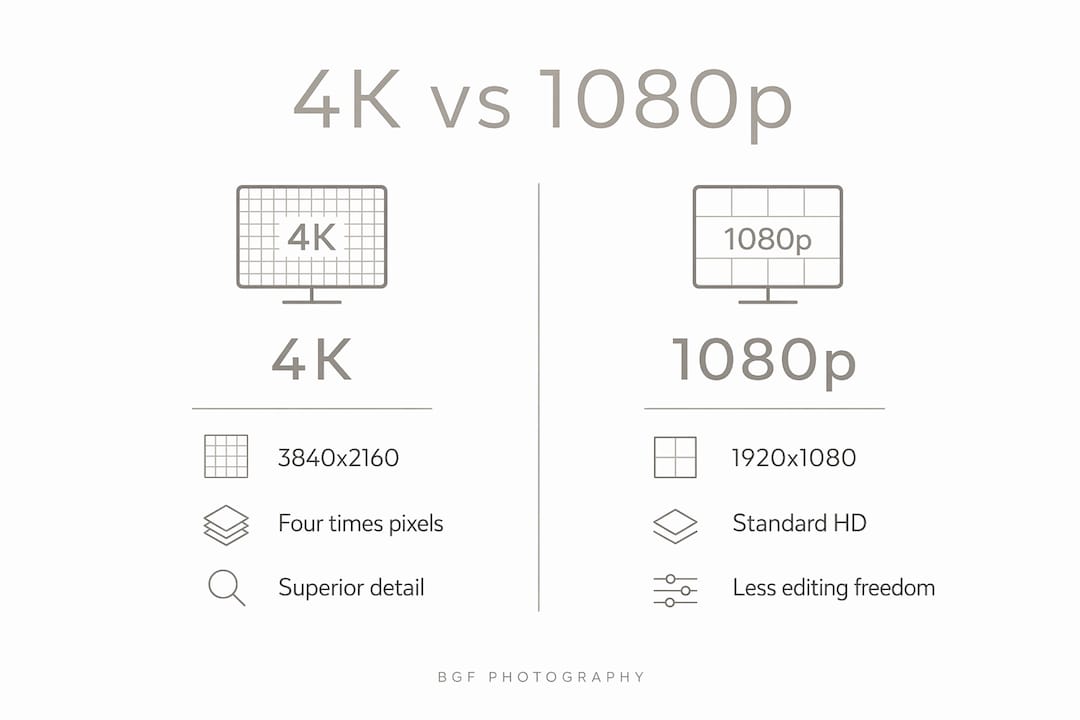
Facial expressions are where this matters most emotionally. A quiet smile from a grandmother in the third row, a lip quiver during vows, a best man’s eyes going wide during a toast. These micro-expressions are what make a wedding film feel human rather than cinematic wallpaper. 4K captures them. 1080p often loses them in the background.
Pro Tip: Ask your videographer to show you a 4K sample clip on a large screen before booking. The difference between 4K and 1080p is subtle on a phone but immediately visible on a TV larger than 40 inches.
Here are the specific advantages 4K resolution delivers in a wedding context:
-
Crop flexibility: 4K footage allows reframing in post-production without any visible quality loss, which is critical when a guest steps in front of the camera during the first kiss.
-
Still image extraction: A 4K video frame yields an 8-megapixel still image, giving you a safety net for candid moments the photographer missed.
-
Better low-light performance: 4K sensors capture more light data per frame, which helps in dimly lit reception halls and candlelit ceremonies.
-
Vertical and square edits: Social media clips in 9:16 or 1:1 formats can be cropped from 4K footage without the image falling apart.
-
Future display readiness: 4K footage looks native on current and upcoming high-resolution screens, including large-format displays and emerging VR formats.
How resolution affects editing, sharing, and delivery
Resolution shapes what your editor can do with your footage long after the wedding day. The editing benefits of 4K are not just cosmetic. They are structural.
Editing flexibility that 1080p cannot match
When a videographer shoots in 4K, the editor gains the ability to fix framing errors without reshooting. Weddings are one-take events. Nobody gets a second chance at the ring exchange or the first dance. 4K’s crop flexibility acts as insurance against the unpredictable moments that define live events. An editor can zoom into a 4K frame by 50% and still deliver a clean 1080p output. That same move on 1080p footage produces a pixelated, unusable shot.
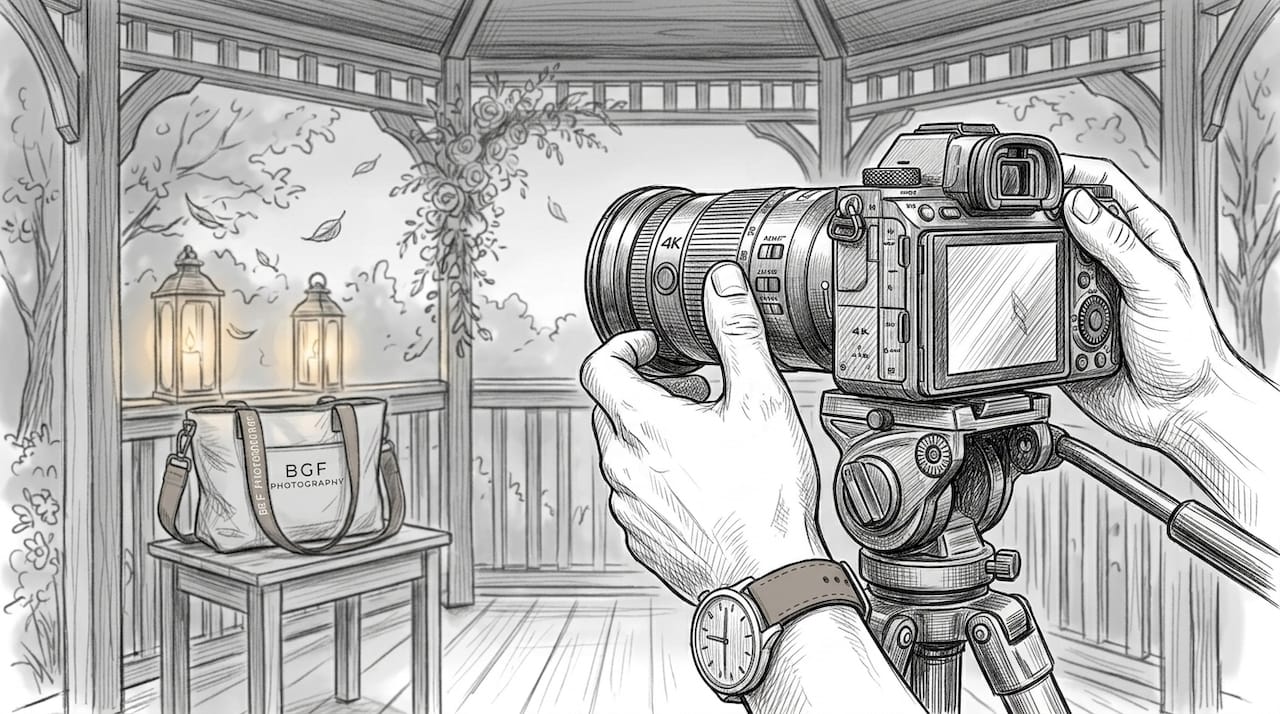
Stabilization also benefits from higher resolution. Digital stabilization crops the frame slightly to smooth out camera movement. With 4K source footage, that crop still leaves plenty of resolution for a sharp final image. With 1080p, stabilization visibly degrades the picture.
Social media, delivery formats, and codec choices
Creating social media clips from your wedding film is now standard practice. Couples share highlight reels on Instagram Reels, TikTok, and YouTube Shorts, all of which use vertical or square formats. Cropping a 4K frame to 9:16 for Instagram Reels produces a clean, sharp vertical video. Doing the same with 1080p footage results in a noticeably softer image.
For final delivery, codec choice matters as much as resolution. The two dominant options are H.264 and H.265 (also called HEVC). H.265 reduces file size by 35–40% compared to H.264 at the same visual quality. That means a 4K film delivered in H.265 can be smaller than a 1080p film delivered in H.264 at a higher bitrate.
Device compatibility is the trade-off. H.264 is compatible with nearly every device on the market. H.265 has narrower support, particularly on older computers and TVs. A good videographer delivers in both formats or chooses based on what you actually use.
The recommended delivery standard for professional 4K wedding films is H.264 or H.265 at 80–100 Mbps variable bitrate. That setting balances file size, playback quality, and broad device compatibility.
Here is a practical breakdown of delivery format decisions:
-
Ask for H.264 if you plan to play your film on a wide range of devices, including older smart TVs and laptops.
-
Ask for H.265 if you want smaller file sizes and your devices are from 2018 or newer.
-
Request both formats if your videographer offers it. Store H.265 for archiving and H.264 for everyday playback.
-
Confirm bitrate settings with your videographer. A 4K file at 50 Mbps can be smaller than a 1080p file at 80 Mbps when encoded efficiently.
-
Get a cloud backup link in addition to a physical drive. File formats evolve, but cloud storage keeps your film accessible.
Pro Tip: When reviewing your final film, watch it on the largest screen you own before approving delivery. Issues with compression or bitrate are invisible on a phone but obvious on a TV.
| Format | Resolution | Codec | Bitrate | Best Use |
|---|---|---|---|---|
| Standard delivery | 1080p | H.264 | 40–60 Mbps | Everyday playback, broad compatibility |
| Premium delivery | 4K | H.264 | 80–100 Mbps | Large screens, future-proofing |
| Archival master | 4K | H.265 | 80–100 Mbps | Long-term storage, smaller file size |
| Social media export | 1080p or 720p | H.264 | 10–20 Mbps | Instagram, YouTube, TikTok |
When is 1080p good enough for a wedding film?
Not every couple needs 4K, and understanding when 1080p suffices saves money without sacrificing what actually matters. Viewers cannot reliably distinguish 4K from 1080p on screens smaller than 27 inches. If you and your partner plan to watch your wedding film primarily on phones or a small laptop, the resolution difference will be nearly invisible.
The viewing context determines how much resolution matters. A couple who plans to project their film at a 10-year anniversary party on a large venue screen will notice the difference. A couple who watches their film once a year on a tablet probably will not.
Here are the scenarios where 1080p is a reasonable choice:
-
Budget is a primary constraint. 4K production requires more expensive equipment and longer editing time. If choosing 4K means cutting your videography hours, the trade-off may not be worth it.
-
You prioritize audio quality. Audio quality is the single most predictive factor for wedding video satisfaction. A film with crystal-clear vows and speeches in 1080p will feel more emotional than a visually stunning 4K film with muffled audio.
-
Your primary viewing device is a phone or tablet. The 4K advantage simply does not appear on small screens.
-
Storage and sharing are concerns. 4K files are large. If your videographer does not offer cloud delivery, managing and sharing large files can become a practical headache.
-
Storytelling is the priority. A beautifully edited 1080p film with strong narrative structure, well-chosen music, and emotional pacing will move you more than a technically perfect 4K film with poor storytelling.
The honest truth is that resolution is one variable in a larger equation. The wedding video package you choose should reflect your actual viewing habits and what you value most in a film, not just the highest number on a spec sheet.
How 4K future-proofs your wedding memories
The strongest argument for 4K is not what it looks like today. It is what it protects against in the future. Downsampling 4K footage to 1080p produces sharper results than native 1080p footage because the process averages more pixel data, reducing noise and preserving fine detail. The reverse is not possible. Upscaling 1080p to 4K is an educated guess made by software. The original detail that was never captured cannot be recovered.
Display technology will continue to advance. The televisions sold in 2030 will likely support 8K natively, and 4K will be the minimum standard for quality playback, much as 1080p became the baseline in the 2010s. A wedding film shot in 4K today will still look native-quality on those future screens. A 1080p film will look like standard definition does today on a modern TV.
Shooting your wedding in 4K is not about chasing the latest technology. It is about making a decision once that protects your memories from becoming visually outdated. The couples who shot in HD in 2008 are now watching films that look noticeably soft on modern screens. The couples who shot in 4K in 2018 are still watching films that look sharp and current. Resolution is the one technical choice that compounds in value over time.
The benefits of 4K for long-term preservation include:
-
Still image extraction: Pull an 8-megapixel photo from any frame of your film, giving you a library of candid images beyond what your photographer captured.
-
Future display compatibility: 4K footage plays natively on current TVs and will remain compatible with next-generation screens.
-
Archival integrity: Higher resolution source files give future editors more to work with if you ever want to recut or restore your film.
-
Downscale advantage: Delivering a 4K master downscaled to 1080p produces better image quality than a native 1080p recording.
-
Legacy value: Your wedding film is a family heirloom. Shooting in 4K means your children and grandchildren will watch it on whatever screens exist in 2050 and still see your day clearly.
BGF Photography shoots wedding films in 4K as standard practice. The goal of preserving wedding memories for future generations requires source footage that holds up under the demands of future technology.
Key Takeaways
4K resolution is the professional standard for wedding videography because it delivers superior editing flexibility, future-proof image quality, and the ability to extract high-resolution stills from video frames.
| Point | Details |
|---|---|
| 4K vs 1080p pixel count | 4K contains four times the pixels of 1080p, producing sharper detail in faces, textures, and décor. |
| Editing and crop flexibility | 4K footage allows editors to reframe shots in post-production without any visible quality loss. |
| Audio matters as much as resolution | Clear audio of vows and speeches predicts satisfaction more reliably than resolution alone. |
| Codec choice controls file size | H.265 reduces file size by 35–40% versus H.264 at the same quality, keeping 4K files manageable. |
| Future-proofing your memories | 4K footage downscales cleanly to 1080p but 1080p cannot be upscaled without visible quality loss. |
Resolution is only half the story
Here is something most couples do not hear until after they have booked: resolution is the easiest thing to advertise and the least likely thing to make you cry watching your wedding film.
I have watched couples play back technically flawless 4K films and feel nothing. The shots were sharp. The color was graded beautifully. The audio was a muddy mess of overlapping voices and a microphone that picked up the DJ’s bass more than the groom’s voice cracking during his vows. The resolution did not save it.
Audio quality in wedding videography is the element that carries emotional weight. When you hear your partner’s voice clearly, when the words of your vows are intelligible and present, the film becomes a time machine. When the audio is poor, even a beautifully shot 4K film feels like watching someone else’s wedding.
My honest advice: ask your videographer as many questions about their audio setup as their camera gear. How many wireless microphones do they use? Where do they place them? Do they record a backup audio track? These questions reveal more about the quality of your final film than any resolution spec. You can find a solid list of questions to ask your videographer before you sign a contract.
Resolution still matters. Shoot in 4K if your budget allows it. The future-proofing argument alone justifies the investment. But do not let the spec sheet distract you from the craft. A great wedding film is built on clear audio, honest storytelling, and a videographer who knows when to be invisible and when to move closer. The pixels are just the canvas.
— Billy
What BGF Photography delivers in every wedding film
BGF Photography produces wedding films in 4K as the standard for every package, with delivery options in both H.264 and H.265 to match your playback setup. Every film is edited with a focus on emotional storytelling, not just technical output.
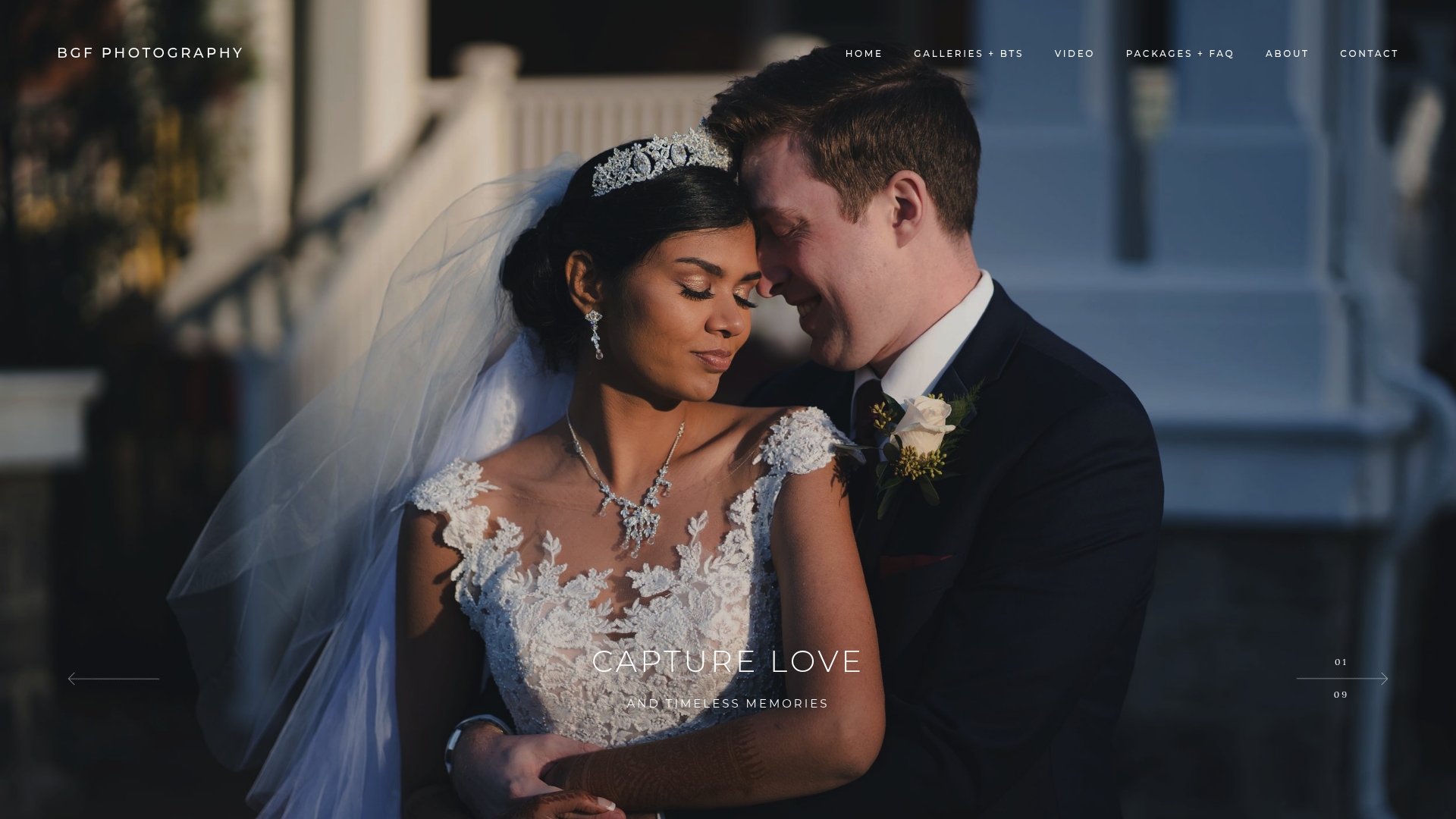
BGF Photography’s hybrid wedding coverage pairs photography and videography under one cohesive visual style, so your photos and film feel like they belong to the same day rather than two separate vendors’ interpretations of it. Serving couples in Buffalo and Rochester, NY, BGF Photography handles everything from 4K capture through final delivery, with archival masters stored for long-term access. If you are ready to see what professional 4K wedding videography looks like in practice, the packages and investment page has full details on what is included at each level.
FAQ
What is the best resolution for wedding videography?
4K (3,840 x 2,160) is the professional standard for wedding videography in 2026. It provides superior editing flexibility, future-proof image quality, and the ability to extract 8-megapixel still images from video frames.
Can viewers tell the difference between 4K and 1080p on a phone?
Viewers generally cannot distinguish 4K from 1080p on screens smaller than 27 inches. The resolution advantage becomes clearly visible on large TVs and projected displays.
Does 4K mean a much larger file size for my wedding film?
Not necessarily. A 4K file encoded in H.265 at 80 Mbps can be smaller than a 1080p file encoded in H.264 at a higher bitrate. Codec choice and bitrate management control file size more than resolution alone.
Is audio or video resolution more important in a wedding film?
Audio quality is the single most predictive factor for wedding video satisfaction. Clear audio of vows and speeches creates more emotional impact than resolution, making it equally important to evaluate when choosing a videographer.
What codec should my wedding film be delivered in?
H.264 offers the broadest device compatibility and works on nearly every TV, phone, and laptop. H.265 produces smaller files at the same quality but has narrower support on older devices. Ask your videographer for both formats if possible.