

Protect ceremony arrival with a 15 to 30 minute buffer that nobody touches for photos or extra stops. Add smaller fixed buffers around getting ready and portraits, then pad every travel leg with either 15 minutes flat or 25 to 50% of the mapped drive time depending on traffic risk. Anchor everything to your ceremony start and vendor call times first, then read the calculation method below to size each leg correctly.
TL;DR:
- Buffer times should be anchored to the ceremony start and vendor call times, with a minimum of 15 to 30 minutes protected at the ceremony arrival.
- Use a flat 15-minute addition for short travel legs under 10 minutes and 25 to 50 percent of mapped drive time for longer or unpredictable routes.
- Mass guest shuttles require at least 40 percent extra padding on top of the estimated drive time, plus a mop-up vehicle to prevent delays.
- Protect key photography moments by allocating 20 to 30 minutes for pre-ceremony portraits, 15 to 20 minutes for first look sessions, and firmly schedule golden hour outside the wedding day schedule.
- Confirm all venue, vendor, and transportation details two weeks before the wedding and assign a timekeeper on the day to monitor and adjust for schedule slips.
Table of Contents
- Where to Place Your Wedding Day Travel Time Buffer
- How Do You Calculate a Travel Buffer for Each Leg?
- Planning Guest Shuttles Without Creating a Cascade
- Sample Timelines and a Buffer Cheat Sheet
- Common Mistakes That Drain Your Buffer
- What Photographers Need You to Protect on the Timeline
- Final Checklist Before the Big Day
- Why This Buffer System Actually Works
- How BGF Photography Helps You Protect Your Timeline
- Sources
- FAQ
Where to Place Your Wedding Day Travel Time Buffer
A wedding day isn't one long block of time. It's a series of handoffs, and every handoff leaks minutes if you don't plan for it. Planners recommend anchoring the whole schedule to fixed points, like the ceremony start and your vendor call times, then working backward to place buffers between them. That single habit prevents one late seam from collapsing the rest of the day.
Getting ready eats more time than couples expect, mostly because hair and makeup timelines drift when there are multiple people in the chair. A solid rule is to finish hair and makeup well before you need to leave, not 90 minutes before the ceremony. That gap covers dressing, photos, and the inevitable missing bobby pin crisis.
Portraits and first look need buffer because light changes fast and wardrobe adjustments take longer than anyone plans for. A dress with 40 buttons does not care about your schedule.
Ceremony arrival is the buffer you protect above all others. This is the one slot where being early costs nothing and being late costs everything.
Reception transitions (cocktail hour to dinner, dinner to dancing) need short buffers too, usually 10 to 15 minutes, so one delayed toast doesn't compress the whole night.
- Getting ready: finish 90 minutes before departure
- Portraits: 15 to 30 minutes of flex for light and wardrobe
- Ceremony arrival: 15 to 30 minutes protected, no exceptions
- Reception transitions: 10 to 15 minutes between major segments
Pro Tip: Have your transportation arrive before your stated departure time, not exactly at it. Final dress adjustments and hunting for a missing earring always take longer than expected, and a waiting car removes that scramble entirely.
How Do You Calculate a Travel Buffer for Each Leg?
Two rules of thumb cover almost every situation. For short, predictable legs, chauffeur services widely recommend the 15-minute rule: take your mapped drive time and add a flat 15 minutes for loading, parking, and small surprises. This works well for a five-minute hop from the hotel to the ceremony venue.

For longer or higher-risk legs, use percentage-based padding instead.
Here's the step-by-step method:
- Mark your anchor point (ceremony start time or vendor call time).
- Map the raw drive time for that leg using a maps app, ideally at the same time of day and day of week as your wedding.
- Add a traffic buffer: 15 minutes flat for short hops, 25 to 50% for longer or riskier legs.
- Add a last-mile allowance for parking, boarding, or walking from the car to the venue entrance.
A useful baseline for the whole day: add buffer time throughout the day, typically around 15 minutes for every two-hour block, plus an extra 30 minutes at the very start of getting ready. If your day runs 10 hours, that's roughly 75 minutes of buffer distributed across the schedule, not dumped in one place.
Test-drive the actual route if you can, on the same day of the week at the same time you'll be traveling. A Tuesday morning drive tells you nothing about a Saturday afternoon in June.
Planning Guest Shuttles Without Creating a Cascade

Shuttle logistics fail for one reason more than any other: someone treats the "vehicle call" and the "guest call" as the same time. They aren't. The vehicle call is when the driver needs to be staged and ready. The guest call, usually 10 to 15 minutes later, is when boarding actually starts.
Mass-exit legs, like transporting 80 guests from a hotel block to a ceremony site, need heavier padding than a couple's private car. Transport operators commonly add 40% or more to the mapped drive time for shuttle runs, since loading a full bus takes longer than loading a sedan, and traffic near a venue during peak arrival windows moves slower than any app predicts.
- Set the vehicle call time 15 to 20 minutes before the guest call
- Stage the first shuttle so it departs on schedule even if a few guests are still boarding
- Run a mop-up vehicle 15 minutes behind the main shuttle to catch stragglers
- Give drivers a fallback staging point in case the primary pickup spot is blocked
That mop-up vehicle is the difference between "we left one guest behind, and she caught the next ride" and "the whole wedding party waited in a parking lot for twenty minutes."
Sample Timelines and a Buffer Cheat Sheet
Two common day structures need slightly different buffer placement.
First-look full day: Hair and makeup starts at 8:00 AM and finishes by 11:30 AM (90 minutes before a 1:00 PM first look). First look and couple's portraits run 1:00 to 2:00 PM, with a 15-minute buffer built into that hour for wardrobe fixes. Travel to the ceremony venue departs at 2:15 PM for a 2:30 PM arrival that's actually needed by 3:00 PM, giving you a full protected 30-minute cushion. Ceremony starts 3:30 PM.
No-first-look compressed day: Getting ready runs later since portraits happen after the ceremony. Hair and makeup finishes by 12:30 PM for a 1:00 PM ceremony that needs guests seated by 12:45 PM. That leaves only a 15-minute travel and arrival buffer, so this structure demands tighter route planning and less tolerance for surprises.
| Travel scenario | Recommended buffer |
|---|---|
| Short hop (under 10 minutes) | 15 minutes flat |
| Cross-town leg (10 to 30 minutes) | 25% of drive time |
| Rural or unfamiliar route | 40 to 50% of drive time |
| Guest shuttle, mass exit | 40% or more, plus mop-up vehicle |
Adjust these ranges based on your own distances. A rural venue an hour from the hotel block needs a different math than a downtown ceremony three blocks from the reception.
Common Mistakes That Drain Your Buffer
Buffers disappear in predictable ways, and almost all of them come down to treating protected minutes like free minutes.
- Placing buffer too early: A 20-minute cushion at 9:00 AM does nothing for a 3:00 PM ceremony if six hours of small delays eat it first.
- Treating buffer as bonus photo time: The 15 minutes built into your portrait session isn't an invitation to add five more poses.
- Not timeboxing optional stops: A "quick" detour to a scenic overlook has no natural end point unless someone sets one.
- Poor vendor communication: If your photographer doesn't know the ceremony buffer is protected, they'll assume there's room to negotiate.
A simple decision trigger helps: if you're running 10 minutes behind, drop the next optional stop. If you're running 20 minutes behind, notify the ceremony site and skip any remaining portrait locations. Give this rule to your coordinator or a trusted family member in writing.
Pro Tip: Time buffers only work if one person, not the whole wedding party, owns the "we're behind schedule" call. Democracy is great for picking a first dance song. It's terrible for timeline decisions.
What Photographers Need You to Protect on the Timeline
Photographers build their entire day around a handful of fixed anchors: pre-ceremony portraits, a first look if you're doing one, and golden hour for outdoor shots. These call times exist because certain shots simply can't happen outside their window, and a photographer who's negotiating logistics on the fly isn't focused on capturing your day.
On-the-day, a working photography team stages near the next location before it's needed, gives a five-minute warning before a transition, and flags decision triggers early instead of after the moment has already passed.
A protected 15-minute buffer before golden hour portraits is often the difference between rushed, flat lighting and the shot that ends up printed and framed. Photographers who plan around that window, rather than squeezing it in whenever the day allows, consistently get better results.
Couples building their own schedule around these needs can use resources like a wedding photography timeline guide or a breakdown of why timeline structure affects photo quality to align their buffers with what a photographer actually needs.
- Pre-ceremony portraits: protected 20 to 30 minute window
- First look: protected 15 to 20 minutes, undisturbed
- Golden hour: fixed by sunset time, not negotiable once set
Final Checklist Before the Big Day
Two weeks out: Confirm every venue address, vendor call time, and transportation staging point in writing. A planning meeting with your photographer helps catch gaps before they become morning-of surprises.
Two days out: Reconfirm shuttle pickup times, test-drive routes if practical, and print the timeline for every vendor and your wedding party lead.
- Reconfirm all vendor call times by phone or text
- Distribute the printed timeline to coordinators, drivers, and family point people
- Assign one person as timekeeper for the morning
Wedding morning: Stage vehicles early, check in with vendors as they arrive, and have your timekeeper issue five-minute warnings before every major transition.
Why This Buffer System Actually Works
Most couples don't lose time to one disaster. They lose it to twelve five-minute leaks nobody flagged as a problem until the ceremony was starting late. A protected buffer isn't about pessimism. It's about admitting that hair takes longer than the trial run, that traffic near a venue at 2:00 PM on a Saturday behaves nothing like traffic at 10:00 AM on a Tuesday, and that nobody regrets arriving at their own ceremony ten minutes early.
Call times should be treated as fixed points, not suggestions, because protecting that structure protects the shots that matter most.
— Billy
How BGF Photography Helps You Protect Your Timeline
Planning a buffer system on paper is one thing. Having a photography and videography team that actually builds their call times around it is another. A photography and videography team that coordinates timeline logistics as part of hybrid coverage can stage near upcoming locations and flag delays before they cascade into your ceremony window.
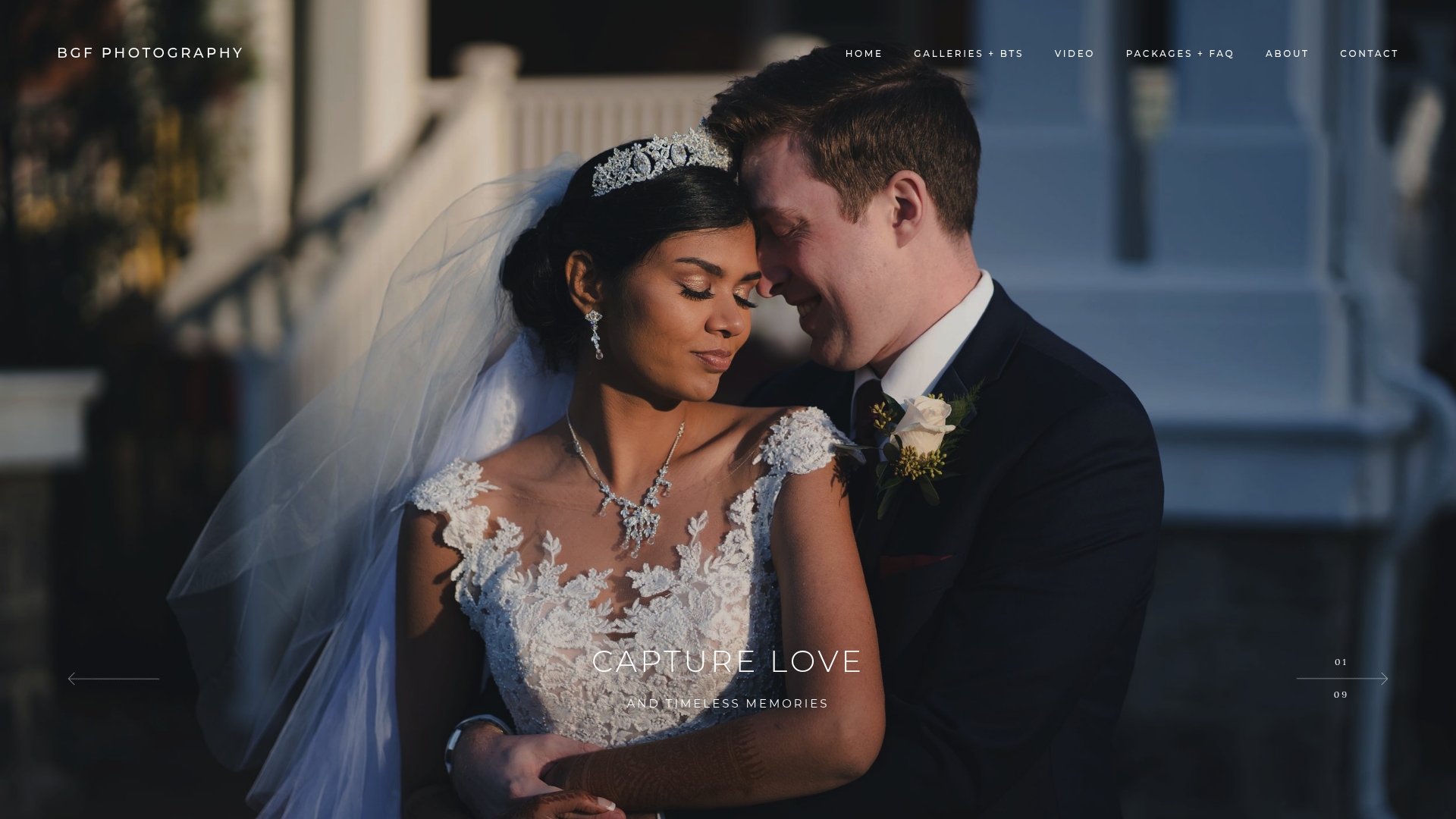
If you're mapping out getting-ready windows, portrait timing, or golden hour for your own day, BGF Photography's packages and planning details walk through how coverage fits around your schedule. You can also review how family formals get organized efficiently in this guide to wedding portrait planning, or check timing guidance for golden hour photos if outdoor light is part of your plan. Reach out to schedule a planning meeting and build your buffer timeline around a photography team that already treats protected minutes as non-negotiable.
Sources
- Wedding Transportation Planning Guide: Ensure a Seamless Day | Affects Premium Chauffeured Services
- Wedding Transport Timeline: Hour by Hour From Hotel to Last Bus Home – Fox Bus
- How to Build a Wedding Day Timeline (With Examples) | WeddingProsRated
For couples also thinking about pre-wedding fitness routines, Fortivus's bridal workout guide covers preparation timelines outside the wedding day itself.
FAQ
What is the 15-minute rule for weddings?
The 15-minute rule means adding a flat 15-minute buffer to short travel legs to cover loading, parking, and minor delays, a common recommendation from chauffeured transportation services.
What is the 50/20/30 rule for weddings?
That figure typically refers to budget allocation (roughly 50% venue and catering, 20% photography and entertainment, 30% everything else), not travel time. It isn't a timeline or buffer rule.
What is the groom's mom responsible for?
Traditionally, the groom's mother helps coordinate the rehearsal dinner and supports the groom's family logistics, though modern weddings vary widely and this isn't a fixed rule.