
The best way to choose a Buffalo wedding photographer is to decide how you want your day remembered first, then hire the person whose full galleries show that style, whose coverage fits your timeline, and who puts delivery and backup terms in writing. If you want candid photos and film that feel like your day rather than a staged version of it, a photographer who also films, with one cohesive look across both, makes every later decision simpler. That is how we work at BGF Photography, and it is the lens we use in this guide.
Below you will find the steps in order, what to look for at each one, and where couples in Buffalo, Rochester and the Finger Lakes most often go wrong.
TL;DR
- Pick your style before your photographer: candid and documentary, classic and posed, editorial, or a mix. Then judge only photographers who shoot that way.
- Ask to see complete wedding galleries, not a highlight reel. Consistency across a whole day tells you more than a best-of page.
- Work backward from the last moment you want photographed to set your hours, and decide early whether video is part of the plan.
- Booking photo and video together under one style keeps the look cohesive and gives you a single schedule to plan around.
- Get delivery timing, image count, backup plans and cancellation terms in the contract, not in conversation.
Table of Contents
- Start With the Kind of Photos You Want
- Judge the Portfolio Like a Professional
- Decide How Many Hours You Need
- Think About Video at the Same Time
- Set a Realistic Budget
- Ask the Right Questions Before You Sign
- Timing Your Search in Buffalo
- A Simple Way to Compare Your Shortlist
- Our Perspective
- Book Coverage That Fits Your Day
- FAQ
- Sources
Start With the Kind of Photos You Want
Most couples open their search by scrolling galleries and comparing prices. It works better the other way around. Spend an evening with your partner looking at wedding photos you both love and ask what they have in common. Is it the quiet laugh between the couple and a grandparent? A crisp, magazine-like portrait? Dramatic light and unusual angles?
That answer matters because photographers tend to be strong in one approach. A Buffalo guide to picking a wedding photographer describes four common styles:
- Editorial: crisp, clean, magazine-like, with stylized shots of accessories and details.
- Photojournalism: unobtrusive capture of events as they unfold.
- Classic or portraiture: formal family and guest portraits, a good fit for large families.
- Artistic: creative use of color, angles and lighting with a dramatic feel.
Most real wedding galleries blend two or three of these. The useful question is which one leads. If a photographer's gallery is mostly posed portraits with a few candid frames, expect a posed day. If it is mostly unplanned moments, expect to be photographed while you are busy living your wedding.
Why Candid Suits Many Couples
Candid coverage means the photographer stays in the background, anticipates moments and lets them happen: the look your dad gives you before the aisle, the toast that goes off script, the dance floor chaos. It suits couples who feel awkward in front of a camera, who want their guests relaxed, and who would rather have fifty real expressions than five perfect poses.

Candid does not mean no direction at all. Family formals and a few portraits of the two of you are still worth planning. The difference is that they are short and deliberate, and the rest of the day is documented without interruption. Our approach is natural and unobtrusive, and that is the quality we would ask any photographer about if candid is what you want.
The Film Question
Film photography adds a soft, nostalgic quality that digital files do not produce on their own. If that look appeals to you, ask whether film is an option and how it is priced, since it is often an add-on. We offer medium format and 35MM film at $100 per roll, which lets you choose film for the moments that matter most, such as the ceremony, portraits or the first dance, without committing the whole day to it.
Judge the Portfolio Like a Professional
A portfolio is a marketing page. Every photographer shows their best twenty frames. What you actually need to know is what a normal stretch of your day will look like, in bad light, in a crowded room, with a moving subject.
Here is how to read a portfolio with that in mind.
- Ask for two or three full galleries. A complete gallery from a real wedding shows how the photographer handles every part of a day: getting ready, ceremony, family, portraits, reception, dancing. Look for the weak points as well as the strong ones.
- Check consistency. Do the colors, skin tones and mood stay steady from morning to night, and from one wedding to the next? Consistency is a sign of a settled style and a reliable editing process.
- Look for venues like yours. A dim church, a bright lakeside tent and a mid-winter ballroom all demand different skills. Buffalo-area weddings span all of these, so find a gallery that resembles your setting.
- Study the in-between moments. Anyone can photograph a ring. Look at guests mid-laugh, hands, hugs and people walking in. Those frames are what you will return to in ten years.
- Check how the people look. Natural expressions and relaxed posture in the photos tell you how comfortable the couple felt.
Ask About Experience
Experience matters most for the things you cannot see in a gallery: handling fast-moving light, awkward venues and a timeline that slips. The Los Angeles Times suggests asking how many weddings a photographer has shot, how many years they have worked, and what they love most about wedding photography. The last question is the telling one. A photographer who lights up describing the part of a wedding they love will usually be paying attention at yours.
Meet Them, Even by Video Call
You will spend more waking hours with your photographer on your wedding day than with almost any other vendor. A call or a coffee tells you whether you feel at ease. If you tense up talking to them, you will tense up in front of them, and it will show in the pictures.
Decide How Many Hours You Need
Coverage length is usually the biggest factor in price, so settle it before you compare quotes. The simplest method is to work backward from the last moment you want photographed.
- If your wedding is a courthouse ceremony or an elopement, you may need only a couple of hours around the ceremony and portraits.
- A small wedding with a short portrait window and a simple reception often fits in a half day.
- A standard wedding, from getting ready through the first dances, usually needs a full day.
- If you want the late-night send-off, a long cocktail hour or a very large family list, build in extra time.
Then add buffer for the real-world slowdowns: big families that take longer to gather, travel between a church and a venue, and a Buffalo weather plan B. Photographers who say yes to everything in a quote are not always planning for the same timeline you are.
If you are choosing between a full day and a smaller package, think about which parts you would regret not having. For many couples that is the getting-ready moments and the end of the night, because those are the parts a short booking tends to skip.
Elopements and Courthouse Weddings
A small ceremony still deserves good photos. It is the day you get married, whoever is in the room. Our elopement coverage is $2,200, and our engagement session is $600 if you want relaxed portraits before the day. For a courthouse wedding, tell the photographer the building's rules about cameras early, and plan where you will walk afterward for portraits.
Think About Video at the Same Time
Video is the decision couples most often push to later and regret. Good videographers book as early as photographers, and a film adds a dimension photos cannot: voices, laughter, the vows as they were spoken.
Start by understanding the styles. Brides.com's videography guide breaks them into three:
- Documentary: hands-off and sequential, using natural audio and minimal editing.
- Cinematic: a curated, music-driven film that tells your story.
- Traditional: everything filmed as it happens, in order, with minimal editing.
Documentary tends to feel raw and immediate. Cinematic is shaped to match the mood of your particular wedding. If you want a film you will rewatch and share, a cinematic edit gives you the most control over the story. If you want a faithful record of the day as it happened, the longer formats are better.
Pick the Length of the Film
Film length changes what you get. Our published video options are:
| Video option | What it is | Price |
|---|---|---|
| Highlight video | 3-6 minutes | $1,400 |
| Featurette | 9-15 minutes | $1,800 |
| Full length video | 30-60 minutes | $2,600 |
A highlight is the one you post and send to friends. A featurette gives room for the ceremony and speeches to breathe. A full-length film is the complete story of the day. Many couples choose a featurette because it holds the emotional beats without feeling rushed.
Photo and Video Together or Separate?
There are two ways to build your team: hire a photographer and a separate videographer, or book one team that does both. When you compare them, these are the points that matter:
- Cohesive look. When one team shoots both, the photos and film share the same color, pacing and feel. Separate vendors may have very different styles that do not sit well together.
- Fewer people in the room. Two independent crews can crowd the ceremony, the aisle and the dance floor. One hybrid team plans its positions together.
- One schedule. A single team builds a single timeline, so portraits, family formals and the first look are planned around both mediums.
- One point of contact. You deal with one contract, one set of deadlines and one person to ask when something changes.
This is why we offer hybrid coverage, so couples book photography and videography under one cohesive style and vision. If you love a particular videographer and a particular photographer who are separate, that can work. But if you are starting from scratch, the combined route is the simplest way to a day that feels like one story.
For questions to bring to a video consult, our guide to questions to ask your wedding videographer covers audio, music licensing, edit length and delivery.
Drone and Extra Footage
Aerial footage can make a lakeside or estate venue look grand. If you want it, ask early whether the venue permits drones. We offer additional drone pilot coverage at $500 to $700. Unedited footage is available at $500, and an additional video edit runs $200 to $600, for example a social-media cut alongside the main film.
Set a Realistic Budget
Buffalo wedding photography prices vary widely with hours, experience, number of shooters and whether video is included. Instead of chasing an average, decide what is most important to you and set the budget around it.
Our published pricing, so you can see what a full-day, candid, hybrid-capable package looks like:
| Service | Price |
|---|---|
| Full Wedding Day | $4,500-$5,200 |
| Elopement | $2,200 |
| Engagement Session | $600 |
| Medium Format and 35MM Film | $100 per roll |
| Half Day Content Add-on | $900 |
| Full Day Content Add-On | $1,700 |
These are the prices as published on our investment page. For a wider look at what couples pay around the area and what drives the number, see our breakdown of wedding photographer prices in 2026.
Where Budgets Slip
Three things push totals up that couples often forget to count:
- Engagement session. If it is not included, it is a separate cost.
- Film and add-ons. Film rolls, extra video edits and drone coverage are priced separately.
- Albums and prints. Ask what is included and what is extra before you sign.
On the other side, an unusually low quote is a reason to read the contract carefully. Ask how many hours, how many photographers, how many edited images and when you will receive them. A low price that leaves out half the day is not a low price.
Ask the Right Questions Before You Sign
A good photographer welcomes detailed questions. These are the ones that protect your day.
Availability and Backup
- Is my date open, and is it held once I pay a retainer?
- Who shoots my wedding? Will it be you, or an associate?
- What happens if you are ill or have an emergency on my date?
- Do you bring backup cameras and store images on more than one card?
Coverage and Style
- How do you work with guests who do not like cameras?
- How much direction do you give during portraits?
- Can you adapt the coverage to a timeline I build around family or tradition?
Delivery
- How long until I receive my photos, and my video?
- Roughly how many edited images should I expect for a full day?
- In what format and resolution are they delivered, and do I get a print release?
Turnaround is the question couples forget most often and the one that causes the most stress later. We wrote two guides on it: how to get wedding photo turnaround in writing, and the contract clauses that secure your wedding video. For the image count itself, see how many wedding photos to expect from an eight-hour day.
Contract Terms
The contract should say, in plain words, what you are buying. Look for:
- the date, the hours and the locations covered;
- the number of photographers and videographers;
- the deposit, the payment schedule and the final balance date;
- the delivery timeline and format for photos and video;
- the cancellation and rescheduling terms;
- what happens to your files afterward. Our post on how long photographers keep wedding photos explains why you should download and back up your gallery yourself the day it arrives.
If a promise matters to you and it is not in the contract, it does not exist. Ask for it to be added.
Timing Your Search in Buffalo
Buffalo weddings cluster in a short warm season, and the best dates book up far ahead. Couples who start looking after they have a venue and a date, but before they choose a florist or band, usually have the widest choice of photographers. Winter and shoulder-season dates are often easier to hold. Our note on why Buffalo's wedding season affects photography goes into how the calendar shapes availability, light and timelines.
If you are marrying in Rochester or the Finger Lakes, the same logic applies. Ask any photographer about travel, since a venue an hour or more from their base can change the logistics.
For a wider picture of what to look for in local photo and video coverage, our Buffalo coverage guide is a good companion read.
A Simple Way to Compare Your Shortlist
Once you have two or three photographers you like, score each on the same short list. Rate each from one to five:
| Criterion | What to look for |
|---|---|
| Style match | Full galleries that look like the photos you saved |
| Consistency | Steady color and quality across whole weddings |
| Rapport | You feel relaxed on the call |
| Coverage fit | Hours and team match your timeline |
| Video | Offered in a style and length you like, with a cohesive look |
| Delivery | Clear timelines and formats in writing |
| Contract | Backup plan, cancellation terms and payment schedule are clear |
If two photographers tie, choose the one you felt most comfortable with. A photographer you trust gives you better pictures of you.
Our Perspective
We built our approach around one idea: the best wedding photos and films are the ones where nobody was performing for the camera. That is why we stay natural and unobtrusive, let moments unfold, and document them carefully.
When couples ask us how to choose, we tell them to look at the feeling of a full gallery, not the most polished frame. Do the people look like themselves? Do you want to be in that room? Our film option adds a nostalgic look for the moments that deserve it.
We also think photo and video belong together. When both are shot by one team in one style, your day has a single point of view, and you plan one timeline instead of two. That is why we offer hybrid coverage, and why we tailor each package to the wedding you are actually planning in Buffalo, Rochester or the Finger Lakes.
Billy
Book Coverage That Fits Your Day
If candid photography, film and a cohesive video sound like what you have been looking for, we cover weddings in Buffalo, Rochester and the Finger Lakes, and every package is tailored to your day. Our Full Wedding Day is $4,500-$5,200, and you can add a highlight, featurette or full-length video, film rolls and drone coverage. See every option and price on our investment page and tell us your date.
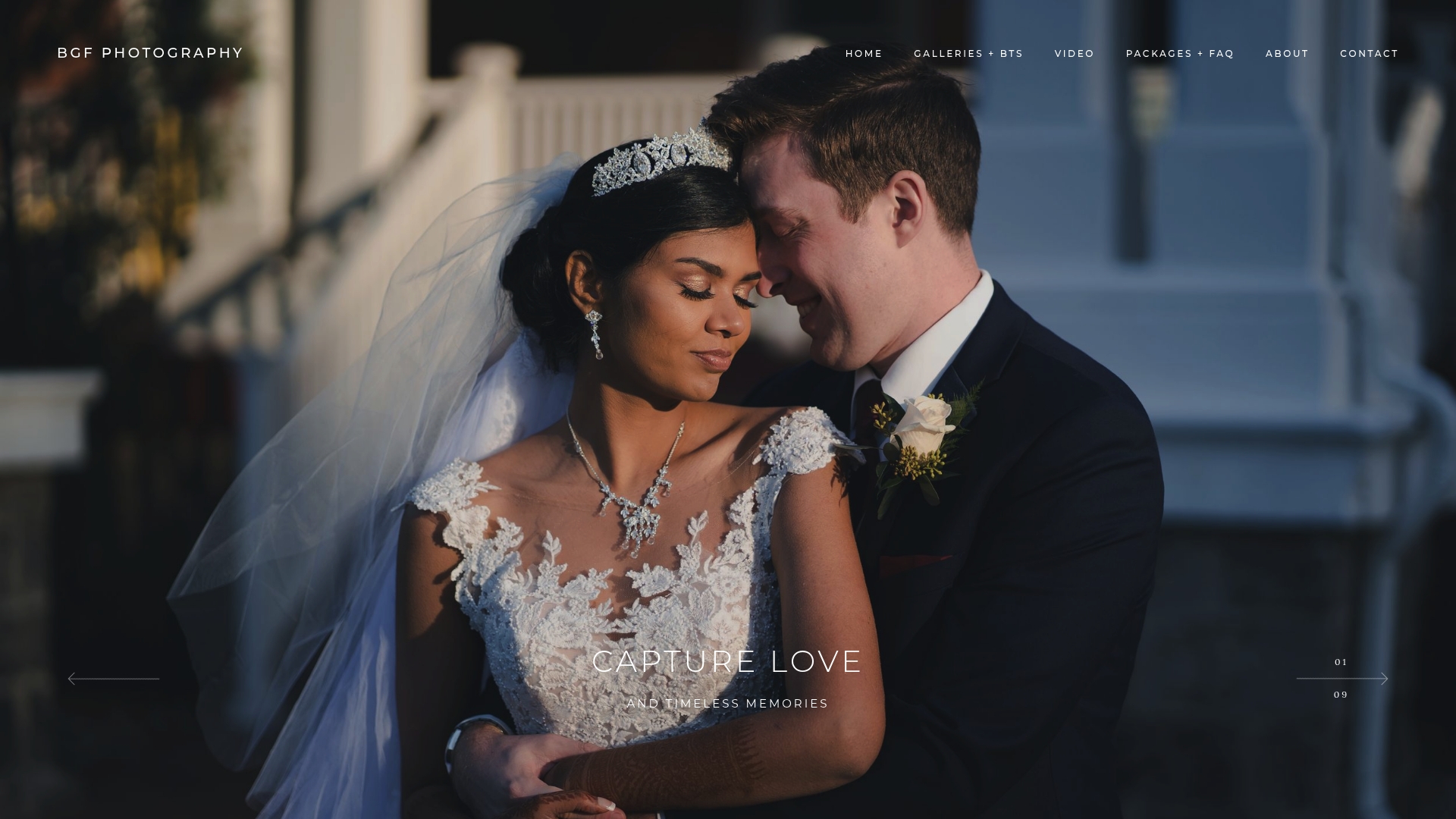
If you are still planning, a $600 engagement session is a relaxed way to get used to being photographed before the wedding itself.
FAQ
How far ahead should I book a wedding photographer in Buffalo?
Book as soon as you have your date and venue, because popular dates in the Buffalo season fill well in advance. Many couples book a year or more ahead for summer and early fall. If your date is closer, reach out anyway, since availability varies by date.
Do I need a photographer for a courthouse wedding?
Yes, if you want the day documented, because a courthouse ceremony is short and you cannot repeat it. A small amount of coverage around the ceremony and a few portraits nearby is enough. Check the building's camera rules beforehand and tell your photographer.
Is it better to hire one team for photo and video?
For most couples starting from scratch, yes. One team gives you a matching look across photos and film, a single timeline and one contract. Separate vendors can work if you already love both, but you will need to coordinate them yourself.
What does an engagement session do for my wedding photos?
It gives you practice in front of the camera and gives the photographer time to learn how you move and interact. Couples often look more relaxed on the wedding day as a result. Our engagement session is $600.
What should be in a wedding photography contract?
The date, hours and locations, the number of people shooting, the payment schedule, delivery timelines and formats, backup plans, and cancellation terms. If anything you were promised is missing, ask for it in writing before you sign.
Sources
- How to Pick a Wedding Photographer in Buffalo, NY
- Top Questions to Ask Your Wedding Photographer
- Wedding Videography Styles: A Complete Guide