
If the thought of being photographed all day makes your stomach drop, you are in good company, and you can still get wedding photos that look like you. The couples who feel least awkward tend to share three things: a photographer they already know, a day built around movement rather than held poses, and coverage that documents moments instead of staging them. That is the approach we take at BGF Photography, where candid, unobtrusive wedding photography and videography is what we do for couples in Buffalo, Rochester and the Finger Lakes.
Below is the full plan: what to do months ahead, what to do on the day, which prompts work when you freeze, and how film and video can add to the natural feel.
TL;DR
- Camera shyness is mostly about feeling watched and unsure what to do with your hands. Trust in your photographer and a few simple tasks fix most of it.
- Meet your photographer before the wedding. An engagement session is a low-stakes rehearsal for the real day.
- Ask for movement, not poses: walking, adjusting a veil, laughing with your partner. Moving breaks up the stiffness of standing still.
- Plan your timeline and family photo list ahead so the day flows and you are not improvising in front of a lens.
- Candid, documentary coverage, with optional film and matching video, lets you live the day while it is recorded.
Table of Contents
- Why wedding photos feel so awkward
- Build trust before the wedding day
- Practice before the day, lightly
- Give your hands and attention a job
- Plan the day so you are not improvising
- What candid coverage actually captures
- How family and guests can help
- Film and video for a natural, nostalgic feel
- Our perspective
- Camera-shy couples and BGF Photography
- FAQ
- Sources
Why wedding photos feel so awkward
Most people are photographed in short bursts: a selfie, a snapshot at dinner. A wedding asks you to be on view for eight to ten hours, with relatives watching, in clothes you do not normally wear. Of course it feels strange.
The awkwardness usually has two causes. The first is self-monitoring: you start editing your face and posture, which makes both stiffer. The second is stillness. When you hold a pose with nothing to do, you notice every part of your body. Almost every fix below attacks one of those two problems, either by giving you something to focus on that is not yourself, or by keeping you in motion.
It also helps to know that the photographer's goal is not a perfect face. One Harper's BAZAAR guide tells couples to forget a photographer is watching during the ceremony and toasts, and to kiss, laugh or cry without worrying how they look, because staging moments makes the day look less authentic. That permission is the whole philosophy of candid coverage.
Build trust before the wedding day
The biggest single lever is who is behind the camera. TheWed.com's camera-shy guide says comfort starts with trust in the photographer, and suggests spending time with them beforehand, through an engagement session or rehearsal dinner coverage.
That matches how we think about it. A photographer you have never really talked to is a stranger pointing a lens at you. One you have walked around a park with is just a person who happens to be taking pictures. If you want a longer look at this, we wrote about building your photographer relationship before the wedding and the role of trust in wedding photography.
What an engagement session does for shy couples
An engagement session is a practice run with no guests, no timeline and no pressure. You learn how your photographer gives direction, what kind of prompts make you laugh, and which of your habits look good on camera (you will be surprised). You also get a first set of photos of the two of you, which tends to calm the fear that you will look terrible.

Our engagement session is $600. Many couples find it is the moment the nerves drop, because when the wedding morning arrives the photographer already knows how to work with them.
Tell your photographer you are shy
Say it plainly when you inquire. A photographer who works in a documentary style will adjust: fewer instructions, more space, more time spent in the background. You are not asking for something unusual, and it shapes how the whole day is approached.
Practice before the day, lightly
You do not need to rehearse. A little familiarity helps, though. TheWed.com quotes a Florida-based wedding photographer who suggests practicing in front of a mirror a few months ahead and studying photos you love so you build muscle memory for your better angles. The same guide advises you to talk, have fun and laugh, since movement breaks up the awkwardness of standing still.
Here is a low-effort version:
- Save five or six photos you love, then notice what the people are doing. Usually they are laughing, walking, touching a collar or looking at each other rather than the lens.
- Take a few selfies or short phone videos together and watch them back. Seeing yourself on screen a few times makes the real thing less jarring.
- Wear your wedding shoes and a similar outfit on a date night so you know how it feels to move in it. TheWed.com's guide recommends clothing you can move and breathe in, and that makes posture easier.
Give your hands and attention a job
Shy people rarely hate being photographed. They hate being photographed while doing nothing. The fix is a task.
PureWow reports a "body props" idea from a veteran wedding photographer: use your hair, jewelry, clothing or your partner as props. Let your partner tuck a loose strand of hair, fix your tie or fan out your skirt. You now have a job that is not "look good for the camera."
Rangefinder describes a documentary photographer who directs gentle movements, such as the bride playing with her veil, because a held pose looks focused and staged, while movement lets a moment evolve. Here are prompts that work well when you feel frozen:
- Walk slowly toward each other and stop when you feel like it.
- Whisper one thing you are looking forward to about the honeymoon.
- Hold hands and swing them as you walk, then stop and look at the ground.
- Take turns straightening each other's clothes.
- Tell your partner the most embarrassing thing a guest has said to you today.
- Lean your forehead against theirs and breathe out slowly.
None of these ask you to smile on cue. The smile comes from the prompt.
Plan the day so you are not improvising
A lot of camera stress is really schedule stress. When you are rushed, hungry and unsure what comes next, you feel exposed. TheWed.com features a photographer's advice that natural, unposed photography depends on prep: good rest, good food, and knowing in advance which photos will happen before and after the ceremony and with whom, so family formals go quickly.
Schedule portraits in short pockets
The same article recommends planning three separate pockets of time for couple portraits through the day, which lets you rejoin cocktail hour when you want. For shy couples this is gold. Ten or fifteen minutes at a time is far easier than a single hour of continuous attention, and each pocket can happen in a different light and location.

Keep family formals short and organized
Family groupings are where many shy couples tense up, because relatives line up and everyone watches. A written list, a named helper to gather people and a tight time limit solve most of it. We cover this in how to organize family portraits on your wedding day, a family photo checklist of 10 to 15 groupings, and our guide to documentary-style formals. If you want more on what happens in that session, read what couples need to know about family portrait sessions.
Eat, drink and breathe
The Rangefinder piece describes a photographer who checks in on clients, offers water and snacks, and gives brief encouragement, because when people are relaxed and feel safe, they open up more easily. You can plan for the same thing. Pack snacks and water for the portrait window, and let your photographer know when you need a minute.
What candid coverage actually captures
Here is the good news for camera-shy couples: some of the best photos of a wedding are taken when nobody is posing. Fstoppers notes that the most meaningful candids often come right after big events, such as the second after the first kiss, a parent exhaling after holding back tears, or guests processing a speech, because once the spotlight passes, people relax and real emotions tend to show. The article also recommends pairing tight close-ups with wider shots that show the setting.
A photographer working this way is mostly waiting and watching. Your job, as TheWed.com's expert puts it, is to live the day, while the photographer looks for the quiet tear or the big laugh in good light.
A shot list that respects your comfort
Harper's BAZAAR advises editing your list down and deciding which shots must be posed and which can be candid during cocktails or on the dance floor. For shy couples, a good split is:
| Moment | Approach | Why it helps |
|---|---|---|
| Getting ready | Candid | You are busy with people you love |
| First look or first moments | Candid with light direction | Your attention is on each other |
| Family formals | Quick, organized list | Short and predictable |
| Couple portraits | Movement prompts in short pockets | You always have something to do |
| Ceremony and toasts | Fully candid | Nothing to perform |
| Cocktail hour and dancing | Fully candid | The photographer fades into the party |
If you want alternatives to the classic stand-and-smile portrait, see 10 alternatives to posed wedding portraits and our guide to authentic wedding moments.
How family and guests can help
You do not have to manage this alone. A few small agreements with the people around you make a visible difference:
- Pick one helper per side. A sibling or friend who knows the family can gather relatives for formals, so you are not calling names across a lawn.
- Ask guests to stay present. An unplugged ceremony keeps phones out of the aisle, and nobody is stepping into the frame while you are trying to relax.
- Brief the bridal party. Ask them to keep things light while you get ready. A joke or a shared story relaxes your face more than any instruction.
- Tell parents the plan. When they know when family photos happen and how long they take, they do not hover.
The common thread is that people who know what is happening stay calm, and calm people look better in photos.
Film and video for a natural, nostalgic feel
Many shy couples find that the format matters. Film photography has a pace of its own: with a limited number of frames on a roll, the photographer is selective and there is less of the constant clicking that makes people self-conscious. We offer medium format and 35MM film at $100 per roll, and many couples choose it for the nostalgic look it gives candid moments.
Video suits shy couples for another reason. Moving footage captures how you laugh, how you glance at each other and how your family reacts, things a still photo cannot hold. If you are curious whether it suits you, we explain what documentary wedding videography is and who it suits.
Booking photo and video from the same team, which we call hybrid coverage, also means one approach to the day. There is no second crew to meet, and photo and video share one cohesive look and one idea of how to stay out of your way.
Our perspective
Almost every couple who tells us they are camera shy says the same thing: they are afraid of looking stiff. We think the answer is to stop asking you to perform.
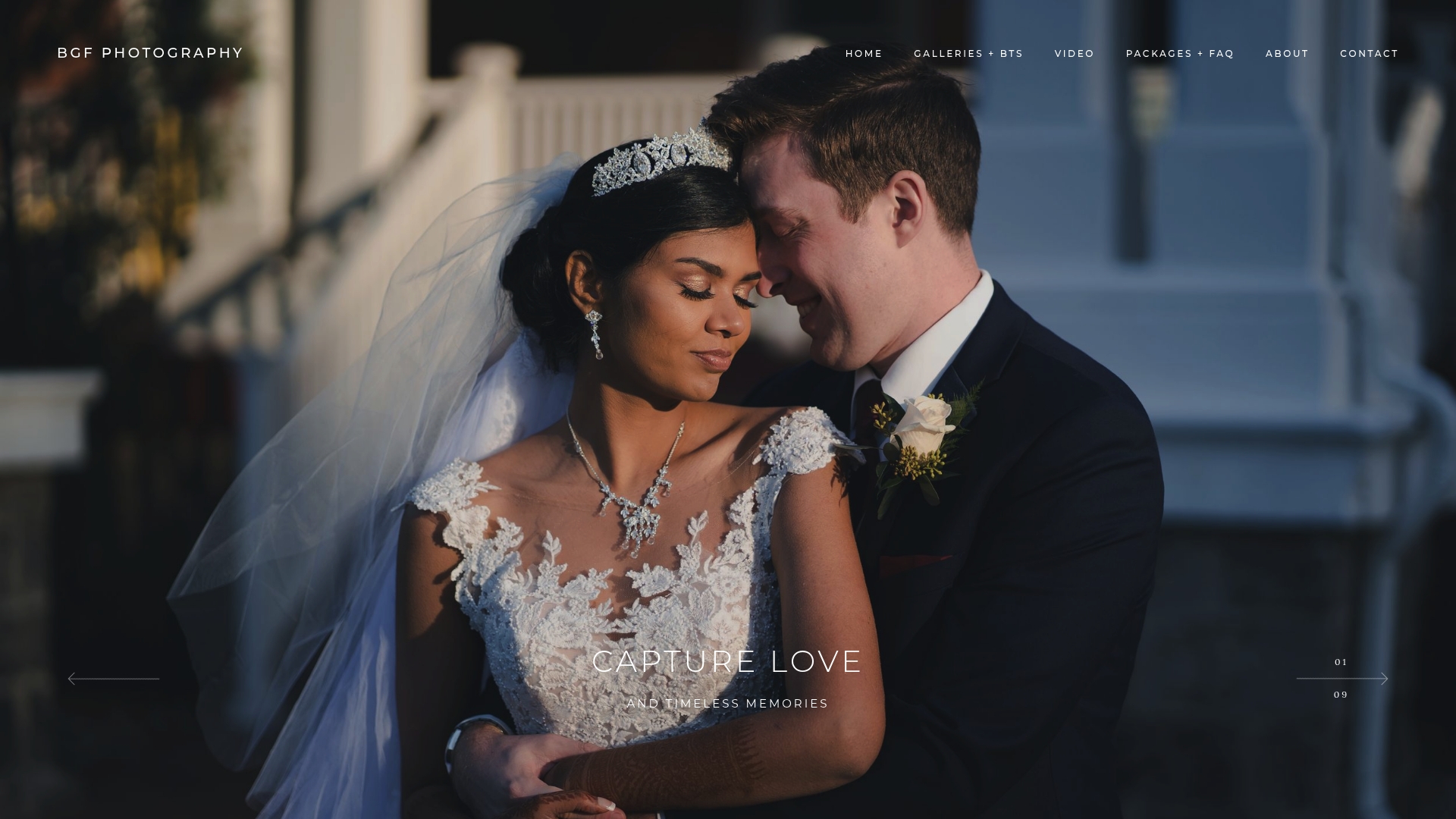
Our style is candid and unobtrusive. We stay close enough to catch what happens and far enough away that you forget about us. Photos made this way show how the day felt, which is why shy couples often end up loving their galleries more than they expected.
That is also why we encourage an engagement session, and why we like to offer photography and videography together under one vision. By the wedding morning you know us, we know you, and the camera is just another guest.
Billy
Camera-shy couples and BGF Photography
We shoot candid wedding photography and videography across Buffalo, Rochester and the Finger Lakes, with optional film and a personalized approach built around how you want your day to feel. The Full Wedding Day is $4,500 to $5,200, and the Engagement Session is $600. Video options start with a 3-6 Minute Highlight Video at $1,400, a 9-15 Minute Featurette Video at $1,800, and a 30-60 Minute Full Length Video at $2,600. You can see every option on our investment page, or get in touch through our site when you are ready to talk about your date.
If the engagement session is your first step, it is also a good time to talk through your concerns, your timeline and which moments matter most to you.
FAQ
Can I really get natural photos if I hate being photographed?
Yes. Most natural-looking wedding photos come from direction that keeps you moving and busy, not from a perfect smile. A documentary approach, short portrait sessions and a photographer you already trust all help. Many people who describe themselves as camera shy are happy with candid galleries because the photos show them mid-laugh rather than mid-pose.
Should I book an engagement session if I am shy?
We recommend it. It lets you meet your photographer, try prompts and see what you look like in good light before the wedding. TheWed.com's guide also suggests spending time with your photographer beforehand. Our engagement session is $600.
What do I do with my hands?
Give them a job. Hold your partner's hand, adjust a lapel, touch the bouquet, play with your veil or fix a strand of hair. PureWow's "body props" advice is that your hair, clothing and partner can all be props, which takes the pressure off looking good for the camera.
How long should couple portraits take?
Short is better. Schedule a few small pockets of time across the day rather than one long session, as TheWed.com's expert advice suggests. That keeps you fresh and lets you get back to your guests.
Is video harder for shy couples than photography?
Usually it is easier, because a documentary videographer records the day as it unfolds instead of asking you to pose. Booking photo and video together keeps the style consistent and the team small.
Sources
- Camera Shy? Here's How to Feel Confident in Your Wedding Photos, TheWed.com
- 5 Expert Tips for Natural and Unposed Wedding Photography, TheWed.com
- Tips for Natural, Relaxed Wedding Photography Poses, Rangefinder
- How to Look Natural in Wedding Photos, PureWow
- Capture More Meaningful Candid Wedding Photos, Fstoppers
- Wedding Photo Ideas, Harper's BAZAAR